





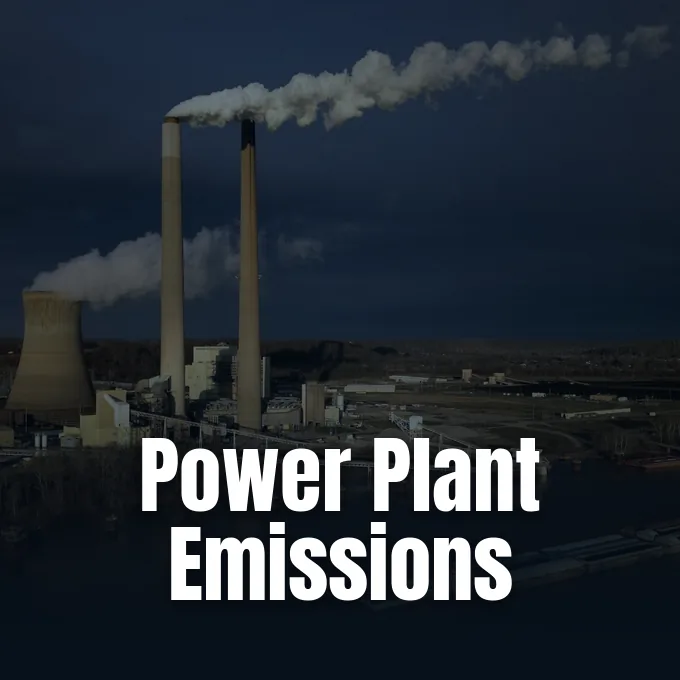
Can the rollback of federal environmental mandates reshape the future of power plant emissions across North America? The US Environmental Protection Agency (EPA) announced on Monday that it is scrapping major regulations designed to curb carbon pollution from electricity generation facilities (specifically coal and natural gas units). Proponents argue the policy reversal will lower energy bills and protect grid reliability. Environmental groups warn that abandoning these caps will accelerate planetary warming. The federal agency declared that past requirements exceeded statutory authority [1].
Scrapping Limits on Power Plant Emissions
The decision fundamentally alters how federal regulators oversee power plant emissions across the United States. Under former President Joe Biden, federal standards required existing fossil fuel generators to adopt stringent emissions reduction measures or face early closure. EPA Administrator Lee Zeldin announced that the agency is repealing the vast majority of those mandates. The regulatory reversal removes restrictions on coal and gas facilities. Agency leaders also signaled their intent to eliminate all remaining greenhouse gas rules governing the power sector [1].
Regulatory mandates shifted immediately. Nationwide carbon caps on existing facilities were eliminated [1].
The policy change, first proposed last year by Zeldin, represents a fundamental philosophical break from environmental strategies pursued by Democratic administrations over the past two decades. According to reporting published by Mongabay Environmental News, agency officials asserted that the previous rules forced operators to retire aging power stations prematurely rather than allowing utilities to make sensible operational choices for their local ratepayers [2]. In a formal announcement, Zeldin insisted that the United States already generates energy far more cleanly than international rivals and maintained that domestic power plants should not face what he characterized as unfair regulatory burdens. The administration framed the repeal as a necessary economic intervention designed to support industrial manufacturing while reducing consumer energy costs. Furthermore, understanding broader ecosystem balances remains vital as researchers examine how plants absorbing human-caused emissions interact with atmospheric carbon levels over prolonged timescales [1].
Regulatory Overreach and Economic Arguments
Economic calculations played a central role in justifying the repeal of federal power plant emissions limits. The EPA estimated that dismantling the Biden-era framework will save industry approximately $310 billion (£223 billion) while easing upward pressure on consumer utility bills [1]. Reporting by Matthew Daly of the Associated Press noted that eliminating these compliance expenses is intended to prevent utilities from passing costly technological upgrades directly to consumers [2]. Federal officials claim the repeal removes immense financial burdens. Energy costs matter.
The agency based its legal reasoning on the concept of statutory overreach. In its official determination, the EPA stated that previous standards mandated control technologies that had not been adequately demonstrated in commercial practice. Forcing utilities to install unproven systems amounted to an indirect closure order rather than a feasible standard. Regulators rejected compulsory carbon capture systems. Zeldin argued that lifting these mandates will decrease utility and manufacturing expenses while strengthening national energy security [1].
Supporters of the rollback view conventional power stations as essential backbones of American industry. President Donald Trump has consistently advocated for a resurgence in coal mining and coal-fired generation, arguing that domestic fossil reserves guarantee energy independence. He has frequently criticized wind and solar installations as intermittent and expensive. Maintaining existing coal units preserves baseline capacity. Federal planners maintain that uninterrupted generation remains paramount for national grid stability [1].
Public Health Warnings and Predicted Deaths
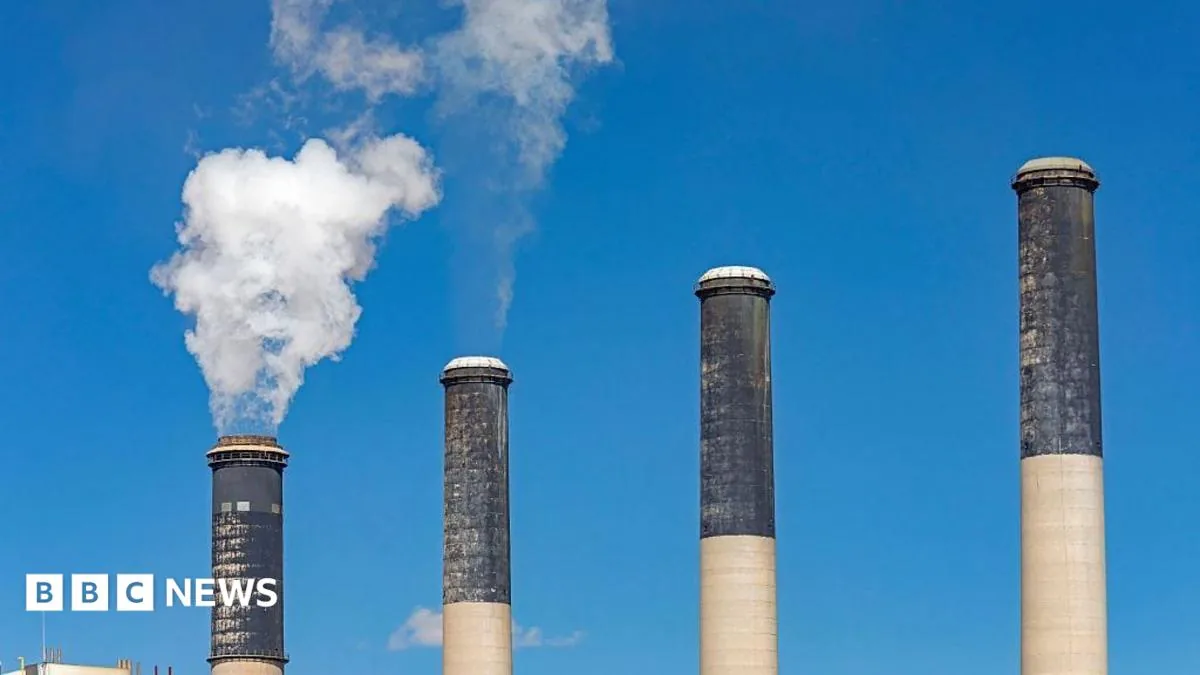
Public health advocates and environmental scientists voiced immediate alarm following the announcement. When the Biden administration introduced the regulations, government analysts projected that curbing power plant emissions would prevent roughly 4,500 premature deaths each year [1]. Medical groups emphasize that burning coal and natural gas releases fine particulate matter and toxic byproducts that damage human respiratory systems. Health advocates strongly dispute the federal reversal. They argue that allowing older facilities to emit pollutants unchecked directly threatens vulnerable communities living downwind.
The federal agency presented a contrasting view regarding health effects. In its statement on Monday, the EPA asserted that potential public health harms were too uncertain, conjectural, remote, and convoluted to tie specifically to the US power sector. Environmental leaders reacted with dismay. Nathaniel Keohane, president of the Center for Climate and Energy Solutions (an independent environmental organisation), characterized the rollback as a giant step backward for the country [1]. Keohane stated that the agency abdicated its responsibility to protect public welfare.
The confrontation reflects a broader administrative push to dismantle climate regulations across executive agencies. In February, the EPA reversed a landmark Obama-era scientific determination that had classified greenhouse gases as threats to public health [1]. That earlier decision had provided the foundational justification for multiple federal clean air rules. Several state and municipal governments promptly initiated legal challenges against the February reversal. The legal debate continues.


National Emissions and Global Climate Drivers
The global climate impact of domestic power plant emissions remains substantial. According to data highlighted by the United Nations, fossil fuels constitute by far the largest driver of global climate change worldwide. The United States ranks as the second-largest emitter of planet-warming greenhouse gases, behind China. Within the American economy, electricity generation accounts for roughly one-quarter of total domestic emissions, producing approximately 1.5 billion tonnes of carbon dioxide-equivalent each year [1]. American power sector emissions exceed the output of most individual nations. The output remains massive.
Domestic emissions trends had shown persistent progress over recent decades prior to this policy change. Decades of market transitions led to falling emissions as electric utilities steadily retired obsolete coal units in favor of cheaper natural gas and renewables. Although official records showed a slight uptick last year, total output from power stations remained well below historic peaks. Scientists caution that policy shifts may complicate global decarbonization, particularly as nations track targets to close the emissions gap under international treaties [1]. Progress requires durable policy frameworks.
Will loosening pollution rules cause an immediate surge in atmospheric greenhouse gases? Independent energy analysts suggest the outcome is far more complex than administrative declarations indicate. Modeling conducted by the independent Rhodium Group found that rolling back federal climate standards would slow national emissions cuts rather than reverse them entirely [1]. Market dynamics and state-level renewable mandates continue to exert downward pressure on coal combustion across regional electricity grids.
Legal Precedents and Supreme Court Authority
The rollback is deeply rooted in prior judicial battles over administrative power. In 2022, the US Supreme Court issued a major decision curtailing the EPA’s authority to impose system-wide emission caps. That lawsuit had been brought by 19 states and major coal companies, who argued that federal regulators lacked statutory authority under the Clean Air Act to reshape state energy portfolios [1]. The Supreme Court ruled in their favor. Judicial rulings sharply restricted federal regulatory powers.
The 2022 judicial ruling established that major economic transitions cannot be mandated by executive agencies without explicit congressional authorization. The current EPA leadership applied that precedent directly when evaluating power plant emissions standards, arguing that former administrators had overstepped their statutory role [1]. Regulators claimed that forcing existing units to install nascent technologies represented an impermissible industrial transformation. Legal scholars anticipate that environmental organizations and state attorneys general will challenge this interpretation in federal courts, arguing the agency retains an affirmative duty to limit dangerous air pollution.
The resulting legal uncertainty will influence utility investment strategies for years. Power companies require predictable regulatory horizons before committing billions of dollars to facility upgrades. Several states continue enforcing their own stringent climate laws regardless of federal rollbacks. The regulatory landscape remains fractured [1].
Market Realities and Clean Energy Economics
Despite the elimination of federal mandates, energy analysts question whether coal can stage the economic comeback envisioned by political leaders. The American energy landscape has evolved dramatically over the past decade due to underlying market economics rather than environmental rules alone [1]. Dramatic declines in the cost of utility-scale solar, wind generation, and modern battery storage have made renewable installations cheaper to construct and operate than aging thermal units. Economic realities continue driving the clean energy transition. Market forces drive change.
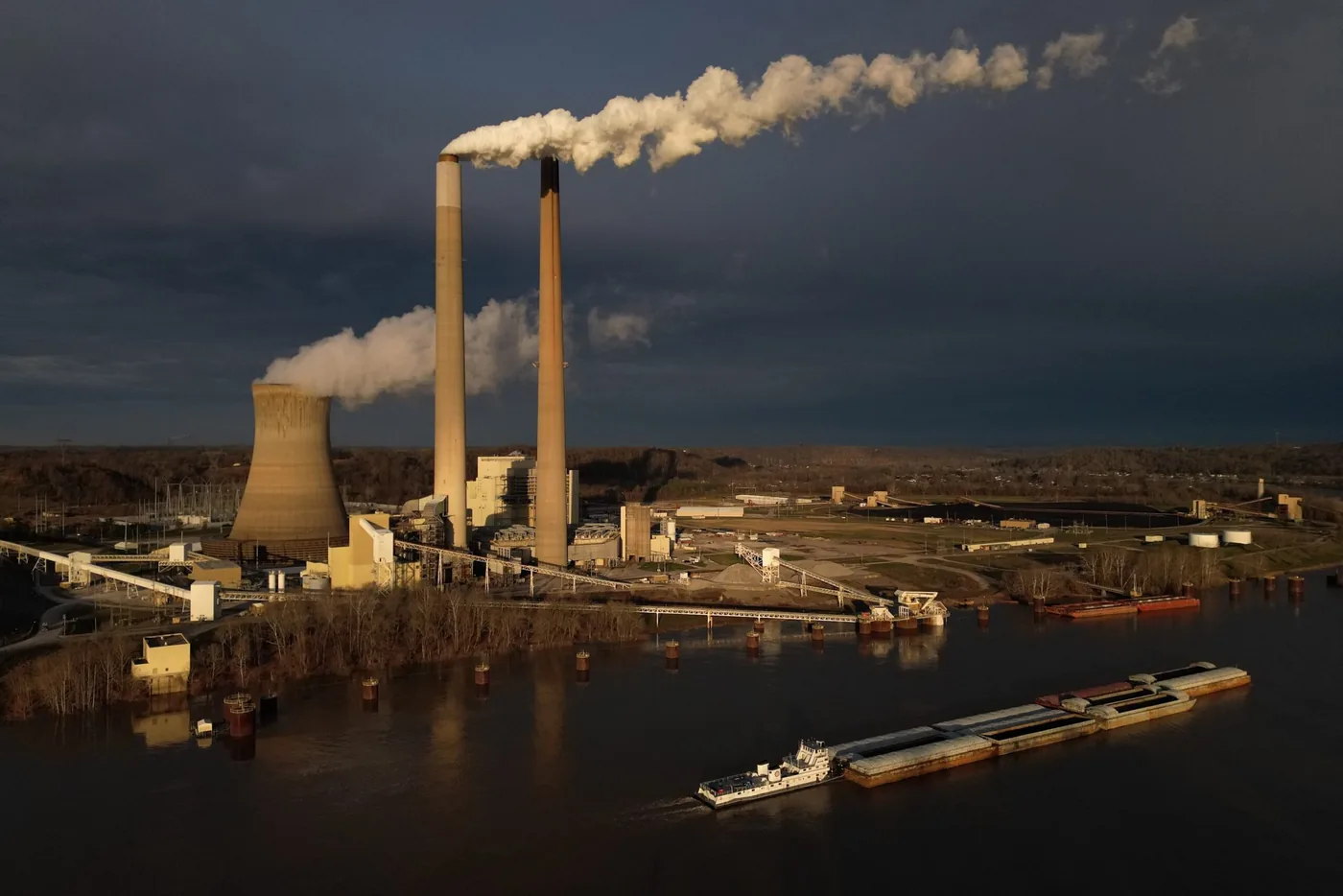
Physical infrastructure highlights the scale of this ongoing industrial transition. Near New Haven, West Virginia, the Mountaineer Power Plant illustrates the operational reality of commercial coal generation along the Ohio River [2]. Fuel barges continuously supply coal to keep massive boilers operational while national emissions policies undergo revision [4]. Commercial operators face tough economic calculations. Utility executives recognize that building new coal infrastructure remains financially unviable for corporate investors, even in the absence of federal limits on power plant emissions [2].
Scientific discussions documented by the American Geophysical Union emphasize that removing carbon dioxide limits leaves broader decarbonization timelines uncertain [3]. Global climate stability remains tied to rapid emissions cuts, especially as atmospheric research highlights escalating risks of extreme weather events linked to accumulated carbon pollution. Clean energy technologies continue maturing rapidly. Whether market momentum alone can replace federal regulation in curbing power plant emissions remains an unresolved question facing both domestic policymakers and international climate scientists.
- ONLINE NEWS Halpert, M., & Pontying, M. (2026, September 14). US scraps limits on emissions from coal and gas power plants. BBC News. [Article Link]
- ONLINE NEWS Daly, M. (2026, September 14). EPA eliminates rule that limits planet-warming greenhouse gas emissions from power plants. Mongabay Environmental News. [Article Link]
- ACADEMIC JOURNAL American Geophysical Union. (2026). EPA will remove carbon dioxide limits on power plants. Eos. [Article Link]
- WEBSITE Kaster, C. (2026, March 13). Mountaineer Power Plant on the Ohio River [Photograph]. Associated Press. [Article Link]
APA 7: TWs Editor. (2026, September 15). Cutting power plant emissions: Why US rules were scrapped. PerEXP Teamworks. https://perexpteamworks.com/en/power-plant-emissions-limits-scrapped/


