





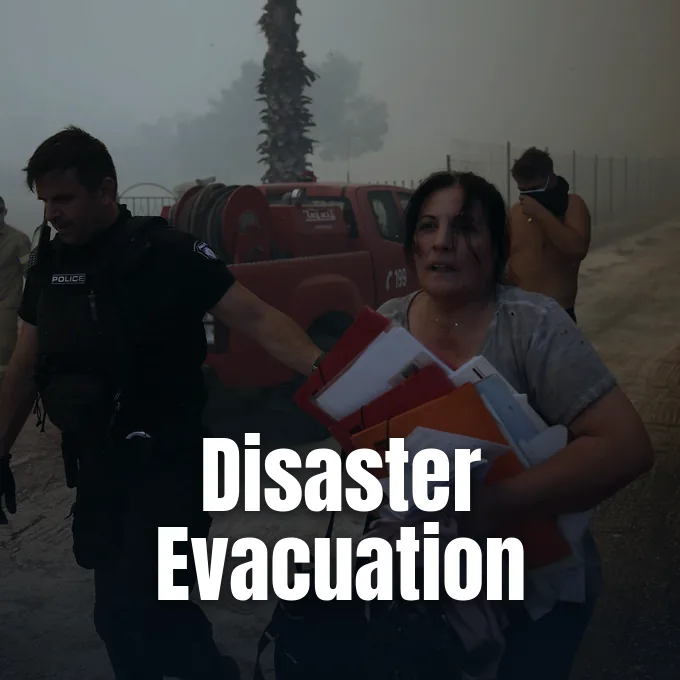
International legal scholar Jane McAdam received the Gerda Henkel Prize in Düsseldorf, Germany, explaining how sudden environmental hazards force millions of people away from home. Moving people out of danger is an instinctive response to fires, floods, and armed conflicts, yet the hardest problems begin after the sirens fade. Emergency operations often treat disaster evacuation as a short shelter exercise rather than an enduring disruption to social life. Between 2015 and 2022, government registries recorded that more than 2.1 billion people fled sudden environmental hazards and armed conflicts worldwide, leaving vast populations stranded in temporary encampments [1].
Disaster Evacuation Trends Around the World
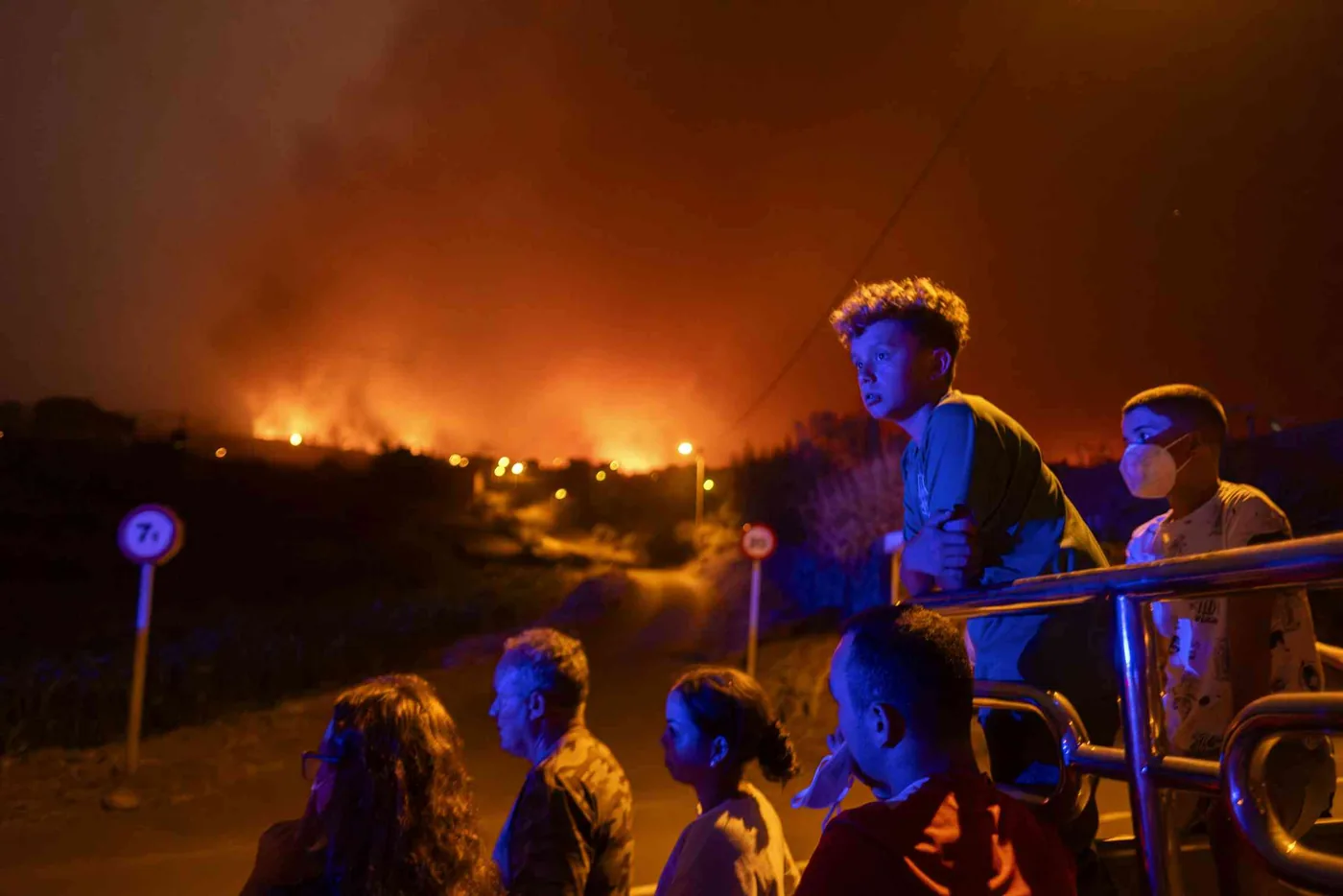
Recent emergencies illustrate how quickly environmental threats outgrow local response systems. In July, more than 200,000 residents fled intense wildfires near Bordeaux, representing the largest emergency departure in France since the 1940s. A few years earlier, a single massive cyclone prompted five million people to flee in Bangladesh, India, Myanmar, and Bhutan. Millions fled additional war zones in Palestine, Lebanon, Afghanistan, and Ukraine, as reported by The Conversation [1].
Global records confirm that the scale of displaced populations has grown steadily in every region of the world. Between 2015 and 2022, international agencies documented that hazard relocations occurred repeatedly in vulnerable regions, showing that recurring climate shocks weaken local economic stability and exhaust municipal emergency reserves. While many evacuees returned within days, millions remained far from home for months or even years. Some families still have no path back because destroyed infrastructure prevents safe return. When emergency shelter ends, displaced people face scarce jobs, missing identification papers, and lost community support. Adapting to these prolonged dislocations connects directly to understanding climate change causes and solutions in coastal settlements and agricultural valleys where sea level rise and recurrent flooding make historical hometowns permanently unviable. Without coordinated public policies, short-term relocation camps gradually turn into permanent settlements that trap impoverished families in persistent hardship.
Why Temporary Shelters Fail
Emergency planners usually view rapid departure as a temporary safety measure. Flames advance rapidly. Yet treating disaster evacuation as a simple logistics task hides deeper social and economic harms that follow departure. Where do families sleep once initial shelter operations conclude? These disruptions show that moving people creates a prolonged social process rather than a brief pause in normal life [1].
Prolonged absence from home gradually strips families of their independence and economic security. Displaced people often exhaust their personal financial reserves while paying for private rent, food, and basic medicine in unfamiliar towns where commercial goods cost far more than in their rural home villages. If breadwinners cannot find work because local permits do not transfer, households slip into poverty. The emotional strain deepens steadily as months pass without reliable news regarding local reconstruction efforts, property compensation schemes, or infrastructure restoration from municipal disaster management departments [1]. Dislocation dissolves the informal support networks that neighbors rely on during difficult times. When families lose daily contact with friends and relatives, managing routine emergencies becomes far more challenging.
Legal rights become equally precarious when evacuees cross regional borders or international boundaries. Civil status documentation is easily lost during sudden departures, leaving parents unable to prove property ownership, access emergency state payments, or enroll their dependent children in regional public schools. Without clear residency rights, people cannot access public healthcare or employment benefits in host jurisdictions. McAdam pointed out that governments celebrate successful departures while ignoring the subsequent legal marginalization of displaced communities [1].
Refugee Law Born in Crimea
History reveals that mass evacuations have shaped international refugee policy for more than a century. In late 1920, as anti-Bolshevik armies collapsed during the Russian civil war, nearly 150,000 Russians fled Crimea across the Black Sea with British and French naval assistance to escape imminent military retaliation. The primary objective was keeping civilians and soldiers alive amid military retreat. But when rescue ships deposited the masses in Constantinople (present-day Istanbul), an acute humanitarian emergency began. Constantinople was overwhelmed. The evacuees arrived with no recognized legal identity, no right to work, and no safe prospect of returning home [1].
Conditions in the temporary camps deteriorated rapidly as food supplies ran low and infectious diseases spread among crowded tents. Food rations dwindled quickly. Local Ottoman authorities and allied military officers had neither the budget nor the legal mandate to support thousands of stranded families permanently. The crisis proved that getting people to safety was only the first step of humanitarian relief. Without legal status and employment opportunities, safe harbors quickly turn into open-air holding centers [1].
The Crimea evacuation compelled European powers to invent new mechanisms for global cooperation. League of Nations High Commissioner Fridtjof Nansen helped design identity certificates, later called Nansen passports, which allowed displaced Russians without nationality to travel legally to participating European nations. Contemporary diplomats argued that refugees needed to be “evacuated” once more to destinations where they could obtain productive employment and rebuild their households. This coordinated policy of onward movement showed that evacuations were central to early refugee protection long before governments drafted the 1951 Refugee Convention [1].


Wartime Lessons From Child Relocations
The mass relocation of children during the first half of the twentieth century in Europe revealed another painful dimension of emergency movements. European governments transported hundreds of thousands of boys and girls away from metropolitan centers to protect them from aerial bombardment, political persecution, and food shortages caused by military blockades. Those emergency transfers succeeded in saving young lives from lethal violence, but long-term separation from parents and familiar communities produced deep psychological trauma. Separation caused lasting trauma. Child development specialists and social workers documented lasting emotional distress, identity confusion, and behavioral difficulties among evacuated youth. Experience demonstrated that emergency measures designed for survival can unintentionally inflict deep emotional harm on vulnerable dependents [1].
In response to those wartime experiences, international bodies incorporated specific legal protections into post-war human rights treaties. Legal frameworks set rules stating that preserving family unity is a fundamental duty during humanitarian crises. Treaties also affirmed a strong legal presumption that cross-border evacuation of children should occur only under exceptional circumstances to protect the best interests of the child. These legal standards emerged because health authorities recognized that personal safety cannot be separated from emotional and developmental well-being, an insight that applies directly when contemporary emergencies uproot vulnerable households [1].
Managing Disaster Evacuation in Warmer Climates
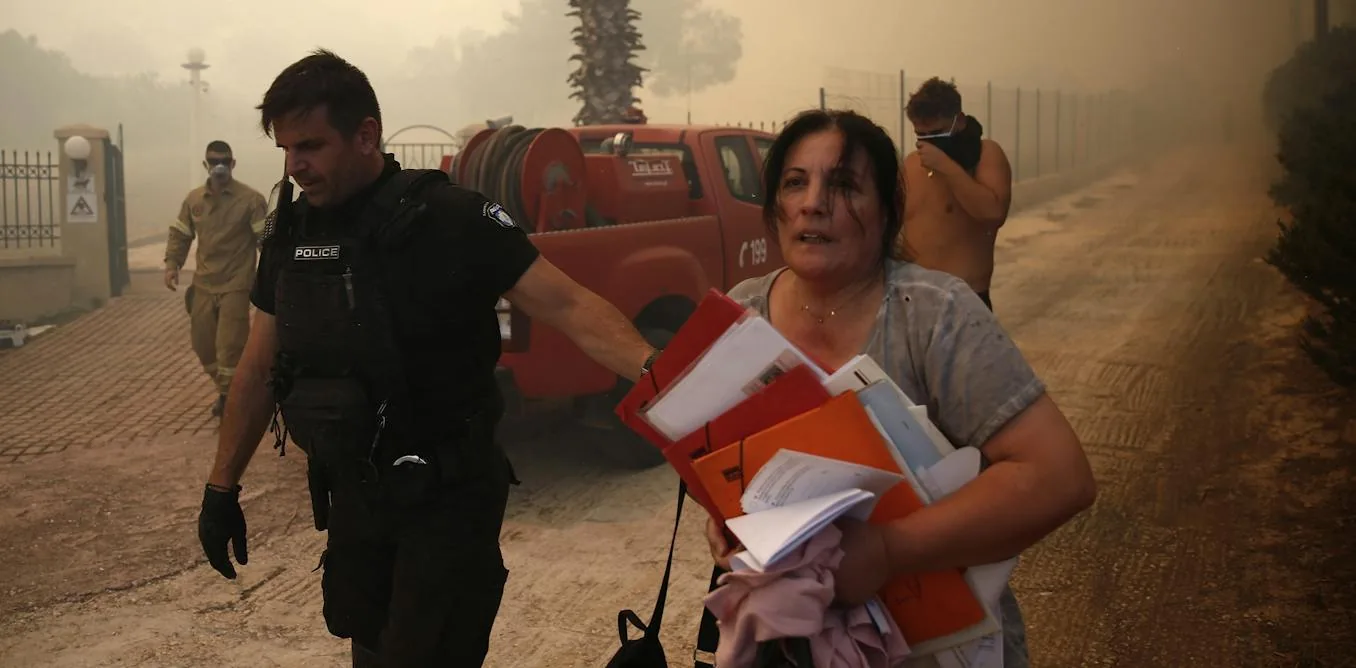
Fast changes in global weather systems are now producing what Jane McAdam described as “disasters on steroids”. Cyclones dump heavier rainfall, heatwaves dry out vast forests, and seasonal wildfires spread faster through dry terrain. When rapid environmental hazards intensify, organizing disaster evacuation demands extensive financial resources, transportation fleets, and intergovernmental coordination from emergency planners and municipal civil protection departments [1]. A well-organized rescue operation is evidence of a capable civil protection system, but repeated evacuations also expose structural poverty and geographic vulnerability. Marginalized groups who live in flood-prone valleys or poorly built housing bear the heaviest burden.
The dual nature of emergency evacuation creates a difficult policy paradox. Departure is not neutral. Rushing families away from active fire zones saves lives in the short term, but it simultaneously initiates a period of forced displacement. Low-income workers often lose their daily wages, informal tenants cannot claim state compensation, and undocumented residents avoid official aid stations out of fear. Disaster managers must acknowledge that emergency relocation reshapes social inequality [1].
Environmental pressures also threaten community food security and child development during prolonged shelter stays. When supply chains break down, young children face heightened risks to their daily nutrition and early growth. Research on public health emphasizes how climate change nutrition risks threaten children when families lose stable kitchens and clean water supplies. Extreme climatic patterns analyzed by climatologists—such as in studies exploring heatwave dynamics and temperature spikes—demonstrate how severe weather disrupts local farming, drinking water supplies, and school food programs over extended recovery periods. Meeting these basic human needs requires emergency managers to look beyond tents and blankets to long-term recovery.
Building Durable Resettlement Policies
Long-term recovery requires answering the same core questions that European authorities confronted a century ago. Who decides when an evacuation must occur, and what legal rights do evacuees carry when they cannot return home? If an area becomes permanently uninhabitable due to sea level rise or repetitive wildfires, temporary shelter must give way to planned resettlement. Governments must establish clear policy pathways that guarantee work rights, property restitution, and access to justice for displaced households [1].
Community participation is essential for transforming emergency response into lasting stability. Local knowledge saves lives. Top-down evacuation orders frequently overlook the specific needs of elderly residents, disabled individuals, and local indigenous groups. When displaced people participate in resettlement planning, outcomes improve for both host communities and arriving families. Dignified recovery depends on restoring social agency rather than keeping evacuees in indefinite dependence on charity rations [1].
Historical precedents provide useful insights into how protection regimes evolve during harsh environmental crises. As Jane McAdam said in her prize address, treating evacuation solely as a protective rescue ignores the long road to genuine recovery. When climate hazards force communities over regional borders, international law must offer more than emergency transport out of danger. Rather than treating disaster evacuation as an isolated emergency intervention, modern legal institutions must guarantee that displaced families obtain formal legal status, fair employment opportunities, and permanent social protection [1].
- ONLINE NEWS McAdam, J. (2026). As climate change creates ‘disasters on steroids’, it’s time we asked: what happens after an evacuation?. The Conversation. [Article Link]
APA 7: PerEXP Teamworks. (2026, November 24). Jane McAdam Links Disaster Evacuation to Global Displacement. PerEXP Teamworks. https://perexpteamworks.com/en/disaster-evacuation-prolonged-displacement-risks/


