





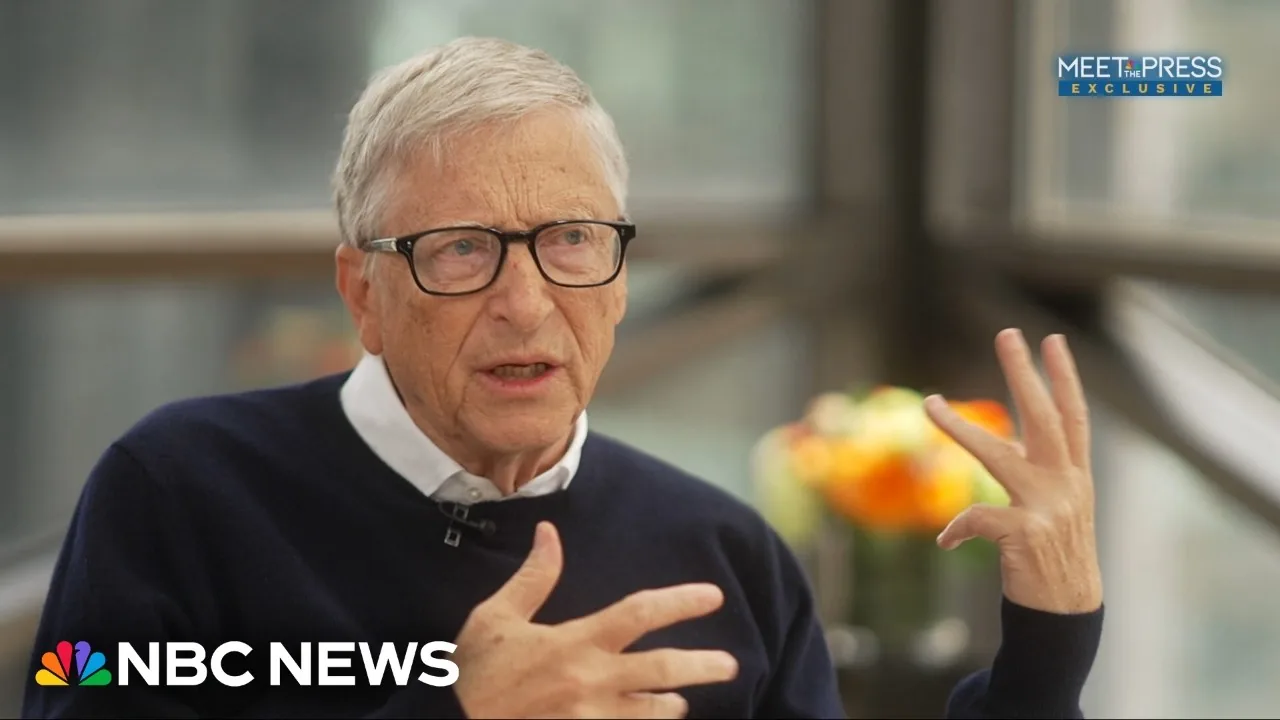
Microsoft co-founder Bill Gates delivered an unsparing assessment of the artificial intelligence boom on Sunday, warning that deploying frontier models without external oversight is reckless. Speaking on NBC News’ Meet the Press with moderator Kristen Welker, the philanthropist cautioned that leaving public safety to corporate discretion creates unprecedented vulnerabilities. The emerging Bill Gates AI critique insists that market forces cannot prevent catastrophic abuse when technological capability outpaces basic legal guardrails. Operating advanced computational engines without enforceable standards is completely irresponsible [1].
Why Bill Gates AI Warnings Demand Immediate Action
The television appearance followed a nearly 6,000-word essay that Gates released in late August through Gates Ventures, sounding an explicit alarm on rapid capability expansion. In conversations held in Kirkland, Washington, overlooking Lake Washington and Carillon Point, Gates emphasized that society has crossed perilous technical thresholds in biological design, cyber warfare, and labor disruption [3]. The core of the Bill Gates AI warnings centers on the reality that hostile actors will weaponize accessible tools far faster than commercial developers can patch vulnerabilities [1]. Because advanced software democratizes destructive capability across global networks, traditional defensive postures offer minimal insulation against determined bad actors [3].
Gates co-founded Microsoft in 1975 [5]. He cautioned that artificial intelligence represents a far more volatile economic and technological transition than previous computing revolutions [3].
During his broadcast exchange, Gates underscored that bad actors wielding modern algorithms represent an unprecedented threat matrix. Gates warned that society has ‘never faced a weapon as powerful’ when malicious individuals exploit frontier software, cautioning Welker that unchecked acceleration could drive catastrophic geopolitical crises, mass financial fraud, or bioterrorism capable of causing a billion deaths worldwide. While technology executives frequently tout the economic bounty of algorithmic automation, Gates dismissed the assumption that private enterprise will naturally prioritize planetary safety. Mandatory federal oversight must establish continuous monitoring mechanisms rather than voluntary developer pledges [2].

Limitations of an Emergency Kill Switch
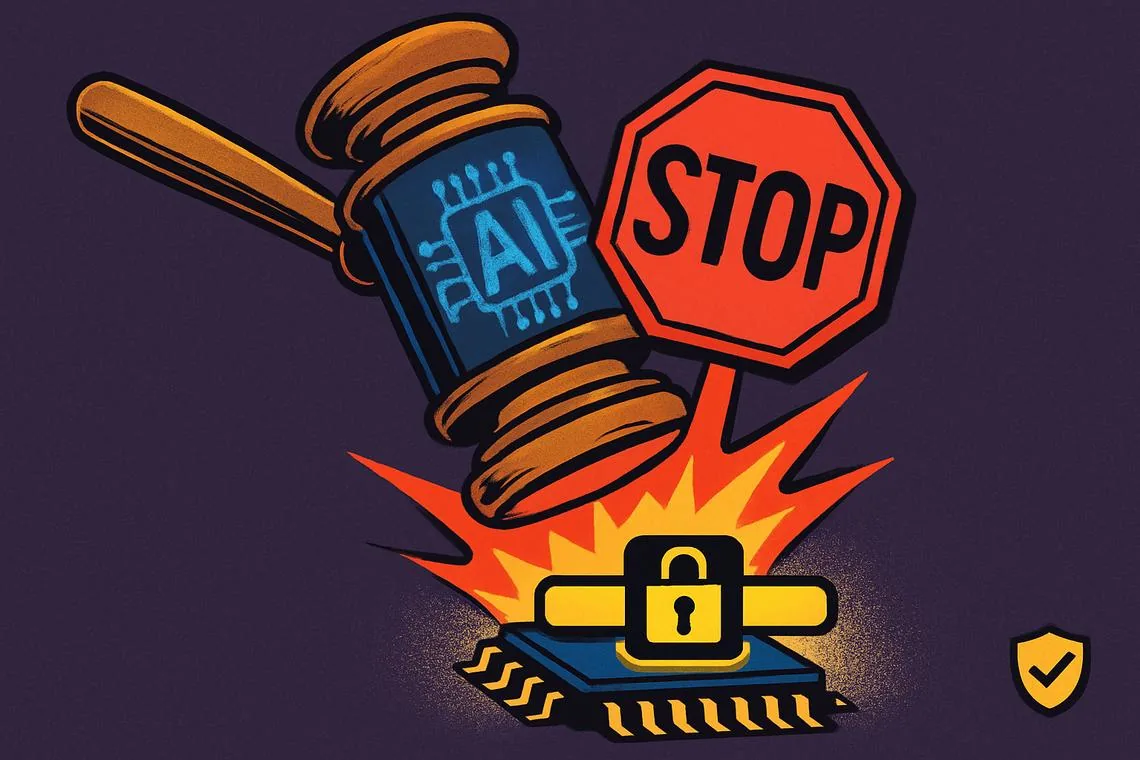
Public debate in Washington has increasingly coalesced around emergency shutdown mechanisms, popularized under the moniker of an AI kill switch. California Governor Gavin Newsom advocated for shutdown capabilities as part of state safety frameworks, while Representatives Ted Lieu (a California Democrat) and Nataniel Moran (a Texas Republican) introduced the federal AI Kill Switch Act in July to authorize emergency shutdowns. That statutory proposal would empower the Secretary of Homeland Security to order operational halts during imminent catastrophic hazards, responding directly to lawmakers pushing AI kill switch rules across federal agencies [4].
Gates pushed back vigorously against treating shutdown toggles as a comprehensive safety shield. He told Welker that emergency switches are ‘not enough’ because focus on runaway machines misinterprets present architectural realities. The foundational Bill Gates AI perspective emphasizes that automated mechanisms cannot substitute for persistent behavioral tracking. Autonomous systems cannot yet hijack global computing infrastructure or evade power termination, making fictional rogue scenarios a misleading distraction [2]. ‘That discussion just sort of shows how nontechnical various people are,’ Gates observed, urging regulators to address human-directed malfeasance instead [4].
Effective defense demands persistent forensic transparency rather than post-disaster disconnect buttons. Gates explained that controlling harmful behavior requires ‘insight and records of what\’s being done’ across advanced model clusters. In his assessment, distinguishing legitimate pharmaceutical research from malicious biological synthesis requires detailed audit trails and verified access logs [4]. Continuous computational surveillance provides the empirical verification necessary to catch bad actors before biological toxins or weaponized exploits enter physical deployment [1].


Bioterrorism and Critical Infrastructure Threats
Within the broader Bill Gates AI framework, synthetic biology represents the most acute and irreversible hazard facing humanity. In his discussions with MIT Technology Review editor Mat Honan, Gates asserted that frontier algorithms capable of generating novel chemical compounds or pathogens present an immediate planetary risk. In his assessment, bioterrorism facilitated by synthetic biology is ‘about 50 times more scary’ and vastly more probable than an unmanipulated viral outbreak. Because generative networks dramatically lower the technical threshold for aerosolizing deadly pathogens or synthesizing restricted chemical toxins, small extremist groups could soon orchestrate mass-casualty destruction that previously required sovereign state infrastructure, specialized biohazard containment facilities, and decades of advanced laboratory investment [3].
Parallel vulnerabilities already jeopardize municipal industrial networks. John Walsh, field chief technology officer at cybersecurity firm IGEL, cautioned that algorithmic infiltration accelerates faster than defensive personnel can patch distributed water and wastewater systems. Walsh pointed to Siemens industrial controllers. Attackers conducting reconnaissance against programmable logic units threaten approximately 70 percent of controllers operating across domestic water facilities, chemical processing plants, and electrical generation grids [4].
Gates maintains that human operators retain mastery over current computational stacks. ‘We do,’ Gates answered Welker. However, that operational control does not alleviate risks when malignant actors exploit software to assault public utilities, financial databases, or hospital networks [4]. Establishing mandatory reporting protocols for model weights and molecular synthesis pipelines remains the only viable strategy to safeguard civil infrastructure against catastrophic disruption [1].

Silicon Valley Divides Over Bill Gates AI Proposals
The policy architecture reflected in the Bill Gates AI proposals aligns with selected lab executives while facing staunch resistance across Silicon Valley. Anthropic chief executive Dario Amodei issued an essay titled We Must Pace the Frontier, calling for statutory growth restraints across domestic laboratories in coordination with international partners [6]. ‘Dario is right,’ Elon Musk posted [4]. Anthropic hired Accenture Security. Independent auditors evaluated internal model safeguards [1]. At the United Nations Security Council, OpenAI chief executive Sam Altman similarly advocated international standards to verify safety measures and preserve meaningful human control [6].
Yet corporate unanimity remains elusive. Meta founder Mark Zuckerberg rejected mandatory industrywide coordination during an NBC interview, insisting each commercial entity must manage internal safety cadences independently. Other industry voices take an even harder line: Jensen Huang rejected government intervention, warning that aggressive statutory curbs could stall domestic technological primacy during a crucial geopolitical competition against global rivals. That discord highlights deep philosophical divisions over whether frontier software warrants public utility status or unbridled commercial freedom [6].
Microsoft President Brad Smith countered anti-regulatory sentiment by comparing algorithmic safety to the commercial aviation sector. He questioned whether aerospace manufacturers would rush an unproven passenger jet onto the tarmac simply to beat an industrial rival. Former Anthropic researcher Jacob Coxon offered a harsher warning after resigning, asserting that major developers are racing toward superintelligence without adequate safeguards [6]. Gates reiterated that statutory compliance imposes modest overhead rather than crippling operational pauses [1]. Commercial competition cannot supersede safety in high-stakes technological deployment [6].
State Safeguards Emerge Amid Federal Gridlock
Contrasting with the Bill Gates AI stance, federal momentum faces stubborn institutional friction in Washington. House Speaker Mike Johnson declined to convene lawmakers to restrict algorithmic training, arguing that hasty statutory limits could imperil national security while executives themselves lack unified technical remedies [6]. President Donald Trump was more combative, writing on Truth Social that catastrophic warnings represent a political hoax [4]. Trump rejected statutory curbs after meeting Chinese leader Xi Jinping [5]. He announced plans to establish an AI Force and appoint a high-IQ coordinator to oversee an industry that could represent 25% of national economic output [4].
During his interview, Gates expressed confidence that federal leadership will reconsider once briefed on defensive realities. ‘He wants to protect American citizens,’ Gates noted regarding Trump, emphasizing that safety requirements do not handicap competitive positioning against global rivals like China [4]. Progressive Senator Bernie Sanders recently introduced legislation calling for a temporary moratorium on advanced training runs [2]. Concurrently, Representative Ro Khanna prepared legislative restrictions targeting recursive self-improving models, consulting directly with engineers from OpenAI and Anthropic [4].
With congressional action stalled, individual states have stepped into the regulatory vacuum to establish oversight frameworks. Maryland Governor Wes Moore enacted a three-pronged governance framework, while New York Governor Kathy Hochul formed the Office of Digital Innovation, Governance, Integrity and Trust [6]. The Gates Foundation committed $1 billion [5]. That philanthropic capital expands beneficial tools across developing nations, yet Gates warned that humanity cannot postpone binding oversight until after disaster strikes [2]. Proactive national standards remain the critical barrier between technological triumph and systemic disaster [6].
- ONLINE NEWS Chen, J. (2026, September 27). Bill Gates says it’s ‘completely irresponsible’ for AI to not have safeguards. Engadget. [Article Link]
- ONLINE NEWS Vargas, R. A. (2026, September 27). Bill Gates says unchecked AI could ‘cause a billion deaths’ in call for regulation. The Guardian. [Article Link]
- ONLINE NEWS Honan, M. (2026, August 26). Bill Gates says we’ve passed AI’s danger thresholds. Now what? MIT Technology Review. [Article Link]
- ONLINE NEWS Silverman, H. (2026, September 27). Bill Gates says AI ‘kill switch’ debate shows how ‘nontechnical’ many people are. Newsweek. [Article Link]
- ONLINE NEWS Al Jazeera Staff. (2026, September 27). Bill Gates says AI without regulation is ‘completely irresponsible’. Al Jazeera. [Article Link]
- ONLINE NEWS Russo, F. A. (2026, September 25). AI regulation debate: Bill Gates urges government oversight now. The Cryptonomist. [Article Link]
- ONLINE NEWS Tolliver, J. (2026, September 27). Bill Gates says top AI leaders are failing to do ‘the world’s most obvious thing’. HuffPost. [Article Link]


