




How can long-duration space expeditions sustain human vitality millions of miles from clinical infrastructure? Evaluating advanced space health technology aboard the International Space Station provides essential answers as orbital crews prepare for complex handovers between incoming and departing spacecraft. During Expedition 75, flight engineers conducted autonomous artificial intelligence ultrasound scans, processed complex immunological specimens, and tested countermeasure garments designed to protect cardiovascular performance. Station residents are actively balancing these automated clinical trials with spacecraft packing procedures as NASA’s SpaceX Crew-13 mission targets launch no earlier than October 1 [1].
- How Does Space Health Technology Guide Autonomous Ultrasound?
- Tracking Immune Shifts With Blood and Saliva Assays
- How Does Astronaut Health Monitoring Counter Fluid Shifts?
- Cellular Cartilage Cultures and Diagnostic Bio-Monitors
- Can Space Health Tech Prevent Deep Space Medical Risks?
- Operational Handovers and Emergency Evacuation Drills
How Does Space Health Technology Guide Autonomous Ultrasound?
Automated space health technology guides autonomous ultrasound examinations by pairing augmented reality markers on tablet computers with artificial intelligence algorithms that verify internal organ visualization. Inside the Columbus laboratory module, NASA astronaut Jessica Meir and European Space Agency (ESA) flight engineer Sophie Adenot evaluated the EchoFinder-2 investigation by taking turns scanning each other. Augmented reality software projected optical targets on a screen to confirm the precise placement of the Echo ultrasound probe against the body, while onboard neural algorithms confirmed whether the device properly distinguished targeted organs. An ultrasound technician on Earth monitored the session in real time to evaluate how effectively orbital crews can execute diagnostic imaging without direct clinical intervention [1].
Autonomous diagnostic capability becomes essential as long-duration exploration missions push beyond low Earth orbit toward lunar habitats and interplanetary transit corridors where radio communication latencies make tele-mentored medical consultations impossible. CIPHER spans fourteen human research experiments. During Expedition 70, astronaut Matthew Dominick configured similar diagnostic ultrasound hardware and blood pressure monitors in orbit to scan NASA flight engineer Loral O’Hara for that comprehensive multi-year biological study [3]. Validating automated probe guidance ensures that deep space explorers can identify acute internal trauma or organ pathologies independently, shifting orbital medicine from reactive ground consultation toward resilient, crew-managed health maintenance [1].
Tracking Immune Shifts With Blood and Saliva Assays
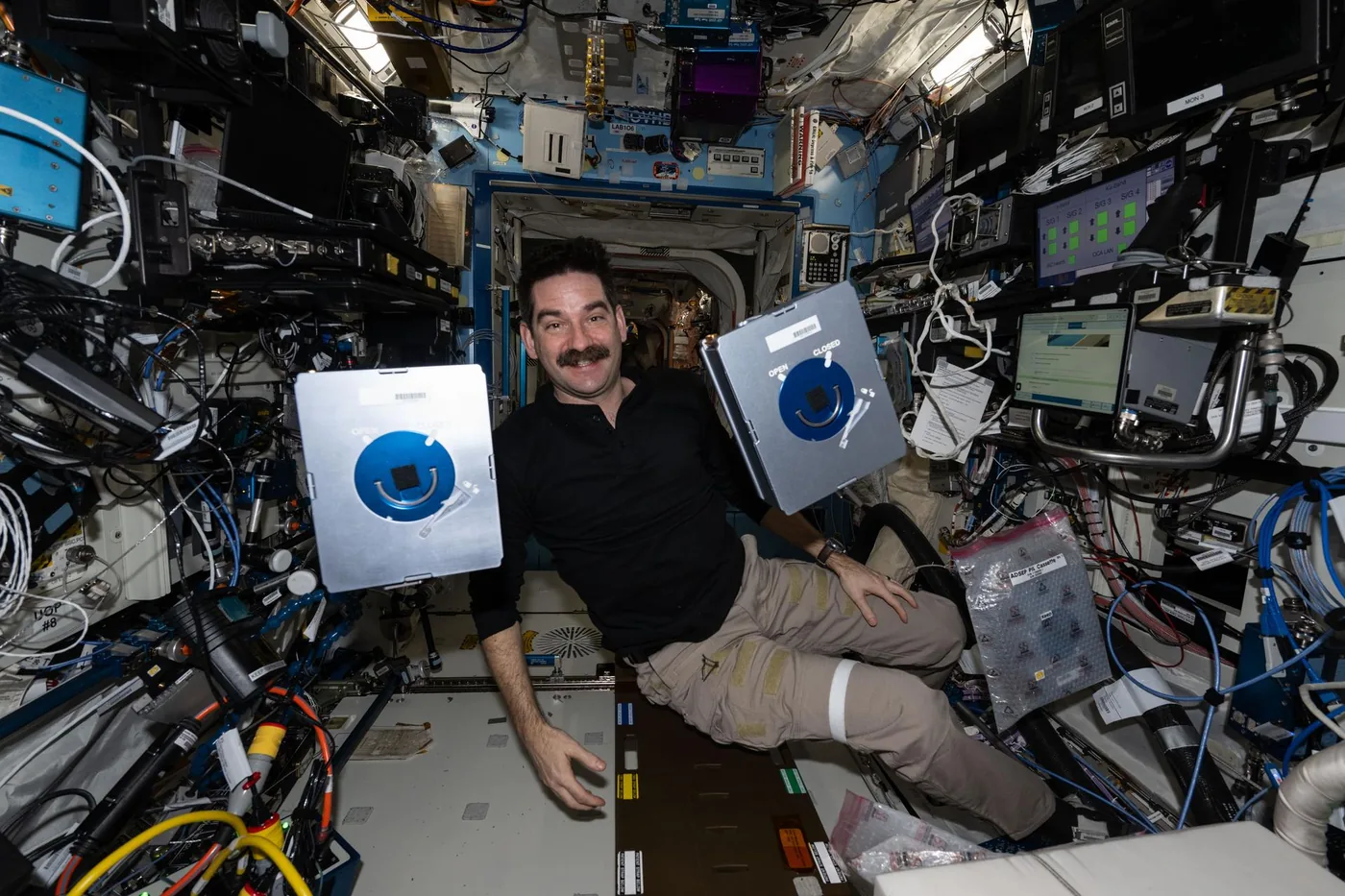
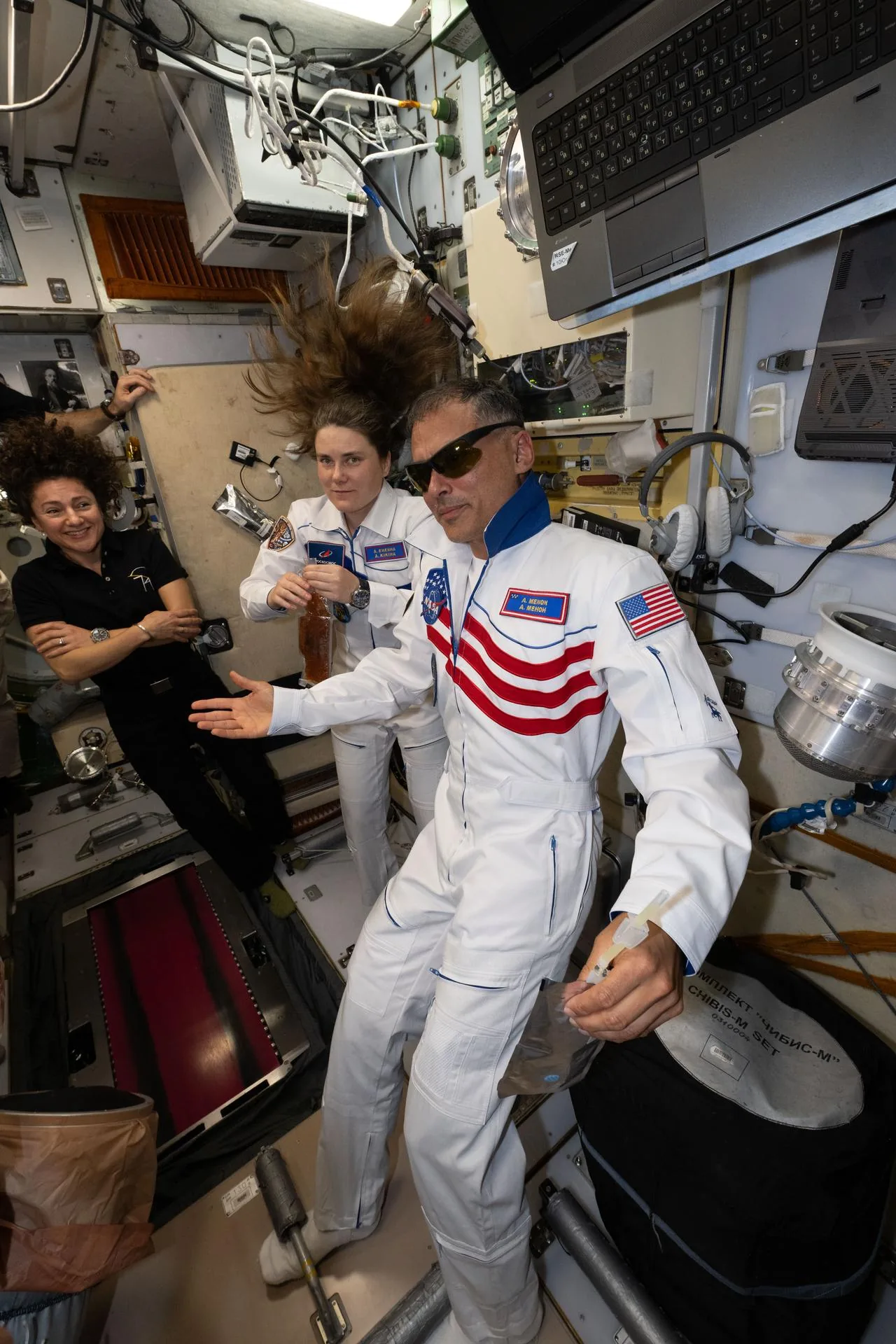
Prolonged exposure to microgravity alters human immune signaling, prompting orbital researchers to process biochemical specimens directly aboard the space station. Menon drew his own blood. Working inside the Harmony module, NASA flight engineer Anil Menon processed his blood specimens for the Immunity Assay investigation by placing the tubes inside a centrifuge to separate distinct cellular fractions before transferring them into an ultra-cold science freezer. Flight engineer Jack Hathaway supported the study by gathering hardware components and loading cellular samples into the Kubik incubator, an insulated facility designed for microgravity biological cultivation. Tracking cellular reactivity in orbit helps flight surgeons understand how continuous spaceflight stressors degrade antimicrobial defenses during extended interplanetary transit [1].
Complementary immunological surveillance extended to oral biology as Roscosmos flight engineer Anna Kikina gathered saliva specimens to determine how mucosal antibody concentrations respond to environmental spaceflight conditions. Concurrently, Hathaway retrieved fluid samples from the Destiny laboratory’s Exploration Potable Water Dispenser (xPWD) and placed them inside incubators so terrestrial engineers can verify bacterial purity and mechanical reliability for future deep space life support architectures. These microbial and immunological investigations parallel ongoing astronaut ageing research, which examines how persistent orbital radiation and cellular strain accelerate systemic physiological decline over prolonged mission timelines. Both research efforts clarify how cellular mechanisms adapt to weightlessness without terrestrial gravitational benchmarks [1].
How Does Astronaut Health Monitoring Counter Fluid Shifts?
Targeted astronaut health monitoring counters microgravity fluid shifts by deploying specialized pneumatic suits that apply negative pressure to pull cephalic blood volumes back into the lower extremities. In weightlessness, bodily fluids drift cephalad toward the head and chest because the natural hydrostatic pressure gradient created by Earth’s gravity disappears. Kikina assisted Fedyaev during tests. Roscosmos flight engineer Andrey Fedyaev evaluated the Russian-designed lower body negative pressure suit to mitigate this upward redistribution and ease cardiovascular readjustment prior to concluding his nearly eight-month orbital deployment. Mechanical lower-body suction stimulates autonomic vascular reflexes, conditioning the circulatory system for the return to planetary gravity [1].
During Expedition 73, Roscosmos flight engineer Kirill Peskov conducted similar evaluations with an experimental negative pressure suit while Alexey Zubritsky assisted with operational telemetry to measure fluid redistribution away from the cranial cavity [2]. Fluid pressure pooling inside the skull directly affects vision by flattening the posterior globe and inducing optic disc edema during long orbital tours. To monitor these microvascular alterations, Jack Hathaway deployed high-resolution medical imaging inside the Harmony module to examine Jessica Meir’s retina, cornea, and lens as terrestrial ophthalmologists evaluated the optical video feed in real time. Hathaway scanned Mikaev’s peripheral veins. These coordinated vascular checks demonstrate how mechanical suction suits and ultrasound diagnostics shield orbital vision from intracranial swelling [4].


Cellular Cartilage Cultures and Diagnostic Bio-Monitors
Microgravity provides a unique research environment where biological tissues assemble three-dimensionally without the gravitational sedimentation that restricts terrestrial cultures. Inside the Kibo laboratory module, Jessica Meir cultivated cellular cartilage specimens within the Life Science Glovebox to investigate tissue engineering processes under persistent microgravity conditions. Gravitational unloading enables chondrocytes to form natural matrix architectures that prove impossible to synthesize in Earthbound laboratories, yielding structural insights for treating articular joint trauma and degenerative osteoarthritis. Sophie Adenot supported the cartilage trials by retrieving incubated cell samples and delivering them to Meir for fluorescent microscopic evaluation [5].
Diagnostic innovations aboard the station also encompass continuous wearable physiological tracking to record vital biometrics without interrupting operational duties. Williams donned the Mobil-o-Graph apparatus. Developed by the Canadian Space Agency, the Bio-Monitor vest and headband recorded cardiovascular parameters across a 24-hour recording session while NASA astronaut Chris Williams measured arterial tension with the Mobil-o-Graph monitor [4]. During Expedition 73, Anne McClain wore the identical biometric system during intensive physical workouts on the Advanced Resistive Exercise Device inside Tranquility, demonstrating how three records track astronaut exercise across variable orbital workloads [6].
Cosmonauts Sergey Kud-Sverchkov and Sergei Mikaev attached cutaneous laser sensors to measure micro-circulatory capillary blood flow inside the orbital complex [5].
Can Space Health Tech Prevent Deep Space Medical Risks?
Advanced space health tech mitigates deep space medical risks by providing autonomous diagnostic tools that function independently of delayed communications with terrestrial mission control centers. When astronaut crews travel toward Mars, two-way radio transmission delays will reach up to forty minutes, making real-time telemedicine consultation impossible during clinical emergencies. To ensure autonomous diagnostics, flight engineer Sophie Adenot evaluated the portable Aphrodite saliva testing unit to analyze physiological biomarkers rapidly without returning chemical samples to Earth [5]. Simultaneously, Jessica Meir deployed the PhysioTool apparatus to measure Adenot’s mental acuity and cognitive performance during high-tempo orbital shifts [4].
Metabolic investigations extend into gastrointestinal function, where microgravity alters nutrient absorption and shifts normal intestinal motility patterns. Roscosmos cosmonauts Sergey Ryzhikov and Alexey Zubritsky performed sequential ultrasound examinations of their stomachs both on an empty stomach and after breakfast to record postprandial digestive motility [2]. Jonny Kim evaluated haptic flight interfaces. Working inside the Destiny module, Kim operated robotic control consoles paired with touchscreens, force-feedback haptics, and virtual reality goggles to evaluate how isolation degrades fine motor precision during planetary surface simulations [6]. These combined physiological trials address the long-term hazards cataloged by NASA space biology programs preparing for Mars expeditions [7].
Operational Handovers and Emergency Evacuation Drills
Scientific experimentation aboard the station proceeds in tandem with demanding structural maintenance and logistics management. Progress 96 delivered fresh station supplies. Roscosmos flight engineer Pyotr Dubrov unpacked cargo crates containing food, propellant, and biological experiment modules delivered to the orbital complex by the Progress 96 resupply craft [1]. Concurrently, Jack Hathaway entered the Bigelow Expandable Activity Module (BEAM) attached to Tranquility to replace internal sensor batteries and retrieve experimental hardware originally installed on April 16, 2016. NASA astronaut Chris Williams inspected safety tethers inside the Quest airlock following his June 30 spacewalk with Meir, while replacing air ducts and verifying ventilation airflow in Columbus sleep quarters [5].
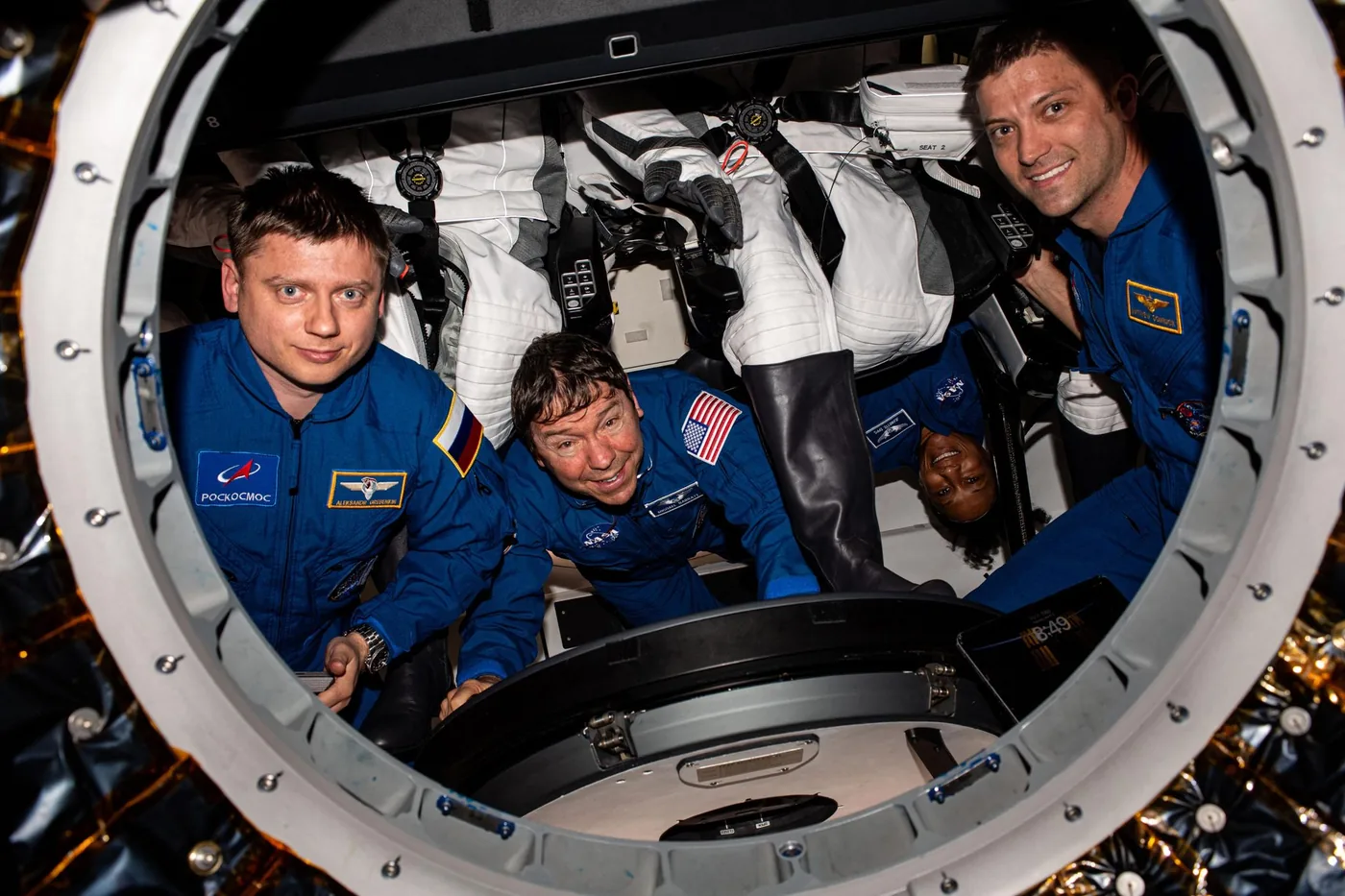
Rotation preparations are accelerating as the SpaceX Crew-12 team concludes its six-month orbital mission aboard the laboratory. Station commander Jessica Meir, pilot Jack Hathaway, Sophie Adenot, and Andrey Fedyaev packed personal cargo into their SpaceX Dragon spacecraft ahead of NASA’s SpaceX Crew-13 arrival, scheduled no earlier than October 1. Before departure, the quartet completed emergency drills with Anil Menon, testing respirator masks and reviewing evacuation protocols inside the Soyuz MS-29 spacecraft alongside Anna Kikina and Pyotr Dubrov [1]. These operational transitions reflect the meticulous logistics and flight safety milestones detailed during the NASA SpaceX Crew-12 return briefing.
Anne McClain completed her second spaceflight. Reflecting on international coordination during earlier Expedition 73 preparations, McClain emphasized: “There’s always a massive team on the ground, somewhere around the world, that is having to work really hard to keep the train on the tracks” [2]. That continuous ground support enables station residents to validate autonomous space health technology, execute intricate crew handovers, and pioneer self-reliant clinical tools that will safeguard human explorers across future deep space voyages [1].
- PRESS RELEASE Garcia, M. A. (2026, September 23). Crew Studies Advanced Health Tech and Gears Up for Next Crew Swap. NASA. [Article Link]
- PRESS RELEASE Garcia, M. A. (2025, July 25). Crew Swap Preps Underway as Health and Robotics Research Wrap Week. NASA. [Article Link]
- ONLINE NEWS O’Neill, M. (2024, March 7). Space Station Crew Swap Underway Amid Advanced Zero-Gravity Science Experiments. SciTechDaily. [Article Link]
- ONLINE NEWS Cosmic Chronicles. (2026, July 21). Biomedical Research, Crew Swap Operations Pack Busy Day Aboard Station. Cosmic Chronicles. [Article Link]
- ONLINE NEWS Cosmic Chronicles. (2026, July 7). More Cartilage, Blood Pressure Studies on Station as Crew Swap Preps Begin. Cosmic Chronicles. [Article Link]
- ONLINE NEWS Global People Daily News. (2025, July 24). Robotics, Exercise Studies Improving Space Missions as Crew Swap Nears. Global People Daily News. [Article Link]
- WEBSITE MedicalSchool.tv. (2025, April 10). Crew Studies Advanced Tech, Space Biology Before Next Crew Departs. MedicalSchool.tv. [Article Link]
APA 7: PerEXP Teamworks. (2026, September 24). Station Crews Test Space Health Technology Ahead of Orbital Swaps. PerEXP Teamworks.


