



Wild bull tusker Kavantissa died on Oct. 16 after suffering gunshot injuries in northwestern Sri Lanka, sparking widespread grief among rural residents and renewed public scrutiny of state conservation management. The animal was known for his calm behavior and regular movements near Galgamuwa, where local travelers frequently stopped to watch him cross main transit roads. His demise prompted street protests outside government offices in Colombo and triggered calls from wildlife scientists for systematic habitat protection rather than emergency medical interventions for solitary animals [1].
Death of Tusker Kavantissa in Galgamuwa
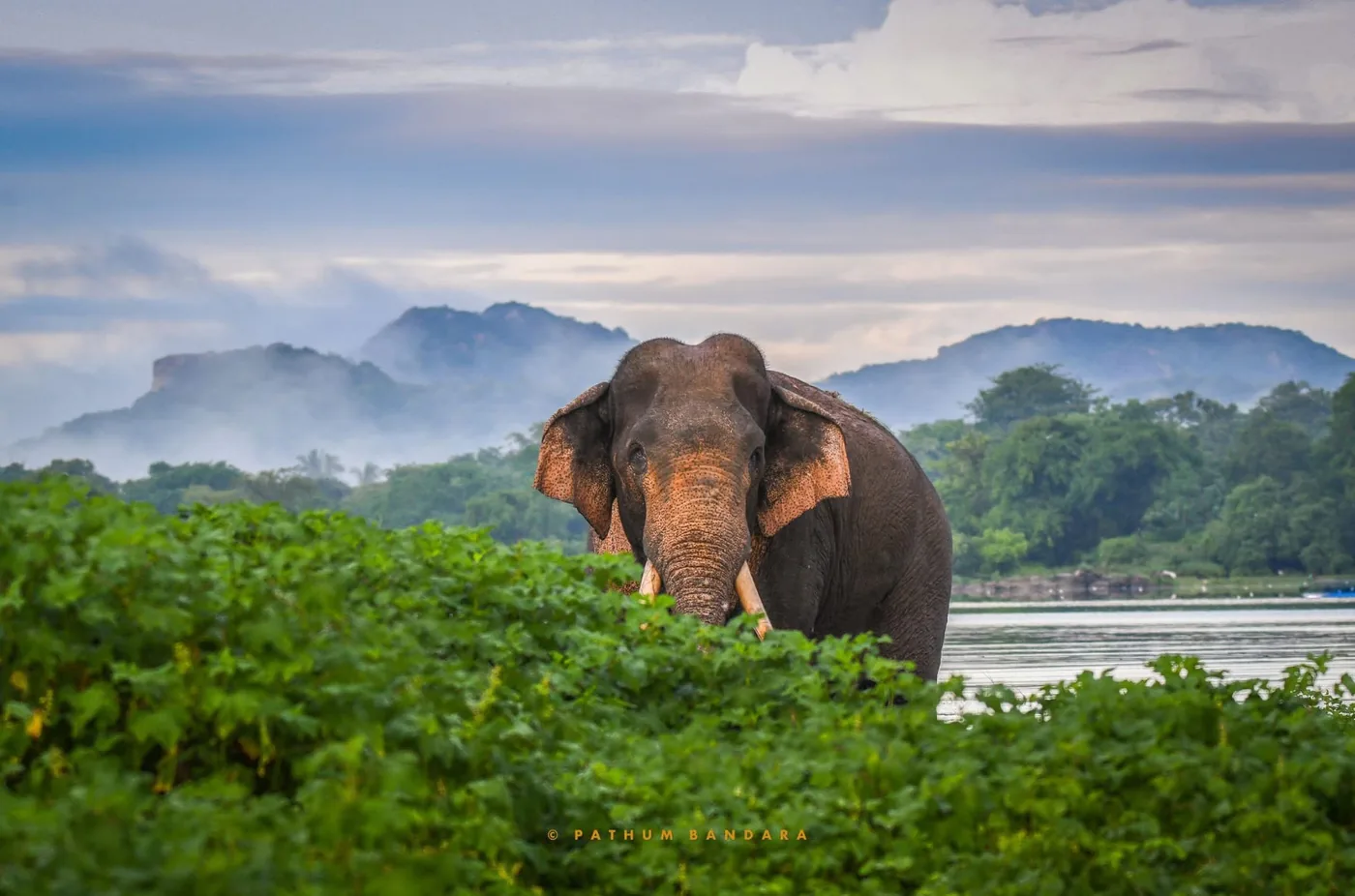
The bull took his name from King Kavantissa, an ancient monarch who ruled Ruhuna in southern Sri Lanka during the second century B.C.E. Considered the tallest wild elephant on the island, he roamed agricultural boundaries in the North Western Province without attacking village farmers [2].
Local resident Rathnayake Mudiyanselage Jayathilaka Bandara and his neighbor Kumara spent years observing the bull as he led family herds across railway tracks between Galgamuwa and Ambanpola. Kumara assisted with field tracking. Bandara explained that the animal would stand patiently at forest edges until younger elephants crossed safely before he stepped onto the road. “Sometimes it would pause before crossing the road and journey toward the nearby Palukadawala tank,” Bandara told Mongabay, describing how tusker Kavantissa would occasionally push against an electric fence without showing anger toward human onlookers who gathered to photograph his movements. The regular sight of the bull at railway crossings turned him into a popular subject on national social media channels [2].
The animal belonged to the subspecies Elephas maximus maximus, an endangered island herbivore whose feeding ranges overlap directly with rural paddy fields. Large crowds traveled to Kasikote each week to witness his twilight crossings. This public visibility meant that news of his sudden injury travelled quickly across the country in late September [2].
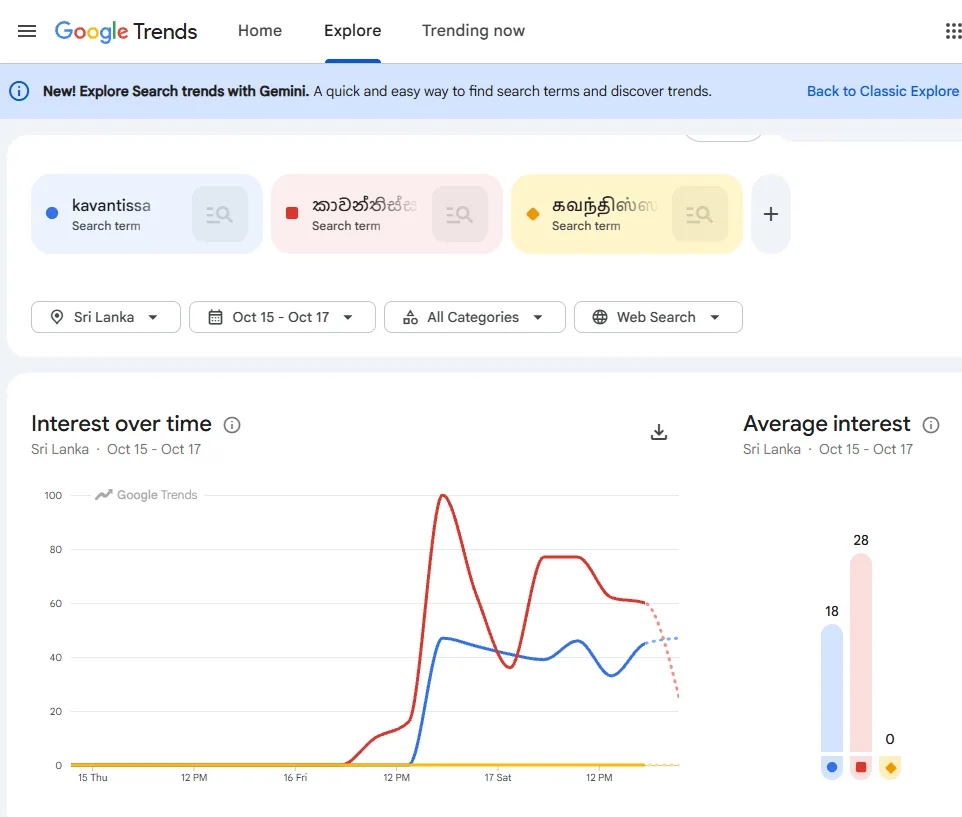
Timeline of Veterinary Care and Public Scrutiny
Maha Galgamuwa reported the limping. Wildlife trackers first spotted the bull in pain on Sept. 22 while he was in musth, a biological state of elevated testosterone. The Department of Wildlife Conservation (DWC) began medical treatment two days later by firing antibiotic darts and sedating him to examine his wounded right leg [1].
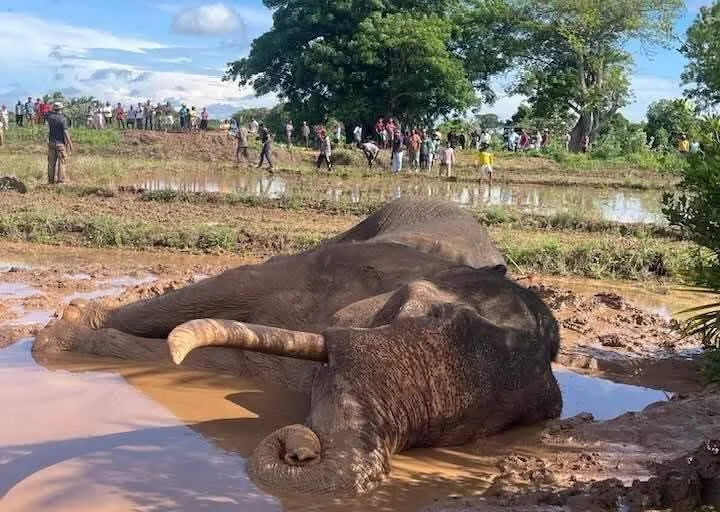
Although department officers reported an encouraging initial response, the animal disappeared into dense forest cover and eluded search teams until Oct. 2. His physical condition deteriorated markedly over the next three days, as observers documented severe diarrhoea in tusker Kavantissa on Oct. 5 before veterinary crews resumed intervention on Oct. 6. The bull soon walked into Kala Wewa, a large reservoir located in the Anuradhapura district of North Central Province, where he stood motionless in chest-deep water and refused all food offered by rangers. Weakened by systemic infection and dehydration, he collapsed on Oct. 15 in a muddy field and proved unable to regain his footing [1].
Oct. 16 marked his death. Field veterinarians attempted emergency procedures when the bull suffered cardiac arrest during the evening hours. A veterinary surgeon climbed onto the animal’s ribcage to deliver manual cardiopulmonary resuscitation (CPR), but the elephant died at 6:18 p.m. Several political figures arrived during his final hours, including opposition leader Sajith Premadasa, who kissed the animal’s head, and environment minister Dhammika Patabendi, who inspected the site in rain [1].
Department Response and Veterinary Defense
Public criticism mounted online. Outrage spread rapidly across domestic social media platforms as wildlife enthusiasts questioned whether field veterinarians administered an excessive dose of sedatives or antibiotics. Prominent entrepreneur Dudley Sirisena offered private funding to fly foreign elephant specialists to Colombo [1].
DWC Director General Ranjan Marasinghe rejected accusations of negligence, maintaining that the veterinary team operated in a coordinated manner with external university advisers. “When an iconic tusker like Kavantissa is injured, our team of veterinarians act together as a team,” Marasinghe told Mongabay. “We also welcome opinions of other senior veterinarians in the country who excel in treating elephants, so it is a planned operation.” Former president Mahinda Rajapaksa joined citizens in publishing public tributes, while Marasinghe insisted that staff possessed adequate medical resources to manage wild emergencies. He cautioned that public anger on social media often overlooks the physical difficulty of treating adult bull elephants in untamed wetland terrain [1].
Former DWC director of wildlife health Tharaka Prasad called for a formal inquiry grounded in veterinary data rather than public rumor. Prasad noted that the onset of feeding difficulties, bowel cessation, and severe diarrhoea raised complex medical questions that required careful laboratory testing. A court-ordered post-mortem examination was scheduled to determine the precise anatomical cause of death and assess all administered medications [1].
How Illegal Firearms Threaten Wild Elephants
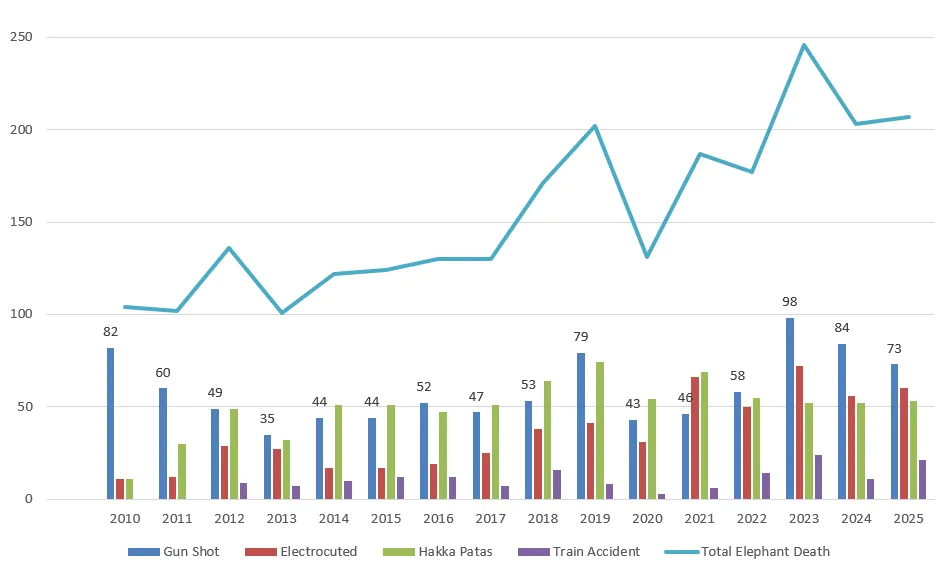
Guns kill indiscriminately. Gunshot wounds remain the leading cause of wild elephant mortality throughout rural Sri Lanka. Government records reveal that 976 wild elephants died from gunshot injuries between 2010 and May 2026, demonstrating that crude firearms used by farmers create persistent mortal risks for roaming herds [2].
Annual conservation tallies highlight how firearm injuries drive mortality spikes even as total deaths fluctuate. Sri Lanka recorded 488 wild elephant deaths in 2023 with 98 resulting from gunshots, followed by 388 deaths in 2024 with 84 from gunfire, and 455 deaths in 2025 including 79 shootings. State firearm policies have fueled controversy among wildlife groups. In 2023, then Minister of Defence Premitha Bandara Tennakoon proposed amending laws to grant farmers guns for crop security, while then Agriculture Minister Mahinda Amaraweera distributed air rifles. In 2024, Minister of Agriculture K. D. Lal Kantha faced criticism after stating landowners could protect their fields, before clarifying that his statement referred only to monkeys, peacocks, and wild boar [2].
Bathiya suffered similar gunshot trauma. The fatal leg wound suffered by tusker Kavantissa underscored how small-caliber trap guns maim animals without causing instant death. Another wild tusker named Bathiya succumbed to gunshot trauma in 2025, while wildlife officers continue to treat Agbo, a bull that survived repeated blast wounds. Surviving elephants face prolonged bacterial infections and chronic joint damage that eventually prevent normal foraging in open terrain [2].
Habitat Loss Beyond Protected National Reserves
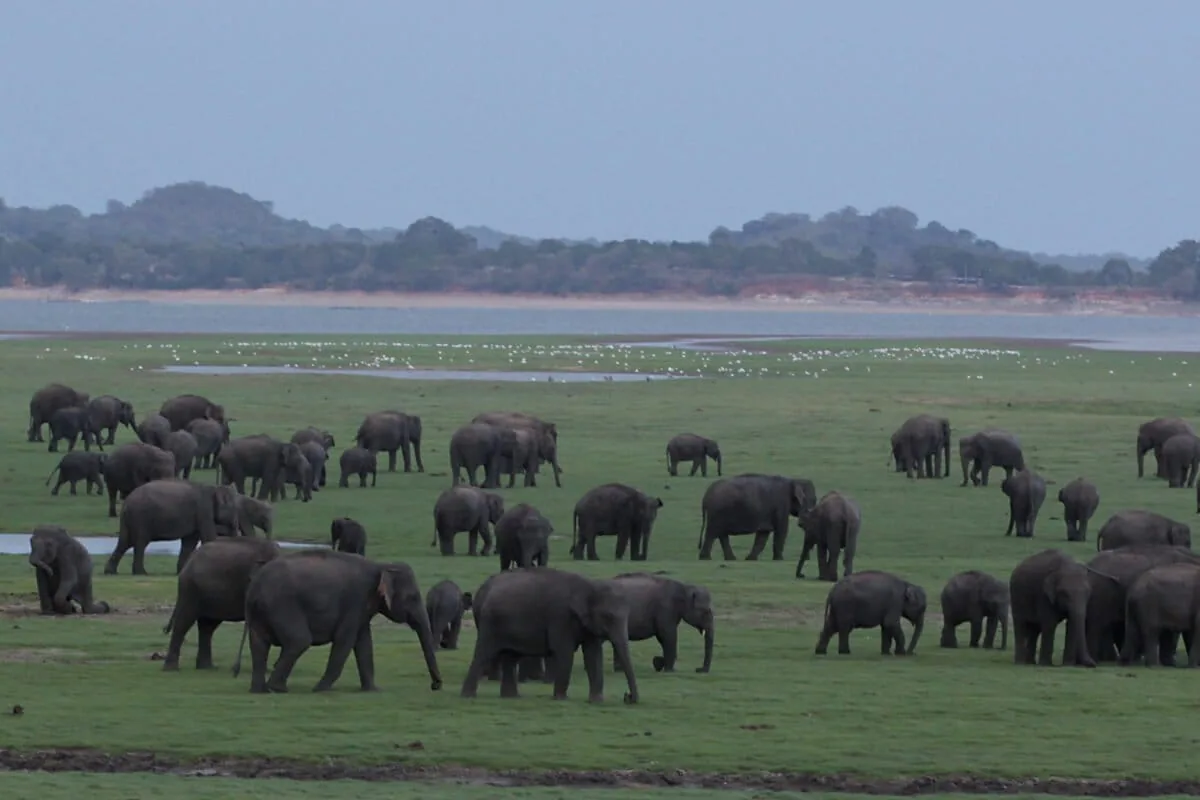
Farming encloses open corridors. Landscape fragmentation forces wild elephants to leave forested tracts and move across farming communities. Prithiviraj Fernando, chairperson of the Center for Conservation and Research (CCR), revealed that humans inhabit 82% of Sri Lanka’s total land area, leaving elephants to share the remaining 18% with encroaching developments [2].
DWC Director General Marasinghe explained that about 70% of wild elephants live entirely outside designated protected zones such as Minneriya National Park. Confining wide-ranging herds inside fenced reserves is ecologically unfeasible because natural vegetation inside sanctuaries cannot satisfy the dietary intake of thousands of adult pachyderms. Marasinghe noted that over 7,000 elephants survive across Sri Lanka today, functioning as essential ecosystem engineers that shape seed dispersal and forest structure. He said that department rangers conduct daily patrols to confiscate illegal weapons in buffer areas. Even so, agricultural expansion continues to bring cultivators and hungry elephants into direct competition over land [2].
Fernando questioned the individual escorts. He cautioned that round-the-clock guards cannot safeguard individual famous tuskers roaming across extensive home ranges. “From the perspective of its cause of death, there is no difference, as Kavantissa apparently died from a trap gun injury,” Fernando told Mongabay. “Ultimately, the only effective way to protect iconic tuskers, or any other elephant, is to protect elephants in general and address the wider threats they face [1].”
Policy Debates Following Tusker Kavantissa Loss
Protesters rallied outside headquarters. Following the loss of tusker Kavantissa, wildlife enthusiasts staged a demonstration outside DWC headquarters in Colombo to demand accountability for medical and security failures. Buddhist monks chanted Pirith blessings at memorial gatherings, while officers moved his head to a secure location to deter ivory poachers before cremating his body [1].
The state’s decision to sever and retain the tusks drew criticism from conservationists who argued that preserving ivory reinforces its perceived material worth. Fernando questioned whether keeping the tusks aligned with public efforts to honor the animal, warning that high ivory valuation endangers all wild tuskers. He argued that cremating the entire carcass in the field would deliver a clear ethical message that living pachyderms possess immense ecological significance while ivory carries no commercial value after death. For wildlife biologists, decoupling national conservation from ivory trade represents an urgent step toward reducing poaching incentives across Asian elephant range countries. Independent animal welfare advocates echoed these recommendations, calling on parliament to ban the private storage of all reclaimed tusks [1].
Sak Surin suffered similar neglect. The death also triggered international reverberations as animal rights advocates in Thailand pressured their government to recall two elephants previously gifted to Sri Lanka. The dispute recalled the 2023 repatriation of Sak Surin, an elephant gifted in 2001 known locally as Muthu Raja, following years of untreated joint neglect. To address rising public anger, the Sri Lankan government convened an expert committee on Oct. 21 to establish scientific standard operating procedures and fund a rapid response veterinary unit [2].
- WEBSITE Handunnetti, D. (2026). Sri Lanka mourns iconic tusker amid renewed calls to address human-elephant conflict. Mongabay Environmental News. [Article Link]
- WEBSITE Handunnetti, D. (2026). Death of iconic elephant in Sri Lanka pushes authorities to fast-track protection efforts. Mongabay Environmental News. [Article Link]
APA 7: PerEXP Teamworks. (2026, October 25). Sri Lanka Tusker Kavantissa Dies After Gunshot Wound. PerEXP Teamworks. https://perexpteamworks.com/en/tusker-kavantissa-death-sri-lanka/


