





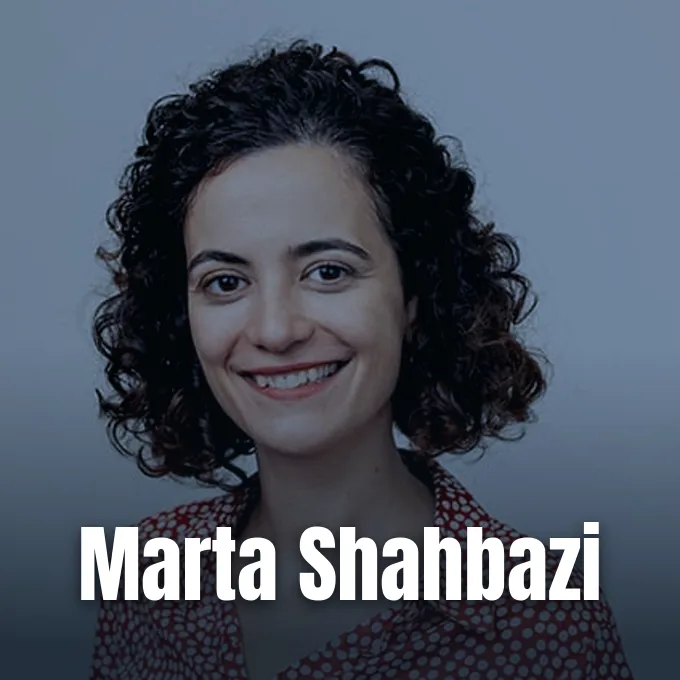
Dr Marta Shahbazi, an embryo biologist at the University of Cambridge and the Medical Research Council Laboratory of Molecular Biology, died when two passenger trains collided near Urda in central Spain. News of the Cambridge scientist train crash prompted deep grief from academic colleagues in Britain and Spain, where the forty-one-year-old researcher had travelled to accept a national science award. Spanish transport authorities confirmed that at least 69 people died in the disaster [1].
The Collision Near Urda
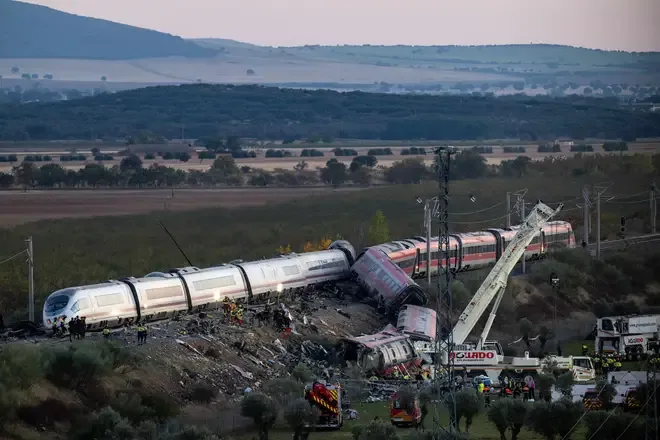
Dr Shahbazi boarded the morning Renfe AVE service in Madrid on Wednesday, October 28, following a visit with her brother Carlos Shahbazi. She was travelling south to Andalusia to attend the Spanish Society of Developmental Biology conference in El Rompido. At around 9:00 a.m., as the train traversed Toledo province near Urda, the moving Renfe train struck the rear of an Iryo service that had halted on the high-speed line linking Madrid and Seville [5]. The impact derailed several passenger coaches and sent multiple carriages tumbling down a steep trackside embankment [4].
Regional officials in Castilla-La Mancha stated that more than 540 travellers were aboard both convoys at the moment of impact. The stationary Iryo service held 146 passengers and an infant, whereas 397 riders were travelling inside the moving Renfe train when the collision occurred. More than 100 people sustained injuries in the derailment, with dozens hospitalised in serious condition in Toledo and Madrid. Emergency rescue teams worked into the night to extract survivors from damaged carriages scattered along the railway corridor [4].
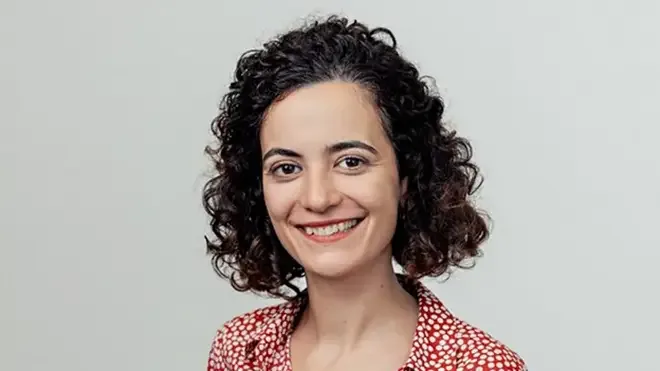
Dr Shahbazi was travelling in the front carriage of the Renfe train, where the collision caused severe damage to the passenger cabin [5]. Her employer and relatives initially reported her missing, as rescue teams combed the wreckage over forty-eight hours [4]. In the days following the Cambridge scientist train crash, her family clung to hope until Friday, but authorities later confirmed that she died at the scene [5]. Colleagues learned of her passing on Sunday after an online announcement from the Centre for Research in Molecular Medicine and Chronic Diseases (CiMUS) in Galicia, where her aunt works [3].
Early Human Embryo Research
Born in Spain, Dr Shahbazi completed her doctorate at the Spanish National Cancer Research Centre in Madrid before moving to England to pursue postdoctoral research at the University of Cambridge. She joined the city’s Medical Research Council Laboratory of Molecular Biology (LMB) in 2020 as a group leader within the Cell Biology Division. At Cambridge, she also served as an affiliate associate professor and affiliate principal investigator at the Cambridge Stem Cell Institute (CSCI). Colleagues respected her commitment to collaborative science, noting her enthusiasm for mentoring younger researchers who joined her team on the Cambridge Biomedical Campus [2].
Her research group investigated how human embryos develop during their earliest stages, focusing on the cellular self-organisation that occurs before and after uterine implantation. By creating in vitro culture systems that allowed embryos to develop beyond the stage where they attach to the womb, her team illuminated fundamental processes of mammalian embryogenesis. This line of inquiry revealed how biochemical signals and cellular forces guide cell fate decisions during early morphogenesis. Understanding these foundational steps shed light on why chromosomal errors arise in early development, offering biological insights into why many early pregnancies fail [1].

Her scientific contributions had been recognised with multiple honors and awards. The Spanish Society of Developmental Biology had announced her as the winner of its scientific excellence prize for her research into early human development. She had been travelling to collect the prize at the society’s meeting when the crash occurred. Prof Bertie Gottgens, director of the CSCI, said the institute community was deeply saddened by her passing, adding that her creativity and generosity would be missed by fellow scientists across both Cambridge institutions [2].
How the Cambridge Scientist Train Crash Affected Peers
Peers and scientific institutions reacted with shock following the Cambridge scientist train crash, highlighting her exceptional contributions to early embryology. The Medical Research Council Laboratory of Molecular Biology released a formal statement paying tribute to Dr Shahbazi after the confirmation of her death. The laboratory said: “Marta was an inspiring, talented and passionate scientist whose research shed light on the earliest steps in the development of human embryos and how errors occur that lead to failed pregnancies [1].” Leadership at the LMB noted that her death was “a profound shock and a huge loss” for the institute, adding that staff were receiving support as they navigated the tragic loss [6].
Dr Roser Vento-Tormo, a group leader at the Wellcome Sanger Institute outside Cambridge, remembered Dr Shahbazi as a close friend and long-time research partner. Vento-Tormo wrote: “Marta Shahbazi was a beautiful person: a close collaborator, a treasured friend, and an inspiration to me both as a scientist and as a mother.” She noted that the two researchers had co-supervised two graduate students and shared ambitious research goals. Vento-Tormo added that some of their collaborative research would be published in scientific journals over the coming months [1].

In Galicia, the Centre for Research in Molecular Medicine and Chronic Diseases offered condolences to Dr Shahbazi’s aunt, Dr María José Alonso, a principal investigator at the centre. The Galician institute described Dr Shahbazi as a “brilliant young researcher” whose work had elevated Spanish biomedical science abroad [3]. UK Research and Innovation, the national funding agency that oversees the LMB, also issued a statement honoring her accomplishments and praising her dedication to opening scientific opportunities for others [6].
Family Life and Motherhood
Colleagues frequently highlighted Dr Shahbazi’s ability to balance the demands of laboratory research with raising her young family [1]. According to statements from the LMB, she wrote thoughtfully about her experiences and served as an admired role model for a “mother scientist”, a phrase she often used to describe her dual commitment [2]. Dr Shahbazi was married to Mirco Petruzzelli, with whom she had two young children. Her daughter Alma is seven years old, and her son Dario is three [5].
Her family had made arrangements to join her in southern Spain following the developmental biology conference. Her children and husband were scheduled to meet her at a coastal beach resort near Huelva for a brief family holiday. Before departing Madrid on Wednesday morning, Dr Shahbazi had stayed overnight with her brother, Carlos Shahbazi, a research professor living in the Spanish capital. Speaking to Spanish reporters while she was still listed as missing, he said: “The odds are very slim but we are clinging to a final shred of hope.” He described his sister as an affectionate person and a tireless worker whose family remained a close unit [5].
Identifying Victims in Toledo
Following the crash, Spanish judicial authorities activated the Data Integration Centre, a temporary forensic body organised to manage mass-casualty incidents. Working in Toledo, forensic specialists carried out 52 identifications using fingerprint records and relied on comparative DNA analysis for the remaining victims during post-mortem examinations. Authorities reported that 56 of the 69 victims had been officially identified by the weekend, with 54 identified as Spanish nationals alongside citizens of France and Portugal. Officials confirmed that forensic teams were working to complete identifications for several foreign travellers [5].
Family members of 51 victims, including 33 men and 18 women, were officially notified of their relatives’ deaths. Among the foreign nationals reported missing and feared dead were four Americans, two Australians, one Canadian, and one Mexican traveller. The disaster claimed the lives of several public and academic figures. Former Spanish Employment Minister Fátima Báñez, aged 59, who served in the cabinet of Prime Minister Mariano Rajoy from December 2011 to June 2018, was named among the deceased. The collision also killed thirty-one-year-old scientist Tamara González, who worked at the Institute of Molecular Biology in Vienna, and Civil Guard officer José Manuel Chacón, aged 31 [5].
What the Cambridge Scientist Train Crash Revealed About Safety
The Cambridge scientist train crash raised urgent questions regarding railway signaling protocols on Spain’s high-speed network. The fatal collision near Urda marks Spain’s deadliest railway accident since the Santiago de Compostela derailment in 2013 [4]. Spanish Transport Minister Óscar Puente stated that early evidence suggested the crash resulted from human error by an infrastructure operator at Adif, the state-owned railway network manager, triggered by a computer system failure [5]. High-speed rail services between Madrid and Andalusia remained suspended as technicians inspected track geometry and signaling equipment. Investigators are examining why the moving Renfe train received track authorisation to enter the block occupied by the stationary service [4].
Spanish Prime Minister Pedro Sánchez declared three days of national mourning starting on Thursday, describing the collision as a tragedy for the country [1]. Sánchez promised a full inquiry, stating that state institutions from local town halls to the national government were working night and day to investigate the cause. Sánchez said: “I’d like to let all Spaniards know that every institution that is part of the state — from the smallest municipality to the government of Spain — is working day and night [6].” Safety regulators indicated that technical findings would be published once event recorders from both trains are evaluated [4].
In Cambridge, university colleagues and students began organising memorial tributes to honour Dr Shahbazi’s life and scientific contributions. The Cambridge Stem Cell Institute and the LMB confirmed that ongoing research projects initiated in her laboratory would continue with support from senior faculty members [2]. The international biomedical community mourned the loss of a researcher whose work shaped modern understanding of mammalian embryogenesis, ensuring that her scientific legacy will continue to guide future studies in reproductive biology [1].
- ONLINE NEWS Siddique, H. (2026, November 1). Tributes paid to ‘inspiring’ Cambridge scientist who died in Spain train crash. The Guardian. [Article Link]
- ONLINE NEWS Applegate, Z., & McMenemy, R. (2026, November 1). Cambridge scientist Marta Shahbazi dies in Spanish train crash. BBC News. [Article Link]
- ONLINE NEWS De Wolfe, D. (2026, November 1). Cambridge scientist, 41, among victims of Spanish train crash. LBC. [Article Link]
- ONLINE NEWS Kidwai, S. (2026, November 1). British scientist among 69 killed in Spain train disaster was on way to collect award. The Independent. [Article Link]
- ONLINE NEWS Couzens, G., & Bridge, O. (2026, November 1). Cambridge scientist confirmed dead after horror train crash as tributes paid. Daily Mirror. [Article Link]
- ONLINE NEWS Addison, I., & Samuel, C. (2026, November 1). British scientist dies in horror Spain train crash that killed 69. Express.co.uk. [Article Link]
APA 7: PerEXP Teamworks. (2026, November 2). Cambridge Scientist Marta Shahbazi Dies in Spain Train Crash. PerEXP Teamworks. https://perexpteamworks.com/en/cambridge-scientist-train-crash/


