





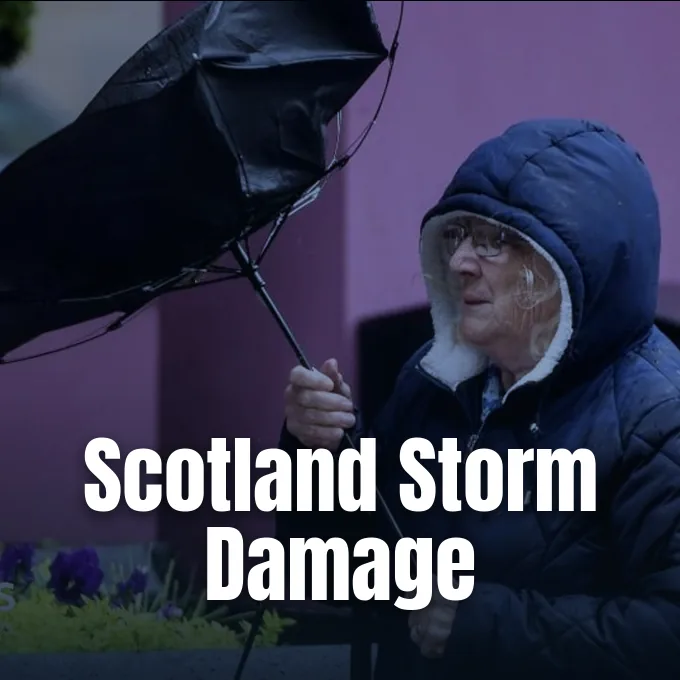
A 60-year-old man died on Sunday morning after a falling tree struck him in southern Scotland during high gales [1]. He died instantly at the scene [7]. The fatality occurred as Scotland storm damage mounted, with peak wind gusts reaching 85mph at Machrihanish in Argyll and Bute [6]. More than 82,000 properties lost electricity as violent gales toppled overhead lines, brought mature trees onto rail corridors, and forced transit operators to cancel ferry crossings [7]. Emergency teams worked in difficult conditions to clear debris while Scottish ministers convened contingency meetings to coordinate recovery operations [1].
Fatal Impact Across Southern Scotland
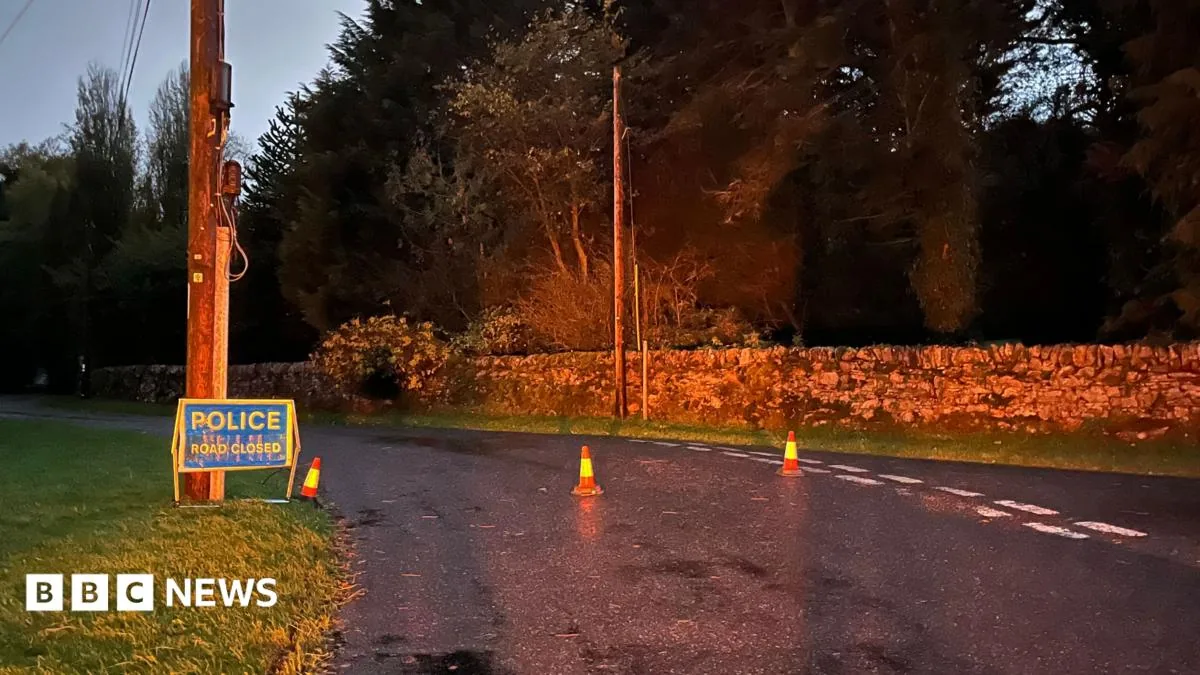
Police Scotland said emergency services responded to reports of a fallen tree at around 10:30 on Sunday, 25 October 2026, on a minor road at Mid Kelton near Castle Douglas. The victim was 60 years old [1]. Paramedics pronounced him dead shortly after arriving on site. “The man was pronounced dead at the scene. There are no suspicious circumstances and a report will be submitted to the procurator fiscal in due course,” a police spokesperson said [7]. Gale-force gusts brought down large timber along rural routes, leaving motorists vulnerable to falling branches and blocked roads [1].
Further north in Perth and Kinross, another tree collapse caused serious injuries in the town of Aberfeldy [1]. Two women were struck at about 12:50 on Sunday near Poplar Avenue and the local footbridge known as the bouncy bridge [6]. Both victims were taken to hospital while police cordoned off Poplar Avenue to prevent further casualties. The accident happened quickly. Meanwhile, officers in South Ayrshire evacuated unstable buildings in Ayr and helped 15 people trapped at a waterlogged caravan park in Ballantrae as floodwaters cut off road access [1].
Assessing Scotland Storm Damage on Power Grids
High winds wreaked havoc on electrical grids, leaving network engineers struggling to repair snapped distribution wires and blown utility equipment in heavy rain [7]. The Energy Networks Association reported that 161,400 properties were without power by Sunday afternoon, though field crews had reconnected 344,900 customers despite hazardous conditions. Power cuts hit hard. Combined figures revealed that 838,700 homes lost electricity during the back-to-back impacts of Storm Austen and Storm Boelo [6]. Dangerously high winds prevented linesmen from climbing utility poles in exposed locations, delaying normal service to isolated communities [7].
In northern Scotland, Scottish and Southern Electricity Networks faced more than 238 separate incidents as wind gusts damaged rural infrastructure [1]. The utility restored connection to 32,500 customers by Sunday afternoon, but 47,000 households were still cut off, including over 5,500 in the west Highlands. Many homes waited in the cold [8]. On the Western Isles, engineers fired up an emergency power station to supply electricity because the subsea cable link to Skye went offline [1]. Further south, SP Energy Networks reported that around 6,000 homes in Ayrshire and Dumfries and Galloway had no supply [8].
The blackouts created major challenges for animal shelters. In Ayr, Claire Revis, founder of the charity Saving and Rehoming Strays, cared for 50 dogs without light. Several animals required care for diabetes and paralysis, forcing staff to change nappies in darkness and rely on neighbours to cook warm food. Repair crews worked to contain Scotland storm damage to local networks so that refrigerated pet medications stayed viable [1].

Transport Networks Paralyzed by Gale Gusts
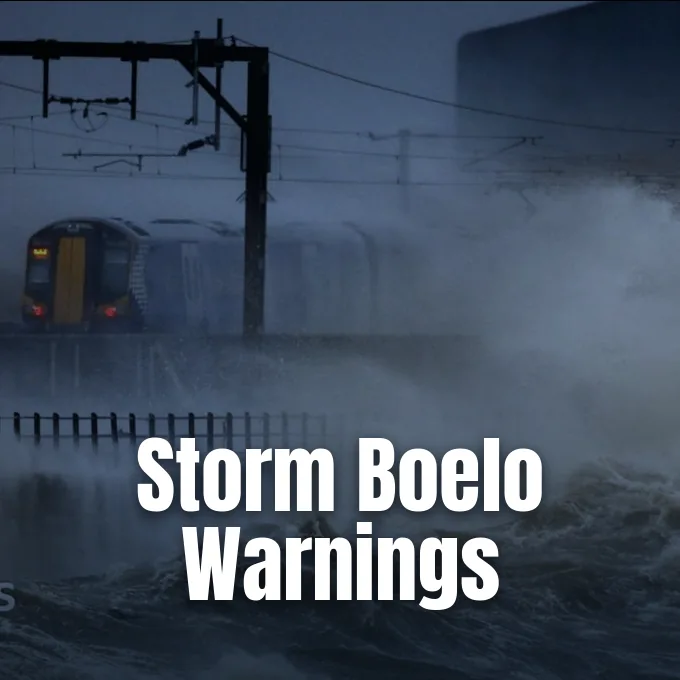
Rail transport suffered cancellations as gale-force winds brought branches and debris onto running lines [1]. Network Rail Scotland deployed specialist weather teams to clear obstructions, including a trampoline and a garden shed that had blown onto the tracks. Tracks flooded in Glasgow. Trees blocked lines near Dumfries and Partick, while flooding submerged tracks up to platform level at one station [7]. “We know disruption is frustrating and we really appreciate the patience people have shown this weekend while our teams do everything they can to get everyone moving again,” Gary Hopkirk, route director at Network Rail Scotland, said [1].
ScotRail halted trains on several routes, including the line between Kilwinning and Ayr, as well as branches linking Fort William to Mallaig and Crianlarich to Oban. Services stopped in the north. Lines were closed between Kyle of Lochalsh and Achnashellach, and between Helmsdale and Wick [1]. Speed restrictions were put on the West Coast Main Line to safeguard passenger trains [4]. The disruption came just two days after Storm Austen cut power and grounded flights across parts of southern England and Wales.
High winds also disrupted road, ferry, and air corridors throughout northern Scotland. Ferry operator CalMac reported that 27 of its 30 routes suffered delays or cancellations due to dangerous swells. At Edinburgh Airport, high winds caused 81 flight cancellations and forced 11 aircraft to divert. Flights halted for hours [1]. Major bridges faced restrictions, with Dornoch Bridge closed to all traffic, while Queensferry Crossing and Clackmannanshire Bridge imposed 30mph limits [8].
How Coastal Towns Confronted Surging Waters?
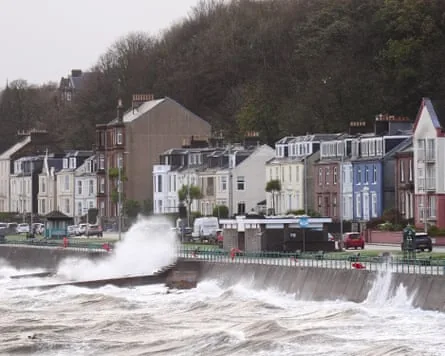
Coastal settlements along the Firth of Clyde faced flooding as tidal surges combined with downpours on Saturday night. Waves crashed over walls. In Gourock, towering waves broke over sea defences and deposited an entire boat onto the roadway. Further south, floodwaters inundated the town centre of Largs, damaging multiple businesses and blocking the A78 route towards Skelmorlie [6]. The Scottish Environment Protection Agency issued 17 flood warnings and 11 flood alerts, warning residents that rising river levels and sea swells posed a genuine threat to life and property [7].
Local traders sustained heavy losses from storm surges along the Clyde. In Dumbarton, mobile phone shop owner Muhammad Zubair Ashraf arrived to find his premises flooded with river water, resulting in an estimated £5,000 to £10,000 in ruined stock and damaged fittings. The water ruined everything inside [6]. In Aberdeen, authorities shut the flood gates along Riverside Drive to prevent the River Dee from spilling into residential streets [1]. Rainfall totals reached exceptional levels in the Highlands, where Cluanie Inn recorded 130mm of rain over the weekend [6].

Emergency Protocols Following Scotland Storm Damage
Scottish ministers activated the government resilience room on Friday and reconvened on Sunday to review emergency operations. First Minister John Swinney thanked emergency workers and urged residents to follow official guidance closely. “While we expect some respite from the adverse weather during the day on Monday, there is a possibility of more severe weather conditions early on in the week and we urge everyone to continue to follow advice and heed any warnings,” social justice secretary Shirley-Anne Somerville said [1]. Transport authorities had already flagged major vulnerabilities when earlier forecasts showed Storm Boelo rail cancellations and road warnings across northern transit corridors.
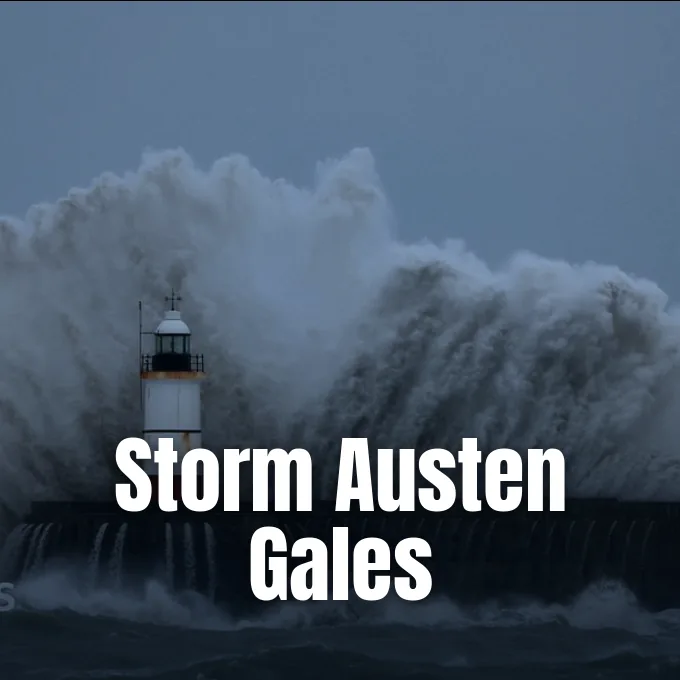
The Met Office upgraded its weather alert from yellow to amber for the mainland and Western Isles, keeping the warning active for 24 hours. The warning covered millions of people [4]. Chief forecaster Jason Kelly said the system would deliver widespread gusts of 60 to 70mph, with coastal exposures reaching 80mph or higher. Winds peaked at 85mph in Machrihanish, while Capel Curig in north Wales registered 84mph and Snowdonia recorded 83mph [6, 7]. Officials monitored Scotland storm damage as the alert covered an unusually wide territory [1].
Emergency agencies urged the public to stay indoors and avoid coastal promenades where crashing waves presented fatal hazards [7]. Michael Avril, water safety lead for the Royal National Lifeboat Institution, warned that high tides could knock people off their feet or wash them into the sea [1]. Police Scotland superintendent Andy Barclay said wet roads could double vehicular stopping distances, urging motorists to defer non-essential travel. Travel was not advised [4]. Several public events were cancelled, including Paisley’s Halloween festival and the Enchanted Forest light show in Pitlochry [1].
What Follows as Atlantic Lows Approach?
Even as winds eased on Sunday night, forecasters cautioned that another Atlantic low-pressure system was gathering strength to the west. Met Office meteorologist Stav Danaos said the new disturbance could bring gale or severe gale-force winds to western Scotland and Northern Ireland by Tuesday. The next system approached rapidly. If the incoming system meets official naming criteria, it will become Storm Chloe, marking the third named storm to target the British Isles within a single week. Early modeling suggested the system might carry slightly less widespread disruption than the peak of Storm Boelo [8].
Recovery work across Scotland will take several days as network engineers and local council road crews clear thousands of fallen branches and repair broken utility lines [8]. Stuart Wilson from Transport Scotland said that significant recovery work would be required before rail, ferry, and road networks could return to normal operations. The cleanup will take time [7]. While southern England enjoyed milder temperatures and sunny intervals, northern communities faced a lengthy cleanup under unsettled skies [8]. Residents across affected regions were advised to monitor local council alerts and check transport timetables before resuming travel [1].
- ONLINE NEWS BBC News. (2026, October 23). Man killed by falling tree as Storm Boelo batters Scotland. BBC News. [Article Link]
- ONLINE NEWS BBC News. (2026, October 25). The aftermath of Storm Boelo across Scotland. BBC News. [Article Link]
- ONLINE NEWS BBC News. (2026, October 24). Amber weather warning as Storm Boelo hits Scotland. BBC News. [Article Link]
- ONLINE NEWS McCool, M. (2026, October 22). Scotland to be hit with 80mph wind gusts as Storm Boelo alert upgraded to amber. BBC News. [Article Link]
- ONLINE NEWS BBC News. (2026, October 23). Man killed by falling tree as Storm Boelo batters Scotland [Updated edition]. BBC News. [Article Link]
- ONLINE NEWS Kipling, E. (2026, October 25). Man killed by falling tree as Storm Boelo leaves 160,000 properties without power. BBC News. [Article Link]
- ONLINE NEWS Al-Othman, H., & Moloney, C. (2026, October 25). One dead and 82,000 properties without power as Storm Boelo batters UK. The Guardian. [Article Link]
- ONLINE NEWS Hanlon, T., Davies, E., Moldoveanu, R., Hill, L., & Ingram, P. (2026, October 25). Storm Boelo live: Man killed by falling tree as 84mph gusts batter UK. Daily Mirror. [Article Link]
APA 7: PerEXP Teamworks. (2026, October 26). Scotland Storm Damage Leaves One Dead as High Gales Batter Roads. PerEXP Teamworks. https://perexpteamworks.com/en/scotland-storm-damage-boelo/


