





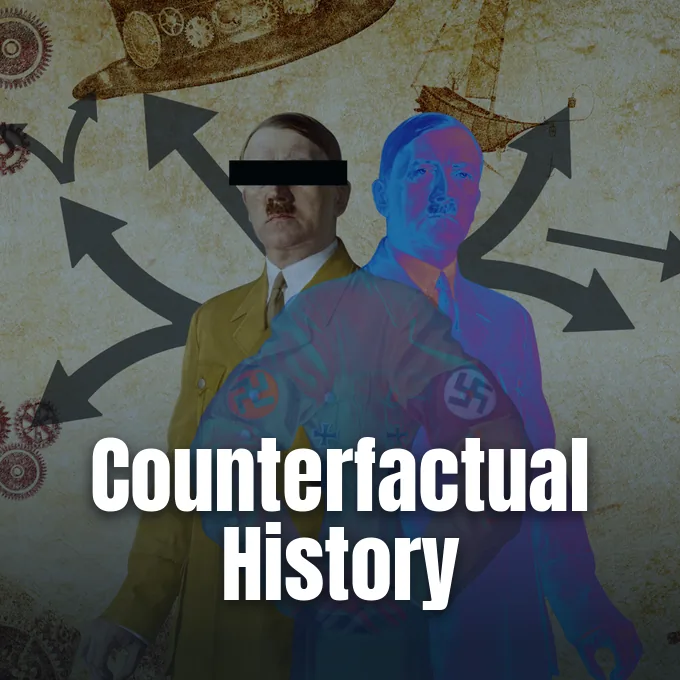
Journalists Maggie Haberman and Jonathan Swan open their book Regime Change with an unexpected historical detour. They imagine an alternative world where Donald Trump won re-election in 2020 and started his second term in 2021 instead of 2025. In that scenario, Trump encounters sharper political limits and never gains the chance to rally supporters around disputed voting results, leaving the country on a much calmer path. Writer Julian Novitz observes that this thought experiment reflects a broader curiosity shared by novelists and scholars alike. They want to know how the world might have changed if a known event took a different path. That shared inquiry forms the foundation of counterfactual history, an analytical approach that starts from a plausible break with recorded facts to examine why our own reality took shape [1].
The Divergence Point
Every exploration of an altered timeline begins with what writers and scholars describe as a point of divergence. Researchers take a recorded event and introduce a single plausible change to see where the new timeline leads. The possibilities stretch across centuries. Writers often ask what might have happened if Adolf Hitler had been assassinated in 1943 rather than dying by suicide in 1945, or if the Soviet Union had reached the Moon before the United States in 1969. Others consider what would happen if smallpox had never harmed the Indigenous peoples of North America, or if Christopher Columbus had missed the Americas in 1492, exposing European societies to an Incan invasion decades later. A single shift can produce an unfamiliar world [1].
Fictional alternatives have explored these divergent paths for hundreds of years. The subgenre appeared as early as 1490 in the chivalric romance Tirant lo Blanc, where a wandering knight manages to prevent the fall of Constantinople and saves the Byzantine Empire. By the 19th and 20th centuries, authors turned toward modern turning points. They imagined Europe under Napoleon’s lasting control or examined the aftermath of a Confederate victory in the American Civil War. These stories showed that shifting a single battle could overturn familiar political landscapes across entire continents [1].
Ancient Roots of Alternative History
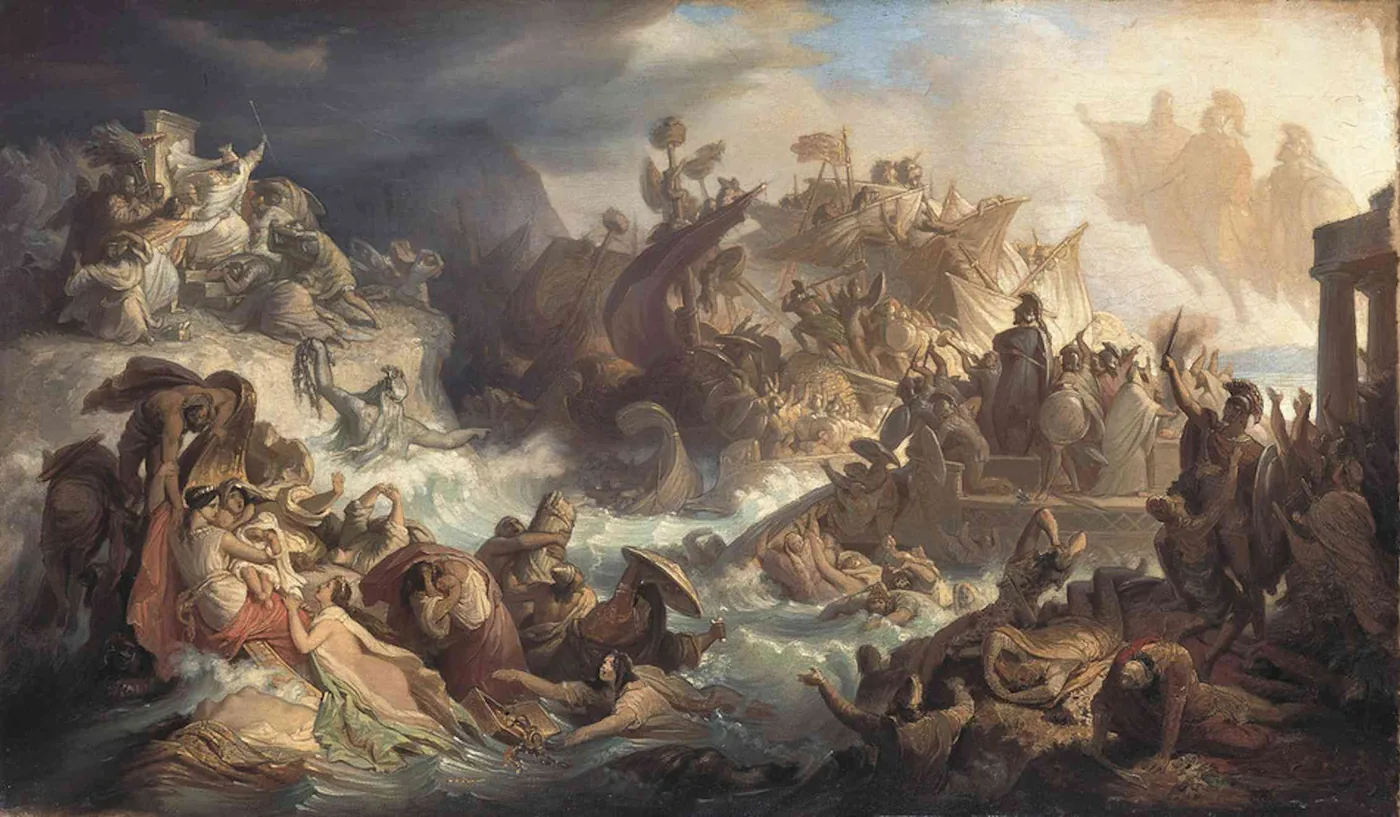
The roots of counterfactual thinking reach back to the beginnings of historical writing. Herodotus examined these causal connections in his Histories while detailing the rise of the Persian Empire and the Greco-Persian wars. Influenced by Greek storytelling traditions of divine fate and violent retribution, Herodotus viewed the past as an unbroken causal chain where each action seeds the next outcome. That view led him to weigh alternative choices. He wondered what might have occurred if Athenian leaders had refused to commit their naval fleet to the allied resistance against Persian King Xerxes I in 480 BCE [1].
Herodotus argued that without the Athenian fleet at the Battle of Salamis in September 480 BCE, Xerxes could easily have isolated and subdued the Greek city states by sea. By describing that alternate outcome, Herodotus showed both the fragile nature of the Greek coalition and the central role he gave to Athens in securing victory. The Roman historian Livy used a similar method centuries later when he pictured Alexander the Great surviving past his death in Babylon in 323 BCE to invade western Europe. Livy claimed that the rising power of Rome would probably have defeated Alexander, using that speculative claim to argue for Roman military organisation and discipline [1].
Ancient writers did not construct alternate realities as entertaining diversions. They used counterfactual scenarios as tools of persuasion to support their broader historical arguments. Haberman and Swan relied on that exact reasoning when opening their modern political study. By outlining an uneventful second term for Trump starting in 2021, they argued that years spent out of office gave him the motivation and political space needed to mount a far more sweeping return [1].
Debates in Counterfactual History
During the 20th century, counterfactual histories grew from brief asides into full collections of speculative essays. In 1931, the publication of If It Had Happened Otherwise gathered contributions from British and American scholars, politicians, and writers. Many of these essays were whimsical rather than deeply analytical. Contributors imagined how a successful British General Strike in 1926 might have established a communist government, or how the poet Lord Byron might have become king of Greece if he had survived his 1824 illness. Winston Churchill contributed a double-counterfactual piece titled “If Lee Had Not Won the Battle at Gettysburg,” written from the viewpoint of a Southern historian who wondered what would have happened if Union armies had prevailed in the Civil War [1].
Serious academic defense of the practice emerged decades later. In his 1993 book Plausible Worlds: Possibility and Understanding in History and the Social Sciences, Cambridge sociologist Geoffrey Hawthorn argued that asking what might have happened sharpens our grasp of what actually took place. Hawthorn examined divergent paths across early modern Europe, 20th-century Korea, and Italian Renaissance painting to show that events are rarely preordained. Considering plausible alternatives undermines rigid social theories by demonstrating that past developments remained open to contingency. Historian Niall Ferguson built on this foundation in his study The Pity of War: Explaining World War One. Ferguson suggested that if Britain had remained neutral in 1914, Imperial Germany might have won and created a peaceful European federation, contending that individual choices carried far more weight than broad social forces [1].



The Critique of Altered Pasts
Counterfactual speculation has also provoked sharp criticism from professional historians. British historian E.H. Carr dismissed these inquiries as “parlour-games with might-have-beens” that contributed little to serious scholarship. A more comprehensive rebuttal came in 2014 from historian Richard J. Evans in his book Altered Pasts: Counterfactuals and History. Evans argued that speculative claims lack genuine empirical grounding and simply offer a veneer of scholarly respectability. In his assessment, “once you let the counterfactual genie out of the bag, anything can happen.” Without firm evidence, alternative narratives can be bent to serve almost any political claim or personal preference [1].
Evans warned that counterfactual scenarios often reveal the nostalgic desires of their creators rather than genuine historical dynamics. Many pieces in If It Had Happened Otherwise dreamed of an enduring British Empire, while some left-wing thinkers indulged in fantasies about Vladimir Lenin surviving longer to lead the Soviet Union. Evans said that focusing on individual leaders overlooks the broader cultural, social, and economic currents that placed those figures in power. Attributing major historical shifts to isolated accidents deflects attention from how large political institutions gradually decay over time [1].
Fiction and Historical Speculation
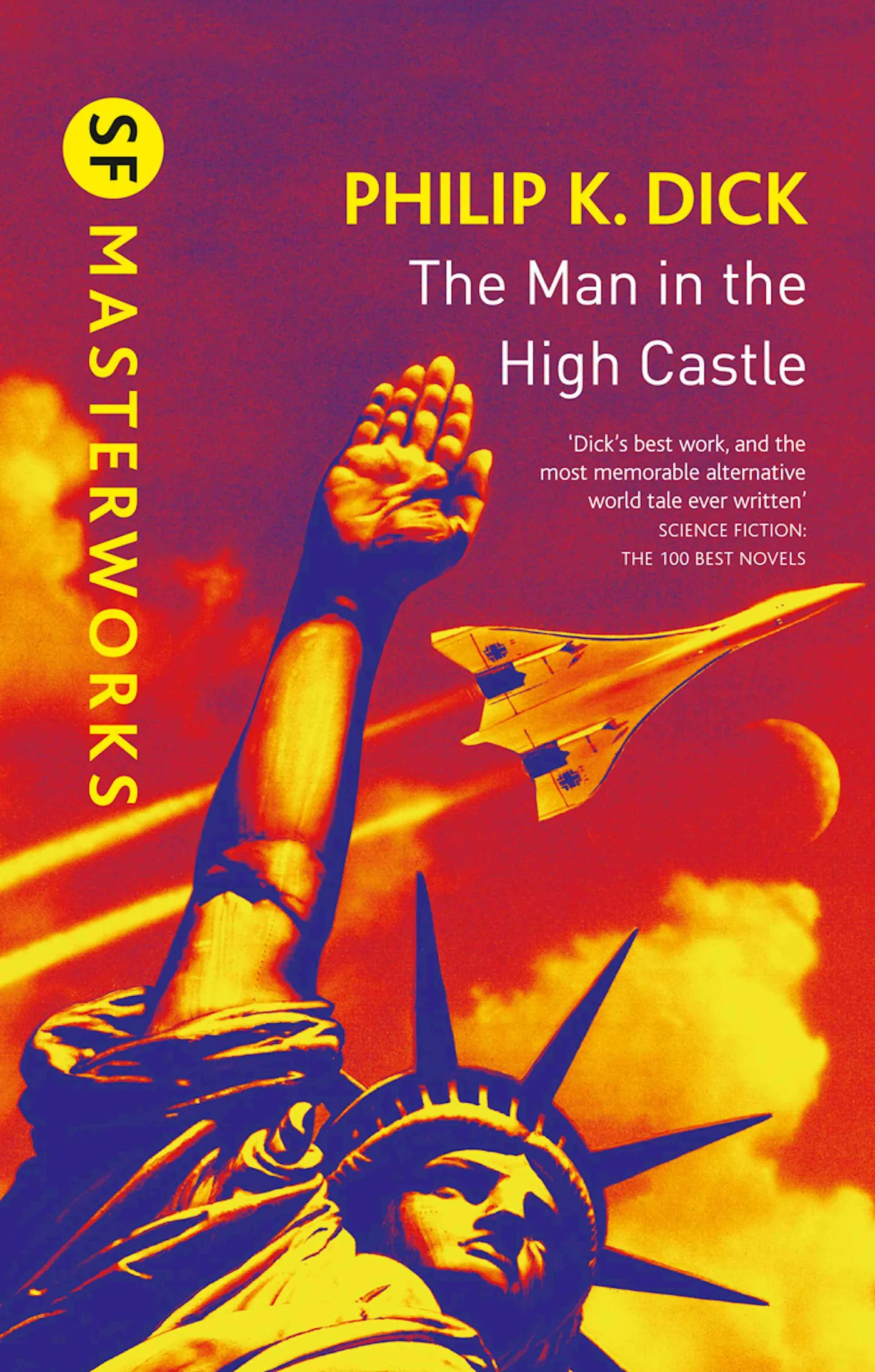
While historians use counterfactuals to test causal claims about key decisions, novelists pursue a very different objective. Fiction writers explore the lived experience of an altered reality, asking how culture, daily habits, and moral values would transform after a point of divergence. Novelist Philip K. Dick pursued this inquiry in his classic book The Man in the High Castle, depicting a defeated United States carved up between Nazi Germany and Imperial Japan. Robert Harris used the form of noir crime fiction in Fatherland to uncover state atrocities twenty years after an Axis victory. More recently, New Zealand author Catherine Chidgey published The Book of Guilt, imagining an eerie 1970s England shaped by an early negotiated peace [1].
Evans dismissed these fictional works as sensationalist entertainment that merely plays on popular fears of tyranny and disaster. Yet literary scholars point out that alternative history reaches far beyond war stories and dystopian thrillers. Authors have used the form across fantasy, young adult fiction, and steampunk settings to investigate human nature. By testing how ordinary people respond when social structures collapse or transform, these novels provide valuable commentary on real historical anxieties [1].
Why Do Historical Outcomes Shift?
Julian Novitz explains that both academic counterfactuals and speculative novels draw their strength from questioning historical inevitability. When people read about an altered past, they become more aware of the fragile decisions that produced their present reality. Novitz said that considering what could have happened prevents readers from accepting existing institutions as natural or unavoidable. Why do alternative realities continue to grip readers? Because exploring unchosen paths compels us to recognize the weight of human agency together with broader social trends [1].
At its best, historical speculation does not replace real evidence with wild fantasy. It serves as an imaginative exercise that reveals how fragile our recorded past has always been. By testing where alternative roads might have led, scholars and readers can better understand why history unfolded the way it did [1].
- WEBSITE Novitz, J. (2026). Friday essay: What if …? The imaginative adventure of reading alternative histories. [Article Link]
APA 7: PerEXP Teamworks. (2026, November 27). Counterfactual History Explores How Minor Decisions Reshape Eras. PerEXP Teamworks. https://perexpteamworks.com/en/counterfactual-history-divergent-timelines-analysis/


