





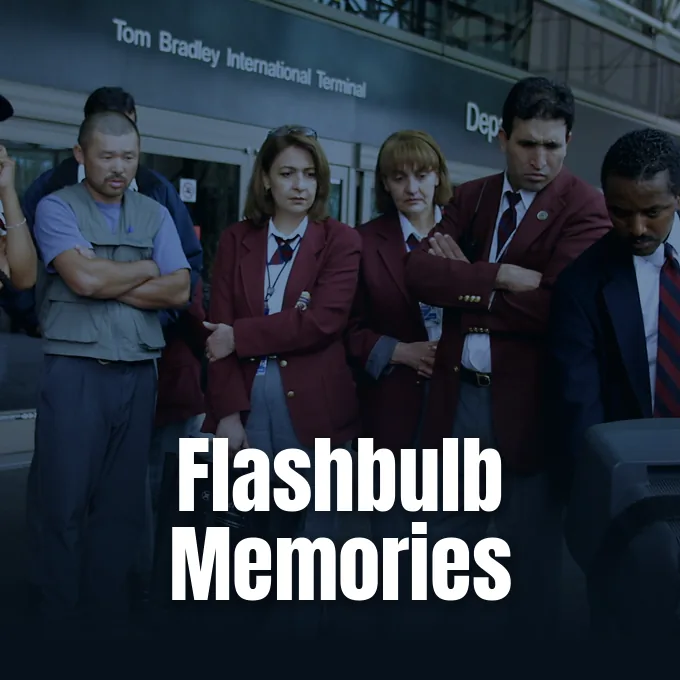
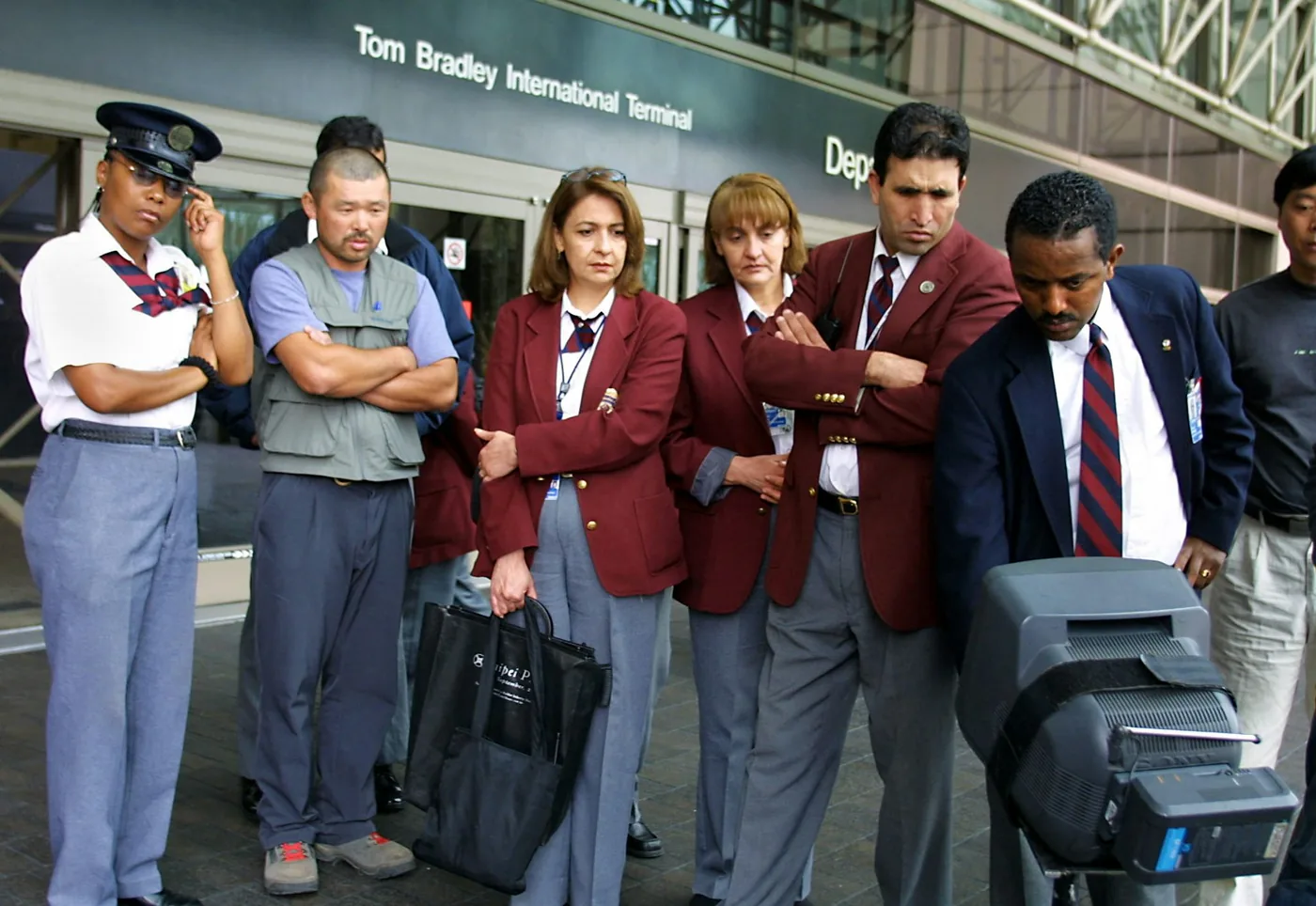
Millions vividly recall the moment they learned of the September 11, 2001 attacks across the United States. Did intense emotional shock etch those personal reception scenes permanently into neural pathways? Psychologists investigating flashbulb memories (vivid autobiographical recollections of learning about unexpected historical shocks) find that human recall behaves far less like an indelible recording than commonly assumed [1, 21]. A quarter-century investigation reveals that nearly forty percent of personal details alter within twelve months [20, 21]. Subjective confidence remains unshakable.
How Flashbulb Memories Form During Traumatic Shocks
Psychologists Brown and Kulik introduced the term flashbulb memories in 1977 [1]. They examined recollections surrounding the assassination of President Kennedy [1]. These recollections do not preserve objective historical timelines. Instead, they record personal circumstances surrounding how an individual first received word of a shocking public event [1, 21]. Brown and Kulik documented that people vividly recount their location, informant, activities, and immediate affective responses. Severe national crises forge lasting narratives.
Subsequent crises revealed comparable cognitive patterns across distinct cultural groups within the United States. In a 1970s survey documented in cognitive literature, seventy-five percent of Black Americans retained vivid flashbulb memories of learning about the assassination of Martin Luther King, whereas only thirty-two percent of white Americans reported comparable recall [21]. Demographic relevance dictates mnemonic endurance. Across the Atlantic, British citizens consistently formed durable personal recollections upon hearing about the death of Princess Diana, while Italian citizens rarely established corresponding memories [4, 21]. In Applied Cognitive Psychology, researchers Kvavilashvili, Mirani, Schlagman, and Kornbrot demonstrated that cultural proximity modulates how personal reception contexts become consolidated into autobiographical memory networks [4]. Societal significance cements personal reception accounts.
Routine daily occurrences rarely generate durable mnemonic traces. While ordinary news dissolves from memory within days, catastrophic disruptions leave distinct markers across human societies [1]. Non-human primates also demonstrate cognitive persistence, detailed in coverage of chimpanzees and bonobos retaining long-term social memories across decades. In humans, flashbulb memories combine personal meaning with broad societal upheaval [1, 18]. These accounts persist across lifetimes.
The 25-Year Study of September 11
Immediately following the attacks of September 11, 2001, cognitive researchers Elizabeth Phelps and William Hirst launched a comprehensive nationwide study across the United States [2, 21]. Thousands of volunteers documented where they stood, who accompanied them, and how they felt [2, 21]. Participants also rated their subjective confidence in memory accuracy. Initial surveys established an empirical baseline.
In Experimental Psychology, the research team re-examined the same volunteers one year, three years, and ten years later [2, 3]. Strikingly, after only one year, approximately forty percent of the recalled personal reception details conflicted directly with initial reports filed days after the attacks [2, 21]. Inconsistencies emerged rapidly across the cohort. For instance, one volunteer originally stated that he learned of the attacks at work, yet a year later insisted he was traveling on a train [21]. Another participant initially described being with her husband, but later remembered standing beside her son [21]. Crucially, the 2026 twenty-five-year evaluation conducted by Elizabeth Phelps and William Hirst is circulating as a preprint and has not yet undergone formal peer review [20].
Distorted recollections stabilized remarkably fast. Whatever erroneous details participants reported after twelve months hardened into permanent memories during subsequent decades [3, 21].
Why Memory Is Reconstruction Rather Than Film
Popular intuition treats memory as an internal camera capturing permanent photographic records. Cognitive scientists emphasize that this intuitive model contradicts neurobiological reality [5, 8]. Human memory operates as a dynamic mental reconstruction rather than a static recording archive [8, 9]. Cognitive psychologist Neisser demonstrated this constructive vulnerability in his classic 1981 study of Watergate testimony, showing that even confident testimony synthesizes disparate episodes from John Dean [5]. When individuals recall an event, the brain pieces together fragments of sensory data, prior knowledge, and subsequent conversations [8, 9]. Human recall remains fundamentally reconstructive.
Neurobiological investigations provide cellular explanations for why consolidated memories alter over extended time. Landmark research by Nader, Schafe, and Le Doux revealed that retrieving an established memory renders the underlying neural trace labile, requiring fresh protein synthesis in the amygdala to re-stabilize [7]. Neurobiologists designate this window reconsolidation (the neurochemical phase wherein reactivated memory traces become transiently vulnerable before setting again) [6, 7]. Researchers Phelps and Hofmann documented how this malleability opens pathways for both clinical therapeutic editing and unintentional distortion [6]. Synaptic connections remodel during conscious retrieval.
Subsequent inputs inevitably seep into stored scenes. In foundational experiments, researchers Loftus and Palmer showed that subtle linguistic cues alter remembered details of vehicular accidents [8]. External information reshapes internal recall. In an updated analysis of mnemonic vulnerabilities, Schacter categorized these distortions under transience, misattribution, and suggestibility [9]. Every retelling incorporates subtle environmental cues.


The Paradox of High Confidence and Low Accuracy
Flashbulb memories exhibit a stark disconnect between conviction and accuracy (the discrepancy between subjective certainty and factual truth). In Psychological Science, Wixted and Wells established that confidence typically tracks factual accuracy under neutral testing conditions [10]. However, highly emotional shocks break this alignment, inflating subjective certainty while leaving contextual details susceptible to substantial decay [11, 12]. Can extreme emotional arousal paradoxically impair contextual accuracy? Studies by Christianson and Loftus showed that emotional arousal sharpens central focus while degrading peripheral context [11]. Individuals remember the central shock vividly, yet mistakenly reconstruct physical surroundings [12, 21].
Laboratory investigations by Rimmele, Davachi, Petrov, Dougal, and Phelps established that emotional stimuli heighten the subjective sense of remembering without improving accuracy for contextual associations [13]. Furthermore, researchers Phelps and Sharot showed that arousal enhances recollection through amygdala-hippocampal interactions [12]. This interaction fosters unwarranted certainty. Hebscher and Gilboa showed that the ventromedial prefrontal cortex coordinates confidence signals independently of sensory retrieval [14]. Brain circuits generate profound certainty.
Frequent social repetition further amplifies confidence. When individuals recount catastrophic experiences to peers, social validation tacitly reinforces the narrative [21]. Cataclysmic emergencies trigger massive spikes in public discourse, comparable to patterns documented in scientific analysis showing how hurricane impacts trigger intense public communication across major social networks. Shared conversations provide social feedback that solidifies personal recollections, embedding erroneous details permanently into conscious memory [21]. Repeated storytelling cements belief.
How Distorted Recollections Anchor Personal Identity
The persistence of distorted recollections points toward an essential psychological function: the construction of autobiographical identity. Cognitive researcher Rubin developed the concept of self-concept focus (a psychological tendency to treat autobiographical events as central to identity), demonstrating that individuals perceive emotionally significant autobiographical milestones as foundational anchors for personal identity [15]. People selectively organize autobiographical memories to construct a coherent life story that bolsters psychological well-being [21]. When individuals contemplate what your childhood memories say about you as an adult, psychologists observe that narrative consistency frequently matters more to emotional health than archival factual accuracy [15, 21]. Identity requires a stable narrative.
Autobiographical recollections gradually reshape over time to align with current self-appraisals. In Social Psychology, Wilson and Ross documented that people systematically appraise earlier versions of themselves in ways that preserve positive self-esteem, modifying remembered details to create satisfying trajectories of personal growth [16]. In Happiness Studies, researchers Bauer, McAdams, and Pals observed that narrative identity integrates reconstructed memories to support psychological flourishing [17]. Subjective certainty enables people to integrate dramatic national moments into their personal life stories [21]. The past bends toward meaning.
Believing that recollection is accurate permits an individual to treat an experience as defining. In their analysis of volunteers across the United States, Elizabeth Phelps and William Hirst observed that participants fiercely defended their memories against contradictory evidence because conceding factual error felt like conceding a piece of personal history [21]. Narrative coherence supersedes literal detail. Retaining conviction anchors the self amidst historical turbulence [15, 21].
Social Bonding and the American Experience
Beyond personal identity, flashbulb memories perform a vital communal role by binding individuals to a shared social collective. Researchers Cyr, Toscano, and Hirst showed that flashbulb memories serve as instruments for group identification [18]. Merck and Hirst showed that collective memory derives authority directly from community narratives rather than formal history [19]. Flashbulb memories operate as shared cultural currency that signals collective belonging [18, 21]. Shared historical shocks unify communities.
In the context of September 11, these recollections reinforce American civic identity across the United States. Surveys analyzed by Elizabeth Phelps and William Hirst in The Conversation revealed that citizens perceive peers who possess vivid flashbulb memories of 9/11 as maintaining a distinctly stronger American identity than those lacking such recollections [21]. Furthermore, separate experimental findings demonstrated that observers judged a citizen’s American identity to suffer greater impairment if that individual forgot the personal flashbulb memory of learning about the attacks than if the individual forgot the objective casualty figures [21]. Forgetting the personal reception context felt like severing an emotional allegiance to the community [18, 21].
Getting forty percent of personal details wrong does not diminish narrative power. When citizens exchange stories on anniversaries of September 11 across the United States, sharing the account affirms collective resilience and mutual membership within a devastated community [21]. Flawed recollections fulfill profound cultural functions.
- ACADEMIC JOURNAL Brown, R., & Kulik, J. (1977). Flashbulb memories. Cognition, 5(1), 73-99. [Article Link]
- ACADEMIC JOURNAL Hirst, W., Phelps, E. A., Buckner, R. L., Budson, A. E., Cuc, A., Gabrieli, J. D. E., Johnson, M. K., Lustig, C., Lyle, K. B., Mather, M., Meksin, R., Mitchell, K. J., Ochsner, K. N., Schacter, D. L., Simons, J. S., & Vaidya, C. J. (2009). Long-term memory for the terrorist attack of September 11: Flashbulb memories, event memories, and the factors that influence their retention. Journal of Experimental Psychology: General, 138(2), 161-176. [Article Link]
- ACADEMIC JOURNAL Hirst, W., Phelps, E. A., Meksin, R., Vaidya, C. J., Johnson, M. K., Mitchell, K. J., Buckner, R. L., Budson, A. E., Gabrieli, J. D. E., Lustig, C., Mather, M., Ochsner, K. N., Schacter, D., Simons, J. S., Lyle, K. B., Cuc, A. F., & Olsson, A. (2015). A ten-year follow-up of a study of memory for the attack of September 11, 2001: Flashbulb memories and memories for flashbulb events. Journal of Experimental Psychology: General, 144(3), 604-623. [Article Link]
- ACADEMIC JOURNAL Kvavilashvili, L., Mirani, J., Schlagman, S., & Kornbrot, D. E. (2003). Comparing flashbulb memories of September 11 and the death of Princess Diana: effects of time delays and nationality. Applied Cognitive Psychology, 17(9), 1017-1031. [Article Link]
- ACADEMIC JOURNAL Neisser, U. (1981). John Dean’s memory: A case study. Cognition, 9(1), 1-22. [Article Link]
- ACADEMIC JOURNAL Phelps, E. A., & Hofmann, S. G. (2019). Memory editing from science fiction to clinical practice. Nature, 572(7767), 43-50. [Article Link]
- ACADEMIC JOURNAL Nader, K., Schafe, G. E., & Le Doux, J. E. (2000). Fear memories require protein synthesis in the amygdala for reconsolidation after retrieval. Nature, 406(6797), 722-726. [Article Link]
- ACADEMIC JOURNAL Loftus, E. F., & Palmer, J. C. (1974). Reconstruction of automobile destruction: An example of the interaction between language and memory. Journal of Verbal Learning and Verbal Behavior, 13(5), 585-589. [Article Link]
- ACADEMIC JOURNAL Schacter, D. L. (2022). The seven sins of memory: an update. Memory, 30(1), 37-42. [Article Link]
- ACADEMIC JOURNAL Wixted, J. T., & Wells, G. L. (2017). The Relationship Between Eyewitness Confidence and Identification Accuracy: A New Synthesis. Psychological Science in the Public Interest, 18(1), 10-65. [Article Link]
- ACADEMIC JOURNAL Christianson, S., & Loftus, E. F. (1991). Remembering emotional events: The fate of detailed information. Cognition & Emotion, 5(2), 81-108. [Article Link]
- ACADEMIC JOURNAL Phelps, E. A., & Sharot, T. (2008). How (and Why) Emotion Enhances the Subjective Sense of Recollection. Current Directions in Psychological Science, 17(2), 147-152. [Article Link]
- ACADEMIC JOURNAL Rimmele, U., Davachi, L., Petrov, R., Dougal, S., & Phelps, E. A. (2011). Emotion enhances the subjective feeling of remembering, despite lower accuracy for contextual details. Emotion, 11(3), 553-562. [Article Link]
- ACADEMIC JOURNAL Hebscher, M., & Gilboa, A. (2016). A boost of confidence: The role of the ventromedial prefrontal cortex in memory, decision-making, and schemas. Neuropsychologia, 90, 46-58. [Article Link]
- ACADEMIC JOURNAL Rubin, D. C. (2020). Self-Concept Focus: A tendency to perceive autobiographical events as central to identity. Journal of Applied Research in Memory and Cognition, 9(4), 576-586. [Article Link]
- ACADEMIC JOURNAL Wilson, A. E., & Ross, M. (2001). From chump to champ: People’s appraisals of their earlier and present selves. Journal of Personality and Social Psychology, 80(4), 572-584. [Article Link]
- ACADEMIC JOURNAL Bauer, J. J., McAdams, D. P., & Pals, J. L. (2008). Narrative identity and eudaimonic well-being. Journal of Happiness Studies, 9(1), 81-104. [Article Link]
- ACADEMIC JOURNAL Cyr, T. G., Toscano, K., & Hirst, W. (2024). Flashbulb memories and memories for personal events: Their role in social categorization and identification. Journal of Applied Research in Memory and Cognition, 13(2), 260-272. [Article Link]
- ACADEMIC JOURNAL Merck, C., & Hirst, W. (2022). Distinguishing collective memory and history: A community’s identity and history are derived from distinct sources. Journal of Applied Research in Memory and Cognition, 11(4), 598-609. [Article Link]
- PREPRINT Phelps, E., & Hirst, W. (2026). Your memories of how you heard about 9/11 may well be wrong – we’ve been asking the same people what they remember for 25 years [Preprint – not peer reviewed]. [Article Link]
- ONLINE NEWS Phelps, E. A., & Hirst, W. (2026, September 12). Your memories of how you heard about 9/11 may well be wrong – we’ve been asking the same people what they remember for 25 years. The Conversation. [Article Link]
APA 7: TWs Editor. (2026, September 13). Why Flashbulb Memories of September 11 Distort Over Time. PerEXP Teamworks. https://perexpteamworks.com/en/flashbulb-memories-september-11-accuracy/


