





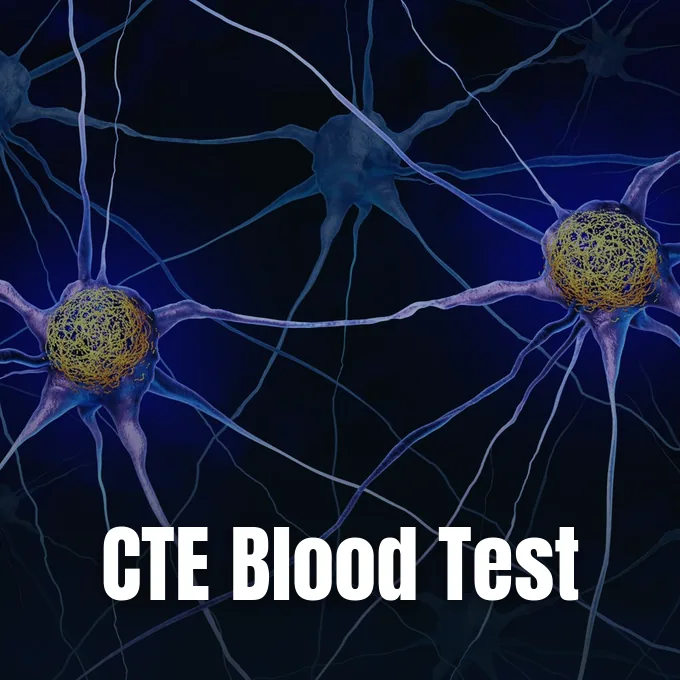
Boston University researchers analyzed blood samples from 21 former football players and detected a tau protein signal that tracks severe brain damage, offering early biological proof that a CTE blood test might identify the disease in living patients. Chronic traumatic encephalopathy has spent decades trapped behind autopsy tables because pathologists could only confirm its signature tau tangles by examining brain tissue after death. By measuring a specific fragment called eMTBR-tau, the team separated donors with advanced stages from those without the condition [1].
Post-Mortem Barriers to Diagnosing CTE
Repeated head impacts from contact sports trigger a degenerative cascade that gradually damages brain cells over years or decades. Athletes in collision sports like American football often experience progressive memory loss, mood swings, impulse control issues, and cognitive decline long after leaving the field. For families and clinicians, the hardest part of the illness has been the diagnostic vacuum. Because physicians can’t see into the living skull with sufficient molecular resolution, patients endure symptoms without definitive clinical validation [3].
Because repetitive impacts occur on almost every snap of a contact sport, damage builds quietly without an acute clinical event. Players may absorb hundreds of subconcussive helmet hits in a single season without ever receiving a formal concussion diagnosis [3]. Over time, these forces initiate localized cellular stress in vulnerable brain regions [1]. Yet because standard magnetic resonance imaging and computed tomography scans reveal only gross anatomical defects, they can’t detect early protein misfolding in living tissue [3].
Concerns about long-term brain health previously led an NFL study modeling chronic traumatic encephalopathy during playing careers, but population-level estimates remained theoretical without biological assays. Pathologists could only diagnose chronic traumatic encephalopathy by slicing post-mortem brain tissue and applying chemical stains to reveal tau deposits pooled in the sulcal depths of the cerebral cortex [1]. The diagnostic bottleneck left neurology without a window into living disease progression. Without an objective marker, drug developers couldn’t enroll verified volunteers for trials targeting early intervention. Michael Alosco, co-director of clinical research at the Boston University CTE Center, pointed out that the absence of live biomarkers has stalled therapeutic pipelines for decades [3].
How the CTE Blood Test Works
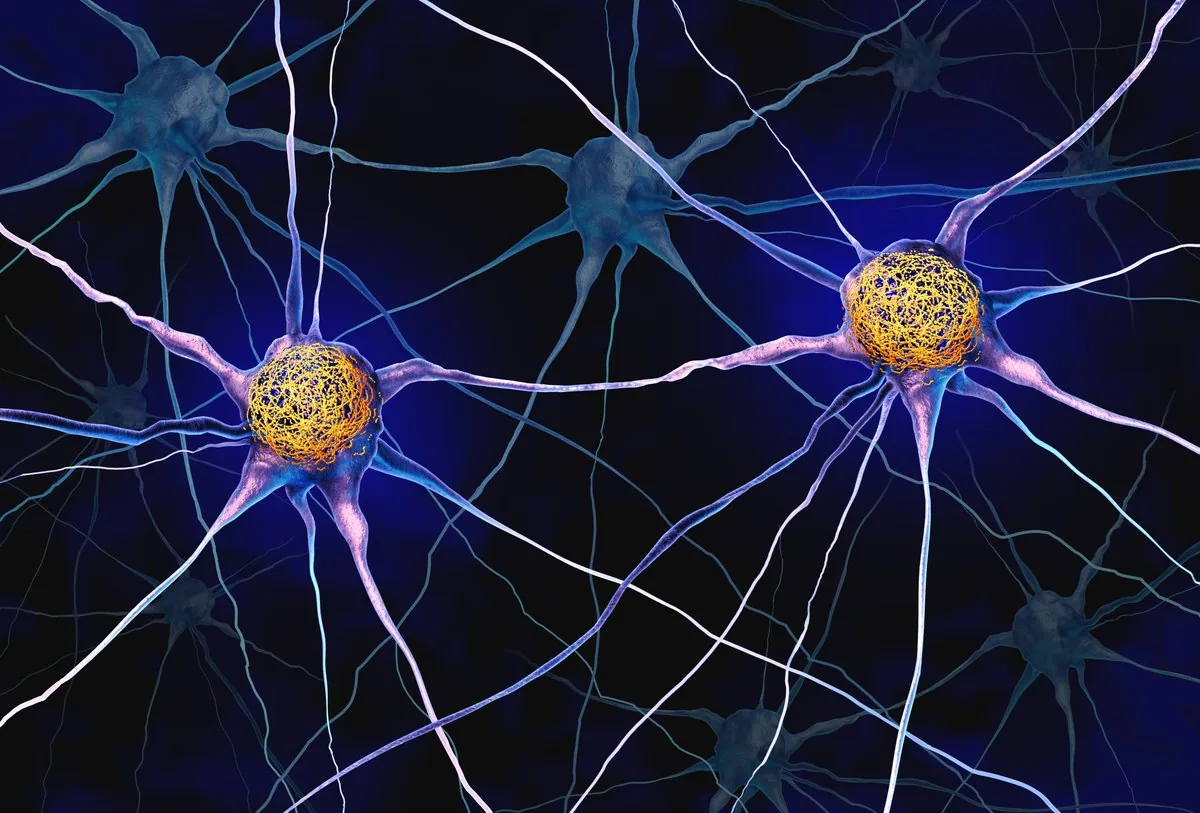
At the center of the discovery is an abnormal form of tau, a cellular protein that normally stabilizes the microscopic skeleton inside healthy brain cells. When repeated head impacts jar brain tissue, tau molecules misfold, detach from microtubules, and twist into toxic neurofibrillary tangles [3]. As these tangles accumulate inside neurons, cellular enzymes cleave the protein into smaller remnants. One specific fragment, known as endogenously cleaved microtubule-binding region tau (eMTBR-tau), slips through the blood-brain barrier and enters peripheral blood in detectable quantities [1].
In post-mortem brain examinations, pathologists assign cumulative neuropathologic tau burden scores ranging from 0 to 33 based on the density of neurofibrillary tangles in cortical sulci. The plasma assay mirrors these tissue scores because cleaved tau fragments enter interstitial brain fluids and drain into venous circulation as neuronal integrity degrades. By tracing these molecular fragments back to their cerebral origins, the CTE blood test connects peripheral fluid chemistry to microscopic tangle burden [1].

To capture these minuscule traces, the investigators deployed an ultra-sensitive nucleic acid-linked immunosandwich assay capable of single-plex detection at picogram concentrations. This assay isolates eMTBR-tau molecules from other circulating proteins and binds them to synthetic DNA tags that amplify readout signals. By quantifying these signals, the experimental CTE blood test measures how much tangled tau has escaped dying neurons in the cortex. Higher circulating concentrations correspond to more advanced neuropathological damage deep in brain sulci, providing a measurable biological gauge of cellular destruction without invasive surgical intervention [1].
Differentiating Brain Pathology from Alzheimer’s Disease
Differentiating chronic traumatic encephalopathy from other forms of dementia poses one of the steepest hurdles in degenerative neurology. Alzheimer’s disease also damages the brain through tau neurofibrillary tangles, meaning elevated eMTBR-tau alone can’t establish a unique diagnosis. Because both conditions share overlapping cognitive symptoms in aging adults, a single protein measurement risks confusing the two disorders. Michael Alosco explained that tau protein abnormalities appear across multiple degenerative illnesses, requiring a multi-marker laboratory strategy to “detect and differentiate” between them accurately [3].
The solution hinges on a companion plasma biomarker known as phosphorylated tau 217, or p-tau217. In Alzheimer’s pathology, p-tau217 concentrations climb early and track amyloid buildup, but the marker stays flat in pure CTE cases [3]. In the JAMA study, researchers measured p-tau217 together with eMTBR-tau in donor blood to test this dual profile [1]. When plasma exhibits high eMTBR-tau without a corresponding surge in p-tau217, the biological signature points away from Alzheimer’s and toward traumatic tauopathy. Days before the Boston University paper, a separate study in JAMA used mass spectrometry to confirm that eMTBR-tau tracks severe tau tangles in neurodegenerative diseases [3].


Findings from the Boston University Cohort
The empirical foundation for the assay rests on blood and tissue collected through the Boston University CTE Center Brain Bank. Beginning April 17, 2008, clinical researchers enrolled 21 former American-style football players who agreed to provide blood samples during life and donate their brains after death. By October 9, 2026, all 21 donors had died and completed full post-mortem neuropathologic evaluations. Pathologists confirmed that 18 of the 21 men had developed chronic traumatic encephalopathy, while three showed no tau tangle pathology [1]. Among the 18 confirmed cases, 16 had progressed to advanced stages of the disease [2].
When investigators matched ante-mortem blood data against autopsy findings, plasma eMTBR-tau levels tracked cumulative tau burden scores, which ranged from 0 to 33 in neuropathologic grading. Participants with confirmed CTE had higher eMTBR-tau concentrations than donors without the disease [1]. Players with advanced pathology showed higher plasma levels than those with mild disease [2]. The median age at blood draw was 68 years (IQR 61-77) for CTE-positive participants and 49 years for CTE-negative donors [1]. Study co-author Gil Rabinovici Edward of the University of California San Francisco said in a statement: “While there is still much work to do to validate these findings before the test is ready to use in patients, I am very hopeful that this study marks a major milestone in our ability to diagnose and ultimately treat this devastating disease” [2].
Next Steps for CTE Blood Test Validation
Despite the encouraging correlation, neuroscientists urge caution about the clinical readiness of the diagnostic tool. The assay is not approved by the U.S. Food and Drug Administration, and its performance has only been evaluated in a small cohort of 21 male football players. Michael Alosco warned that more research must confirm the findings before clinics can adopt the method. “If this finding holds up with future research, it opens up a lot of doors,” Alosco said [3].
Validating a novel fluid screening assay takes years of multi-center testing to prove that blood measurements reliably mirror organ-level pathology. Regulatory agencies demand rigorous proof before clearing diagnostic screens for clinical use, as seen when the Galleri blood test faced FDA advisory panel scrutiny over predictive reliability and false-positive risks. For a viable CTE blood test, future trials must enroll larger groups beyond elite male athletes, including women in contact sports, military veterans exposed to blast injuries, and individuals with mild head trauma. Researchers also need longitudinal blood draws over extended periods to determine whether eMTBR-tau rises before mood or memory symptoms emerge. “We still have more work to do before you can bring it back to patients,” Alosco said. “But it’s an exciting first step” [3].
Implications for Future Clinical Trials
Independent experts view the detection of CTE-related tau in blood as a major turning point for neurological medicine. Michael Buckland, a clinical associate professor of pathology at the University of Sydney who wasn’t involved in the JAMA research, evaluated the clinical meaning of the data. “It is a watershed moment for the field, demonstrating that fluid biomarkers can work in assisting diagnosis of CTE in the living,” Buckland said. He explained that identifying the condition in living people is the main prerequisite for testing neuroprotective drugs. “A confident CTE diagnosis in the living opens the door for clinical trials to start finding treatments for the disease,” Buckland said [3].
How common is chronic traumatic encephalopathy beyond professional athletics? Scientists still don’t know how common CTE is in the general population, because earlier research relied on symptomatic donors whose families chose post-mortem brain donation. If future assays can identify tau pathology during routine medical visits, physicians could track high-risk individuals early and advise them before irreversible cognitive loss sets in. “While there is still a long way to go before the test can be validated for clinical use, it is remarkable to see how fast the field is moving,” Buckland said [3].
- ACADEMIC JOURNAL Miner, A. E., Stein, T. D., McKee, A. C., Mez, J., Asken, B. M., Singh, A., Hanley, D., Zetterberg, H., Goostrey, K., Nosek, S. B., Labonte, J., Nowinski, C. J., Daneshvar, D. H., Tanner, J. A., Tripodis, Y., Young, A., Abdolmohammadi, B., Morisaki, K., Roebuck, M.,. Reiman, E. M. (2026). Plasma eMTBR-tau as a Biomarker for Chronic Traumatic Encephalopathy Tau Tangle Neuropathology. JAMA. [Article Link]
- ONLINE NEWS Mast, J., & Broderick, O. R. (2026). Researchers explore possibility of a CTE blood test. STAT. [Article Link]
- ONLINE NEWS Mogensen, J. F. (2026). ‘A watershed moment’: Researchers unveil first-of-its-kind blood test for CTE. Scientific American. [Article Link]
APA 7: PerEXP Teamworks. (2026, November 21). Boston University Researchers Track Severe CTE with Blood Test. PerEXP Teamworks. https://perexpteamworks.com/en/cte-blood-test-detects-tau-tangles/


