





Microsoft decided to end Copilot on smart TVs before the close of 2026, pulling its artificial intelligence assistant from home living rooms less than two years after announcing the integration. The change affects all smart television platforms that adopted the feature, including models made by LG and Samsung. Notice of the withdrawal reached users through on-screen popups on their displays rather than a formal press briefing from Redmond. The move signals a retreat from living room displays as the software maker adjusts its product plans. [1]
Ending Copilot on Smart TVs
Microsoft first brought its assistant to smart television sets at the turn of 2025, attempting to establish an early foothold on consumer hardware before rival software companies moved into the living room. At the CES 2025 technology trade show, both LG and Samsung announced that their new smart TVs would include built-in access to Microsoft’s Copilot assistant directly inside their system software. The tool functioned as an AI-powered companion that people could control using their remote. Viewers could chat with the assistant, ask questions about whatever content was playing on their screen, or ask for recommendations for movies and TV shows. [2] Few households used the feature.
Simon Batt said in XDA Developers that Microsoft is scaling back its assistant rollout to focus on quality over rapid expansion across every gadget. The software team discovered that putting an assistant on living room screens did not create the regular daily use needed to keep maintaining the apps. Most people simply wanted to watch shows without chatting with a bot. [1]
The rollback ends Microsoft’s early push to put conversational tools onto household television sets. Microsoft decided to remove the feature from all smart TVs rather than spend engineering time building specialized updates for remote controls. Early demonstrations looked promising on convention stages, but real living room adoption remained flat. The assistant is now being pulled from television lineups worldwide. [3]
Discovery Through webOS Notifications
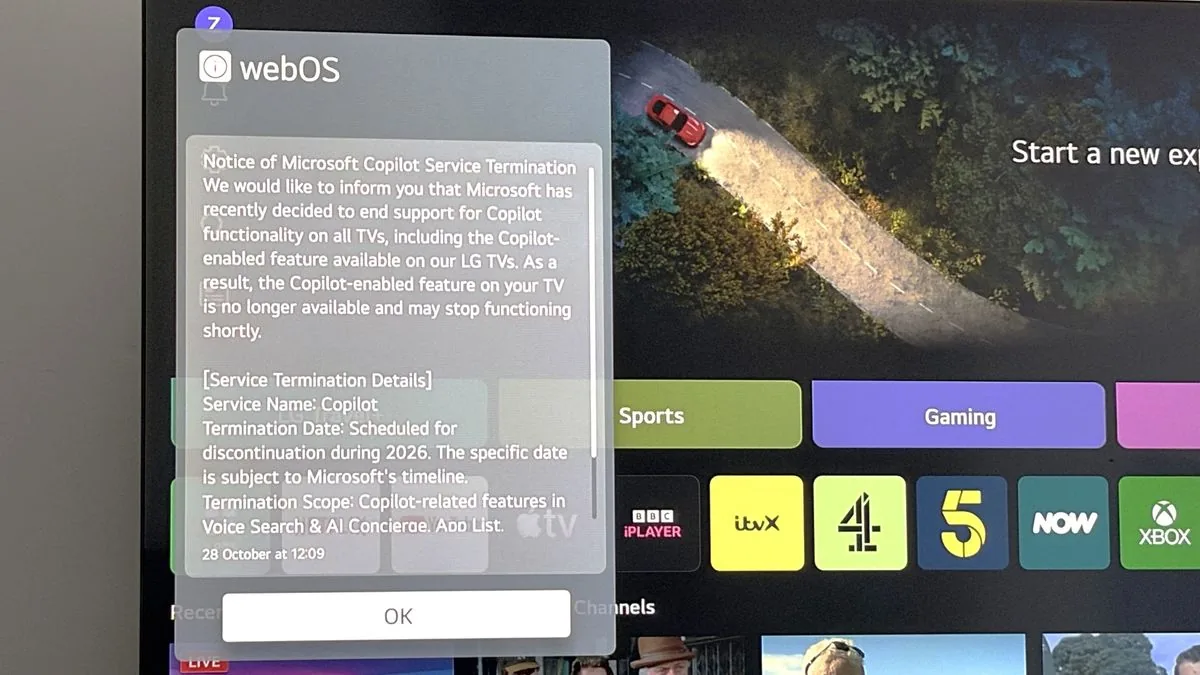
Television owners learned about the shutdown from on-screen alerts instead of a press conference or blog announcement from Microsoft. Zac Bowden of Windows Central first spotted the message when a popup window appeared on the side of his webOS-powered LG television screen. The notification warned that Copilot on smart TVs would lose support in the coming months. The alert stated: “We would like to inform you that Microsoft has recently decided to end support for Copilot functionality on all TVs, including the Copilot-enabled feature available on our LG TVs. As a result, the Copilot-enabled feature on your TV is no longer available and may stop functioning shortly.” [3] The notification surprised many television owners.
The wording in the message drew quick attention from technology reporters. Batt pointed out that the notice clearly said “all TVs” rather than limiting the cutoff to LG models. That specific phrase confirms that Samsung televisions and any other connected screens running the software face the exact same termination date. LG stated that the shutdown will occur during 2026. [1]
The alert also cautioned that the television feature might stop functioning before its official shutdown window. Some owners found the shortcut already unresponsive when opening it from their home menu. LG televisions show the warning across multiple system menus as the sunset date nears. The notice cannot be hidden permanently on some screens. [3]


User Pushback and Shortcut Controversy
The decision to remove the assistant comes after months of growing friction between smart television makers and customers who objected to forced software updates on their private screens. Last December, LG faced severe user backlash after an update to its webOS software added an unremovable Microsoft Copilot shortcut directly onto home screens without user approval. Instead of running a native TV app, the shortcut merely launched a basic web app inside a built-in browser window. Owners went online to register complaints on Reddit and community forums, saying the update felt like an intrusive advertisement taking up valuable home screen room. [2] Viewers disliked the forced addition.
The public outcry pushed LG to change its policy shortly after releasing the controversial update. Following weeks of customer criticism, LG pushed out a new software patch that finally allowed owners to delete the unwanted Copilot shortcut from their home dashboard. Samsung faced similar grumbling when it added assistant shortcuts to its television interfaces over the past year. [3]
The shortcut dispute showed the risk of pushing experimental AI software onto living room screens. Most buyers purchase a television to watch movies, stream shows, and play console games without extra clutter. Customer backlash convinced hardware makers that forced assistant shortcuts damaged the overall viewing experience. [2] People chose to delete the app.
Strategic Shift Toward Business Tools
The withdrawal from smart screens connects to a broader realignment of Microsoft’s artificial intelligence priorities. When Copilot launched, Microsoft tried to place the tool onto nearly every consumer gadget, hoping to build habits in living rooms and home offices alike. Andrew Liszewski said in The Verge that Microsoft introduced a new Copilot “super app” earlier this year, bundling multiple capabilities including chat, agents, and coding into a single interface. That new product direction aims Copilot directly at workplace productivity and enterprise subscriptions rather than casual personal companionship on a living room couch. [2] Personal companion apps are no longer the focus.
Microsoft also recently merged its Microsoft 365 Copilot and consumer Copilot into the same application. That reorganization means there is no longer a separate, dedicated personal Copilot app for consumers looking for a digital friend. Bowden said in his report that Copilot on TV no longer makes sense for Microsoft as its strategy moves firmly away from casual living room conversation. [3]
This television retreat mirrors other recent moves where Microsoft pruned experimental assistant shortcuts across its ecosystem. In an earlier desktop adjustment, Microsoft retired OneDrive Copilot shortcuts from File Explorer after users voiced interface concerns. The company made a similar shift when Microsoft dropped Copilot+ branding from new Surface laptops. Software planners now prioritize high-margin enterprise software over free consumer television integrations. Commercial workplace tools offer clearer returns. [3]

Timeline for Copilot on Smart TVs
Although the end of the service is now confirmed, Microsoft has not yet announced a specific day when Copilot will stop functioning on smart TVs. LG stated that the tool is scheduled for discontinuation during 2026, noting that the exact timetable remains subject to Microsoft’s rollout plans. Bowden noted that the announcement leaves television owners with only a few remaining months of access before the assistant goes dark permanently. Anyone who still relies on Copilot for movie picks or general television queries will soon need to switch to built-in system tools or smartphone apps. [3] The service will shut down quietly.
The disappearance of Copilot on smart TVs closes an experimental living room chapter that started with great fanfare on the CES 2025 exhibition stage. Living room viewers never developed a habit of conversing with an AI chatbot while watching movies or television shows. Microsoft is ending its living room assistant to focus its developers on business software. [1]
For millions of television owners, the change brings relief from an unwanted shortcut that arrived without their consent. Television screens are returning to their traditional role as entertainment monitors without extra assistant icons cluttering home menus. Microsoft continues to narrow its consumer AI ambitions, leaving behind the living room as it concentrates its engineering talent on business tools and enterprise software. [2]
- ONLINE NEWS Batt, S. (2026, October 28). After only two years, Microsoft removes Copilot from all smart TVs. XDA Developers. [Article Link]
- ONLINE NEWS Liszewski, A. (2026, October 28). Microsoft is ending Copilot support on smart TVs. The Verge. [Article Link]
- ONLINE NEWS Bowden, Z. (2026, October 28). Microsoft to end Copilot support on smart TVs by end of year. Windows Central. [Article Link]


