




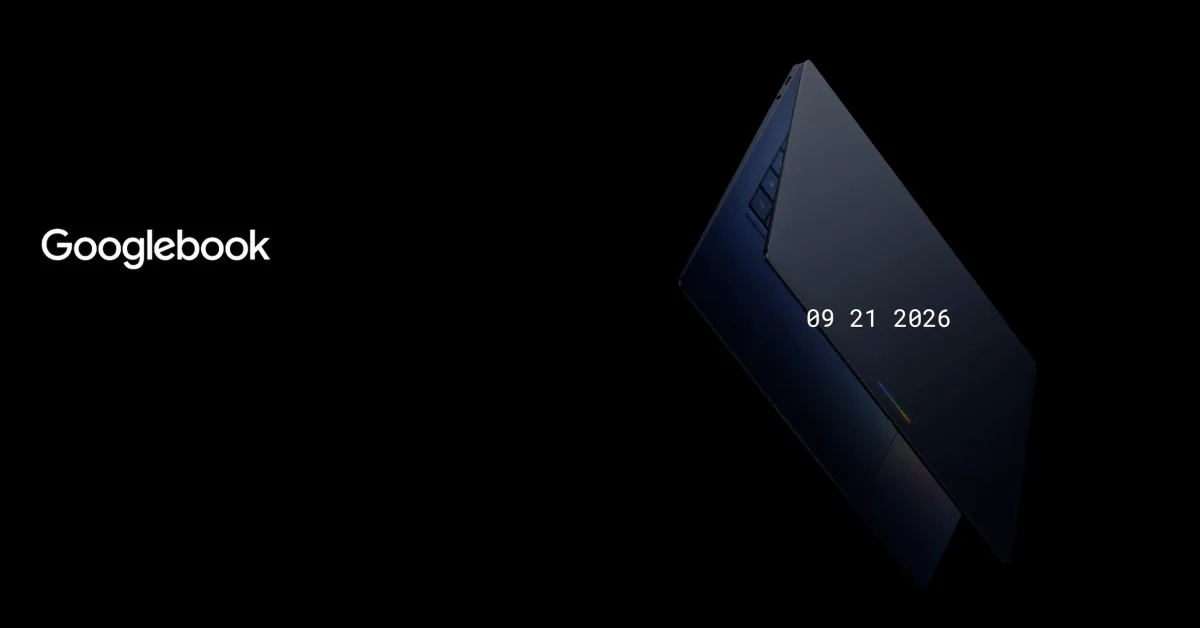
Google designated September 21 for opening Googlebook pre-orders at 9 a.m. Eastern time, dispatching email alerts to registered consumers to inaugurate AI-powered notebooks engineered around Gemini Intelligence and a tailored Android software stack. Order desks open next week. Google previously previewed the premium computing category during The Android Show earlier this year, withholding granular specifications while assembling key manufacturing partners for an autumn arrival. Can an operating foundation rooted in smartphone software redefine conventional personal computing? Partner assembly lines now accelerate production as the official preorder morning approaches. [1, 2]
Googlebook Pre-Orders and Launch Partners
Google established the September 21 reservation milestone through notifications sent directly to subscribers who registered for hardware updates on its newly launched showcase portal. The debut starts early. Sanuj Bhatia reported for Android Central that the incoming hardware assortment relies on established personal computer manufacturers including Acer, ASUS, Dell, HP, and Lenovo. Acer, ASUS, Dell, HP, and Lenovo will supply the initial machines. Kris Holt observed in reporting for Engadget that each partner previously manufactured traditional Chromebooks, providing Google with immediate supply volume across established retail distribution networks. [1, 2]
Google launched a dedicated landing portal displaying minimal branding teasers that pair visual desktop interface previews with the confirmed September 21 date. The company has not published comprehensive spec sheets, estimated battery runtimes, or introductory price tags across specific partner editions. Hardware pricing details remain closely guarded ahead of orders. Abner Li reported for 9to5Google that order desks begin processing reservations on Monday morning, though the waiting duration between early preorders and store shipments remains unannounced. Delivery schedules stay unconfirmed. Launching the hardware in advance of end-of-year shopping rushes appears probable as partner factories finish regional hardware certifications. [1, 3]
Hardware manufacturing schedules determine market momentum. Factory lines move swiftly.
Android Architecture Replaces Legacy ChromeOS
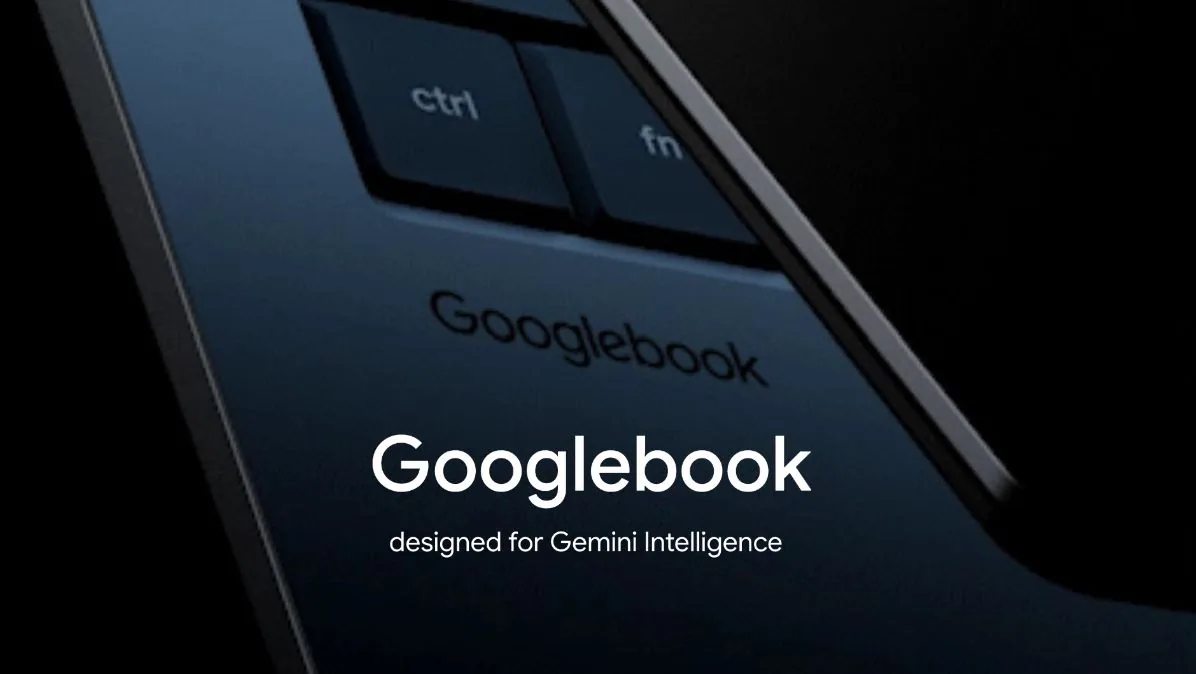
Google engineered the incoming family of notebooks upon an Android-based technical stack rather than legacy ChromeOS, marking a fundamental philosophical transformation in how the technology company develops personal computing software. The platform represents an evolution. Google originally hinted at this architectural departure during The Android Show earlier this year, presenting the hardware in a surprise closing demonstration as portable computers created specifically for an intelligence system era. Kris Holt noted that the software represents an Android-rooted evolution of ChromeOS. The company has yet to reveal the official commercial marketing name for this transformed desktop platform. [1, 2]
This underlying migration clarifies why Google is stopping the exclusive reliance on traditional ChromeOS distributions for its premier notebook offerings. Constructing the core stack on Android permits these laptops to execute native mobile software directly, avoiding the efficiency penalties associated with secondary emulation layers (virtual software environments that typically elevate processor temperature and deplete portable battery reserves). Native application execution eliminates secondary software emulation penalties. How google finally leapfrogged rivals in multi-device synergy centers on this unified framework, enabling users to launch phone applications directly on laptop screens while accessing files stored on smartphones without manual file uploads. Cross-device workflows become immediate. [1, 2]
Sanuj Bhatia observed that Google is positioning Googlebooks as an immediate productivity counterpart for Android phone owners, uniting mobile communications and desktop displays into a continuous operational environment. Shared tools simplify daily tasks. [1]

Magic Pointer and Gemini Intelligence
Gemini Intelligence operates as the fundamental engine driving the entire operating system, managing productivity tasks through interactive contextual recognition rather than detached web searches. Cursor movements unlock contextual suggestions. Kris Holt highlighted in Engadget that shaking the trackpad pointer across the workspace turns the cursor into the Magic Pointer, a context-aware utility that evaluates active screen components to present relevant shortcuts and automated system actions. Directing this specialized pointer toward text passages or open applications invites immediate computational suggestions without requiring people to open dedicated web browser tabs. [2]
Beyond contextual pointer interactions, the operating environment allows owners to generate custom desktop widgets (compact interface panels displaying live data feeds) simply by entering a descriptive natural language text prompt detailing what data they wish to follow. Custom widgets generate live summaries from simple text descriptions. Software demonstrations reveal the Magic Pointer animating smoothly into an illuminated light bar, a visual motif that hardware designers mirrored directly on physical notebook chassis. Abner Li observed for 9to5Google that this glowbar on the laptop lid serves as the primary external visual signature for Googlebooks, whereas the modest Googlebooks wordmark appears exclusively on the left palm rest beneath the keyboard. [1, 2, 3]
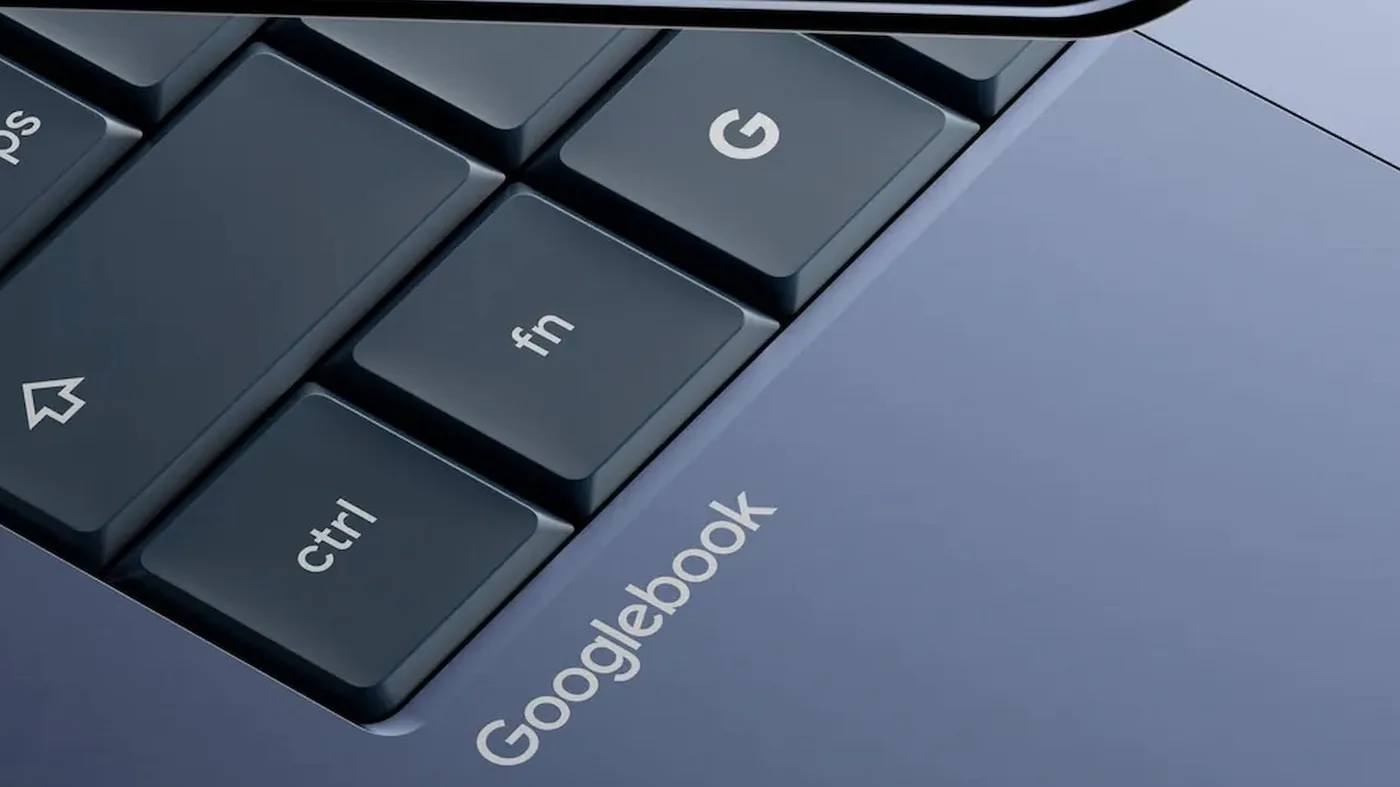
Hardware lighting reinforces software identity. Exterior styling catches the eye.
Hardware Leaks and System Specifications
Technical characteristics have begun surfacing across supply channels ahead of the September 21 date, revealing how partner brands plan to differentiate their respective models. Biometric sensors protect local files. Abner Li noted in 9to5Google that detailed technical documentation recently surfaced for a Lenovo Googlebook 15 notebook, disclosing dedicated Google facial authentication hardware designed for rapid biometric unlocking without entering traditional text passwords. A companion utility titled the Look up app simultaneously emerged on the Google Play Store, currently functioning on Android smartphones while waiting for synchronization with incoming laptop releases. [3]
Early engineering prototypes of the first Asus Googlebook have likewise surfaced in industry registries as component suppliers prepare initial distribution batches for commercial vendors. Google maintained restrained styling across all partner chassis, giving prominence to the lid glowbar while ensuring vendor logos remain subtle. Will initial hardware pricing attract mainstream laptop shoppers? Holiday discount windows approach fast. Consumers analyzing household electronics spending during retail trends surrounding Black Friday shopping will monitor whether initial shipments land on physical store shelves before Black Friday discount seasons expire. [3]
Early component leaks show steady factory preparation across Asia. Retail units near completion.
Market Competition and Premium Expectations
Stepping into the premium notebook arena positions Googlebooks against entrenched industry competitors that maintain firm control over corporate workspaces, creative studios, and educational campuses. Memory component expenses keep rising. Sanuj Bhatia underscored in Android Central that Google enters an intensely competitive consumer market, where advanced notebooks featuring RTX Spark graphics are arriving on store shelves while rising memory component costs apply continuous price pressures across global assembly operations. Rising memory component costs create upward pricing pressure for manufacturers. Kris Holt noted in Engadget that Google must persuade shoppers that an Android platform can provide flexible window multitasking, reliable peripheral connectivity, and local file organization matching longstanding desktop expectations. Can mobile-derived operating platforms satisfy demanding professional workloads? Enterprise procurement will test long-term commercial appeal. [1, 2]
Pre-order announcements from Google and Android Authority confirm widespread curiosity, yet market reception ultimately hinges on dependable software execution and prompt hardware delivery. Retail buyers await official benchmarks. Sanuj Bhatia observed in Android Central that Google initially hinted at an autumn availability window back in May, but corporate spokespersons have not clarified whether all manufacturer partners will ship simultaneously or pace releases across select territories. Monday, September 21 initiates the formal preorder campaign, revealing whether Google’s intelligent operating platform can carve out an enduring niche within modern personal computing. [1, 3, 4]
Retail shelves will soon test Google’s vision. Commercial reception remains unwritten.
- ONLINE NEWS Bhatia, S. (2026, September 14). Googlebook pre-orders finally have a date: Here’s when you can buy one. Android Central. [Article Link]
- ONLINE NEWS Holt, K. (2026, September 14). Pre-orders for the Android-based Googlebook laptops open on September 21. Engadget. [Article Link]
- ONLINE NEWS Li, A. (2026, September 14). Googlebook pre-orders start on September 21. 9to5Google. [Article Link]
- ONLINE NEWS Android Authority. (2026, September 14). Google finally sets a date for Googlebook pre-orders. Android Authority. [Article Link]


