



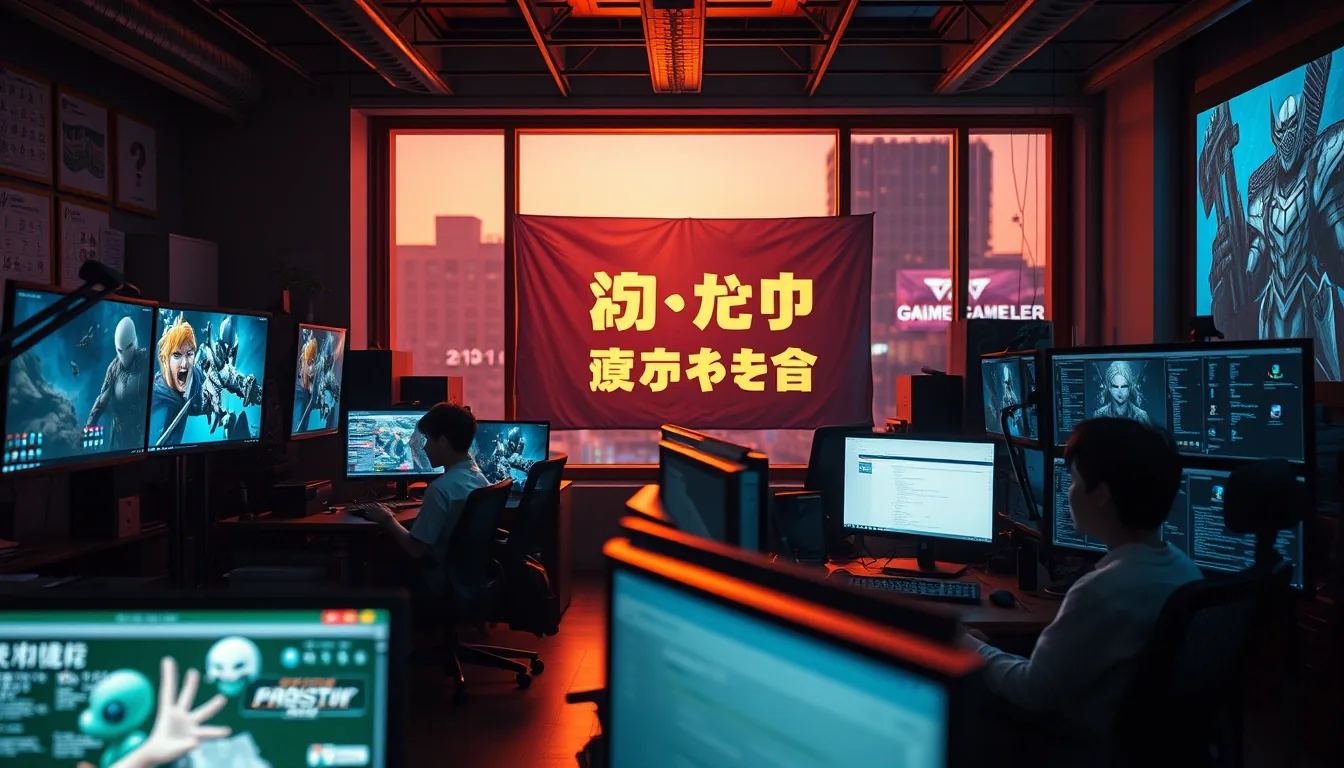
Tokyo Game Show 2026 opened with a concrete look into how commercial studios build modern entertainment software, as the Computer Entertainment Supplier Association (CESA) previewed its 2026 CESA Video Game Industry Report on September 17. The headline figure drew immediate scrutiny across the international games industry: 85.8% of Japanese game developers now use generative AI in their workflow, according to initial coverage from Japanese news outlet Denfaminicogamer and partner publication Yomimono. That total marks a sharp climb from the 51% recorded among member studios in 2025. Nearly two-thirds of respondents reported daily use. The rapid transition establishes that automated tools have moved beyond casual testing into regular production schedules across Tokyo and Osaka. [1, 2]
Survey Details Behind the 85.8% Adoption Rate
The findings originate from an extensive research study titled Game Developers Employment and Career Formation 2026, conducted between May and August 2026. CESA compiled 1,349 valid responses from technical artists, sound directors, programmers, executives, and students across major studios, according to reporting from shattered.io lead researcher Elena Marchetti and Sigma Wire analysts Shyamini and Core Nexis. Out of those 1,349 respondents, 63.0% use generative AI tools every working day, while 22.8% deploy them occasionally. Adoption moved fast. Another 8.6% confirmed they were actively trialling or verifying tools, whereas only 4.8% had never touched the technology, and a minimal 0.7% had stopped after earlier trials. [2, 4]
The baseline had shifted within twelve months as individual Japanese game developers integrated automated tools directly into everyday studio routines. [4]
In 2025, CESA measured generative AI usage at roughly 51% across 54 participating Japanese game companies rather than polling individual employees. That methodological difference between company-level policy and personal daily usage provides critical context, as Skip The Critics and Tech Insider noted in their comparative analysis, yet both data points confirm widespread adoption across Japan’s digital entertainment sector. CESA pulled these preliminary figures forward specifically for Tokyo Game Show 2026 ahead of the full report scheduled for release in early December 2026. Prominent CESA member companies—including Capcom, Sega, Level-5, Konami, Square Enix, Bandai Namco, and Koei Tecmo—anchor these survey returns, establishing operational standards that smaller independent creators and regional outsourcing partners across Asia frequently follow during production cycles. [1, 2]
Efficiency and Labor Shortages Drive Studio Adoption
When CESA surveyed member studios including Square Enix and Bandai Namco on why they integrated generative AI into production, executive teams cited practical business pressures rather than creative curiosity. Shorter development cycles ranked as the primary motivation among 30 surveyed companies, followed by reducing development and operating costs across 29 firms. In addition, 24 studios highlighted multilingual support and faster international launches, while 20 companies pointed directly to Japan’s domestic labor shortages. Development budgets for console and computer titles have climbed relentlessly as visual fidelity expands, forcing production managers to seek greater output from existing headcounts. [1, 4]
Japan faces an ageing workforce and an acute shortage of software engineers, while a weaker yen makes overseas revenue indispensable for domestic publishers. A specialized study of Japanese online game companies, reported by Automaton West editor Carlos in July 2026, revealed a 100% adoption rate across that specific sector. In that online segment, Google Gemini registered 94% usage, Anthropic Claude reached 84%, and GitHub Copilot stood at 76%. Tech Insider analyst Nadia Dubois observed that while Western commentary often centers on artistic controversies, Japanese studios frequently leverage generative algorithms for user preference analysis (analyzing player telemetry), player behavior prediction, translation assistance, and routine coding support. [1, 3]
Throughput drove the shift. Can smaller teams meet demanding milestone targets without automated assistance? For many Japanese game developers handling simultaneous worldwide releases, generative systems serve as an operational lever to accelerate localization drafts, prototype mechanics, and maintain live-service roadmaps. [2, 3]


Japanese Game Developers Establish Human Review Guardrails
Rather than issuing blanket corporate bans, Japanese game developers have focused heavily on structured workplace oversight. When CESA asked developers what protective measures their studios enforce, the most common response was conducting human verification, correction, and supervision of all generated material, as documented by Tech4Gamers writer Shahmeer Sarfaraz and Automaton West reporter Carlos. Participating firms emphasize specifying or restricting permissible software tools, with explicit rules forbidding direct placement of raw AI output into commercial products. [1, 5]
That measured posture reflects hard lessons learned from recent public controversies across the domestic market. Earlier in 2026, Level-5 faced intense online scrutiny when gaming communities noticed visual anomalies in a promotional video, though the studio clarified that the issue stemmed from internal production oversights rather than reckless automation. Earlier coverage examined how Level-5 addressed public backlash over AI-generated art in the famous Professor Layton franchise. In a recent corporate presentation, the Level-5 chief executive officer officially confirmed that the studio uses generative AI under strict supervision, illustrating how Japanese game developers have transitioned from defensive denials to transparent operating boundaries. [1, 4]

Most Japanese studios treat generated text, concept sketches, and placeholder models strictly as preliminary drafts (temporary assets used during early prototyping). Human review remains standard procedure. An artisan must inspect, adjust, and approve every single asset before commercial release. Will that rigorous human supervision withstand frantic pre-launch crunches when milestones tighten? [2, 6]
Intellectual Property Concerns and Voice Cloning Disputes
Announcing the survey findings at Tokyo Game Show 2026, CESA Executive Director Tsutomu Masuda deliberately avoided celebratory rhetoric. Masuda emphasized that while generative AI expands steadily across development pipelines, unresolved legal issues regarding intellectual property infringement demand vigilant attention. Masuda framed the industry’s central challenge as enhancing the quality of human-centered development while balancing emerging technological methods against intellectual property protection. His measured stance reflects mounting legal and reputational risks confronting modern entertainment corporations. [1, 4]
Real-world disputes illustrate why Japanese publishers proceed cautiously with voice and character generation. In September 2026, a Shanghai court ordered an artificial intelligence voice service to pay $112,000 to the developer of Genshin Impact after the platform cloned 63 distinct character voices without authorization. Prominent voice actress Megumi Ogata, widely celebrated for her iconic performances in Evangelion, publicly expressed deep concern over unauthorized voice cloning and questioned why Japan lacked comprehensive protection guidelines for voice talent. [4]

Regulatory frameworks are beginning to shift across Tokyo as well. In August 2026, a Japanese government panel approved a principle code encouraging generative AI developers to disclose their training data, signaling potential revisions to Japan’s traditionally flexible copyright framework (the statutory guidelines governing machine learning). Media outlets including Nikkei Business Publications noted that game publishers whose foundational assets consist of proprietary character designs and established voice lines recognize that unchecked model training cuts both ways. [4]
Contrasting Industry Approaches and Future Talent Risks
Not every major studio in Tokyo embraces generative software at identical speeds, as Capcom and Square Enix maintain distinct artistic traditions. Nintendo has repeatedly reaffirmed its decision to avoid generative AI in commercial game development, citing persistent worries over intellectual property boundaries and brand integrity. Former Nintendo art director Takaya Imamura publicly experimented with commercial tools but voiced reservations about their creative value. Meanwhile, veteran engineers at Capcom have pointed out that machine algorithms cannot replicate human artistic sensibility, demonstrating that technical adoption does not equal blind creative confidence. [2, 4]
On a global scale, Japanese game developers appear to be adopting generative workflows considerably faster than their international counterparts across North America and Europe. The worldwide Game Developers Conference State of the Game Industry survey found that 36% of game professionals personally utilize generative tools, with 52% of studios reporting company-level usage. In South Korea, the Korea Creative Content Agency documented a 41.7% utilization rate in early 2025, while the Unity 2025 Gaming Report recorded 79% positive sentiment among creators worldwide. Japan’s demographic constraints and intense release schedules have accelerated practical workplace adoption far ahead of global medians. [2, 3]
A deeper structural question looms over junior positions. Traditional apprenticeships in Japanese studios historically depended on entry-level artists drawing background props and junior programmers debugging boilerplate routines. Creative pipelines depend on junior staff. If generative algorithms absorb those basic tasks, how will Japanese game developers cultivate the next generation of veteran art directors and lead systems architects? [4]
- ONLINE NEWS Carlos. (2026, September 17). Over 85% of Japanese game developers use generative AI in game development, 2026 CESA survey shows. An increase from last year’s 51%. Automaton West. [Article Link]
- ONLINE NEWS Marchetti, E. (2026, September 17). CESA: 85.8% of Japan Game Devs Use Generative AI. shattered.io. [Article Link]
- ONLINE NEWS Dubois, N. (2026, September 17). Japan Game Devs Hit 85.8% Gen AI Use at TGS 2026. Tech Insider. [Article Link]
- ONLINE NEWS Shyamini, & Core Nexis. (2026, September 18). Japanese Game Developers Generative AI Adoption Hits 85.8%. Sigma Wire. [Article Link]
- ONLINE NEWS Sarfaraz, S. (2026, September 17). Over 85% Japanese Studios Now Use Generative AI In Game Development, Up From 51% Last Year. Tech4Gamers. [Article Link]
- ONLINE NEWS Let’s Data Science. (2026, September 18). CESA report finds 85.8% of Japanese game developers use generative AI. Let’s Data Science. [Article Link]


