





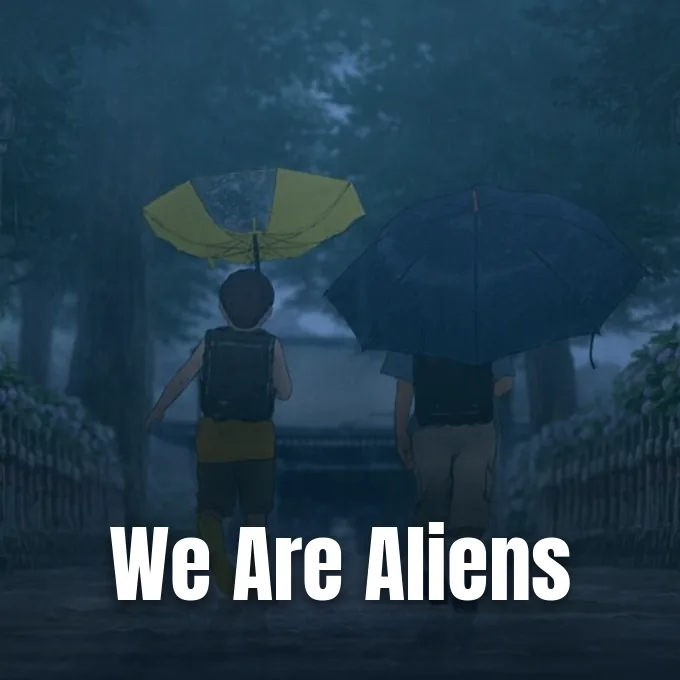
Japanese director Kadowaki Kōhei’s animated feature We Are Aliens won the Kau Ka Hoku Award at the 46th Hawai’i International Film Festival. Presented by Hawaiian Airlines, the honor recognized the film as the top entry among first and second features from emerging international filmmakers. Festival organizers handed out the jury prizes during a reception at the Halekulani Hotel in Waikīkī on Nov. 1, before public screenings continued across five Hawaiian islands over the following two weeks [2].
Festival Winners at the Halekulani Reception
Presented by Hawaiian Airlines, the Kau Ka Hoku Award focuses on new international directors presenting either their first or second full-length movie in the festival’s main competition program. Programmers assembled a slate of fiction and nonfiction nominees. An independent jury panel made the final choice. Juror Samuel Jamier, president of the New York Asian Film Festival, evaluated the entries alongside film critic Jesse Hawthorne Ficks and former Letterboxd West Coast editor Mia Lee Vicino before choosing the winner [2].
The three jurors agreed on the Japanese animated film after reviewing the competition lineup. The jury gave the prize to Kadowaki’s film for “giving childhood a physical presence” through hand-drawn animation and rotoscoping. Jurors said the overheard dialogue captures how children learn cruelty from each other and what memory makes of those moments over time. The panel also praised the film for “an emotional force” that stood out in a debut work, and jurors gave an honorable mention to The Seoul Guardians. The jury agreed unanimously [2].

Local categories also handed out honors during the evening. Filmmaker Zilla Barbosa won best Made in Hawai’i feature for Making the Line, a debut picture celebrating personal determination and local community life in Hilo. Justyn Ah Chong took best Made in Hawai’i short for The Man and the Tree. The short film depicts life from a Native Hawaiian perspective. That short qualifies for Oscar consideration. In the short film category, the jury recognized Aukai Lagiri’s Kukulu with an honorable mention. Ty Sanga’s Lahaina: Voices of Change also gained recognition from both the Made in Hawai’i and Pacific Award panels. The Made in Hawai’i jury included Michelle Sugihara, executive director and CEO of the Coalition of Asian Pacifics in Entertainment, alongside Taylour Chang from the Bishop Museum and Kent Matsuoka. Jordan Manley’s documentary The Navigator won the Pacific Award for best feature, and Australian thriller Faceless by Fraser Pemberton and William Jaka secured the international short film prize [2].
How the Kau Ka Hoku Award Jury Decided
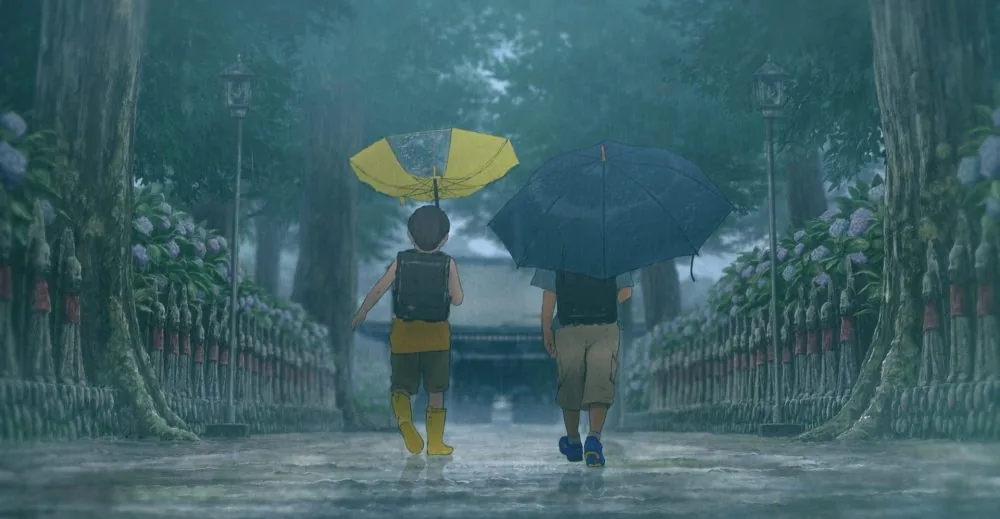
The decision rested on how the movie handled painful childhood memories through mixed visual methods. Director Kadowaki Kōhei earned the Kau Ka Hoku Award for his visual storytelling. Kadowaki combined traditional hand-drawn art with rotoscoping to give character movements a grounded weight. Rotoscoping helped actors look natural on screen, but unvarnished line work preserved the stylized freedom of animation. The spoken dialogue sounds like conversations overheard on street corners instead of tidy studio scripts. This approach lends the schoolyard conflicts between the children immediate emotional weight [2].
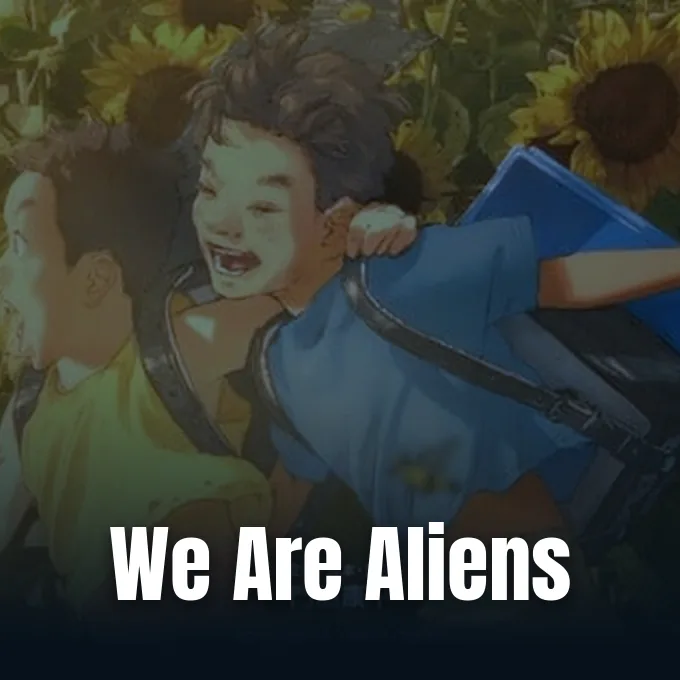
At the center of the story are two schoolboys named Tsubasa and Gyōtarō who strike up a close friendship during their early elementary school years. Misunderstandings and unspoken jealousy slowly push the boys apart until a single hurtful incident breaks their connection for good. The story tracks the painful fallout of that rupture over three decades, following both boys as they grow up and take entirely different directions in their separate adult lives without ever speaking [2]. But the unresolved feelings do not simply vanish with time. When unexpected reminders from their elementary school days resurface decades later, both men find themselves forced to confront the old dispute that broke their connection during their youth. The dispute left quiet regret [1].
Kadowaki took on unusual personal responsibility during development. He served as planner, scriptwriter, director, storyboard artist, and editor. Before launching this feature, Kadowaki created the second BEASTARS season’s ending sequence and directed animated music videos for the pop duo YOASOBI. Kadowaki directed, wrote, and edited the feature [1].
Voice Cast Across Two Generations
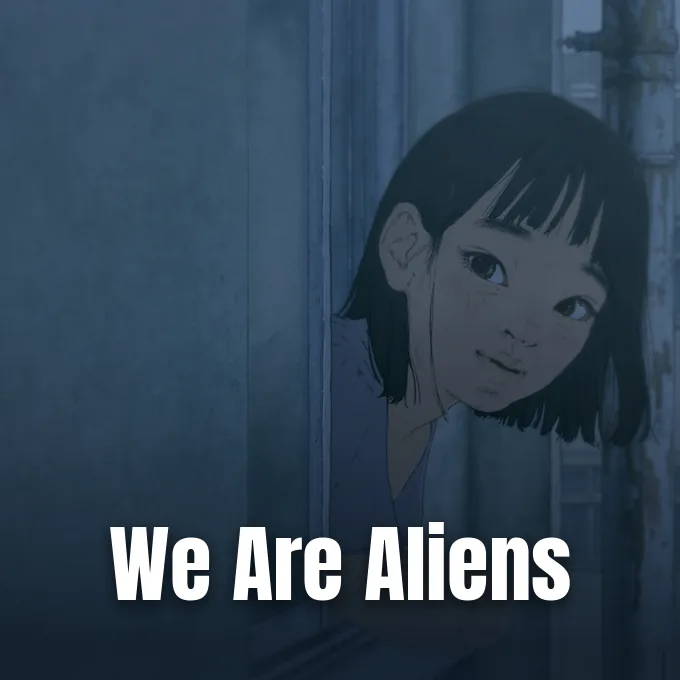
To reflect the long timeline of the story, the team hired separate performers for the childhood and adult chapters. Actor Ryōta Bandō voices the adult Tsubasa. Bandō previously performed in the anime feature Fureru. and the official Japanese dub of How to Train Your Dragon. Amane Okayama voices Gyōtarō as an adult. Okayama previously voiced characters in the animated music feature Blue Giant, and he has appeared in prominent live-action screen adaptations such as I”s and Hirayasumi [1].
The elementary school versions of the two leads required a different casting route. Open auditions gave child actors Yūto Maki and Tasuku Nakagome the roles of young Tsubasa and young Gyōtarō. The animators captured authentic classroom exchanges by recording the young cast directly. Child actors brought natural vocal cadences without adult mannerisms. Pop singer Ten Yamasaki, a member of the idol group Sakurazaka46, joined the cast as Konatsu. Comedian Kemuri Matsui provided the voice for Batahara, rounding out the childhood social group [1].
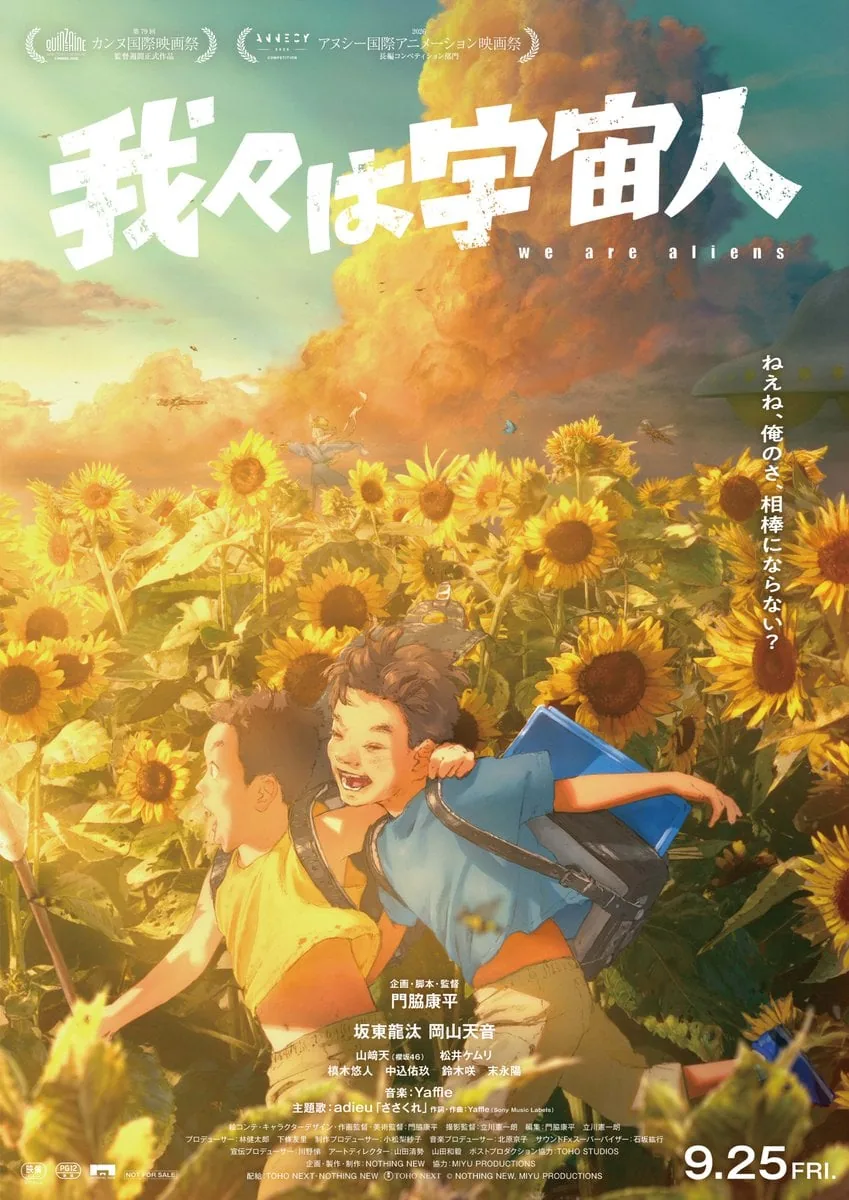
Supporting characters complete the neighborhood cast. Gaku Sano voices Tsubasa’s adult friend Seiya Toda, and Reika Ōzeki plays young Seiya in school flashbacks. Arisa Sasaki voices Toda’s childhood friend Elmo Matsushita. Edo Harumi rounds out the local cast, playing a calligraphy teacher who witnesses the boys growing up [1].
Behind the Kau Ka Hoku Award Production
Planning began under Japanese company NOTHING NEW, which built the film around Kadowaki’s original scenario. In June 2025, French animation studio Miyu Productions joined the team as a collaborative partner. Miyu Productions previously worked on well-received international animated features, including Ghost Cat Anzu and A New Dawn. Collaborating with a French studio helped NOTHING NEW coordinate complex rotoscoping and hand-drawn animation pipelines across both Japanese creators and overseas artist teams throughout the multi-year production cycle [1].
Music also formed a core element of the movie’s identity. Composer Yaffle wrote the original score, bringing experience from producing chart records for Japanese soloists Fujii Kaze and Kenshi Yonezu. Musical artist adieu performed the ending theme song Sasakure (Split). The track’s title refers to a small hangnail, serving as an everyday metaphor for the tiny irritating wound that eventually unravels the boys’ lifelong friendship. Composer Yaffle wrote the score [1].
The festival gala also spotlighted veteran talent in Waikīkī. Halekulani Hotel hosted the honoree gala on Oct. 29. Ke Huy Quan received the Halekulani Golden Maile Career Achievement Award. Sung Kang received the Maverick Award for writing and directing Drifter. Polynesian Voyaging Society leader Nainoa Thompson earned the Legacy Award. In 1980, Thompson guided a voyaging canoe from Hawai’i to Tahiti with no modern instruments, becoming the first Native Hawaiian in centuries to complete that traditional open-ocean journey. Actor Luciane Buchanan took the New Vanguard Award, and screenwriter Bryson Chun received the Trailblazer Award. Gala host Sisa Grey presented [2].
Screening Schedule Across Five Islands
The Hawai’i win continues a steady worldwide festival tour. We Are Aliens held its world premiere at the Cannes Film Festival on May 14 as part of the Directors’ Fortnight selection. In late June, the film traveled to the Annecy International Animation Film Festival in France, competing against international animated features during the festival’s weeklong competition schedule. Film festivals in Melbourne and New Zealand screened the movie during the late summer months [1].
Award recognition gathered speed as the film moved into autumn programming. In September, We Are Aliens earned the Ottawa Animation Festival top prize for best animated feature. It then traveled to Spain, taking the Sitges Anima’t best feature award at the 59th Festival Internacional de Cinema Fantàstic de Catalunya. On October 25, the film picked up Special Mentions in the Alice nelle città section of the 21st Rome Film Festival, and it also earned an Honorable Mention at the 35th Philadelphia Film Festival. The film also screened in the Japanese animation special category at the 31st Busan International Film Festival [1].
The 46th Hawai’i International Film Festival opened on Oct. 21 at the Hawaii Theatre in Honolulu. Following the Halekulani awards reception, festival organizers launched island screenings running from Nov. 3 to Nov. 15 across venues on Kapolei, Maui, Moloka’i, Hawai’i Island, and Lāna’i. Executive director Jean H. Lee said the winners showcase storytelling throughout the Pacific [2].
- ONLINE NEWS Anime News Network. (2026, November 2). We Are Aliens Film Wins Award at Hawai’i Int’l Film Festival. [Article Link]
- ONLINE NEWS Ramachandran, N. (2026, November 2). Hawai’i International Film Festival Crowns ‘We Are Aliens’ as Ke Huy Quan, Sung Kang Receive Honors (EXCLUSIVE). Variety. [Article Link]
- ONLINE NEWS Bennett, M. (2026, November 2). ‘We Are Aliens’ Wins Top Jury Prize at Hawai’i Film Festival. Arts & Voices. [Article Link]
- ONLINE NEWS The Front Page. (2026, November 2). Hawai’i International Film Festival Concludes With Top Honors for ‘We Are Aliens’. [Article Link]
- ONLINE NEWS Matrix News. (2026, November 2). ‘We Are Aliens’ Wins Top New Filmmaker Prize at Hawai’i Film Festival. [Article Link]
- ONLINE NEWS Headliner redactie. (2026, November 2). We Are Aliens wint Kau Ka Hōkū Award op 46e Hawaii International Film Festival. Headliner.nl. [Article Link]


