





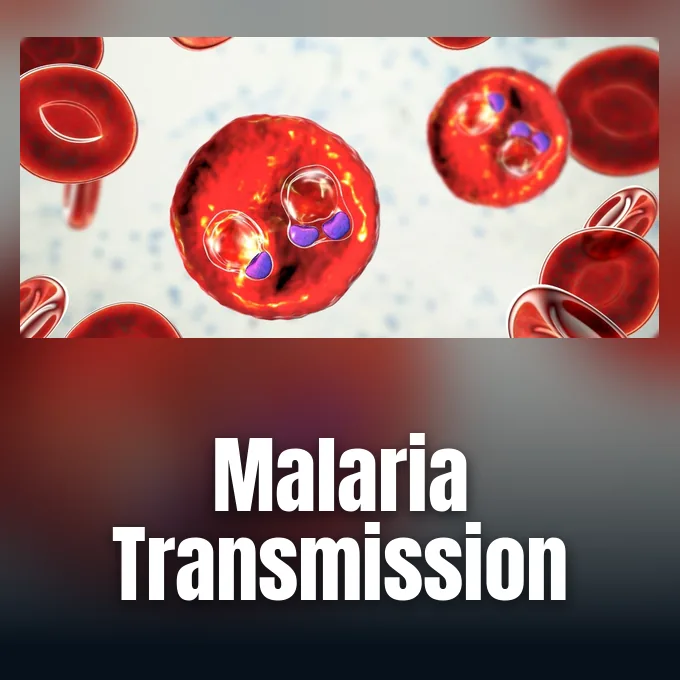
Can a single-celled blood pathogen actively determine when to multiply inside a patient and when to escape into an insect vector? Malaria parasite transmission relies on Plasmodium falciparum, the organism responsible for over 90% of global malaria deaths, executing an evolutionary trade-off between asexual blood replication and transmissible sexual gametocytes. While host immune responses threaten asexual multiplication, a study coordinated by Alfred Cortés at the Barcelona Institute for Global Health demonstrates that environmental pressure triggers an epigenetic network that drives gametocyte production [1].
Malaria Parasite Transmission and the Replication Paradox
During intraerythrocytic infection in humans, Plasmodium falciparum encounters two conflicting biological demands. On one side, asexual stages must replicate continuously to sustain population density within red blood cells. On the other side, a small fraction of parasites must convert into non-replicating sexual stages, termed gametocytes, to ensure passage into feeding female Anopheles mosquitoes. The decision determines whether the pathogen prioritizes internal survival or transmission to another human host. If every parasite converts to gametocytes, the asexual infection collapses and the host immune system clears the threat. Conversely, producing zero gametocytes traps the pathogen in a single human body, extinguishing its evolutionary lineage [2].
Human malaria has burdened populations since at least 500 B.C.E., yet therapeutic elimination remains elusive. In 2023, the World Health Organization reported approximately 263 million cases across the globe. Clinical records show that Plasmodium falciparum gametocytes typically emerge in peripheral blood between the 10th and 12th day following the onset of fever, expanding steadily over the subsequent two to three weeks. In striking contrast, Plasmodium knowlesi gametocytes mature within 1.5 to 2 days with a circulation lifespan of only 5 to 12 hours. Meanwhile, Plasmodium vivax produces sexual forms within 3 days, and Plasmodium ovale requires approximately 5 days. These varied timelines highlight how distinct species adapt their transmission dynamics to vector availability [3].
Maintaining this reproductive balance requires acute environmental sensing. Much like evolutionary mechanisms where parasites altering host biology adjust phenotypes to shifting host conditions, malaria parasites monitor physiological distress to recalibrate transmission investment. When the intraerythrocytic environment turns hazardous, the organism initiates sexual conversion. Cellular resources shift rapidly [1].

Epigenetic Silencing Keeps Sexual Genes Dormant
Under standard growth conditions in human erythrocytes, the genetic program required for sexual commitment remains tightly repressed. At the center of this conversion switch sits PfAP2-G, a master transcription factor belonging to the ApiAP2 family that regulates over 400 genes involved in early gametocyte differentiation. Heterochromatin packaging maintains this critical locus in a transcriptionally silent state, preventing premature conversion during proliferative infection phases [3].
Histone modifications establish this repressive barrier. The ap2-g gene locus is marked by H3K9me3 (histone 3 lysine 9 trimethylation) and physically occupied by heterochromatin protein 1 (HP1). As long as HP1 coats the promoter, transcription machinery cannot access the sequence. Laboratory cultures first established by William Trager and James B. Jensen in 1976 demonstrated that stable asexual propagation requires continuous nutrient replenishment in RPMI 1640 medium. Without external stress, the vast majority of parasites retain HP1 occupancy and continue asexual schizogony [3].
What triggers the parasite to dismantle this epigenetic barrier? Researchers observed that high parasitaemia in culture (typically 8% to 15%) stimulates sexual development, particularly when combined with lysed uninfected erythrocytes or conditioned medium. In traditional crash protocols, cultures initiated at 0.5% parasitaemia reach approximately 15% by days 4 to 5, prompting sexual conversion by days 6 to 7. Such environmental pressures trigger chromatin remodeling, forcing HP1 eviction so that malaria parasite transmission pathways can activate before asexual hosts perish [3].
AP2-HS Acts as the Master Sensor
To identify the molecular sensor directing this transition, researchers led by Elisabet Tintó-Font and Alfred Cortés at ISGlobal examined parasite gene activation across three distinct stressors. The investigation exposed Plasmodium falciparum to nutrient depletion, treatment with the clinical antimalarial dihydroartemisinin (DHA), and simulated febrile heat shock mimicking human fever. Across all three distinct environmental challenges, the team recorded identical transcriptomic and epigenomic responses, revealing a unified stress-sensing network [1].
The study revealed that AP2-HS functions as a central command hub that coordinates cellular defense and sexual development. When the parasite senses host-derived stress, AP2-HS activates transcription of gdv1 (gametocyte development 1), initiating the cascade required for sexual conversion. Concurrently, AP2-HS upregulates general heat shock and protective survival proteins, stabilizing the pathogen against lethal injury. Survival collapses immediately. Without functional AP2-HS, parasites cannot commit to vector transmission [2].
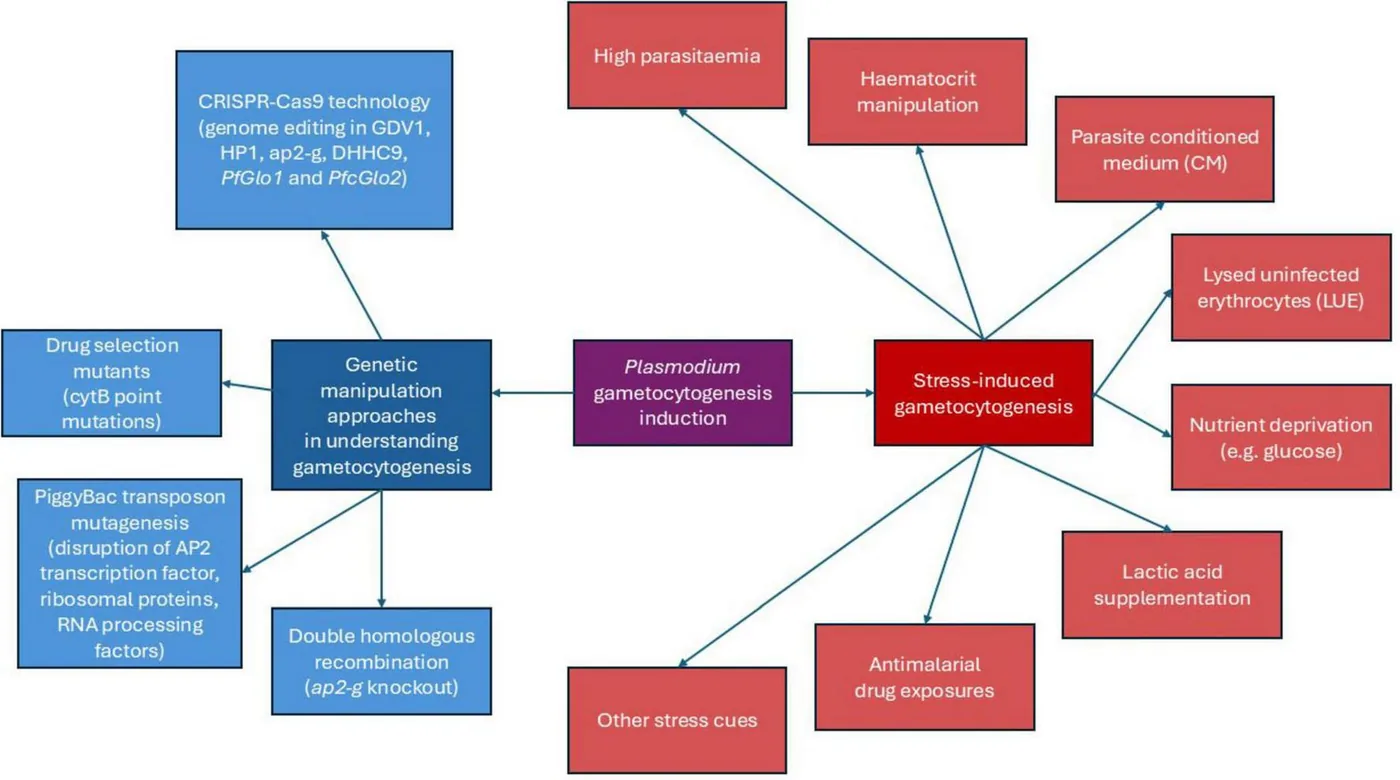
Genetic deletions proved conclusive. When Tintó-Font deleted ap2-hs, parasites completely lost the ability to generate viable gametocytes under fever, DHA treatment, or nutrient starvation [1].


GDV1 and Antisense RNA Control Commitment
Once AP2-HS triggers the expression of GDV1, the newly synthesized protein translocates to the nucleus to execute epigenetic reprogramming. GDV1 physically binds to heterochromatic regions and interacts with HP1, specifically evicting the repressor molecule from the ap2-g locus. This targeted eviction opens compacted chromatin packaging, allowing nuclear transcription factors to transcribe ap2-g and upregulate downstream differentiation markers including GEXP02, msrp1, and Pfs16. Chromatin remodeling thus serves as the direct gateway to gametocytogenesis [3].
Unchecked GDV1 production carries severe biological hazards. Continuous expression of GDV1 disrupts broader genomic silencing, which proves toxic and lethal to asexual parasite populations. To prevent runaway differentiation, the Plasmodium falciparum genome incorporates a built-in antisense RNA brake. The locus transcribes gdv1-as, an antisense RNA molecule that directly represses gdv1 transcript accumulation. This regulatory feedback loop ensures that GDV1 levels spike quickly to trigger sexual conversion while shutting down before prolonged expression destroys the entire asexual cohort [1].

Regulatory feedback reconciles responsiveness with cellular control. The parasite mounts a rapid escape strategy during severe fever episodes or drug exposure while safeguarding population viability. Similar to conserved cellular stress adaptations across different species, the organism leverages negative feedback loops to regulate developmental switches. The molecular brake prevents fatal overcommitment, preserving asexual reserves while generating sufficient sexual stages to sustain malaria parasite transmission through mosquitoes [2].
Lipid Depletion and Host Inflammatory Pressure
While genetic screens uncover intracellular circuitry, clinical investigations demonstrate how host metabolism governs parasite commitment in natural infections. A major study led by Abdirahman Abdi at the KEMRI Wellcome Trust Research Programme analyzed clinical data and plasma samples from 828 children in Kilifi, Kenya, spanning two decades between 1994 and 2014. The cohort included children presenting with severe, mild, and asymptomatic malaria, allowing researchers to observe malaria parasite transmission patterns across changing transmission intensities [4].
Clinical data from Kenya revealed that host inflammatory responses correlate directly with reduced plasma levels of lysophosphatidylcholine (LPC), a vital host lipid. Under normal conditions, Plasmodium falciparum absorbs abundant host LPC to fuel asexual membrane synthesis and cell division. When severe host inflammation suppresses circulating LPC concentrations, asexual replication stalls. Detecting this lipid starvation, the parasite activates ap2-g along with the environmental sensor PfSir2a, triggering sexual conversion. Matthias Marti, professor at the Wellcome Center for Integrative Parasitology and senior author on the eLife study, noted that gametocytes consume fewer resources than dividing schizonts, making transmission an advantageous evolutionary escape when nutrients collapse [4].
In vitro experiments corroborate these clinical observations. When nutrient deprivation is induced in culture, researchers achieve gametocytaemia levels reaching 5.1%, compared to merely 0.15% under specific drug regimens. In natural patient populations, declining transmission intensity and falling host immunity modify the biochemical environment, driving parasites to allocate higher proportions of resources into transmission stages. Low nutrient availability thus serves as an unambiguous environmental warning that the host environment is failing [4].
Targeting Gametocytes to Block Disease Spread
Unraveling the molecular triggers behind gametocytogenesis exposes critical vulnerabilities in the malaria transmission cycle. Standard schizonticidal drugs effectively clear asexual stages and relieve acute clinical symptoms, but they largely spare mature sexual stages. Consequently, treated individuals can harbor circulating gametocytes for weeks, continuing to transmit pathogens to local mosquito vectors. In 2021, global malaria infections caused an estimated 619,000 deaths and 247 million clinical cases, with approximately 70% of mortality concentrated among young African children under five. Interrupting vector transmission represents the cornerstone of regional elimination [4].
Biomedical advances now leverage in vitro gametocyte production to engineer novel interventions. Formulations developed by Sanaria Inc. utilize attenuated sporozoites to elicit protective immune responses in clinical trials, while monoclonal antibodies such as MAD21-101 target cryptic epitopes on the circumsporozoite protein (PfCSP) to confer protection. Producing sufficient biological material for these therapies requires standardized culture methods. By identifying AP2-HS and the GDV1 regulatory loop, researchers gain precise molecular tools to synchronize sexual conversion in laboratory strains [3].
Translating these insights into medicine offers a direct path toward transmission-blocking therapeutics. Small molecules designed to inhibit AP2-HS or prevent HP1 eviction could permanently lock Plasmodium falciparum in an asexual state, rendering the organism sensitive to frontline antimalarials while depriving it of transmission capacity. Conversely, artificially stimulating GDV1 expression without its antisense brake could trigger premature, lethal differentiation across parasite populations. As Elisabet Tintó-Font and Alfred Cortés demonstrated, dissecting this environmental stress switch reveals how single-celled pathogens navigate hostile hosts, providing actionable targets to halt malaria parasite transmission worldwide [1].
- PRESS RELEASE Barcelona Institute for Global Health. (2026, September 17). New study uncovers how the malaria parasite boosts its transmission potential under stress conditions. ISGlobal. [Article Link]
- ONLINE NEWS Clark, G., & Egan, R. (2026, September 19). How the malaria parasite boosts its transmission potential under stress conditions. Phys.org. [Article Link]
- ACADEMIC JOURNAL Subramaniam, R., Chiew, Z. Y., Zuhaidi, N. D. b., Lau, Y. L., & Cheong, F. W. (2025). Induction of gametocytogenesis in human malaria parasites: from stress to genome editing. Frontiers in Microbiology, 16, 1688506. [Article Link]
- PRESS RELEASE eLife Sciences Publications, Ltd. (2023, March 14). How malaria parasite prioritises growth or transmission. eLife. [Article Link]
APA 7: TWs Editor. (2026, September 20). Malaria Parasite Boosts Transmission Tactics Under Host Stress. PerEXP Teamworks.


