




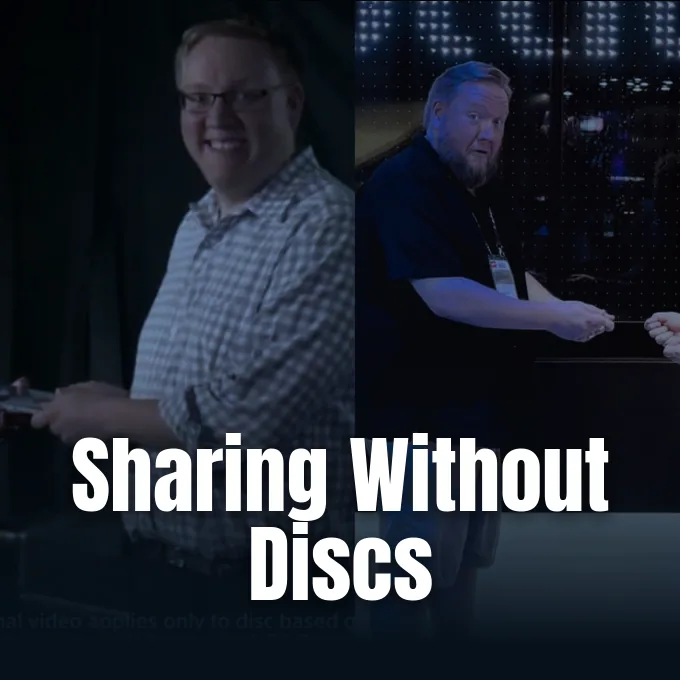
Former PlayStation executives Shuhei Yoshida and Adam Boyes met at Tokyo Game Show 2026 to recreate their famous PS4 game sharing tutorial, but their outstretched hands held absolutely nothing. Thirteen years after ridiculing rival restrictions with a boxed copy of Killzone: Shadow Fall, the executive duo mimicked the iconic handoff gesture using an imaginary retail case. Yoshida posted the reunion photo on September 18, igniting viral reactions among longtime players. The stunt highlights a major industry shift as Sony prepares to phase out physical discs by 2028. [1, 2]
PS4 Game Sharing Meme Returns at TGS
Standing on the show floor during Tokyo Game Show 2026 (TGS 2026), Yoshida and Boyes posed side by side in front of the official PlayStation booth. Both men stared directly into the camera lens with exaggerated, mock-serious expressions while arching their fingers around an invisible plastic case. Yoshida published the picture on social platform X with the caption, ‘Met with a best friend :D’, tagging Boyes and the Japanese PlayStation account. The snapshot mirrored their famous posture from June 2013, when Boyes had happily accepted a retail game box from his colleague during an official studio broadcast. [1, 2]
Fans instantly recognized the parody. Replies poured into Yoshida’s thread, with one commenter observing, ‘Damn, there isn’t anything being shared.’ Another user remarked that ‘it’s been all downhill since you have been gone,’ referencing the leadership turnover that followed their departures from Sony. A third reaction reshared the image with the caption, ‘This is how you share games with your friends in 2028.’ While neither man explicitly criticized their former employer, the broader gaming audience celebrated the tribute as a cheeky commentary on modern software distribution and the fading legacy of PS4 game sharing. [1, 2]
Neither executive held a disc. Their empty hands captured the irony of modern console gaming in a single memorable frame. [1, 3]

How E3 2013 Created an Iconic Moment
To appreciate the humor behind the Tokyo reunion, one must revisit June 2013 during the Electronic Entertainment Expo in Los Angeles. Microsoft had just unveiled the Xbox One with restrictive DRM (digital rights management) policies that required consoles to connect to the internet every 24 hours while severely limiting how players could trade, sell or lend physical game discs. Backlash from players exploded across forums and social networks, creating an unprecedented public relations crisis for the Xbox brand. Did Sony plan an elaborate response? Sony leadership chose humor over corporate jargon. [1, 3, 4]
PlayStation pounced on the opportunity with a spur-of-the-moment guerrilla video shot backstage during the convention. Titled the ‘Official PlayStation Used Game Instructional Video’, the 21-second clip relied on unfiltered executive simplicity to dismantle Microsoft’s complex restrictions. Shuhei Yoshida, then president of first-party studios, stood before the camera with Adam Boyes, who served as head of third-party relations. Yoshida silently handed Boyes a boxed copy of Killzone: Shadow Fall, Boyes smiled politely, and the tutorial ended without any second step. [1, 3]
The short skit exploded across the internet, gathering more than 21 million views over the following 13 years. It solidified PlayStation’s global reputation as an unapologetic defender of physical disc ownership and traditional retail gaming, propelling the PS4 to massive commercial success worldwide. The video became an indelible piece of gaming history because it proved how effectively a major corporation could weaponize consumer sentiment against an overreaching competitor, establishing the gold standard for PS4 game sharing discussions. [1, 2]


PlayStation Discs Face a 2028 Phaseout
Times have changed. Thirteen years after that triumphant E3 broadcast, Sony’s stance on physical distribution has undergone a complete reversal. Earlier this summer, the company announced that it will cease manufacturing discs for new PlayStation titles beginning in January 2028. Sony moved quickly to execute the plan, repurposing its lone disc-manufacturing facility before physical releases had even vanished from store shelves. The corporate decision marks an aggressive acceleration toward an all-digital business model, positioning download storefronts and cloud subscriptions at the very center of PlayStation’s upcoming hardware roadmap. [1, 2]
The abrupt shift provoked fierce backlash from collectors and players who view disc ownership as an essential consumer safeguard. Passionate communities even attempted to organize public protests against the digital transition, though Sony executives remained resolute in defending the timeline. This ongoing friction mirrors growing anxieties surrounding digital game ownership and fan archival efforts, where dedicated players meticulously preserve past corporate promises to hold publishers accountable. When games exist exclusively as digital licenses on centralized servers, consumer access remains vulnerable to arbitrary account bans, regional storefront closures and licensing expirations. [1, 2]
Physical storefronts face severe financial jeopardy as a direct consequence of Sony’s digital timetable. Gaming analysts informed Eurogamer that ending boxed retail games would deliver a devastating hammer blow to specialty brick-and-mortar merchants who rely on software trade-ins and hardware bundles to sustain operational margins. While digital distribution expands profit margins for platform owners by eliminating packaging, transport and middleman cuts, independent shops have little recourse. The impending phaseout effectively dismantles the secondary market that made the original PS4 game sharing skit so impactful. [1]

Preservation Data Challenges Physical Disc Ownership
Beneath the emotional debate over game cases lies a technical reality that complicates traditional notions of media preservation. Discs are no longer self-contained. According to empirical research conducted by video game preservation group DoesItPlay, approximately 34 percent of PS5 games and 50 percent of Xbox Series X releases require an external digital download to function properly. Without access to network servers to retrieve day-one patches and mandatory data bundles, a substantial portion of modern discs serve merely as physical verification keys. [2]
Yoshida himself addressed this shifting dynamic shortly after Sony announced its 2028 deadline, suggesting that the retirement of physical media might not represent such a catastrophic loss for ordinary consumers. He pointed to the overwhelming dominance of digital sales coupled with the reality that physical media already depends heavily on remote server connections. ‘Personally, I’m a totally digital consumer,’ Yoshida candidly explained during an interview, noting that he preferred immediate dashboard access over swapping discs. ‘I don’t want to manage discs or swap discs. I want all my games on my dashboard, and I just select a game and play it. So, I’m completely digital.’ While convenient for everyday players, this perspective overlooks the vulnerabilities of cultural erasure that preservationists actively fight to prevent. [2]
The competitive landscape presents an ironic role reversal on the eve of the PS6 generation. In 2013, Microsoft faced overwhelming condemnation for its restrictive disc licensing schemes, yet today Xbox utilizes aspects of that abandoned architecture to grant digital licenses to owners of physical discs. Sony, meanwhile, is preparing to cut ties with optical disc manufacturing entirely, forcing its community into a proprietary digital storefront without retail alternatives. Thirteen years after the E3 clash, the consumer-first ethos of PS4 game sharing stands in stark contrast to the closed ecosystem unfolding ahead. [2, 3]

Executive Transparency Gives Way to Corporate Silence
Public response to Sony’s digital trajectory has crystallized on the very YouTube page that hosted the original 2013 gag. Shortly after the disc phaseout was confirmed earlier this summer, thousands of players returned to the eleven-year-old upload to express their disillusionment. The current top-voted comment captures the prevailing sentiment: ‘You’ve become the villain you mocked.’ Another popular reply reflects similar cynicism, noting, ‘This is how you own yourself 13 years later.’ What was once celebrated as a masterstroke of consumer advocacy now reads like a self-inflicted corporate indictment, as the historical legacy of PS4 game sharing collides with modern corporate strategy. [1, 2]
Beyond hardware specifications and commercial models, the viral reenactment exposes a fundamental shift in how PlayStation engages with its community. In 2013, executives like Yoshida and Boyes were celebrated for their candid, accessible public personas, freely joking on camera to defend consumer interests. Today, Sony operates from a far more reclusive corporate posture, avoiding spontaneous public forums and declining to field visible company leaders to explain contentious ecosystem policies. Decisions regarding hardware revisions, digital pricing and media phaseouts arrive through dry corporate statements rather than open dialogue. [3, 4]
Neither man speaks for PlayStation anymore. Boyes stepped down from his executive role in 2016, while Yoshida concluded his remarkable 31-year tenure at Sony in January 2025. Both now operate as independent consultants across the wider interactive entertainment industry. When they extended their empty hands toward each other at Tokyo Game Show 2026, they demonstrated the inevitable conclusion of their famous sketch. As January 2028 draws closer, players will soon share games exactly as Yoshida and Boyes demonstrated: with nothing between their fingers. [1, 2, 3]
- ONLINE NEWS Serin, K. (2026, September 18). Former PlayStation execs recreate iconic ‘this is how you share games on PS4’ meme, only this time without a physical game. Eurogamer.net. https://www.eurogamer.net/sony-execs-game-sharing-meme-physical [Article Link]
- ONLINE NEWS Wood, A. (2026, September 18). As Sony kills physical games, former PlayStation execs recreate now-infamous PS4 game-sharing tutorial, but whoops, there’s no disc now. GamesRadar+. https://www.gamesradar.com/games/as-sony-kills-physical-games-former-playstation-execs-recreate-now-infamous-ps4-game-sharing-tutorial-but-whoops-theres-no-disc-now/ [Article Link]
- ONLINE NEWS Gach, E. (2026, September 18). PlayStation Legends Recreate Iconic PS4 Game-Sharing Meme But This Time There’s No Disc. Kotaku. https://kotaku.com/playstation-legends-recreate-iconic-ps4-game-sharing-meme-but-this-time-theres-no-disc-2000735610 [Article Link]
- ONLINE NEWS Push Square. (2026, September 18). Former Sony Suits Recreate Infamous PS4 Game Sharing Skit, Only without the Disc. Push Square. https://www.pushsquare.com/news/2026/09/former-sony-suits-recreate-infamous-ps4-game-sharing-skit-only-without-the-disc [Article Link]


