




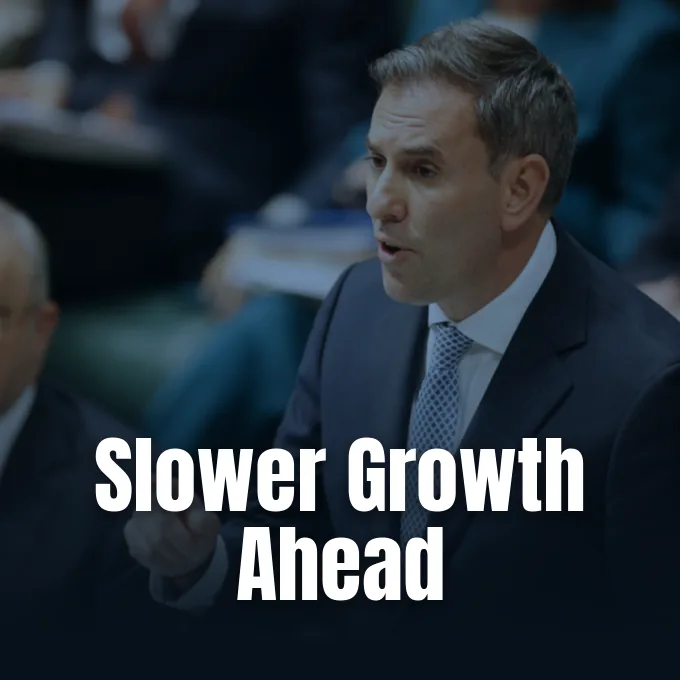
Can a nation double its economic output while demographic expansion dramatically slows? Official projections indicate that Australia population growth will decelerate to 0.9% annually over the next four decades, expanding the national headcount from 27.9 million to 39.3 million by 2065-66 [1]. Treasury released these findings in the 2026 Intergenerational Report, revealing that the population will be 1.8 million lower than anticipated three years ago [2].
Australia Population Growth Slows Across Decades
Demographic momentum has slowed [1]. The Australian Bureau of Statistics recorded the national population at 27.9 million in March, setting the baseline for the Commonwealth Treasury’s forty-year modeling [4]. Between 1986 and 2026, the continent maintained average annual Australia population growth at 1.4%, supported by steady migration and natural increase [2]. Over the coming four decades, that pace will drop to 0.9% per year, representing a 0.2 percentage point reduction compared to the 2023 forecast cycle [1]. Treasury calculates that by 2062-63, Australia will house 1.8 million fewer citizens than previous demographic models estimated [2].
Academic analysis from Michelle Grattan, Professorial Fellow at the University of Canberra, underscores that this recalibration marks a decisive structural pivot for national planning [5]. It is critical to note that Grattan’s initial paper, circulated ahead of the official ministerial address, remains an unreviewed preprint that has not yet undergone formal academic peer review [1]. Launching the findings on News24, Treasurer Jim Chalmers explained that longer lives and smaller households are fundamentally reshaping demographic trajectories [4]. Chalmers emphasized that moderating Australia population growth does not signal economic stagnation, as higher living standards and larger accumulated superannuation balances will accompany the transition into the mid-2060s [2].

Falling Fertility Rates Reshape Family Size
Declining birth rates represent the single most powerful domestic driver suppressing long-term Australia population growth across future decades [2]. Treasury analysts observed that Australian fertility rates are falling further and faster than policymakers anticipated three years ago [4]. Speaking on Sunday Agenda, Treasurer Jim Chalmers revealed that almost half of the overall fertility drop stems directly from families deciding against having three or more children [3]. Women are increasingly having fewer children later in life, delaying parenthood amid rising economic pressures and career considerations [2]. The shift is structural [3].
Policymakers have explicitly rejected cash bonuses to stimulate birth numbers, choosing instead to target systemic structural costs. When questioned about reviving earlier conservative incentives such as the baby bonus, Chalmers dismissed cash payments as ineffective, arguing that targeted subsidies deliver far superior public return on investment [4]. The Albanese government is concentrating federal resources on heavily subsidized childcare places, expanded paid parental leave schemes, and mandatory superannuation contributions paid on parental leave entitlements across upcoming years [3]. Liberal MP Aaron Violi acknowledged on News24 that falling birth rates demand serious national attention, warning that demographic aging compounds existing labor supply vulnerabilities across critical service sectors [4].
Healthcare Advances Lift Longevity Past Eighty
While Australia population growth cools, average individual lifespan continues an extraordinary upward trajectory [3]. Projections published by Treasury demonstrate that life expectancy at birth for Australian women will reach 89.5 years by 2065-66, climbing from approximately 86 years at present [4]. Male life expectancy is forecast to reach 86.1 years over the same four-decade window, rising steadily from current levels of 82 years. More citizens than ever before will celebrate their ninetieth birthdays, establishing a substantial demographic cohort requiring tailored chronic care management. Universal healthcare under Medicare, combined with sustained clinical research, provides the essential backbone supporting these prolonged lifespans across every Australian state [3].
Longevity creates immense fiscal responsibilities [3]. Chalmers stressed that living longer and healthier lives represents an unambiguous social achievement, yet cautioned that elder care demands will exert severe pressure on public revenue [4]. Federal authorities point to mandatory investments in the Pharmaceutical Benefits Scheme (PBS), broadened bulk-billing incentives, and the ongoing rollout of Medicare Urgent Care Clinics designed to alleviate emergency ward congestion [3]. How will upcoming federal budgets balance aging populations against competing public obligations? Treasury modeling suggests that managing health inflation and preventative medicine will determine whether the commonwealth budget can remain sustainable over the next forty years [4].


Budget Resilience Meets Energy Transition Pressures
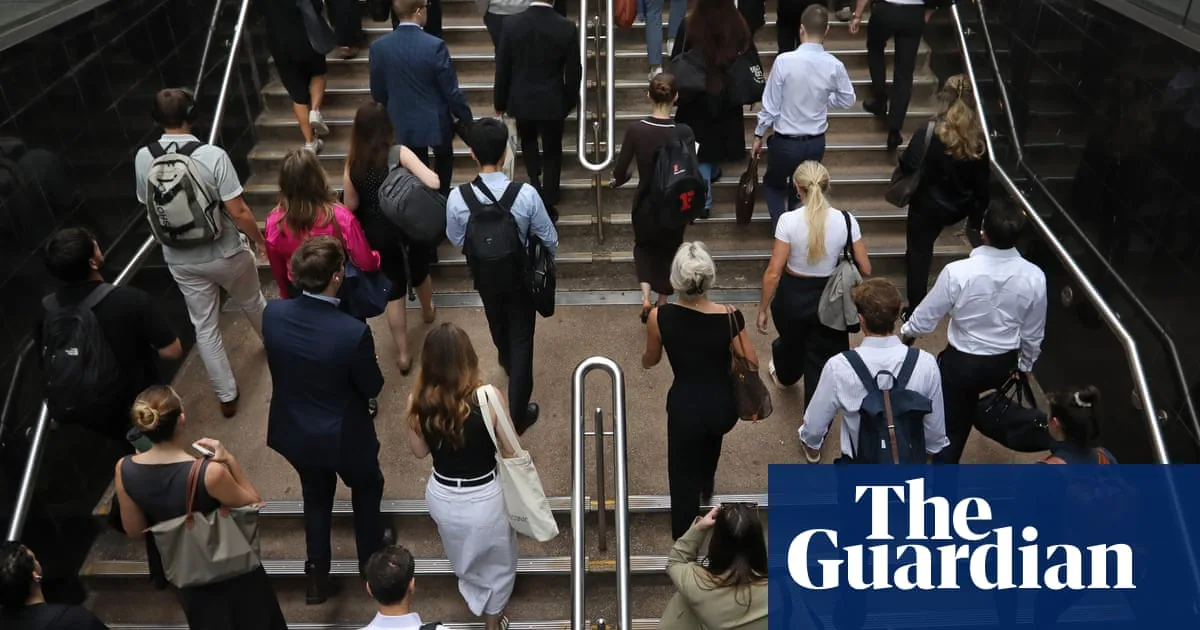
Even as Australia population growth moderates, Treasury’s macroeconomic modeling presents a more favorable medium-term balance sheet than published three years ago [2]. Forecasts indicate that federal net debt will be slashed by half a trillion dollars compared to the projections made in the 2023 Intergenerational Report [3]. The Australian economy will double in size over the next forty years, transitioning into an industrial landscape dominated by specialized services and renewable energy networks. This economic evolution aligns with broader policy frameworks designed to satisfy national obligations under Australia climate targets and clean energy pathways [2]. Personal income tax burdens on individual workers are also anticipated to ease by two percentage points over the long horizon [4].
Household utility expenses are expected to register marked declines as regional electrification expands. Treasury estimates indicate that average annual household energy bills will drop by 40% in real terms between 2030 and 2050. Liberal MP Aaron Violi challenged these specific calculations, declaring that struggling families facing elevated electricity prices at the kitchen table remain profoundly skeptical of long-range official price drops. Violi noted that while technological improvements are promising, past administrative promises failed to shield households from immediate retail spikes. Budget pressures remain acute [4].
Artificial Intelligence Drives Future Productivity Hopes
Economic growth across the coming four decades relies heavily on technological adoption [2]. Treasury assumed an annual productivity growth rate of 1.2% in its 2026 baseline projections, leaving the metric unchanged from the downgraded 2023 figure. Jim Chalmers conceded that domestic productivity has remained completely flat for years, frankly admitting that the Australian economy is not currently dynamic enough to guarantee compounding wealth without technological disruption [4]. Because Australia population growth is decelerating, output gains can no longer depend on sheer workforce expansion [2]. Artificial intelligence occupies the absolute center of national economic strategy, identified by Treasury as the defining influence that will dictate public and private sector efficiency [3].
Diplomatic initiatives reflect these technological stakes. Prime Minister Anthony Albanese visited Silicon Valley to meet Apple executive chairman Tim Cook at Apple Park, discussing automated systems, platform security, and Canberra’s proposed Digital Duty of Care legislation. Cook praised Australia’s ban on social media access for children under 16 as world leading. Albanese intends to highlight this digital regulatory leadership while campaigning for Australia to secure a non-permanent seat on the United Nations Security Council for the 2029-30 term. Australia backs multilateral guardrails [2]. Speaking to ABC program Insiders, Albanese argued that artificial intelligence governance requires binding international frameworks comparable to the historic Nuclear Non-Proliferation Treaty, urging the United States and China to cooperate constructively [3].
Global Fragmentation and Energy Cost Pressures
International headwinds present immediate risks to domestic economic projections [2]. While Canberra advocates multilateral standards, US President Donald Trump signaled aggressive domestic acceleration, appointing an AI tsar and establishing an AI Force while dismissing safety fears as a hoax [3]. Compounding geopolitical friction, ongoing warfare in the Middle East continues to inject severe inflationary volatility into international supply chains. Chalmers observed that military escalation in the Persian Gulf acts as an economic disaster, imposing upward pressure on fuel prices and basic commodity inputs across the domestic market [4].
Energy security debates have ignited intense parliamentary disagreement. Opposition Leader Angus Taylor proposed establishing a Fuel Price Shield, which would automatically halve the federal fuel excise by 27 cents per liter—saving motorists $15 per tank—whenever global crude hits USD $100 ($140.21 AUD) a barrel over a two-week average. Liberal MP Aaron Violi estimated that triggering the shield would cost public coffers approximately $950 million a month. Chalmers immediately rejected the opposition plan as an uncapped and unfunded gamble, recalling that a three-month fuel excise cut enacted during earlier US-Iran warfare cost the federal budget $2.5 billion. The debate mirrors broader agrarian vulnerabilities documented in compounding global conflict and weather risks [4].
Living standards will rise. Yet maintaining social cohesion depends on whether federal reforms translate into tangible opportunities for younger Australians [2].
Quoting American author James Baldwin, Chalmers cautioned that when citizens feel excluded from the national promise of prosperity, democratic institutions inevitably suffer [2]. Slower Australia population growth means that demographic size alone cannot solve fiscal deficits [6]. The coming decades will instead test whether technological investments, healthcare expansions, and cleaner industrial systems can sustain living standards in an unpredictable world [2].
- PREPRINT Grattan, M. (2026). Australia set for 39 million people by mid-2060s – but slower population growth. [Article Link]
- ONLINE NEWS Grattan, M. (2026, September 20). Australia set for 39 million people by mid-2060s – but slower population growth. The Conversation. [Article Link]
- ONLINE NEWS Basford Canales, S. (2026, September 20). More Australians to live into their 90s as life expectancy forecast to rise over coming decades. The Guardian. [Article Link]
- ONLINE NEWS Duke, J. (2026, September 19). Confronting but not pessimistic: Jim Chalmers warns of poor productivity growth but AI opportunities. Capital Brief. [Article Link]
- ONLINE NEWS Norris, M. (2026, September 20). Australia set for 39 million people by mid-2060s – but slower population growth. News.net. [Article Link]
- ONLINE NEWS Mirage News. (2026, September 20). Australia’s Population to Hit 39M by Mid-2060s, Growth Slows. Mirage News. [Article Link]
APA 7: PerEXP Teamworks. (2026, September 21). Australia Projects Slower Population Growth to 39 Million. PerEXP Teamworks. https://perexpteamworks.com/en/australia-population-growth-projections-2066/


