





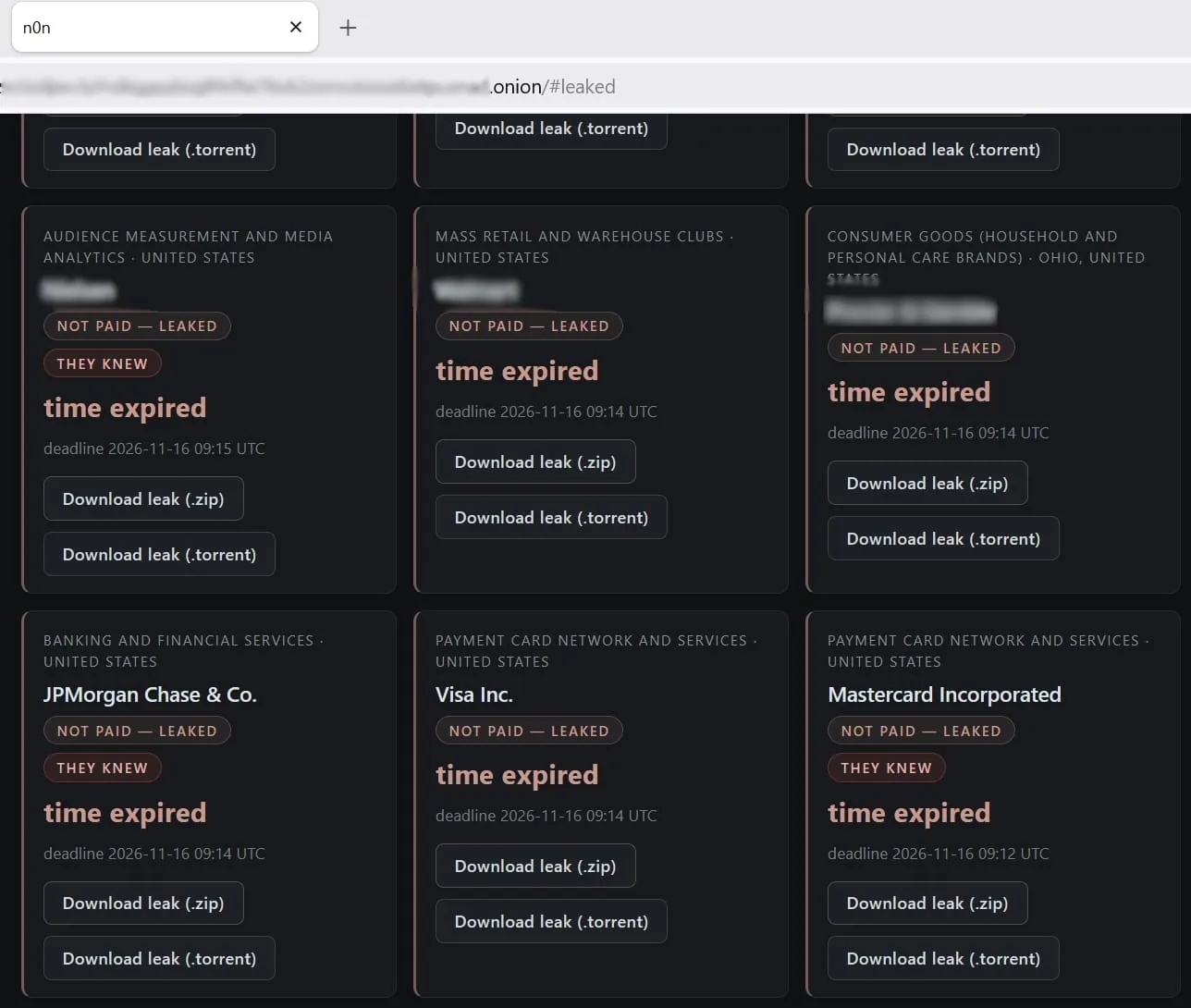
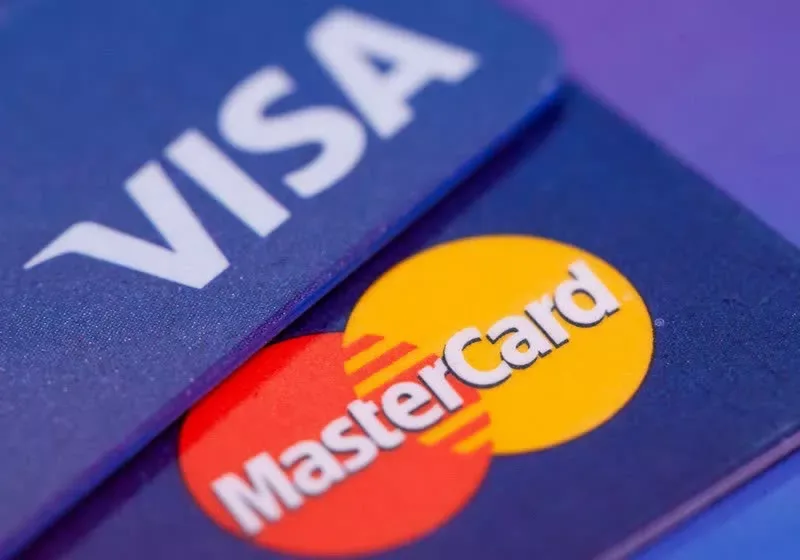
Cyber-extortion group n0n leaked customer contact records tied to JPMorgan Chase, Visa, and Mastercard on November 16, 2026, after compromising cloud data vendor Qubole [2]. The leak followed weeks of ransom demands that the targeted banks ignored. Stolen files surfaced on dark web leak channels. Bank representatives said the breach touched third-party marketing lists rather than payment processing networks. Core banking systems stayed safe [1]. The incident sparked concern over the Mastercard data leak, showing how software vendors can expose client emails even when card networks prevent direct theft [2].
Mastercard Data Leak Impact
Reports from The Wall Street Journal and Reuters revealed that the exposed archives contain client names, phone numbers, and email lists [3]. Financial teams said payment card numbers, bank account balances, and security codes were never viewed during the vendor breach. No card numbers were stolen [1]. The incident echoes an earlier event where CDJapan confirmed customer data exposure after external vendors suffered security intrusions. Both Visa and JPMorgan Chase confirmed that their own private networks never suffered an intrusion, leaving routine branch and web services fully functional for millions of account holders [2].
Mastercard confirmed that email lists for a small group of card users were taken through an outside vendor benefit program. Mastercard SVP Seth Eisen gave specific details about the event, stating, “We were recently informed of an incident at a third-party provider that resulted in the exposure of a limited amount of email addresses – non-payments information – from a small subset of cardholders enrolled in a specific benefit program”. He said teams contained the leak while working with the vendor to assist affected users [1].
JPMorgan Chase Bank, the largest American bank with $4.1 trillion in assets as of June 2026, told its 78 million active digital customers that daily banking was not interrupted. The bank explained on X that vendors providing services were the targets of the cyberattack. It said, “Based on our investigation so far, we believe the attackers accessed certain marketing data held by those vendors, which may include some customer names and email addresses”. BleepingComputer reporter Bill Toulas noted that the bank quickly assured users that checking and savings accounts stayed safe [2].
How Hackers Infiltrated Qubole
The attack centered on Qubole, a cloud data firm owned by Idera that provides automated data processing and real-time reporting for corporate clients. Hackers broke into Qubole between October 14 and October 26, 2026, using stolen administrator keys. They abused roles in Amazon Web Services (AWS) that clients had set up to give Qubole access to cloud storage. The setup gave intruders a back door [2].
During two weeks of access, n0n stole 53.9 GB of data in 30,743 files from Qubole while attempting to pull client records. Stolen files held contracts, pricing plans, staff details, and production data that vendors had stored across cloud systems. The crew claimed it controlled nearly one petabyte of data taken from networks connected through identity and access management (IAM) roles. The intruders tried to negotiate with Qubole and several clients before security firms Sentra and Wiz published reports detailing the attack [2]. The ransom bid failed [1].
When Qubole and the banks refused to pay, n0n posted the stolen files on its leak site on November 16, 2026 [2]. TechRadar security writer Sead Fadilpašić observed that the dump was anticlimactic because the marketing files lacked valuable payment details. The stolen lists held no passwords. The records contained valid emails, but they lacked account data needed to steal funds [1].


Cloud Analytics Vendor Risks
Large firms rely on cloud tools, but granted permissions can create blind spots into client networks when service providers suffer credential leaks. In this case, vendor software permissions gave attackers a way to reach marketing data storage without touching the core banking mainframes that handle money transfers [2]. Security analysts tracking the Mastercard data leak pointed out that companies grant broad cloud roles to data vendors to speed up reporting workflows, yet these connections turn into serious hazards if the partner firm fails to guard login keys [1]. Security teams from Amazon Web Services work with clients to audit these connections, but mistakes happen when vendor accounts keep old permissions long after contracts end [2].
Visa confirmed that its own transaction networks stayed secure, pointing out that the incident involved an outside service provider in Asia Pacific. A Visa spokesperson told The Register that the company payment network operates independently from third-party vendor platforms. The spokesperson said, “Visa’s systems were not involved and were not impacted. No payments data such as card numbers were affected” [1]. The firm operates in more than 200 countries, making the isolation of its core settlement systems a top priority [2]. Transaction rails never stopped [1].
JPMorgan Chase (JPM) also clarified that the vendor attack had no link to service disruptions that hit some banking customers earlier that week [3]. That earlier disruption stemmed from a software bug in an on-premises system rather than an outside cyberattack [1]. The bank told account holders that mobile apps and debit cards continued to work without trouble. Payment processing was never broken [2].
Mastercard Data Breach Responses
Following the Mastercard data breach, banking institutions moved to inform card users whose email addresses appeared on the extortion site. Banks did not issue mass card replacements because account numbers and card expiration dates were never viewed by hackers [1]. Fraud teams urged clients to watch out for phishing emails pretending to come from official bank support [3]. The dump caused little panic [1].
The incident pointed to growing risks around shared vendor credentials across the financial sector. Banks have tightened digital safeguards in recent months, with many US banks restricting unauthorized AI agents over account risks as automated tools touch sensitive networks. Security specialists advised firms to adopt strict role limits and revoke vendor access as soon as automated analytics tasks finish [2]. For retail clients, standard fraud rules mean card users will not bear financial liability for unauthorized charges. Customers can’t be forced to cover fraud losses when third-party software partners leak their contact details [1].
Client reaction stayed quiet because account balances and card services worked normally all week [1]. Payment networks like Mastercard and Visa run multiple layers of automated fraud detection that monitor card usage at checkout [2]. The marketing archives held little street value for cybercriminals seeking quick cash. The gang found few buyers [1].
Double Extortion Hacking Groups
The attack put fresh attention on n0n, a Russian cyber-extortion group that surfaced in September 2026. Unlike older ransomware gangs that lock computer systems with encryption code, n0n relies on data theft and extortion threats without using file-encrypting malware. The group steals corporate archives, demands cash, and threatens to post the files on its Tor leak site if companies refuse to pay. Researchers at ZeroFox described n0n as “an opportunistic threat actor with low-to-medium technical sophistication” that hunts for easy targets. Security firm SOCRadar noted that n0n shares a similar modus operandi with the extortion group ShinyHunters [1].
Security researchers at SOCRadar reported that n0n members are heavy AI users who deploy AI coding agents to build and maintain their attack tools. Ransomware tracking service Ransomnews documented that n0n has compiled nearly 400 victims, jumping from 365 targets in just two days. The group has attacked a wide range of business targets, including automotive software provider CarNow, outdoor clothing retailer Patagonia, and financial firm Wise Advisory Group [1]. Futurism writer Joe Wilkins reported that n0n also focuses heavily on pharmaceutical companies while conducting an average of two cyberattacks per day. This fast pace places the collective among the top five most active extortion groups worldwide [3].
While the Mastercard data leak generated headlines, the group’s attempt to extort the banking industry yielded little reward when Chase, Visa, and Mastercard refused to negotiate. By stealing only vendor marketing records, the hackers failed to gain the leverage needed to secure a payout. Isolating core settlement systems prevented extortionists from holding payment networks hostage. The extortion bid fell flat [1].
- ONLINE NEWS Fadilpašić, S. (2026, November 20). Mastercard and Visa data leaked in breach — ransomware hackers leak information in latest major attack. TechRadar. [Article Link]
- ONLINE NEWS Toulas, B. (2026, November 20). Vendor data breach exposes Chase, Visa, Mastercard customer info. BleepingComputer. [Article Link]
- ONLINE NEWS Wilkins, J. (2026, November 19). Hackers Leak User Data From JPMorgan, Visa, and Mastercard. Futurism. [Article Link]


