




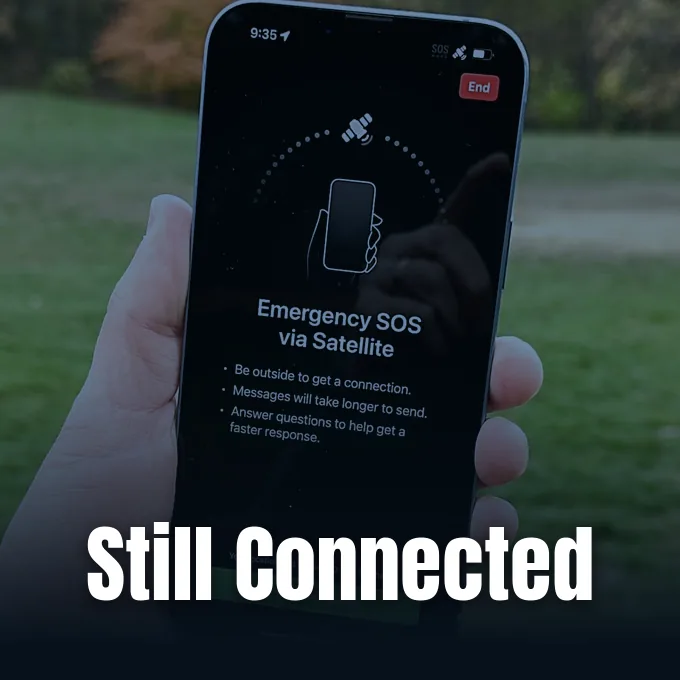
A footnote beneath Apple’s iPhone 18 Pro announcement carries news for phones already in people’s pockets: iPhone satellite access will stay free for another year for eligible existing users. Apple announced the extension for iPhone 14, iPhone 15 and iPhone 16 owners, according to the statement reproduced by 9to5Mac. The satellite connectivity offer covers devices activated in a supported country before the stated September 9 cutoff, keeping their emergency and other supported satellite features available without an access charge. [1]
iPhone Satellite Access Gets Another Year
Apple put the extension in the small print of its new Pro phone announcement. Marcus Mendes reported the detail for 9to5Mac on September 10, quoting Apple’s promise of free access for “an additional year for existing iPhone 14, iPhone 15, and iPhone 16 users.” The change reaches back across three named generations, including the iPhone 14 family that first brought Apple’s satellite services to the market. [1]
The iPhone 16 joins this extension. Last year’s offer covered existing iPhone 14 and iPhone 15 users; without another renewal, some users would have reached the end of their free access later this year. Apple has now moved that point back again, although the quoted terms do not give every eligible owner a single shared expiration date. The announcement describes one extra year of access. It leaves the eventual price unanswered. [1]
Apple’s September hardware news also includes the launch covered in PerEXP Teamworks’ September 9 Apple event viewing guide. Here, the relevant detail concerns continued service on existing devices. Owners of those named iPhone generations do not need to buy an iPhone 18 Pro to fall within the extension, but the activation deadline and country requirement still determine who qualifies. [1]
Which Existing iPhones Qualify?
Apple names iPhone 14, iPhone 15 and iPhone 16 in the eligibility language reproduced by 9to5Mac. The company requires activation in a country that supports its satellite features before midnight PT on September 9. PT means Pacific Time. The cutoff concerns when the device was activated, so the wording does not establish eligibility from the model name alone. Country support also matters: the promise does not describe a worldwide rollout of every satellite service. [1]
The quoted extension does not name iPhone 17. Its omission does not establish that those owners lose access; the announcement simply does not settle their position. Similarly, the two reports do not supply account-specific expiration dates or instructions for checking an individual device’s remaining trial. Reading the named models and activation condition together gives the scope Apple actually set out, without turning a limited extension into a promise for every iPhone. [1, 2]
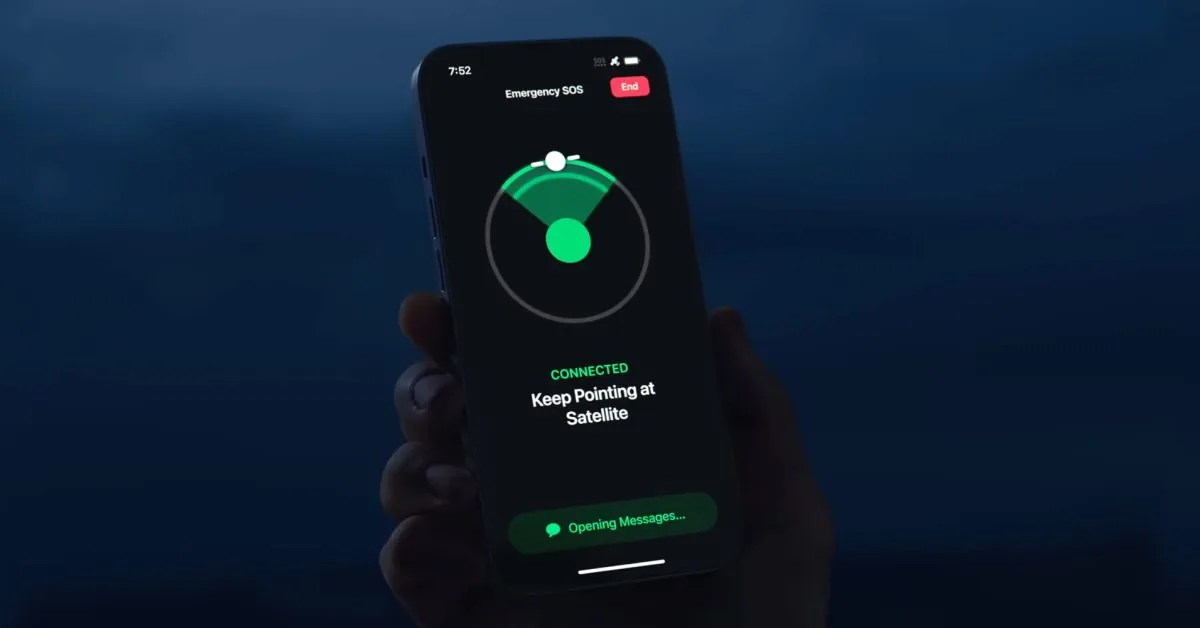
New purchases have a separate offer. Mendes reports that buyers of the iPhone 18 Pro, iPhone 18 Pro Max and iPhone Duo receive their own free year of satellite features. Those buyers and eligible existing owners can both receive free access, but under different starting conditions. For existing devices, Apple’s quoted country and activation requirements remain the relevant test. [1]


What Works Beyond Cellular Coverage?
Emergency SOS via satellite lets an iPhone contact emergency services when cellular coverage is absent. Apple introduced it with the iPhone 14, together with Find My via satellite (location sharing through a satellite connection). The company subsequently added Roadside Assistance via satellite and Messages via satellite. Apple’s current umbrella term, satellite features, brings those services together, so the latest extension reaches beyond the original emergency messaging offer described at launch. [1, 2]
Messages supports non-emergency communication. Find My handles location sharing.
Tom Pritchard’s report for Tom’s Guide identifies Globalstar as the satellite connection behind these services, which send messages in cellular dead zones rather than relying on a nearby mobile network. Apple’s statement describes their role when both cellular and Wi-Fi coverage are unavailable. A request for emergency help, a shared location and a non-emergency message serve different purposes, even though all belong to the same group of satellite features. The free iPhone satellite access extension concerns that group. It does not erase regional limits: Pritchard notes that some services operate only in certain regions, and Apple’s footnote directs readers to its availability guidance. Neither report establishes identical service coverage across all supported countries. [1, 2]
The practical distinction is free access versus feature availability. An extra year of access does not, by itself, announce a new country or add a service to an existing region. [1, 2]

How the Free Period Grew
Apple originally attached two free years to the satellite offer that launched with iPhone 14. In November 2023, the company added another year of Emergency SOS via satellite for existing iPhone 14 users. Apple broadened the service family in the meantime, adding ways to communicate outside an emergency as well as roadside assistance. The terminology in the extension consequently matters: today’s satellite features cover more than the initial SOS service. [1]
In 2025, Apple extended free access again, naming existing iPhone 14 and iPhone 15 users. Now the iPhone 16 appears in the renewed offer as well. Pritchard describes the September 2026 decision as the third extension, tracing a pattern in which the company keeps lengthening free access before affected owners have to start paying for it. His report says Apple has yet to charge users for continued satellite access. [1, 2]
What happens when the extensions stop? Apple’s original two-year offer made that question relevant from the beginning, and repeated renewals have kept delaying the moment when a price would matter to affected owners. For now, iPhone satellite access remains free under the applicable offers. The reports provide a history of renewals, but that history cannot establish that Apple will repeat the decision next September. [1, 2]
Apple Still Has No Announced Price
Apple has not announced how much it would charge once free access ends, according to both reports. No subscription price appears in the extension quoted by 9to5Mac, and neither outlet reports a firm commitment to charge in the near future. Another free year is the confirmed offer. A permanent free service, a monthly subscription and any eventual price remain outside the terms presented in the announcement. [1, 2]
Mendes discusses speculation that Apple could keep at least some satellite services free because of their potentially lifesaving role. Pritchard also argues that continued free access benefits the company and its customers. Those are interpretations of Apple’s repeated extensions; the quoted company statement does not promise a permanent free tier or explain the business decision. Apple’s published commitment in these reports reaches only as far as the additional year. [1, 2]
For an owner checking the offer before travel, Apple’s next useful reference is its satellite feature availability guidance, the page identified in the quoted footnote. The model, activation cutoff and supported country establish eligibility for this extension. Available features need a separate check. Apple still has to say what access will cost if it eventually lets the free period end. [1]
- ONLINE NEWS Mendes, M. (2026, September 10). Apple extends free iPhone satellite access for another year. 9to5Mac. [Article Link]
- ONLINE NEWS Pritchard, T. (2026, September 10). Apple’s just extended free access to emergency satellite communication for another year — it’s the third time this has happened. Tom’s Guide. [Article Link]


