






Researchers led by Y. Lu and X. Deng at Peking University in Beijing have created a battery-free piezoelectric toothbrush that produces electrical charges during brushing to destroy cavity-causing bacteria and limit plaque buildup [3]. Bristle tools have relied almost entirely on manual scrubbing since their documented emergence in 10th-century China, leaving behind resilient bacterial colonies that can quickly rebuild destructive biofilms [1]. By turning the friction of brushing into an active electrical charge, the Beijing device generates reactive molecules that attack bacterial cell walls in saliva [2]. The team published their laboratory and clinical findings on 4 November 2026 in the journal Science Advances, presenting a cleaning tool that also functions as an antibacterial device [1].
Mechanical Cleaning and Plaque Limits
Manual toothbrushes have seen few fundamental design changes since their earliest recorded use during the Tang Dynasty in China [3]. Over roughly 1,118 years, the core concept has stayed the same: flexible bristles scrub the enamel surface to dislodge food debris and break apart sticky layers of saliva and bacteria [1].
While mechanical scrubbing removes visible food particles, it rarely cleans the tooth surface completely [2]. Microscopic biofilms cling stubbornly to tiny enamel fissures along the gum line, where surviving bacteria reproduce and begin reforming dense protective matrices within hours of brushing [1]. Periodontology researcher Frank Scannapieco, based at the University of Buffalo in New York, welcomed the Beijing prototype as a “new twist on an old concept” [3]. Standard nylon bristles sweep away loose microbes through friction alone, but they lack any chemical or electrical mechanism to neutralize pathogens on contact [1]. When bacteria remain sheltered within microscopic enamel ridges, simple mechanical scrubbing leaves the underlying infection cycle intact, allowing plaque colonies to rebuild continually [2].
In the U.K., oral microbiologist Nicholas Jakubovics evaluated the Peking University findings independently for Newcastle University [2]. “It’s great to have new approaches that actually enhance the effect of mechanical cleaning,” Jakubovics said. “The idea that the toothbrush surface itself is actively doing something is really interesting.” Standard brushes serve merely as passive carriers for bristles, relying entirely on human muscle power [3].
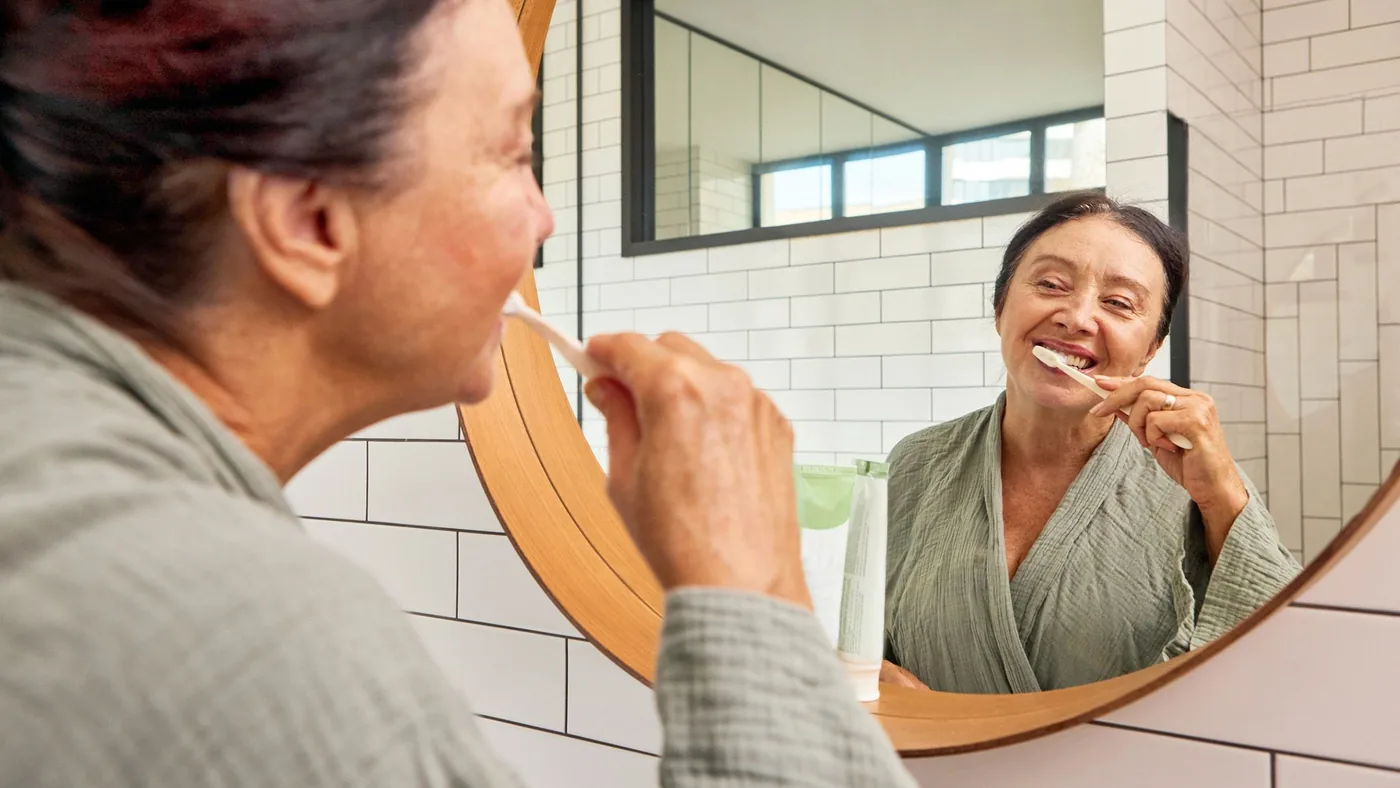
Piezoelectric Toothbrush Bristles and Charge
To turn standard brushing strokes into an electrical generator, the Peking University team replaced common nylon bristles with a plastic called polyvinylidene fluoride (PVDF) [2]. The Beijing researchers stretched and heated the polymer until its internal molecular chains aligned into an active piezoelectric state [3]. Piezoelectric materials produce an electrical charge whenever they experience mechanical stress, compression, or bending [1]. As a person brushes their teeth, the repetitive bending and flexing of each bristle generates tiny bursts of electric potential along its length without needing internal batteries or wall chargers [2]. When the bristles flex against enamel, they release charges into surrounding saliva, and when the bristles relax, the polymer reabsorbs the charge [3]. Continuous bristle movement converts ordinary hand motions into a steady stream of localized electricity [1].
Brushing pauses do not stop electrical activity [1]. Even while resting upright in a bathroom cup, the PVDF bristles retain a faint static surface charge that discourages bacteria from settling on the brush head [2]. A static surface charge helps keep the bristle cluster clean between daily uses [1].
Laboratory evaluations at Peking University confirmed that the PVDF bristles preserved their structural shape and electrical performance throughout three months of simulated brushing, undergoing thousands of continuous flexing cycles without splintering or losing charge output [1]. The brush requires no cords or batteries [3]. The sealed construction keeps the brush lightweight and waterproof, letting piezoelectric toothbrush prototypes maneuver just like standard manual models during daily hygiene routines [2].
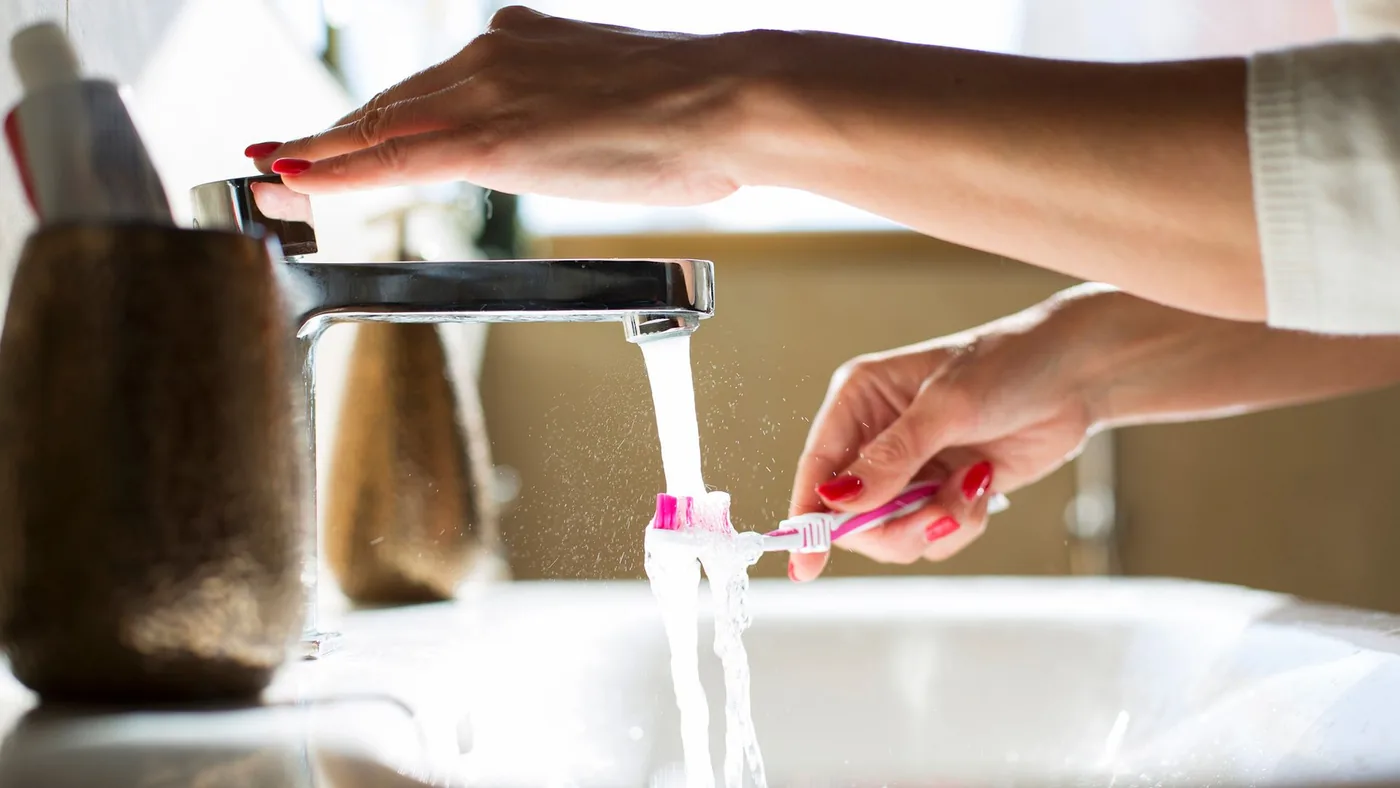
Chemical Reactions That Attack Oral Bacteria
The electrical charge produced by the bending bristles does not destroy bacteria through heat or blunt shock, but by driving local electrochemical reactions in mouth fluids [2]. As electrical current flows through water and saliva, it splits molecules into reactive oxygen species (ROS) [1]. These short-lived chemical compounds act as powerful oxidizers that weaken and rupture the outer membranes of bacterial cells [3]. When the Peking University researchers added an antioxidant compound to neutralize ROS in laboratory mixtures, the brush’s antibacterial effect largely disappeared, confirming that oxidative reactions form the primary chemical mechanism responsible for destroying bacterial cell membranes. Electrified bristles killed more than half of the Streptococcus mutans present in isolated cultures, whereas standard nylon bristles killed just 9% of the bacteria under identical test conditions [2].
The bristles proved similarly effective against Porphyromonas gingivalis, a pathogen linked to gum disease [1]. The experimental brush reduced P. gingivalis counts by up to 78%, while regular nylon bristles managed a reduction of less than 8% [2]. Pathogen levels fell consistently [1].
Beyond membrane disruption, the Peking University study reported that exposure to the electric charges lowered the genetic activity of ATP-binding cassette (ABC) transporter systems in both bacterial species [1]. These transporter complexes serve as molecular pumps that shuttle needed nutrients across cell membranes and help bacteria adhere to dental enamel [2]. The research team suggested that crippling these pumps makes it much harder for microbes to survive and cling to tooth surfaces [1]. Jakubovics urged caution. “ABC transporters transport all sorts of different things,” he said, noting that genetic shifts alone do not prove a direct fatal effect [2].


Clinical Results in Human Volunteers
To test how the system performs against complex bacterial communities rather than isolated germs, researchers led by Y. Lu at Peking University grew authentic human dental plaque on cow tooth enamel [2]. Dental plaque forms hardy biofilms that cling tightly to enamel surfaces and resist mechanical removal [1]. In these laboratory tests, the self-powered bristles removed more than 99% of the dense biofilm, significantly outperforming conventional nylon brushes without increasing enamel surface roughness [2]. Encouraged by these laboratory findings, the team organized a randomized human clinical trial involving 115 adults diagnosed with existing gum inflammation or tooth decay [1]. Participants were randomly assigned to use either the experimental brushes or standard nylon toothbrushes twice daily over a three-month test window [2].
Clinical evaluations after three months revealed measurable health improvements among participants using the electrified bristles [1]. These individuals showed less plaque accumulation, reduced gingival inflammation, and significantly less gum bleeding than volunteers using standard nylon brushes. The study did not record whether users noticed any physical difference in sensation during brushing [2].
Plaque samples gathered from trial participants showed a favorable rebalancing of the oral microbiome, with lower counts of disease-linked bacteria and higher proportions of beneficial microbes across the mouth. Beneficial species suppress oral pathogens [1]. Peking University researchers theorized that pathogenic bacteria possess thinner, more fragile cell membranes that make them particularly susceptible to reactive oxygen species generated by the bristles [2]. Clinical data confirmed pathogen suppression [1]. Whether membrane thickness alone explains this selective antimicrobial vulnerability will require dedicated follow-up investigations in specialized oral biology laboratories [2].
Long-Term Safety and Material Durability
Before any electrified oral device can enter everyday consumer use, investigators at Peking University must confirm that electrical discharges cause neither soft gum damage nor enamel abrasion [3]. In preliminary laboratory toxicity tests, the team exposed lab-grown mouse cells repeatedly to PVDF bristle fragments and detected no cellular death [2]. Cow enamel tolerated repeated brushing. Microscopic inspection showed no mineral loss, surface pitting, or altered enamel roughness [1]. These early findings suggest that the electrical charge generated during brushing remains low enough to avoid direct thermal or mechanical harm to dental structures, although long-term human tissue tests remain unfinished [3].
Outside experts emphasize that Petri dish experiments differ fundamentally from conditions inside a living mouth. “We would want to make sure that it is safe on the tissues for long-term use,” Jakubovics said. In lab tests, bacteria sat on bristles for hours, whereas real brushing contacts tissue only briefly [2].
At the University of Buffalo, Frank Scannapieco noted that while the prototype brush showed no cellular toxicity, the authors did not examine multi-year tissue safety or production costs [3]. The clinical trial also left user sensation unmeasured, meaning researchers still do not know if participants felt minor tingling while brushing [2]. User comfort could influence how consistently people use the device. Cost also poses a practical challenge, because PVDF requires careful thermal stretching that could make replacement heads more expensive than ordinary nylon bristles [3].
Piezoelectric Toothbrush Potential in Future Care
For oral microbiologists, the Peking University study serves as an encouraging proof of concept rather than an immediately available consumer product [2]. The three-month human trial provided helpful preliminary data, but 115 participants remains a relatively small cohort for demonstrating broad medical efficacy across general populations [1]. Larger clinical studies spanning diverse age brackets, dietary habits, and baseline dental health conditions are necessary to confirm whether the technology consistently prevents gum disease and tissue inflammation over several consecutive years [2]. Independent dental faculties will also need to replicate the findings to determine whether the observed reduction in plaque translates into fewer cavities over an extended lifetime [3]. For now, Jakubovics sees the prototype as an interesting concept that requires more convincing clinical data [2].
If future clinical evaluations confirm that the piezoelectric toothbrush is completely safe and durable for long-term use, the concept could change routine oral care [1]. By pairing mechanical scrubbing with sustainable electrical activity, the design turns daily brushing into an active defense against oral disease [2]. Researchers now await larger trials to confirm those benefits [3].
- ACADEMIC JOURNAL Lu, Y., Song, J., Chi, X., Li, W., Wu, L., Guo, Y., Cui, Q., Zheng, X., Bai, Y., Heng, B. C., Han, X., Zhang, X., & Deng, X. (2026). Self-charged toothbrush facilitates tooth healthcare maintenance. Science Advances, 12(45). [Article Link]
- ONLINE NEWS Ishtiaq, I. (2026, November 4). This self-powered toothbrush makes electricity to kill cavity-causing bacteria. Live Science. [Article Link]
- ONLINE NEWS Nature. (2026, November 4). Toothbrush zaps bacteria with electricity made when bristles move. Nature. [Article Link]
APA 7: PerEXP Teamworks. (2026, November 5). Peking University’s Piezoelectric Toothbrush Destroys Bacteria. PerEXP Teamworks. https://perexpteamworks.com/en/piezoelectric-toothbrush-kills-bacteria/


