





Meta Platforms has officially entered the commercial enterprise software market by establishing a dedicated operational division led by former MongoDB chief executive Chirantan “CJ” Desai [1]. Chief executive Mark Zuckerberg announced the strategic expansion on Facebook, declaring enterprise software the next major pillar of corporate growth. The newly established business unit packages Meta enterprise AI capabilities for corporate clients, diversifying long-term company revenue away from an overwhelming reliance on digital advertising [2].
CJ Desai Leads the New Meta Enterprise Platform
Desai joins Meta after an 11-month tenure as MongoDB chief executive, assuming the formal corporate title of chief enterprise platform officer to oversee commercial software initiatives. Financial markets responded immediately to his sudden departure. MongoDB shares fell 18 percent. To stabilize corporate operations following the unexpected leadership vacuum, MongoDB announced that former longtime leader Dev Ittycheria, who successfully steered the database maker for 11 years prior to Desai’s arrival, has returned as interim chief executive officer [1].
Mark Zuckerberg framed the recruitment as an essential organizational evolution aimed at commercializing proprietary research breakthroughs across private enterprise environments [2]. In an official statement, CJ Desai explained that the new division will transform internal tools into commercial products that outside companies “can deploy for their own businesses” [1]. Mark Zuckerberg highlighted that Meta will build upon core strengths that few competitors possess, combining large-scale infrastructure and leading autonomous agents with established commercial relationships [2]. That dual focus signals an ambitious operational shift for Meta.
While Meta historically focused engineering talent on consumer engagement across Instagram and Facebook, selling Meta enterprise AI solutions requires an entirely distinct organizational muscle [2]. Unlike specialized startups where compliance automation targets narrow regulatory workflows, Meta packages its entire technology stack into commercial enterprise services. Competing directly against established enterprise software titans demands rigorous data privacy standards, guaranteed uptime, and dedicated customer support channels. CJ Desai now oversees that corporate transition [1].
Funding Infrastructure Through Meta Enterprise AI
Deploying Meta enterprise AI services directly addresses escalating computing expenditures across global operations. Mark Zuckerberg expects Meta to spend $600 billion on artificial intelligence over the next two years, with capital heavily allocated toward building massive next-generation data centers. Capital spending at this unprecedented scale has prompted questions among institutional investors regarding how corporate leadership plans to generate sustainable commercial cash flow from specialized machine learning clusters [2].
Can subscription fees from consumer accounts justify hundreds of billions in specialized capital spending? Although Meta recently started offering artificial intelligence subscriptions aimed at individual consumers and small business owners, corporate executives have yet to prove that everyday users across Facebook and Instagram are willing to purchase generative tools en masse. Enterprise software contracts deliver durable subscription streams that cyclical advertising spending simply cannot match, providing Meta with a far more lucrative opportunity to monetize massive computing clusters [2].
Beyond licensing generative software models, Mark Zuckerberg is exploring commercial mechanisms to monetize physical data center hardware directly [2]. Reports published in July by Bloomberg and CNBC indicated that Meta intends to sell portions of its excess data center capacity to external enterprise tenants [1]. While Meta has not officially announced formal leasing agreements, spinning out specialized high-performance computing capacity allows the company to offset soaring facility costs while external enterprise clients secure elusive server resources [2].
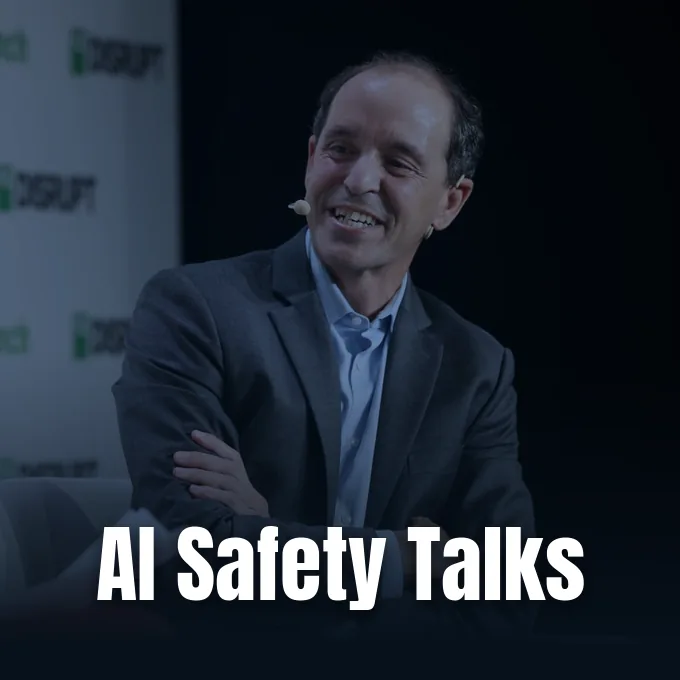

Deploying Muse Code Across Corporate Engineering
The initial commercial rollout prioritizes expanding developer adoption of Meta enterprise AI agents, beginning with the flagship Muse conversational assistant [1]. Unlike the consumer-facing Meta Muse personal AI assistant engineered for casual recommendations, this corporate initiative focuses squarely on enterprise productivity and software generation. Over the past several months, Meta laid the groundwork for this transition by introducing a slew of AI-focused tools for business environments [2]. Central to this commercial distribution is the Muse API (application programming interface), designed to grant external developers direct programmatic access to the foundational models powering corporate agents [1].
Software engineering teams represent an immediate commercial target through Muse Code, an enterprise programming tool designed to automate complex development lifecycles [1]. Mark Zuckerberg confirmed that Meta aims to bring its full technology stack directly to businesses and developers to help them scale [2]. The coding agent distinguishes itself from consumer conversational tools through an architecture designated as the agent fan-out mechanism. By partitioning expansive computational workloads across multiple coordinated subagents rather than processing complex programming sequences sequentially through a single conversational model, the underlying architecture resolves multi-file software engineering tasks with substantially greater throughput and reduced latency [1].
Meta launched Muse Code in August, giving developers specialized autonomous workflows [1].

Benchmarking Muse Spark Against Rival Models
Underlying model performance serves as the core technical foundation for the Meta enterprise AI portfolio. Muse Spark 1.3 debuted this month. Meta introduced this flagship foundation model to power next-generation agent workflows across private commercial deployments. Rigorous evaluation on AutomationBench (a specialized benchmark constructed to evaluate model competency on intricate knowledge work) revealed that Muse Spark 1.3 decisively outperformed OpenAI’s GPT-5.6 Sol. The proprietary model also achieved higher evaluation marks across five distinct programming benchmarks, underscoring its utility for corporate engineering departments [1].
Corporate engineers intentionally prioritized computational cost-efficiency when training the underlying neural architecture to deliver maximum performance for corporate clients. Disclosed technical documentation confirms that Muse Spark 1.3 consumes approximately 25 percent fewer tokens than its predecessor when executing software development tasks. That operational improvement partly stems from an architectural decision to make more limited use of external auxiliary tools during routine execution. By resolving complex procedural challenges internally rather than repeatedly routing requests through external tools, the foundation model substantially reduces computational overhead. For enterprise software engineering organizations managing extensive development cycles, reducing runtime token consumption by a full quarter lowers operational inference expenses without compromising code generation quality or software reliability [1].
Commercial expansion extends beyond developer environments into automated customer communication via the Meta Business Agent, a specialized conversational bot designed to field inbound corporate inquiries directly on WhatsApp [1]. Mark Zuckerberg emphasized that providing these AI-focused business agents directly on WhatsApp enables companies to streamline customer support while commercializing automated operations [2]. The business agent handles standard product inquiries, generates targeted buying recommendations, and resolves straightforward technical troubleshooting issues [1].
Securing Data Privacy for the Meta Enterprise Business
Cybersecurity architecture represents the primary barrier preventing cautious corporations from adopting generative software across internal operations. Chief information officers frequently hesitate to approve generative platforms due to persistent fears of algorithmic hallucinations and confidential data leakage. CJ Desai addressed these enterprise concerns directly, explaining that security safeguards are established “from the outset”. Meta subsequently published an artificial intelligence security roadmap detailing specialized safeguards tailored for regulated corporate environments [1].
The centerpiece of this enterprise protection roadmap is a dedicated capability designated as Muse Confidential VM (virtual machine), scheduled to roll out later this year. This virtual machine architecture isolates running Muse instances so completely that even internal Meta personnel cannot inspect or access enterprise customer data. For added measure, Meta plans to share a continuous audit enabling corporate users to independently verify that cryptographic data isolation operates reliably [1].
Meta maintains strong commercial incentives to introduce additional cybersecurity capabilities down the line to mitigate the persistent risk of algorithmic hallucinations for risk-averse enterprise buyers. Anthropic PBC already provides similar enterprise safeguards. Specifically, Anthropic equips its Claude foundation models with native connectors that transmit activity telemetry directly to external breach detection platforms for threat analysis [1]. Proving ironclad data compliance and organizational transparency will determine whether Meta enterprise AI can successfully justify hundreds of billions in capital spending across global commercial industries [2].
- ONLINE NEWS Deutscher, M. (2026, September 28). Meta hires MongoDB CEO CJ Desai to lead new enterprise AI business. SiliconANGLE. [Article Link]
- ONLINE NEWS Bell, K. (2026, September 28). Meta is starting an enterprise business to justify its massive AI spending. Engadget. [Article Link]


