



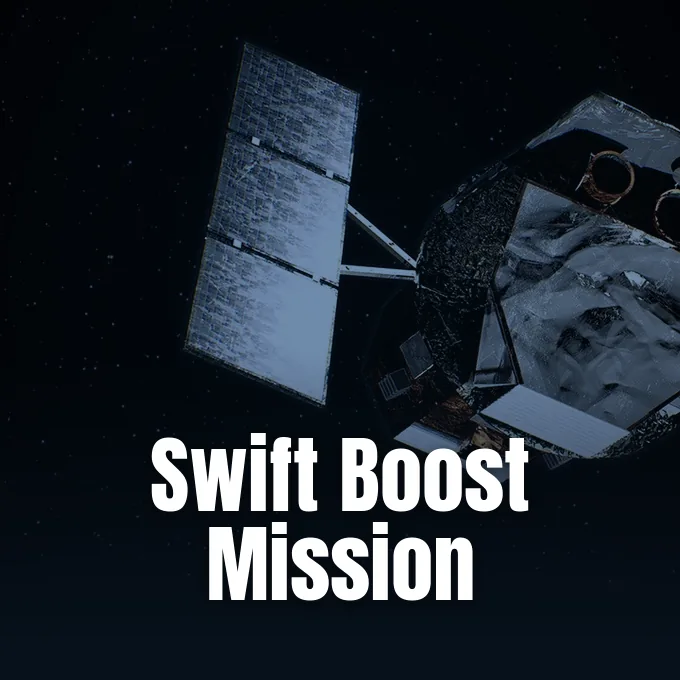
Can commercial robotic servicing save aging space telescopes from atmospheric decay? The Swift boost mission represented an unprecedented public-private collaboration between NASA and Flagstaff-based startup Katalyst Space to intercept the sinking Neil Gehrels Swift Observatory. Launched in November 2004 to monitor cosmic gamma-ray bursts, the unpropelled observatory faced rapid orbital decay following severe solar storms. Although flight teams successfully launched the robotic servicer LINK into orbit aboard a Northrop Grumman Pegasus XL rocket, attitude control failures forced NASA and Katalyst to cancel the orbital lift on August 19, 2026 [1].
Why Did the Swift Boost Mission End?
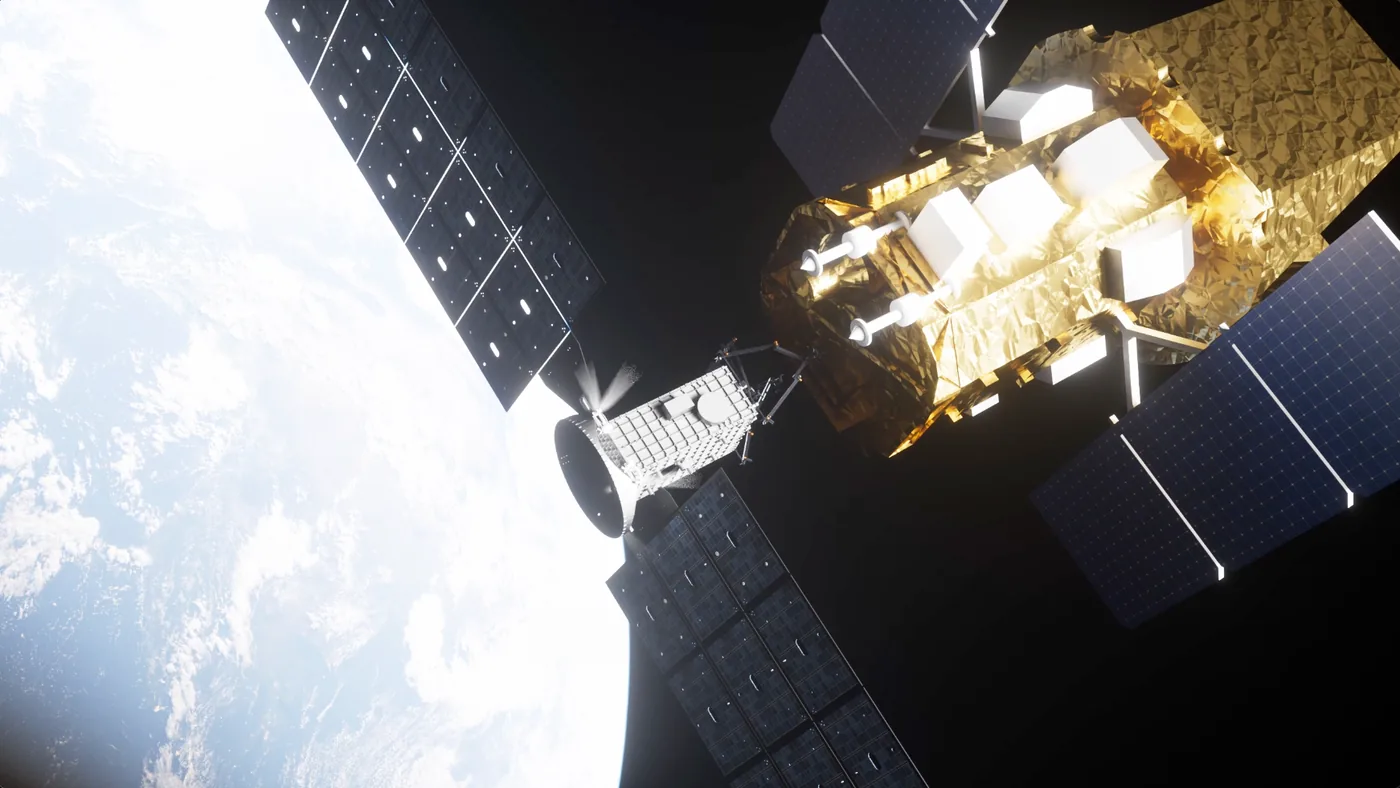
The commercial Swift boost mission ended without raising orbit because persistent attitude control anomalies and reaction wheel failures aboard the robotic spacecraft made a safe docking attempt impossible. Shawn Domagal-Goldman, Astrophysics Division director at NASA Headquarters in Washington, emphasized the calculated necessity of the undertaking. “From the beginning, this was a high-risk, high-reward mission,” Domagal-Goldman explained [1]. Ground controllers discovered that two of LINK’s three reaction wheels were completely inoperable, preventing stable pointing. Reaction wheels failed completely. Grappling a multi-ton observatory without full attitude control carried intolerable collision hazards [5].
NASA and Katalyst Space agreed to curtail the capture rendezvous and pivot toward proving core autonomous servicing systems. “NASA should be willing to move quickly and take smart risks when the potential return is worth it, and that is exactly what we did with this mission,” said NASA Administrator Jared Isaacman [4]. The robotic servicer exercised its xenon-powered ion propulsion and tested all three robotic capture arms. Those arms were engineered to grasp docking fixtures on Swift [1]. News wires tracked the transition [6].
Agency officials formally concluded operations on September 3, 2026. The LINK servicer plunged into Earth’s atmosphere on September 25, 2026 [1].
How Did Solar Drag Threaten Swift?
Intensified solar storm activity expanded Earth’s upper atmosphere, generating relentless aerodynamic drag that pulled the unpropelled observatory toward a critical altitude threshold. Spacecraft in low Earth orbit encounter minute atmospheric particles, but Swift lacked onboard thrusters to compensate for orbital decay. Solar storms accelerated orbital drag [2]. Without active propulsion, the spacecraft lost altitude at an accelerating rate throughout 2025 and 2026 [3]. Calculations indicated that once Swift dropped below an altitude of 185 miles (300 kilometers), aerodynamic drag would increase exponentially and make any robotic grappling attempt physically impossible. Sinking past that line guaranteed uncontrolled atmospheric re-entry before late 2026 [1].
Neil Gehrels and his instrument teams originally designed the satellite for a two-year prime mission when it launched in November 2004 to study high-energy cosmic explosions across the distant universe [4]. Over twenty-one years of continuous flight, the observatory revolutionized multi-messenger astrophysics by detecting gamma-ray bursts, discovering flaring black holes, and tracking comets. While specialized Earth-observing research such as crop health monitoring guides NASA exploration by evaluating terrestrial environments, Swift examined the most energetic phenomena in deep space [1]. Replacing the observatory’s concurrent coverage in visible, ultraviolet, X-ray, and gamma-ray wavelengths would cost substantial federal funding and years of procurement delay [2]. S. Bradley Cenko, Swift’s principal investigator at Goddard Space Flight Center, noted that attempting the orbital boost honored Neil Gehrels’s daring design ethos [1].
Atmospheric drag left mission directors with an unforgiving deadline. If no commercial servicer arrived before autumn 2026, friction with upper air layers would drag Swift into an unrecoverable plunge [1]. Flight controllers faced an urgent choice between passive re-entry and an aggressive rescue program [2].
NASA Swift Boost Agile Development Race
NASA managers adopted an accelerated commercial acquisition framework to commission the NASA Swift boost spacecraft within months [1]. Through the Center of Excellence for Collaborative Engineering and the Small Business Innovation Research program, the agency funded concept design studies from two aerospace firms: Cambrian Works of Reston, Virginia, and Katalyst Space Technologies of Flagstaff, Arizona [5]. In September 2025, NASA selected Katalyst to build, test, and launch the LINK robotic servicer on an aggressive one-year timeline [1].
Developing an autonomous rendezvous and docking vehicle typically demands five to seven years of aerospace engineering reviews, yet Katalyst Space Technologies had roughly twelve months to design, fabricate, and test the spacecraft. Russell Carpenter, project manager in Space Science Mission Operations at Goddard Space Flight Center in Greenbelt, Maryland, established streamlined approval milestones with Katalyst. Goddard engineers managed agile reviews. Specialists from the NASA Engineering and Safety Center provided continuous technical evaluation during critical design gates [1].
Ghonhee Lee, chief executive officer of Katalyst Space, highlighted the magnitude of their rapid engineering sprint. “LINK was built to take on a problem that did not have an easy solution,” Lee stated. Rapid development proved essential [1].


Ground Testing LINK Inside Goddard Vacuum Chambers
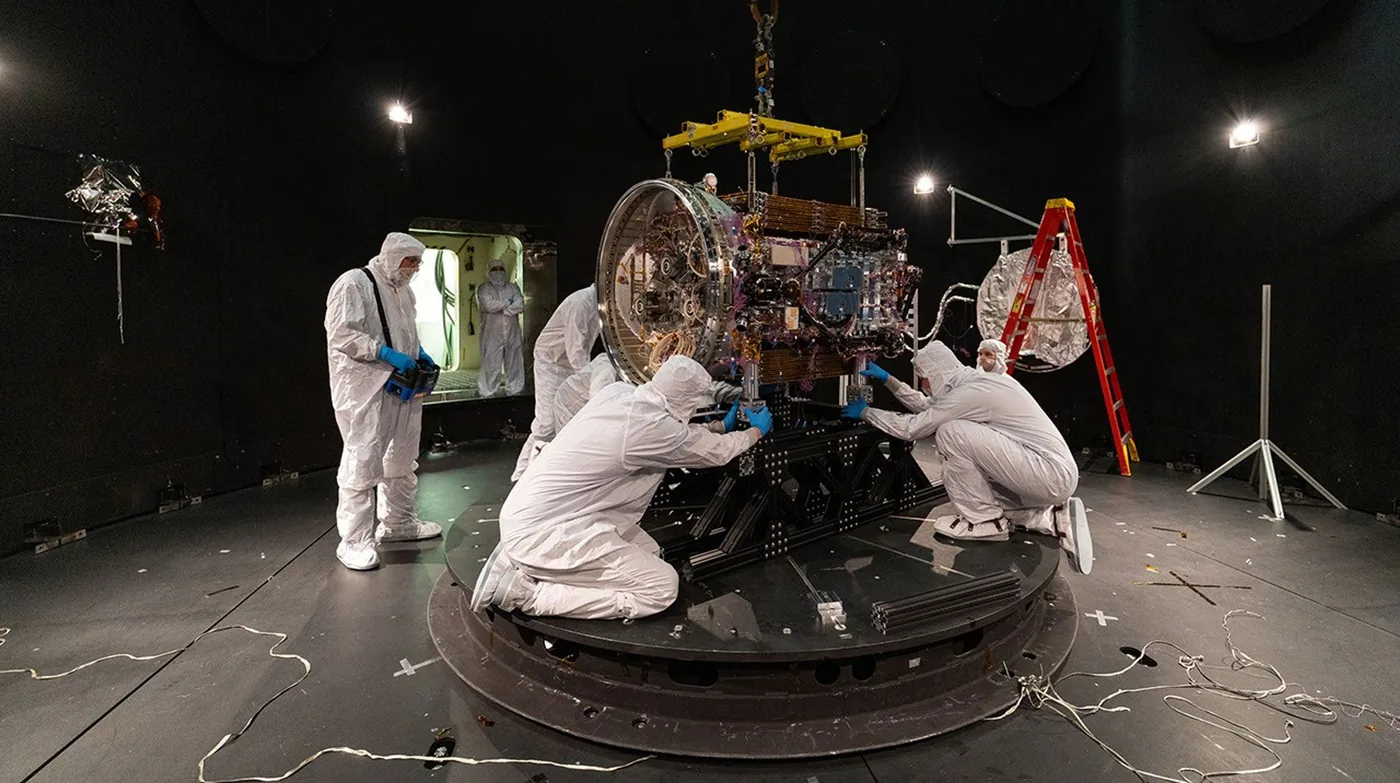
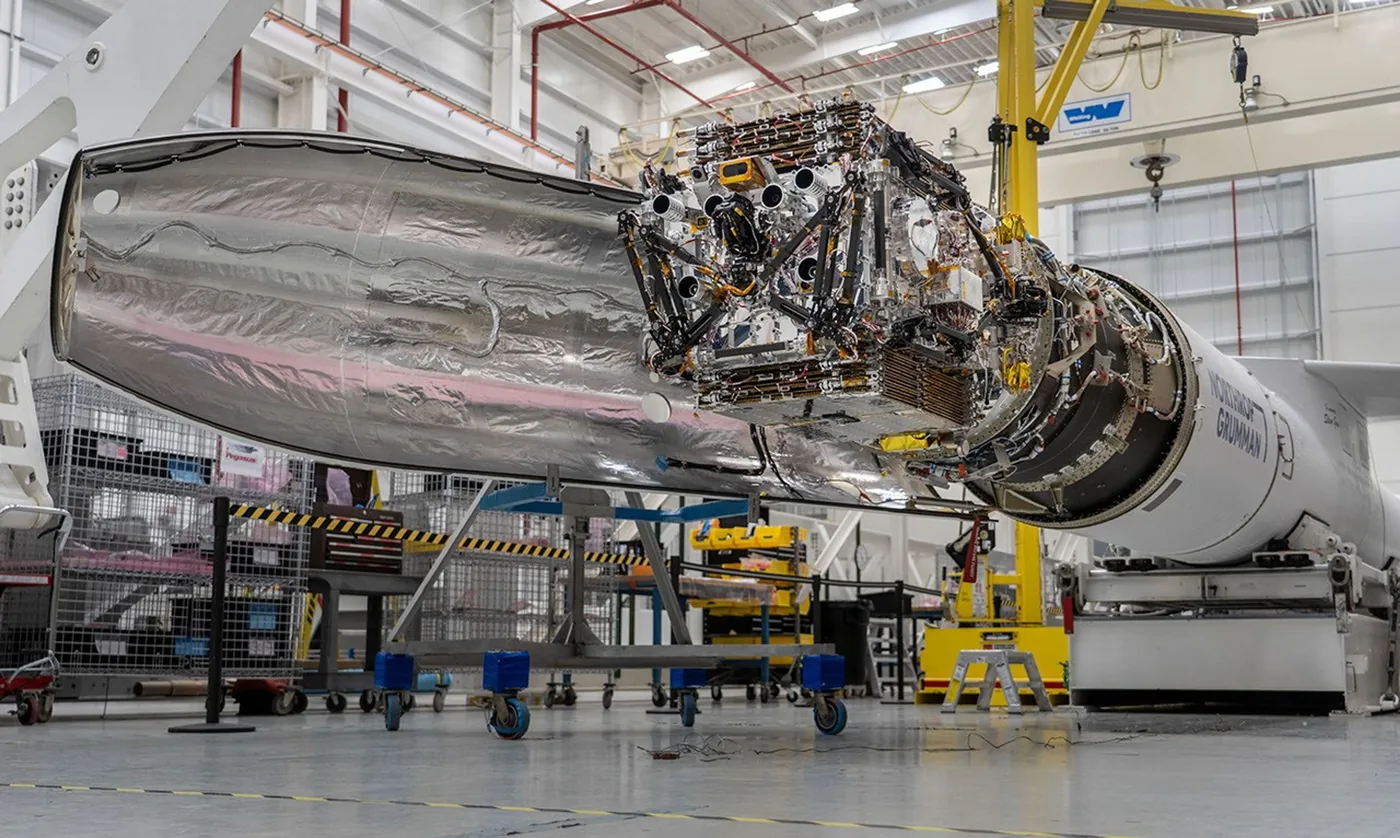
Engineers subjected LINK to rigorous thermal and vacuum trials to confirm that its electronic actuators and thrusters could survive orbital extremes during environmental verification. Katalyst technicians arrived at Goddard Space Flight Center on April 14, 2026, to initiate extensive testing [5]. On April 28, 2026, teams mounted the robotic spacecraft to a baseplate inside Goddard’s 27-foot-diameter Space Environment Simulator chamber. Technicians depressurized the chamber to simulate vacuum, cycled temperatures between scorching highs and freezing lows, fired LINK’s xenon ion thrusters, and operated one of its three robotic arms [7]. Testing concluded on May 4 [5].
Following environmental qualification in Maryland, the servicing satellite traveled south for launch integration. On Friday, June 5, LINK arrived at NASA’s Wallops Flight Facility on the Virginia coast. Technicians completed mechanical installation inside the payload fairing of a Northrop Grumman Pegasus XL air-launched rocket on Tuesday, June 9 [5]. Similar heavy launch preparations occurred when the Artemis 3 mission booster stacking advanced in Florida, highlighting NASA’s multifaceted launch schedule across 2026 [4].
On Thursday, June 18, the carrier aircraft hauling the Pegasus XL rocket departed Wallops Flight Facility for the Pacific Ocean. The flight crew ferried the booster across global waypoints to Kwajalein Atoll in the Republic of the Marshall Islands. Mission logistics required absolute precision [5].
What Happened During the Swift Servicing Mission?
During the orbital phase of the Swift servicing mission, the robotic LINK spacecraft suffered severe attitude control malfunctions shortly after reaching low Earth orbit [4]. The Pegasus XL rocket launched from Kwajalein Atoll at 8:36 p.m. Marshall Islands Time (4:36 a.m. EDT) on Friday, July 3, successfully deploying LINK into low Earth orbit. Initial telemetry confirmed separation, but telemetry checkouts soon revealed erratic rotation and sporadic communication drops. Diagnostic tests indicated that two of LINK’s three internal reaction wheels had stopped functioning, accompanied by partial valve failures in its cold gas thruster system [5].
Engineers from Katalyst Space and NASA worked around the clock to regain operational control [1]. Katalyst successfully transmitted an emergency flight software update that uploaded novel attitude control algorithms, enabling LINK’s remaining actuators to damp the spacecraft’s spin rate [5]. Although stabilization restored communications, conducting rendezvous and physical grappling without a redundant attitude control system posed unacceptable risk to Swift. On August 18 and 19, NASA announced that LINK would not capture or boost Swift [4].
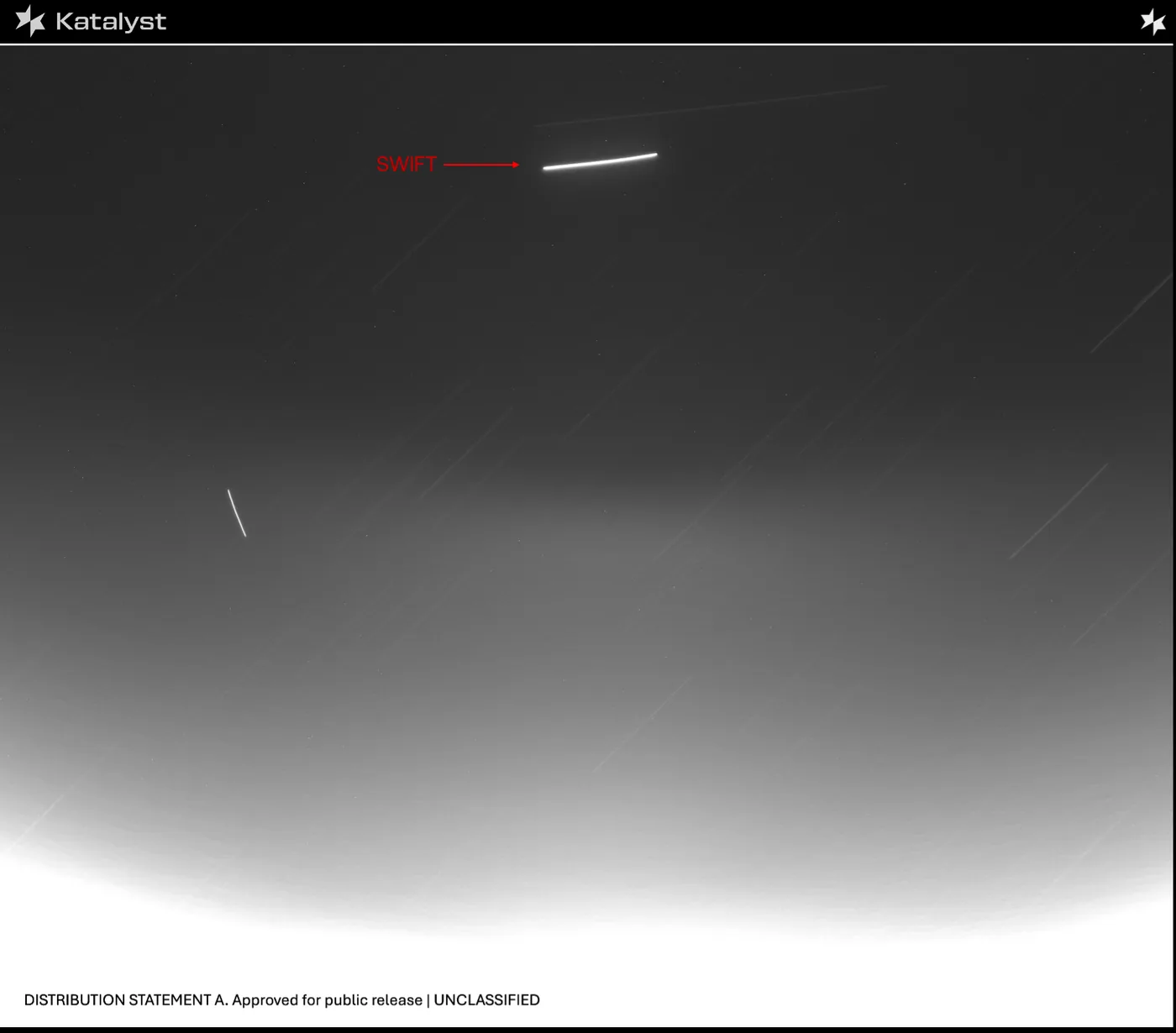
Instead of attempting a capture, flight teams converted the mission into a proximity operations demonstration [1]. LINK approached within 7.5 to 9 miles (12 to 15 kilometers) of the observatory, capturing optical imagery that showed Swift as a luminous streak moving across deep space [7]. Controllers commanded LINK’s robotic arms [1].
Penn State Drag Maneuvers and Servicing Lessons
While ground engineers tested LINK, flight controllers at the Swift Mission Operations Center at Penn State in University Park executed unprecedented orbital tactics to stall decay. Under mission director John Nousek, astronomy professors in the Eberly College of Science altered the spacecraft’s pointing attitude to minimize atmospheric drag across several critical months. In December 2025, controllers swapped 25% of active science targets for orientations that aligned Swift’s structure with incoming air particles. By mid-February 2026, Penn State fully suspended pointed observations to keep Swift streamlined, buying critical months above the 185-mile limit [1].
“Even though Swift was not executing pointed science observations from mid-February to late August, we nonetheless continued Penn State’s history of innovative space research and operations, pioneering new methods to minimize drag experienced by the spacecraft,” explained John Nousek. Flight planners faced strict physical constraints. Pointing the telescopes too close to Earth, Moon, or Sun risked sensor overheating, whereas tilting too far into the atmosphere exposed optics to particle damage [1]. After LINK was scaled back, the Swift telescope restarted science observations using two of its three primary instruments [5].
Commercial in-space servicing remains a vital priority for agency leadership despite LINK’s early termination. NASA gained invaluable experience in rapid contracting, cross-center coordination between Goddard and Wallops, and agile safety oversight. S. Bradley Cenko reflected on the long-term impact for aerospace exploration: “When Neil Gehrels, Swift’s namesake, designed the observatory, nothing like it had ever launched. He would have celebrated that this boost effort was part of Swift’s legacy, that it allowed NASA to try something new and daring even though the outcome wasn’t guaranteed” [1].
Swift demonstrated that public-private satellite servicing can rapidly mobilize from proposal to launchpad within twelve months [1].
- PRESS RELEASE Kazmierczak, J. (2026, September 28). NASA highlights lessons learned from Swift boost mission. NASA Science. [Article Link]
- WEBSITE Mattson, B., & Kazmierczak, J. (2026, February 25). Swift boost mission. NASA Science. [Article Link]
- WEBSITE National Aeronautics and Space Administration. (2026, September 24). Swift boost mission overview. NASA. [Article Link]
- PRESS RELEASE Low, L. E. (2026, August 19). NASA updates next steps for commercial Swift boost mission. NASA. [Article Link]
- WEBSITE Goddard Space Flight Center. (2025). Swift: News and mission updates. NASA GSFC. [Article Link]
- ONLINE NEWS Worldnewsdotcom. (2026, September 28). NASA highlights lessons learned from Swift boost mission. World News. [Article Link]
- ONLINE NEWS PressBee. (2026, September 28). NASA highlights lessons learned from Swift boost mission. PressBee. [Article Link]
APA 7: PerEXP Teamworks. (2026). NASA Swift Boost Mission Delivers Space Servicing Lessons. PerEXP Teamworks Science.


