





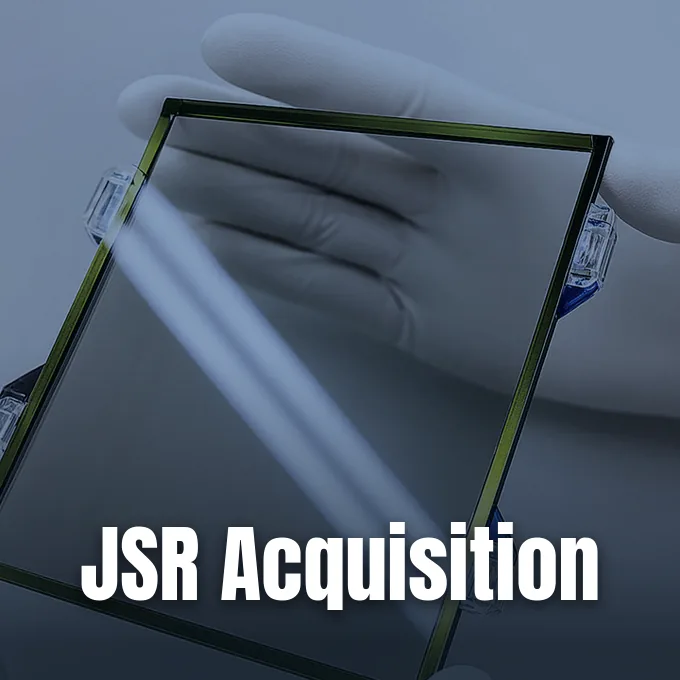
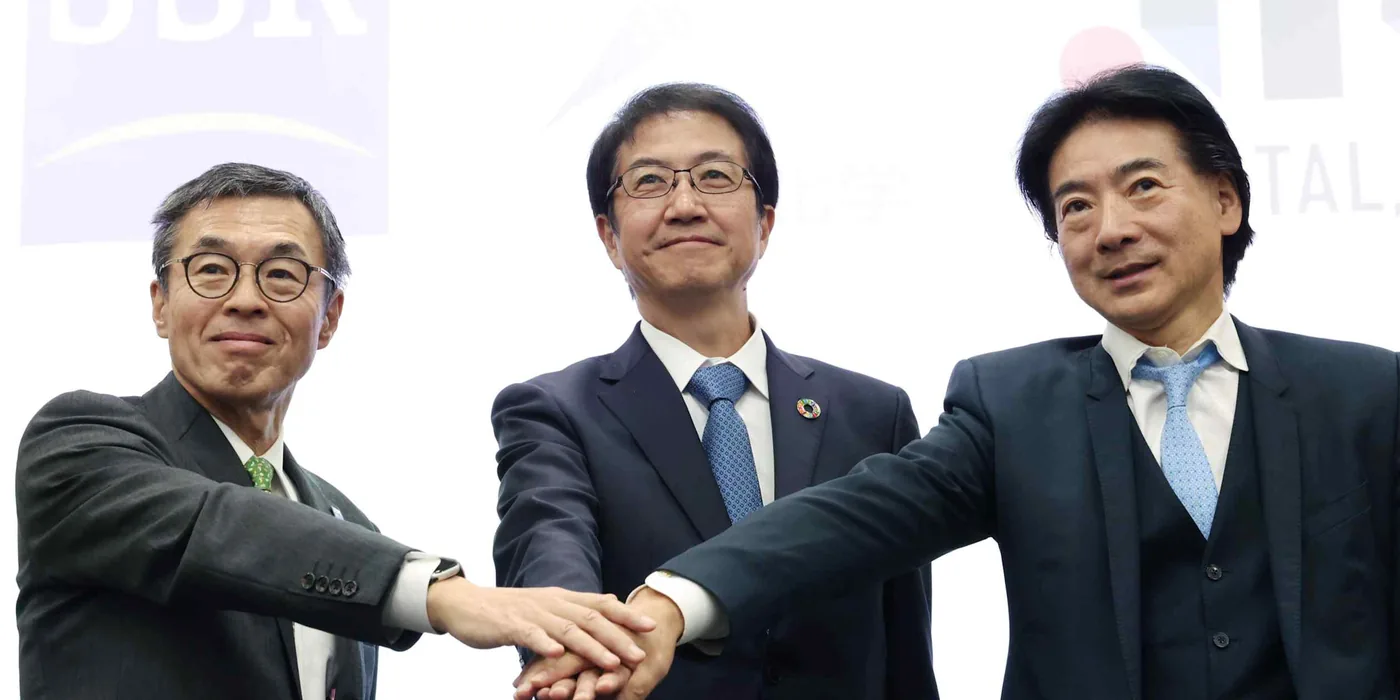
Japanese chemical manufacturer Mitsui Chemicals signed an agreement on November 9, 2026, to buy chip materials maker JSR from funds managed by JIC Capital in a deal valued at ¥1.84 trillion ($11.65 billion). The Mitsui Chemicals JSR deal stands as the biggest takeover ever seen in Japan’s chemical industry, linking basic resin production with high-end lithography supplies. State-backed fund Japan Investment Corporation agreed to sell all common shares, while the Development Bank of Japan joined the purchase to help keep domestic chipmaking supplies stable [4].
Deal Structure Behind State Backing
The transaction serves as the final exit for Japan Investment Corporation, a state-backed entity supervised by Japan’s finance ministry that took JSR private in 2024 for roughly ¥900 billion. JIC delisted the producer so management could carry out deep structural reforms away from the quarterly earnings pressures of public stock markets, shedding underperforming units to concentrate resources on chip lithography chemicals. The government fund evaluated seven or eight prospective buyers before choosing Mitsui Chemicals as the winning industrial partner. JIC Capital Chief Executive Shogo Ikeuchi said the priority was “finding a buyer” that could maintain a solid materials platform to help Japanese industry over the next decade [7].
At ¥1.84 trillion, the purchase surpasses Showa Denko’s ¥960 billion ($4.55 billion) acquisition of Hitachi Chemical in 2020. That earlier deal created Resonac Holdings. By keeping JSR in domestic hands, the transaction avoids the regulatory disputes that often follow foreign takeovers of sensitive chip assets [6].
Under the purchase plan, Mitsui Chemicals and Development Bank of Japan will acquire all common shares from the selling funds using cash. Mitsui Chemicals will also buy preferred shares held by Mizuho Bank and DBJ, converting those holdings into common shares. DBJ plans to convert its stake into non-voting preferred stock, leaving Mitsui Chemicals with 100% of JSR’s voting rights after the deal closes in late fiscal 2027 [4].
Mitsui Chemicals JSR Financing Framework
The transaction value includes ¥1.3921 trillion in equity value and ¥447.9 billion in assumed debt and other liabilities. Mitsui Chemicals secured ¥1.64 trillion in short-term bridge loans from its main commercial banks, while DBJ contributed ¥200 billion in direct equity. Mitsui Chemicals warned that its net debt-to-EBITDA ratio will temporarily rise above 4.0 after closing, which makes quick refinancing necessary to protect its credit standing [3].
To pay down the heavy bridge loans from lead banks, the chemical manufacturer filed a shelf registration on November 9 to issue up to ¥150 billion in new common shares across a two-year window starting November 17, 2026. Management also plans to secure about ¥300 billion in mezzanine financing, a funding format where rating agencies give 50% equity credit to keep debt ratios in check. Combined with the planned stock sale, these steps aim to deliver ¥300 billion in total equity credit within a year of deal completion. Leadership expects to repay most bridge borrowings through this mix of equity-like capital and business earnings, softening balance sheet strain while protecting credit grades [4].
The Mitsui Chemicals JSR integration plan also depends on selling non-core units to speed up debt retirement. Mitsui Chemicals announced it will sell JSR’s life sciences business, which includes contract manufacturer KBI Biopharma, to raise fresh funds within three years. Capital will shift directly toward chip chemicals [7].

Photoresists and Advanced Lithography
JSR is one of the world’s top producers of photoresists, the light-sensitive chemical solutions spread over silicon wafers before light prints circuit designs. The Tokyo company holds about 30% of the global photoresist market, competing directly with domestic peers Tokyo Ohka Kogyo and Sumitomo Chemical. In cutting-edge chip fabrication, JSR strengthened its standing by buying Inpria, an Oregon-based business that makes metal-oxide photoresists designed for extreme ultraviolet (EUV) lithography systems [5].
Mitsui Chemicals brings matching lithography assets to the table, most notably through its production of EUV pellicles made under license from Dutch lithography giant ASML. Pellicles act as dust covers suspended above photomasks to stop stray particles from falling onto circuit templates during high-energy wafer exposure. While JSR makes the sensitive chemical films that take printed lines on wafer surfaces, Mitsui Chemicals supplies protective mask pellicles and advanced back-end packaging materials. Combining these front-end and back-end product lines gives the merged enterprise a wider product lineup that reaches wafer foundries at multiple steps of chip assembly, helping fab engineers coordinate lithography materials with packaging resins [5].
The merger affects chipmakers like TSMC and Intel. Qualifying a photoresist recipe for 3nm or 2nm production takes years of testing, so foundries rarely switch chemical vendors. Concentrating photoresist and pellicle supply within one Japanese group may raise supplier concentration worries among global foundries [5].


The Mitsui Chemicals JSR Strategic Rationale
Mitsui Chemicals Chief Executive Satoshi Ichimura said buying JSR aims to “accelerate the transformation” of the firm into a specialty electronic materials maker. The combined group will become Japan’s largest semiconductor materials supplier by sales, targeting about ¥40 billion in yearly incremental profit by 2035. Ichimura noted that uniting research laboratories will speed up work on custom chemicals needed for artificial intelligence processors and high-density memory packages [3].
The transaction aligns with government efforts in Tokyo to strengthen domestic microchip manufacturing after recent shortages exposed weak links in global electronics supply chains. Japan’s Ministry of Economy, Trade and Industry has spent billions of dollars to attract and underwrite new fabrication plants, including TSMC’s manufacturing sites in Kumamoto and the Rapidus project in Hokkaido. By securing domestic control over irreplaceable photoresists and lithography pellicles, the Japanese government ensures that its emerging domestic fabs will retain uninterrupted access to high-grade chemicals without relying on overseas suppliers or risking disruption from export restrictions [6].
Scale matters in microelectronics chemistry. Merging with JSR gives Mitsui Chemicals the balance sheet scale to match Shin-Etsu Chemical. Bigger research budgets let the combined group develop next-generation photoresists for upcoming High-NA EUV machinery [6].

Restructuring the Basic Materials Portfolio
The takeover speeds up a corporate shift laid out in the company’s VISION 2030 strategy, which began in 2021 to move resources away from basic petrochemicals. Mitsui Chemicals set up growth targets in healthcare, mobility, and communications while trimming older cracker assets that face stiff price competition from overseas plants. Leadership believes adding JSR’s specialized chemistry will generate steady earnings that do not swing with shifts in crude oil prices [4].
Together with the buyout announcement, Mitsui Chemicals confirmed it is reviewing the scope of its planned Basic & Green Materials separation. The company first disclosed work on May 30, 2025, to study a standalone corporate setup for basic petrochemicals to make partnerships, mergers, or restructuring with other producers easier to execute. Carving out commodity ethylene and general resin lines will leave the parent company as a dedicated specialty business built around electronic materials. Managers want to finish this review quickly so capital can flow into chip chemicals rather than commodity plastics [4].
Industry observers see this reorganization as part of a needed change in Japanese chemistry. As Chemical & Engineering News reported, domestic producers have long run mixed businesses that spread investment across low-margin plastics. Mitsui Chemicals is shedding commodity lines to focus money on high-margin electronic supplies [1].
Regulatory Hurdles and Market Reaction
Stock markets responded with concern over the large debt needed to finance the purchase. Shares of Mitsui Chemicals (TYO: 4183) dropped 8.5% on Monday in Tokyo, following an earlier 12% slide on Friday after Reuters reported that negotiations had reached their final stage. Traders worried about repayment risks because Mitsui Chemicals had a market capitalization of ¥664.6 billion on Friday, meaning the takeover price is roughly triple the firm’s equity market worth [7].
Completing the purchase depends on antitrust reviews and foreign investment clearances across several countries. Japan’s Fair Trade Commission and foreign regulatory bodies must examine whether pairing JSR’s photoresist market share with Mitsui’s pellicle output creates undue market power in semiconductor lithography. Mitsui Chemicals aims to close the deal in the second half of fiscal 2027, but the company noted that the closing date could shift if regulatory examinations take longer than expected. Resolving overlap issues and securing formal approval from overseas trade regulators will decide whether the transaction finishes on schedule [4].
If cleared by regulators, the Mitsui Chemicals JSR deal will reshape Japan’s chemical industry through state-backed consolidation. The combined firm will hold a product catalog spanning front-end lithography resins and back-end packaging films. Success will depend on keeping JSR’s technical talent while meeting debt repayment goals over the coming decade [6].
- ONLINE NEWS Matsuoka, K. (2026, November 9). Mitsui Chemicals will acquire JSR in electronic materials push. Chemical & Engineering News. [Article Link]
- ONLINE NEWS Staff Writer. (2026, November 9). Japan’s Mitsui Chemicals to buy chip materials maker JSR for $11.6bn. Nikkei Asia. [Article Link]
- ONLINE NEWS Warrick, A. (2026, November 9). Mitsui Chemicals to buy chip materials maker JSR for $11 bln. Yahoo! Finance. [Article Link]
- ONLINE NEWS IBT Staff Reporter. (2026, November 9). Mitsui Chemicals agrees to acquire JSR in $11.65 billion deal. International Business Times Japan. [Article Link]
- ONLINE NEWS TrendForce. (2026, November 5). Mitsui Chemicals eyes record $8.2B JSR acquisition to expand EUV materials business. TrendForce. [Article Link]
- ONLINE NEWS Nakamura, A. (2026, November 5). Mitsui Chemicals pursues ¥1 trillion takeover of semiconductor materials maker JSR. BriefAsia. [Article Link]
- ONLINE NEWS Somatirtha, & Laxmi, V. (2026, November 9). Mitsui Chemicals to acquire JSR for USD 11.6 billion in Japan deal. Analytics Insight. [Article Link]
- ONLINE NEWS Matsuoka, K. (2026, November 9). Mitsui Chemicals will acquire JSR in electronic materials push. Chemical & Engineering News. [Article Link]
APA 7: PerEXP Teamworks. (2026, November 10). Mitsui Chemicals JSR Takeover Creates Chip Materials Leader. PerEXP Teamworks. https://perexpteamworks.com/en/mitsui-chemicals-jsr-acquisition/


