



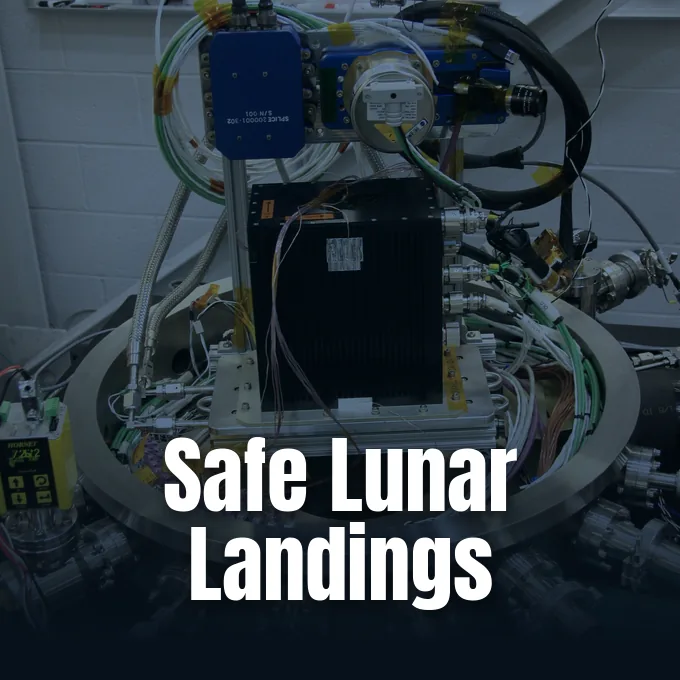
Can robotic landers achieve safe lunar landings on treacherous extraterrestrial terrain without a human pilot touching the controls? Executing precision lunar landing maneuvers requires autonomous systems capable of detecting steep crater slopes, mapping hazardous boulder fields in real time, and adjusting descent trajectories within fractions of a second. To meet these demands, the National Aeronautics and Space Administration (NASA) created the Safe and Precise Landing – Integrated Capabilities Evolution (SPLICE) project at the Johnson Space Center in Houston. Rather than accepting the expansive landing footprints of early space exploration, modern lunar architectures must place cargo landers and habitats within meters of polar resources. On August 27, 2026, NASA engineers demonstrated these capabilities by flying SPLICE navigation hardware on a multirotor drone near the Armstrong Flight Research Center in Edwards, California [1].
- Why Precision Lunar Landing Demands Autonomous Systems
- How Did NASA Prepare for the Moon Landing?
- Testing SPLICE Sensors for Safe Lunar Landings
- Doppler Lidar Engineering for Safe Moon Landings
- Throttling Descent Engines and Absorbing Touchdown Shock
- Subscale Flight Operations and the Artemis Architecture
Why Precision Lunar Landing Demands Autonomous Systems
Planetary exploration has historically tolerated substantial geographic uncertainty during final descent. The targeted landing ellipse for Apollo 11 in 1968 measured approximately 11 miles by 3 miles, requiring manual astronaut intervention to avoid hazardous boulder craters. Viking landed ten years later. That robotic Mars mission accepted an expansive landing ellipse measuring 174 miles by 62 miles across the Red Planet. In 2012, NASA narrowed that ellipse to 12 miles by 4 miles for the Curiosity rover. SPLICE aims to shrink landing error ellipses down to areas half the size of a football field [2].
Extraterrestrial surfaces lack terrestrial positioning networks, forcing incoming exploration vehicles to navigate without relying on external constellation signals. Earth navigation relies on Global Positioning System (GPS) satellite constellations, which began launching in 1978, but no equivalent infrastructure orbits the Moon. Lunar missions encounter rugged impact craters, treacherous boulder fields, and abrasive dust layers that jeopardize propulsion systems during the final descent phase. Mechanical disruptions quickly terminate missions, as observed when a US company abandoned its lunar landing endeavor due to a fuel leak before entering the terminal phase [6].
Because the Moon lacks an atmosphere for aerodynamic braking, descent thrusters must eliminate every meter per second of orbital velocity alone [8].
How Did NASA Prepare for the Moon Landing?
NASA prepared for historic lunar missions by treating lunar flight as an integrated systems engineering challenge rather than an isolated rocket launch. When President John F. Kennedy established the national lunar landing goal, the agency lacked operational experience in deep-space navigation, life support, and lunar descent. Ground teams coordinated testing across thousands of contractors and engineers. Following the tragic Apollo 1 cabin fire in 1967 that killed astronauts Gus Grissom, Ed White, and Roger Chaffee, NASA completely redesigned the Command Module hatch and introduced rigorous environmental screening. Systems were validated across environmental chambers, vibration tables, and vacuum facilities long before crews approached the launch pad [7].
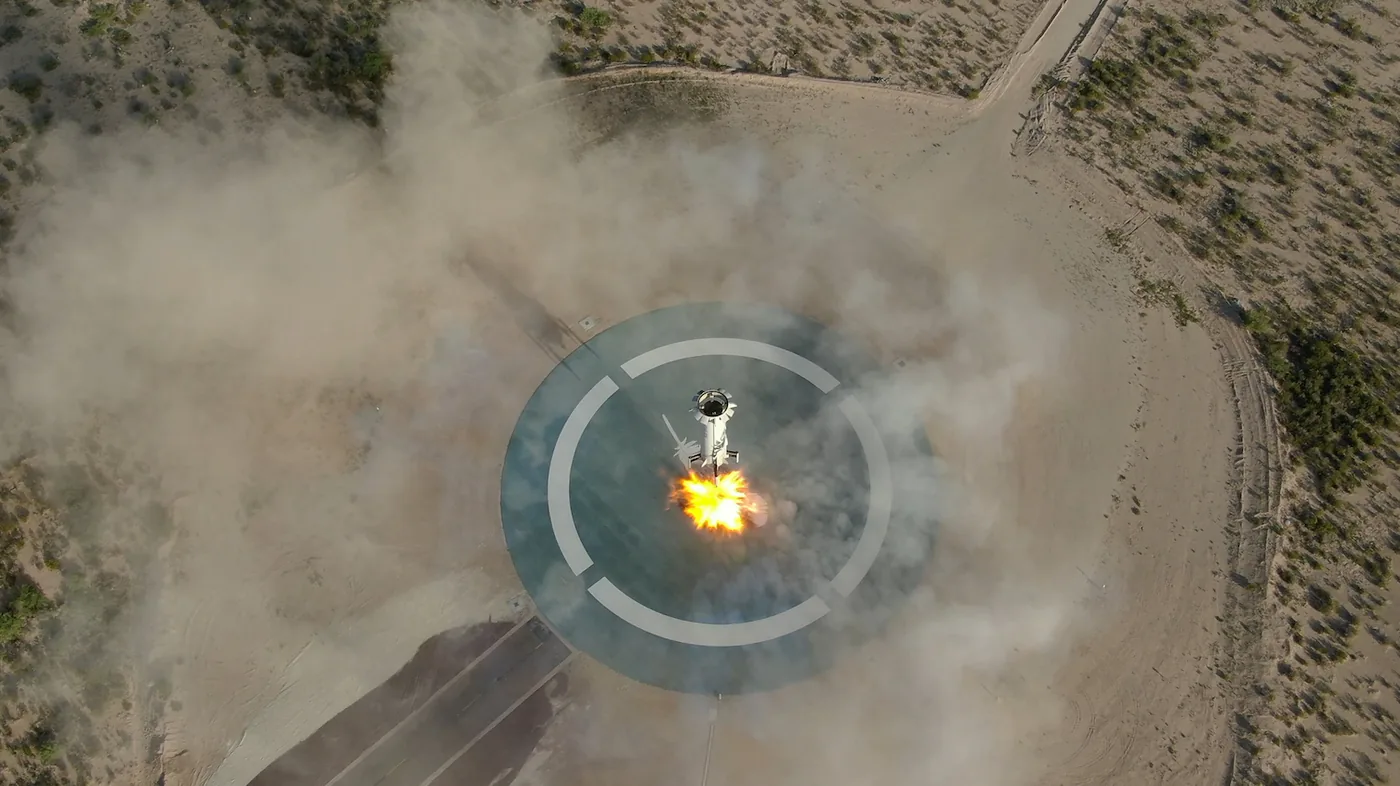
Robotic precursors established foundational knowledge of surface stability before humans attempted a touchdown. Luna 2 made impact in 1959. Following that initial Soviet impact on September 13, NASA launched the Ranger, Lunar Orbiter, and Surveyor programs to examine topography and evaluate boulder distribution. Piloting risks culminated during Apollo 11 in 1969, when Commander Neil Armstrong assumed manual flight control of the Eagle Lunar Module to steer past a boulder-strewn crater. The vehicle touched down safely with roughly 45 seconds of descent fuel remaining [6].
Apollo flight hardware integrated the Saturn V rocket with three specialized spacecraft built by North American Aviation, Grumman, and Boeing. The Lunar Module featured completely distinct stages for descent and ascent. Crews practiced rendezvous, navigation, and emergency protocols in full-scale simulators at Mission Control in Houston. Modern lunar campaigns build on this operational heritage while addressing distinct physiological challenges, including how risks of decompression sickness shape lunar spaceflight during surface operations [7].
Testing SPLICE Sensors for Safe Lunar Landings
Executing safe lunar landings requires sensor packages that operate in unison to track altitude, velocity, and ground features. Under the Game Changing Development program within NASA’s Space Technology Mission Directorate, engineers created the SPLICE project to develop integrated descent sensors. The Alta-X flew on August 27. Researchers conducted these subscale flight tests using a Freefly Alta-X multirotor at the Dale Reed Subscale Flight Research Laboratory, located at Armstrong Flight Research Center in Edwards, California. Chief engineer Derek Abramson coordinated airspace protocols with air traffic control. Chief pilot Justin Hall and drone pilot Justin Link kept the drone on station while project manager Davis Adams and software engineer Jeanette Harper tracked real-time guidance telemetry [3].
Testing automated landing algorithms on an uncrewed aerial vehicle solves a critical validation bottleneck. Multirotor aircraft exhibit different flight dynamics than rocket-powered landers, but subscale flights replicate the computational cycle speeds and sensor integration timelines required during final approach. Mojave Desert winds generate turbulent aerodynamic disturbances, forcing onboard algorithms to filter noisy state estimates and maintain lock on synthetic landing zones. Demonstrating sensor robustness under harsh desert conditions builds operational confidence before loading expensive avionics onto suborbital boosters [4].
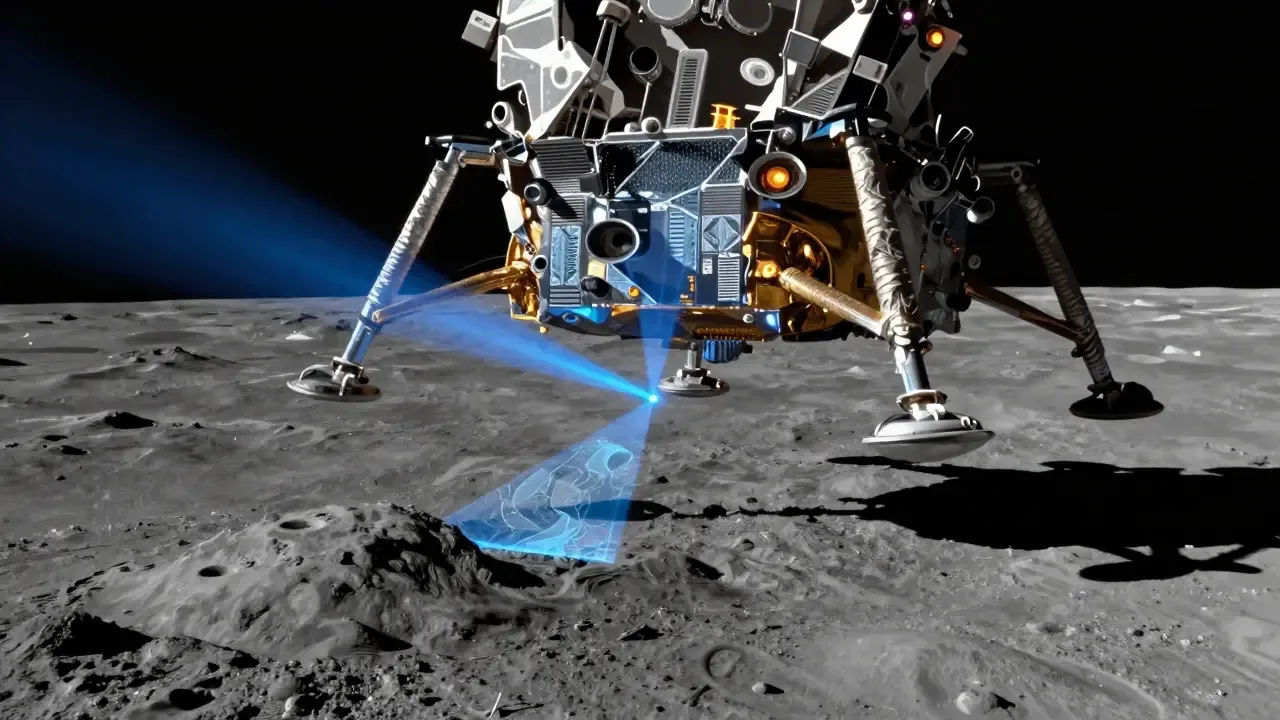
The core architecture consists of four primary subsystems managed by a specialized descent and landing computer. Terrain relative navigation activates several miles above the surface, using an optical camera taking up to 10 images per second. Onboard algorithms match surface features against satellite maps and known landmark databases to determine the spacecraft position. Navigation Doppler lidar operates concurrently to measure velocity and distance. A high-speed computer calculates divert trajectories, while a future hazard detection lidar will identify boulders and steep crater slopes within touchdown corridors half the size of a football field [2].


Doppler Lidar Engineering for Safe Moon Landings
Radar systems have guided space exploration since the Apollo era, but optical laser sensors deliver vastly superior measurement resolution for safe moon landings. Navigation Doppler lidar (NDL), co-invented by principal investigator Farzin Amzajerdian at NASA’s Langley Research Center in Hampton, Virginia, replaces radio pulses with narrow laser beams. The instrument directs three pencil-thin laser beams toward the ground, calculating vehicle range and velocity vectors from the frequency shift and bounce-back timing of reflected photons. The sensor refreshes these measurements 20 times per second across all three beams, providing the guidance computer with continuous kinematic tracking [2].
Operating laser sensors in the deep lunar vacuum introduces distinct physical hurdles. As Farzin Amzajerdian noted regarding planetary regolith characteristics, “There are still some unknowns about how much signal will come from the surface of the Moon and Mars.” Lasers operate at frequencies orders of magnitude higher than radar waves, enabling higher precision and compact sensor packaging. During an uncrewed commercial lunar mission, when primary laser rangefinders malfunctioned before descent, flight controllers successfully reprogrammed a secondary NASA demonstration lidar to execute the powered touchdown [8].
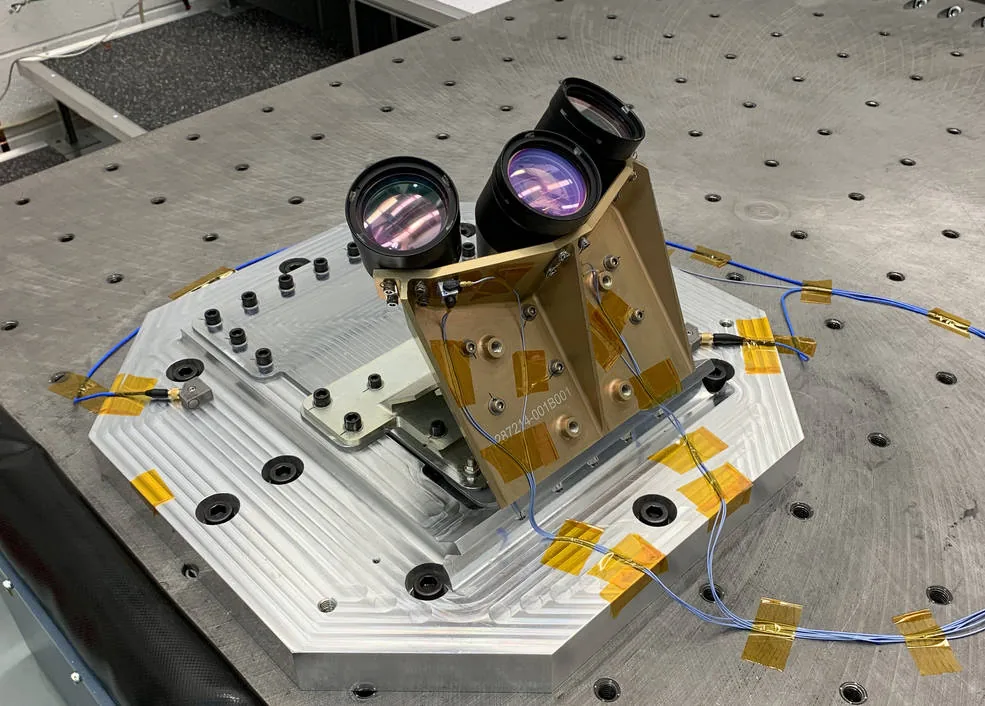
Processing these rapid sensor inputs requires specialized onboard computing power. High sensor data rates would overwhelm a lander’s primary flight computer. SPLICE employs an interim descent and landing computer designed to synchronize navigation streams without causing bus latency. Technical integration manager John Carson explained that “the surrogate computer has very similar processing technology, which is informing both the future high-speed computer design, as well as future descent and landing computer integration efforts.” NASA also integrated three SPLICE subsystems onto a Blue Origin New Shepard booster, verifying sensor routines during suborbital descent before lunar missions deploy [2].
Throttling Descent Engines and Absorbing Touchdown Shock
Even sophisticated guidance algorithms cannot complete a touchdown without responsive rocket propulsion. A soft lunar landing requires a Descent Propulsion System (DPS) capable of continuously modulating thrust. Early liquid engines functioned strictly in binary on-and-off states. In contrast, the Apollo Lunar Module utilized the revolutionary VTR-10 descent engine, engineered by Gerard W. Elverum Jr. at TRW Space Technology Laboratories. The VTR-10 throttled to 10 percent. This throttle mechanism allowed the engine to vary thrust continuously up to 100 percent power, giving astronauts the control authority needed to drift horizontally away from hazardous obstacles [8].
Propellant chemistry dictates spacecraft longevity and thermal complexity during lunar operations. Apollo landers relied on hypergolic propellants, combining Aerozine 50 fuel (a hydrazine derivative) with dinitrogen tetroxide oxidizer. These chemicals ignite spontaneously upon contact without requiring igniters, making them dependable for descent burns. The IM-1 lander burned liquid methane. Modern commercial spacecraft like Intuitive Machines IM-1 pair liquid methane with liquid oxygen, delivering superior specific impulse while requiring active thermal insulation against boil-off [8].
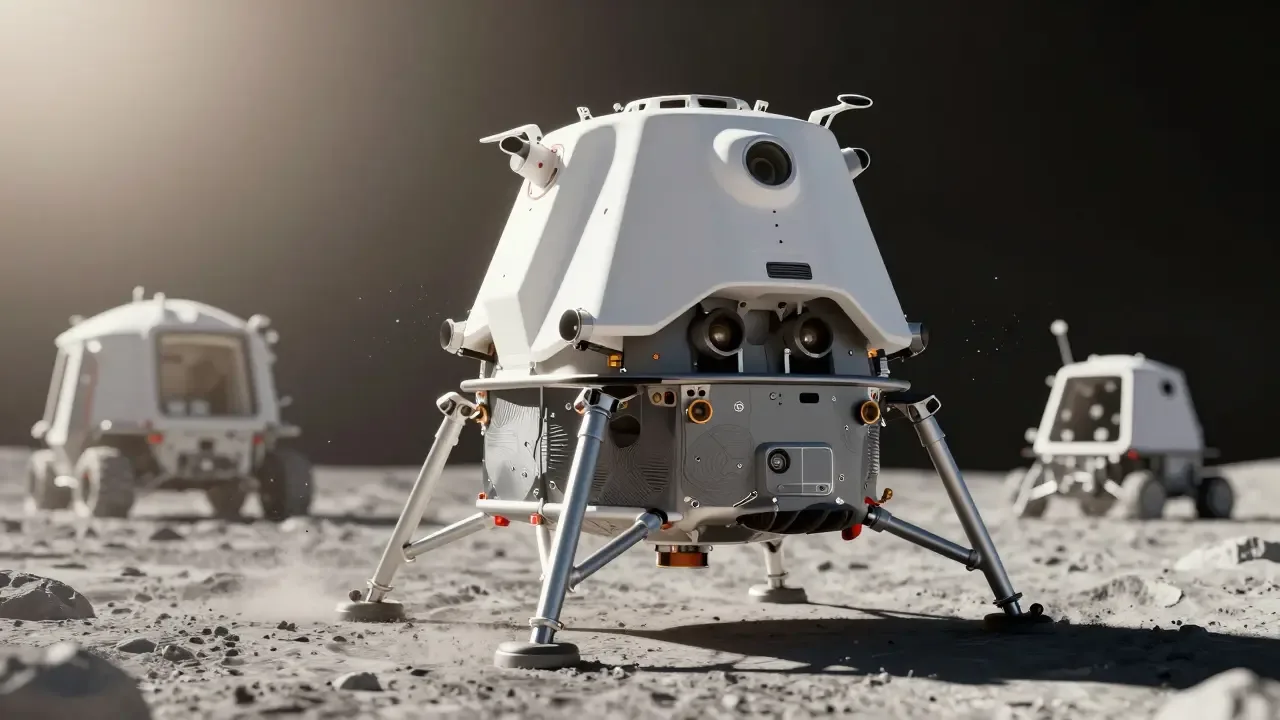
Terminal descent represents the most unforgiving second of any lunar profile. The lander must cancel vertical momentum while touchdown landing gear absorbs residual kinetic energy. If touchdown velocity exceeds design tolerances, structural struts buckle or sensitive scientific instruments shatter against the regolith. If descent slows prematurely, thrusters exhaust remaining propellant above the surface, causing the spacecraft to tumble. Autonomous navigation packages like SPLICE coordinate directly with propulsion controllers, firing retro-rockets until crushable footpads establish mechanical contact with the lunar surface [6].
Subscale Flight Operations and the Artemis Architecture
Deploying landing hardware on multirotor drones provides a cost-effective development cadence for NASA and commercial partners. Subscale flight testing at Edwards allows software teams to iterate navigation algorithms weekly rather than waiting months for integrated rocket launches. Project manager Ron Sostaric emphasized that “SPLICE is designed to integrate with any spacecraft landing on a planet or moon.” These modular sensor kits are engineered for direct integration into commercial Human Landing System landers and robotic delivery vehicles targeting the lunar South Pole. Navigating near deep craters like Shackleton requires high-precision optical tracking because low solar angles produce elongated shadows and intense glare across rugged terrain [3].
Establishing a permanent scientific presence on the Moon depends on repeating safe lunar landings across diverse extraterrestrial terrains. Future cargo missions must land within walking distance of surface bases, delivering heavy equipment to identical coordinates without sandblasting previously deployed hardware. Tracking and descent telemetry will synchronize with ground controllers, paralleling how lunar ground stations route NASA Artemis Moon data across deep-space networks. As John Carson summarized, “Safely and precisely landing on another world still has many challenges. There’s no commercial technology yet that you can go out and buy for this. Every future surface mission could use this precision landing capability, so NASA’s meeting that need now [5].”
- PRESS RELEASE NASA HQ Web Team. (2026, September 24). Practicing for Safe Landings on the Moon and Beyond. National Aeronautics and Space Administration. [Article Link]
- PRESS RELEASE Hall, L., & Pierce, M. (2020, September 17). NASA Technology Enables Precision Landing Without a Pilot. National Aeronautics and Space Administration. [Article Link]
- ONLINE NEWS Drake, C. (2026, September 24). NASA SPLICE Lunar Landing Practice on Alta-X Drone. Beyond Tomorrow. [Article Link]
- ONLINE NEWS Mirage News. (2026, September 24). Practicing For Safe Landings On Moon And Beyond. Mirage News. [Article Link]
- ONLINE NEWS PressBee. (2026, September 24). Practicing for Safe Landings on the Moon and Beyond. PressBee. [Article Link]
- WEBSITE Trackstick. (2023, December 20). Touching Down on the Moon: Strategies for Safe Lunar Landings. Trackstick. [Article Link]
- WEBSITE Sentinel Mission. (2026, June 27). How Did NASA Prepare for the Moon Landing? A Detailed Look at Apollo’s Planning, Training, and Technology. Sentinel Mission. [Article Link]
- ONLINE NEWS Astroway, S. (2026, March 27). Lunar Landers: Technology for Safe Descent and Landing. Orbital Exploration. [Article Link]
APA 7: PerEXP Teamworks. (2026, September 25). NASA Tests SPLICE Technology for Safe Lunar Landings. PerEXP Teamworks.


