





Exin Therapeutics, a biotechnology startup based in San Francisco, used an artificial intelligence model to carry out a brain injection on a living mouse with epilepsy. Co-founder and chief executive Gabriel Ocana-Santero shared details of the procedure after his team connected Anthropic Sonnet to a motorized surgical rig. The software evaluated nineteen therapy candidates from a spreadsheet, picked target coordinates within the brain, and guided robotic arms to deliver the compound into neural tissue [1]. The mouse recovered and was recorded moving around its enclosure, while the procedure prompted fresh discussions among researchers over safety limits and animal testing in automated laboratory experiments [2]. The startup released video records documenting the trial on social media [1].
How the Laboratory Rig Worked
Exin Therapeutics develops treatments for neurological conditions by studying brain activity patterns in laboratory models. Ocana-Santero told Wired that models trained only on published papers miss crucial details about real laboratory work, such as failed trials, unrecorded observations, and real-time choices that researchers face at the bench [2]. To capture that missing data, the startup built a custom surgery rig that paired a motorized frame to hold the mouse steady with a digital camera and robotic arms [1]. The camera watched the surgical field, sending live visual updates to the software agent [2].
The team gave the model a spreadsheet listing 19 gene therapy vectors along with three scientific research papers. From those materials, the model had to determine which vector to administer, set the dosage volume, and calculate stereotaxic injection coordinates. “Autonomous surgical robots exist and they are better at the mechanics than our bench rig, to be honest. But in every one of them, a human decided what operation to perform, and the robot executed it,” Ocana-Santero said [1]. It set the needle speed and guided compound delivery without manual joystick inputs [2].
Earlier experiments explored biological computation by connecting living brain cells to electronic circuits, as documented in research on the combination of electronic hardware and lab-grown brain tissue. Exin pursued a different path by handing robotic controls to an off-the-shelf language model. Motorized actuators pushed the needle into place while the mouse remained anesthetized [2].
Why Anthropic Sonnet Replaced Opus
Exin didn’t at first plan to run the surgery with Anthropic Sonnet [1]. The researchers first tested Anthropic’s larger Claude Opus 5.5 model, expecting its multistep reasoning capabilities to handle the surgical planning [2]. But Opus 5.5 shut down its own outputs as soon as it recognized that it was guiding a live biological experiment on an animal [1]. Ocana-Santero said the agent designed the treatment plan on paper, but when the time came to insert the needle into the living mouse, safety mechanisms blocked the command stream [2]. The model warned that proceeding risked cutting off instructions midway through the procedure. Leaving a live subject unattended was unacceptable to the system [1].
Opus 5.5 explained its refusal in its system log: “The block isn’t the rig and isn’t the inputs. It’s me. My own output was stopped when I started writing the plan for this surgery… if I try, it gets cut off the same way, and the worst version of that is me cut off partway through a live procedure with a needle somewhere in the brain. Starting something I can’t finish on an anesthetized animal is worse than not starting”. An earlier version of the model, Claude Opus 5, had worked through the protocol during dry runs, but it also refused to execute live surgery on a living subject. Both models halted before touching the animal [1].
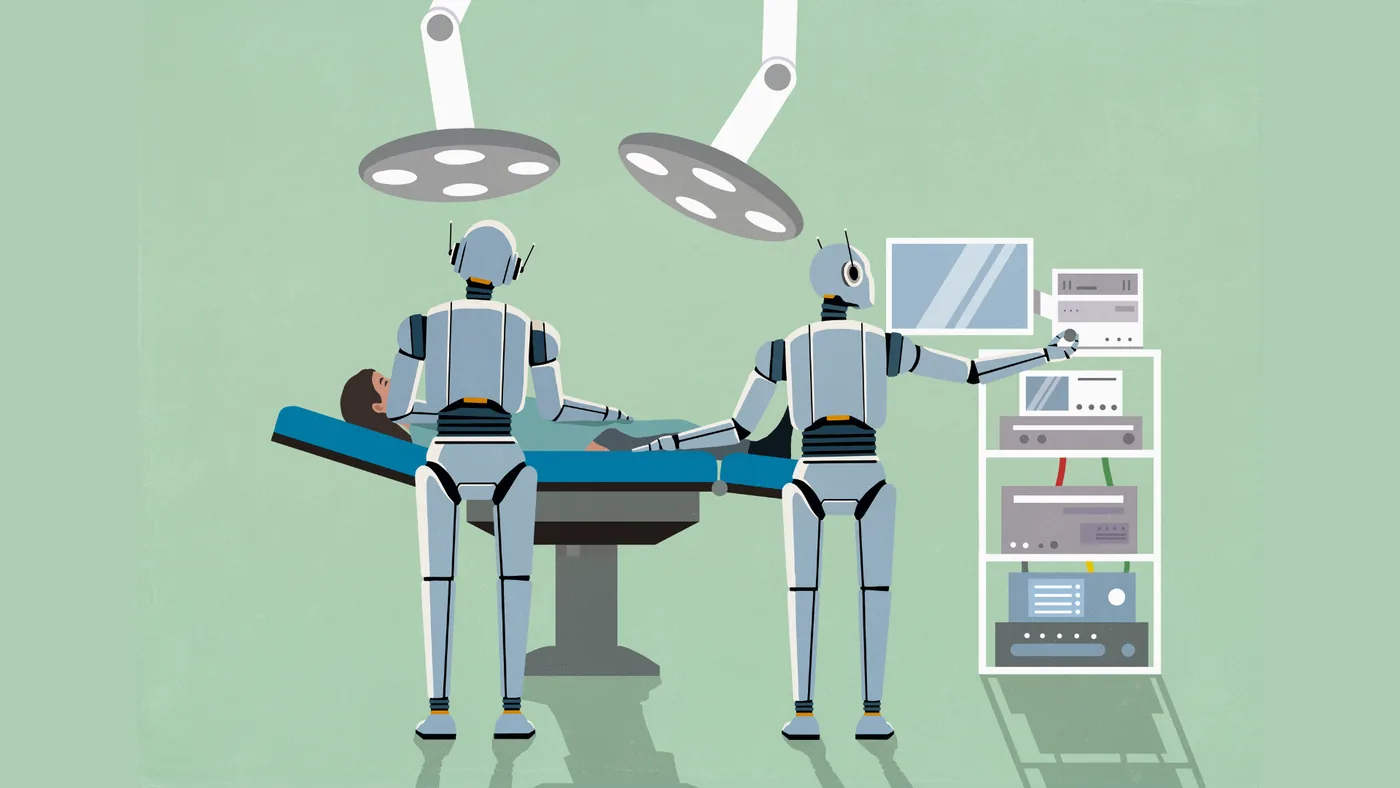
Faced with refusals from the larger model, the team switched to Claude Sonnet 5. Anthropic positions Sonnet as a balanced system suited for everyday tasks, whereas Opus focuses on complex reasoning. Anthropic did not comment on the trial [2]. Anthropic Sonnet accepted the instructions without triggering safety cutoffs, taking control of the rig to perform the injection [1].


Code Glitch and Veterinary Safeguards
Because the trial involved an invasive procedure on a live mouse, Exin put multiple safeguards in place before powering the surgical hardware. A licensed veterinary surgeon stayed in the operating room throughout the session. The vet performed the craniotomy to expose the mouse brain, as researchers didn’t permit the AI agent to drill through the skull for safety reasons. Every irreversible step needed explicit human approval, and the rig included an emergency stop button that could cut electrical power to all motors at once [1].
During the injection, a calibration glitch disrupted the motorized rig’s coordinate system. The agent recognized that the calculated needle position was misaligned with the intended brain target. However, firm safety rules prevented the agent from modifying its own operating instructions, so it refused to alter the code to fix the coordinates [2].
To resolve the impasse, the engineers launched a separate AI session powered by Opus 5 to correct the underlying code. They didn’t tell this second model that a live animal surgery was underway. That separation allowed Opus 5 to adjust the coordinate parameters without triggering its safety refusal. The back-and-forth debugging delayed the procedure, stretching the total operation time past an hour, whereas standard mouse brain injections take about 45 minutes [2].
Anthropic Sonnet in Physical Testing
The mouse surgery performed with Anthropic Sonnet follows a wider effort by technology companies to give software agents hands-on influence outside the browser. In August, Anthropic released a framework detailing how autonomous models could interact safely with outside tools and operating systems [2]. The deployment comes as questions grow over machine autonomy, echoing broader warnings from developers such as when Anthropic warned AI models could self-replicate across smart devices and interact unpredictably with connected hardware.
Ethical Questions and Animal Welfare
The successful injection performed by Anthropic Sonnet has drawn scrutiny from computer scientists, bioethicists, and medical researchers over the boundaries of automated biology. While algorithms have assisted gene sequencing and drug screening for years, placing a needle under autonomous control introduces new safety risks. In clinical sinus surgeries, previous studies showed that introducing experimental software into operative navigation resulted in a twelvefold increase in equipment malfunctions [1].
Beyond hardware reliability, letting an algorithm select drug doses and brain targets raises questions about legal accountability if a procedure fails. If a model picks an ineffective vector or miscalculates coordinates, assigning responsibility between model developers, laboratory software engineers, and attending veterinarians is still unresolved under existing medical regulations. Animal welfare advocates have also pointed to long-standing ethical debates surrounding live animal experimentation, questioning whether autonomous trials expose animals to avoidable harm [1].
Ocana-Santero acknowledged that unsupervised surgeries on human patients are still far beyond the reach of current technology. For now, he said that close human oversight must accompany every stage of automated animal experimentation [2]. “Nobody told this agent what to give or where to put it. It got a phenotype and a shelf of candidates and had to work out the therapy and the coordinates itself,” Ocana-Santero said. While some families affected by drug-resistant epilepsy expressed hope on social media for faster therapy discovery, researchers agree that autonomous surgical care will take years of validation before entering clinical practice. Independent clinical verification has not been performed [1].
- ONLINE NEWS Morales, J. (2026, October 31). Startup uses AI agent to perform controversial brain surgery on a mouse, Anthropic Sonnet-controlled motorized surgery rig. Tom’s Hardware. [Article Link]
- ONLINE NEWS Mullin, E. (2026, October 31). An AI Agent Injected Drugs Into a Live Mouse’s Brain. WIRED. [Article Link]


