




Russian President Vladimir Putin confirmed ongoing Musk satellite talks during the Russia-Africa Summit in Moscow, praising the SpaceX founder as a “real genius” while reviewing orbital networks [1]. The public statement arrived as Russian engineers presented hardware for their home-grown satellite communications project. Putin told delegates that Moscow maintains close contact with American partners so that orbital vehicles do not disrupt each other in space, concluding a tense fortnight of Starshield slowdowns in Ukraine.
What Putin Said in Moscow
Speaking to African leaders in Moscow, Vladimir Putin praised SpaceX and compared its satellite network to Russia’s emerging space program. “Elon Musk is a genius, a real genius,” the Russian president told delegates, with his remarks carried by the Tass news agency and translated by Bloomberg [3]. RT editor Margarita Simonyan shared video footage online. Putin told the audience that Russian specialists stay in touch with Elon Musk and other partners in the United States, arguing that orbit needs discipline so crafts avoid colliding. Space diplomacy has continued even after bilateral relations fractured following the 2022 invasion of Ukraine.
Digital Development Minister Maksut Shadayev presented satellite hardware built for the Rassvet program [4]. Putin used the briefing to draw a comparison between the United States and Russia, pointing out that SpaceX operates thousands of communications nodes while Russia is only testing its earliest hardware. Russian engineers built the prototypes in Moscow. He stated that Moscow is proud to develop its own equipment, but insisted that shared flight paths make orbital coordination necessary for both national fleets.
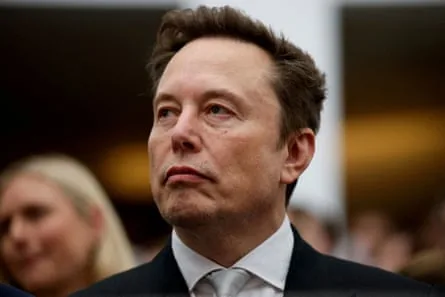
Putin expressed pride that Russian engineers began constructing Rassvet without outside assistance. “We are just taking our first steps, but we are proud that we started doing this and began doing it on our own,” Putin said during his address at the summit [5]. Tass quoted Putin asking attendees how many satellites Musk had placed in orbit. “More than 5,000, and we’re only taking the first steps,” he said, understating the true size of the private American constellation operating above Earth. Both nations share an interest in keeping orbital tracks organized despite tense geopolitical disputes between Moscow and Washington.
Musk Satellite Talks on Orbital Safety
The core agenda of Musk satellite talks involves sharing orbital trajectories so that private American fleets and Russian government networks do not collide in flight [1]. Space coordination has continued even as diplomatic ties broke down following the 2022 invasion of Ukraine. Putin stated that Russian specialists work closely with American teams to avoid interference, adding that both sides value mutual communication despite sharp diplomatic disputes between Moscow and Washington. SpaceX did not reply to press inquiries about the talks, but Russian diplomats in South Africa confirmed that contact continues.
Elon Musk lived in South Africa and Canada before founding his main ventures in California and Texas, building both Tesla and SpaceX into dominant aerospace and technology manufacturers. A detailed profile from PerEXP Teamworks examines Musk’s broader career and business empire as his influence expanded over global markets. Russian leaders watched his progress for years. Putin previously compared Musk to legendary Soviet rocket pioneer Sergei Korolev, acknowledging his ability to build launch systems at high speed [4]. Special envoy Kirill Dmitriev once proposed that SpaceX and Roscosmos build joint projects to explore Mars, illustrating Moscow’s long-standing interest in the American executive. Those proposals never became joint missions, but they showed Moscow’s interest in SpaceX.
Rassvet Constellation Capacity
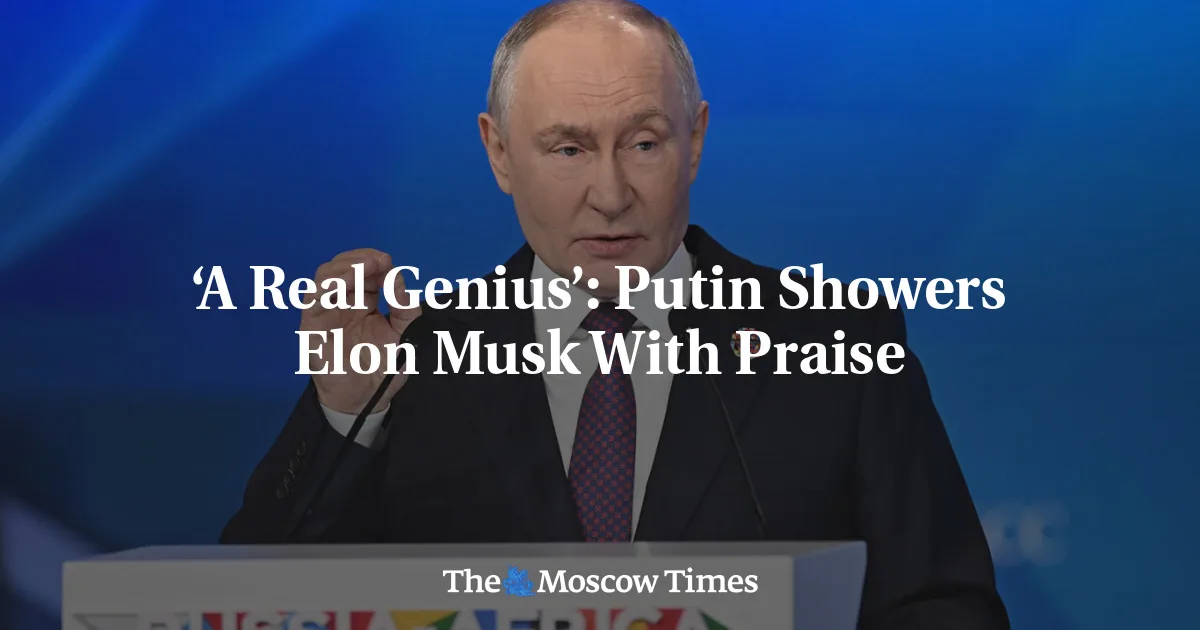
Russia positions Rassvet against Starlink, but the orbital gap is massive. SpaceX has launched roughly 13,000 satellites and maintains an operating constellation of about 10,000 active spacecraft, providing high-speed internet across global markets while Russian engineers track only preliminary flight prototypes in low orbit. An engineering guide from PerEXP Teamworks explains how Starlink satellites deliver broadband from low Earth orbit to antennas on the ground. SpaceX operates roughly 10,000 active satellites [2].
In contrast to Starlink’s thousands of nodes, online satellite trackers estimate that Russia has placed only between 26 and 30 working Rassvet satellites in orbit. The Russian Embassy in South Africa stated that Rassvet marks only the country’s first steps in orbital telecommunications [5]. Digital Development Minister Maksut Shadayev told Putin that these units support both civilian internet and state communications. However, assembling thousands of small satellites needs large factory capacity and advanced microelectronics that Russian industry struggles to procure under foreign trade sanctions imposed after the war began. Orbital friction has already triggered diplomatic protests; American officials accused Russia of reckless conduct when a Russian military spacecraft flew dangerously near a Finnish-operated radar satellite delivering intelligence to Ukraine [4]. Moscow rejected that accusation as absurd.

Starshield Throttling Over Ukraine
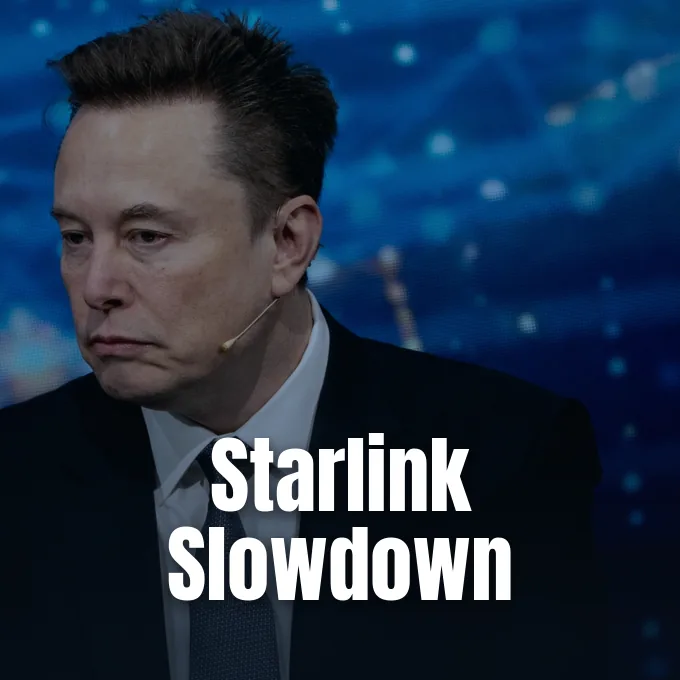
Putin’s praise arrived days after Ukrainian forces faced communications disruptions that hampered their defensive lines. Beginning on October 14, access to Starshield—the military version of Starlink used by Ukraine’s armed forces—was abruptly throttled without advance warning from SpaceX leadership. Terminal speeds in frontline sectors were capped at 160 kilometers per hour, preventing Ukrainian drone interceptors from chasing Russian jet-powered drones during daily aerial attacks. PerEXP Teamworks previously covered the earlier throttling of Starlink in Ukraine during combat maneuvers. Ukrainian air defenses suffered immediate disruptions [7].
Elon Musk defended the restriction on his social platform X, arguing that commercial Starlink services were never intended for offensive drone missions against Russian positions [6]. “Using Starlink, a civilian commercial service, for offensive drone strikes to kill people has never been allowed, nor should it be,” Musk wrote after closing what he described as a loophole. Kyiv rejected that claim, maintaining that troops use Starshield only to defend sovereign Ukrainian territory. On October 24, President Volodymyr Zelenskyy confirmed that full data speeds had been restored overnight, noting that reliable links protect frontline logistics and anti-drone teams. However, Zelenskyy stated on October 27 that civilians died while communications were switched off, showing the tragic human toll of temporary network disruptions in contested regions.
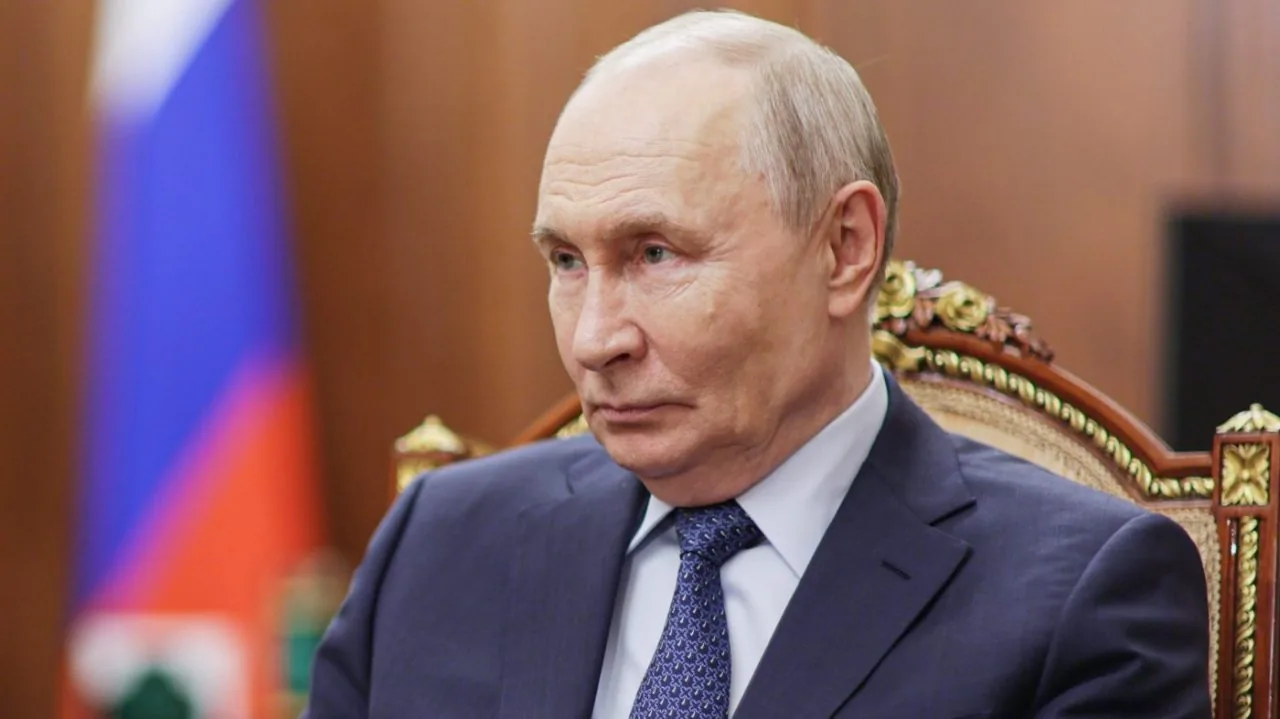
Musk Satellite Talks Complicate Wartime Diplomacy
Deeper political concerns have shadowed Musk satellite talks since journalists reported earlier private communications between Moscow and SpaceX leadership about orbital assets [3]. In 2024, The Wall Street Journal reported that Russian officials held recurring private conversations with Musk starting in late 2022, backchannel exchanges that American officials treated as closely guarded state secrets. While Musk criticized the article, he did not deny having conversations with Vladimir Putin.
Neither Elon Musk nor Donald Trump’s administration claimed responsibility for throttling Starshield in Ukraine, leaving military commanders in Kyiv uncertain about who ordered the damaging network slowdown. Diplomatic dynamics between Washington and Moscow shifted noticeably after Donald Trump reached a trade agreement to import Russian diesel to lower fuel prices caused by the war with Iran [8]. The White House then waived certain economic sanctions scheduled against Russian exports. Moscow then released an American prisoner, leading envoy Steve Witkoff to call Putin a humanitarian. Meanwhile, Musk spent at least $442 million on Republican midterm campaigns, illustrating how wealthy executives shape geopolitical policy without holding elected office. Musk spent $442 million on congressional races [3].
The dispute exposed vulnerabilities in how military forces depend on private satellite systems during wartime [3]. According to casualty figures tracked by the United Nations, the war has killed tens of thousands of civilians and hundreds of thousands of soldiers. President Volodymyr Zelenskyy openly blamed satellite slowdowns for leaving soldiers unable to repel Russian attacks, while American policymakers questioned whether private executives should control strategic battlefield communications. Those questions stay unresolved as private constellations expand in low Earth orbit.
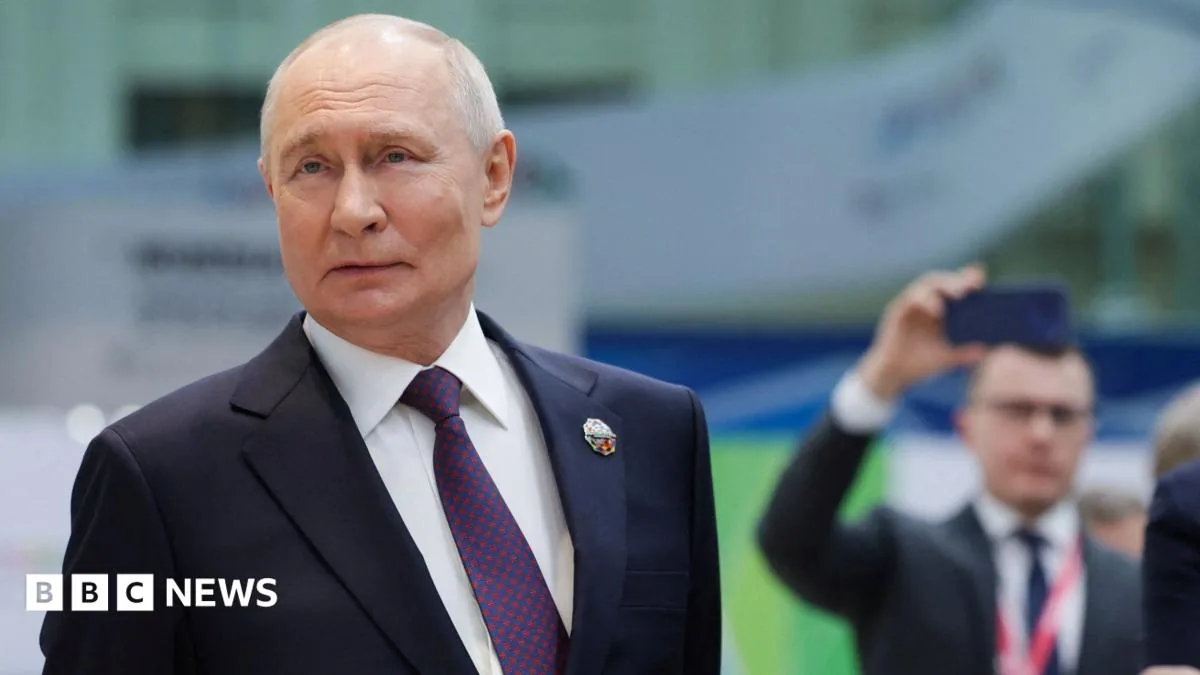
European Aid and Abu Dhabi Negotiations
As frontline forces in Ukraine coped with network disruptions, European governments announced fresh funding packages to protect Ukrainian infrastructure ahead of winter [2]. British Prime Minister Andy Burnham and Chancellor John Healey committed £10bn in financing over the next three years, along with £500m for air defence systems. When Healey told Kyiv about the funding, Zelenskyy replied that the news made his day. The Dutch government also pledged €500m in winter military assistance and €1.2bn in non-military aid to repair damaged utility grids and factories. European leaders stated that Ukraine must not face Russian attacks alone as temperatures drop. The aid arrived as Russian forces targeted power plants.
The funding decisions followed sustained Russian bombardments, with Moscow launching over 100 ballistic missiles against Kyiv since mid-October to cripple power plants ahead of freezing winter weather [2]. During a joint press conference in The Hague with Dutch Prime Minister Rob Jetten, President Volodymyr Zelenskyy stated that Ukraine is preparing for trilateral peace talks involving Kyiv, Washington, and Moscow. The discussions are proposed for November 6 to 10 in Abu Dhabi, awaiting American participation following the midterm elections.
- ONLINE NEWS Hays, K., & Gozzi, L. (2026, October 28). Elon Musk a ‘real genius’, Putin says after talks with SpaceX boss. BBC News. [Article Link]
- ONLINE NEWS Sabbagh, D. (2026, October 28). Putin hails Elon Musk’s ‘genius’ amid plans for Russian version of Starlink. The Guardian. [Article Link]
- ONLINE NEWS Novak, M. (2026, October 28). Putin Calls Elon Musk a ‘Real Genius,’ Says Russia Coordinates With Him on Satellites. Gizmodo. [Article Link]
- ONLINE NEWS The Moscow Times. (2026, October 28). ‘A Real Genius’: Putin Showers Elon Musk With Praise. The Moscow Times. [Article Link]
- ONLINE NEWS Swai, F. (2026, October 28). Putin: Russia in ‘close contact’ with ‘genius’ Musk over satellite networks. The Hill. [Article Link]
- ONLINE NEWS Bin Oki, O. (2026, October 28). Elon Musk is a ‘real genius’, Putin says after satellite talks with SpaceX boss. Kahawatungu. [Article Link]
- ONLINE NEWS Doluda, Y. (2026, October 28). Putin calls Musk ‘genius’ as Ukraine recovers from Starshield throttling. The Kyiv Independent. [Article Link]
- ONLINE NEWS Hays, K., & Gozzi, L. (2026, October 28). Elon Musk is a ‘real genius’, Putin says after satellite talks with SpaceX boss. BBC News. [Article Link]
APA 7: PerEXP Teamworks. (2026, October 29). Putin Confirms Musk Satellite Talks at Moscow Summit. PerEXP Teamworks. https://perexpteamworks.com/en/musk-satellite-talks-moscow-summit/


