



The NASA ROSES hydrosphere program element expands scientific investigations into Earth’s global water cycle through a newly issued research opportunity under the Science Mission Directorate. How does the continuous exchange of moisture between oceans, soil reservoirs, and atmospheric clouds govern long-term terrestrial climate stability? Amendment 72 formally establishes this research opportunity within the ROSES-2025 omnibus solicitation, establishing a mandatory Step-1 proposal deadline of October 8, 2026 [1, 2].
Core Disciplines in NASA ROSES Hydrosphere Research
Three distinct disciplines form the core foundation of the NASA ROSES hydrosphere program element: ocean physics, terrestrial hydrology, and precipitation science. Understanding the physical mechanisms governing Earth’s hydrosphere (the continuous circulation of water throughout oceans, atmosphere, and landmasses) requires coordinated empirical measurements across multiple environmental interfaces. Ocean circulation patterns regulate planetary thermal distribution. Meanwhile, atmospheric moisture condensation dictates global freshwater replenishment over continental drainage basins. NASA specifically designed this solicitation to examine the fundamental distribution, physical movement, and energetic transformation of water across interrelated terrestrial and oceanic reservoirs, uniting observational datasets that historically remained confined within isolated research silos [1, 3].
Targeted measurement priorities center upon critical diagnostic indicators of water cycle dynamics. Within this research portfolio, investigators will analyze remote sensing observations of ocean surface salinity with seasonal snow depth and satellite precipitation rates. Salinity variations reflect freshwater inputs from melting glacial ice, river discharge plumes, and oceanic evaporation. Under the annual omnibus announcement known as Research Opportunities in Space and Earth Sciences, designated program element A.17 solicits experimental methodologies that synthesize commercial satellite precipitation readings with spaceborne radar observations [1, 4]. These integrated measurements illuminate how regional freshwater flux influences larger coupled oceanic and atmospheric circulation patterns across seasonal cycles, providing essential boundary conditions for predictive numerical models [1].
Cross-Cutting Investigations Across Earth Spheres
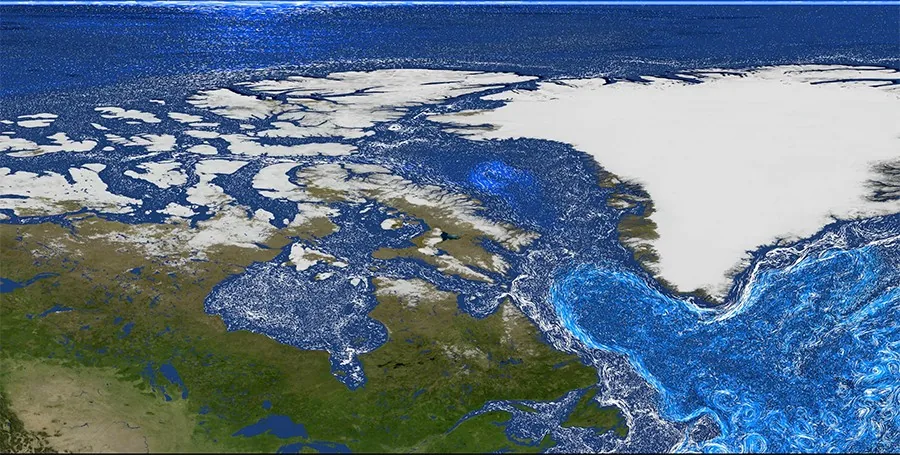
How do shifting river discharge volumes alter the salinity gradients of coastal estuaries? The solicitation provides dedicated scope for cross-cutting investigations that extend across subelements and transcend traditional disciplinary divisions [1, 2]. Through Sub-Element 4, the NASA ROSES hydrosphere framework encourages proposals connecting terrestrial hydrology directly to atmospheric and oceanic domains [2]. These collaborative studies evaluate boundary-layer dynamics where river discharge enters coastal shelf environments, transforming chemical equilibrium and regional biological productivity throughout vulnerable nearshore marine ecosystems [1].
Water defines planetary habitability. Complex hydrological feedback loops directly govern continental climate resilience, shaping freshwater availability across interconnected ecological boundaries [1].
Interdisciplinary inquiries also examine terrestrial moisture storage (including soil moisture storage and seasonal snow cover) to quantify freshwater reservoirs before runoff reaches major continental drainage networks [1]. Evaluating moisture migration across spherical boundaries requires sophisticated analytical models capable of ingesting diverse observational streams [2]. Researchers studying continental water storage frequently account for satellite observation biases in Earth surface vegetation monitoring to ensure vegetative canopy density does not distort underlying microwave radar reflections. By bridging distinct Earth science spheres, cross-cutting proposals aim to resolve long-standing discrepancies between continental runoff estimates and observed coastal ocean freshening trends, yielding a unified mathematical characterization of planetary moisture transport [1, 2].

Satellite Synergies and Field Observation Assets
A central objective of the solicitation involves enhancing current NASA investments in existing Earth observation missions and active field deployments. Research projects funded under this program will capitalize on data collected during the Fate of River Export and Surface Hydrology field campaign, tracking terrestrial runoff through delta networks into coastal seas. Concurrently, investigators will leverage synthetic aperture radar observations from the NISAR mission (synthetic aperture radar measurements providing fine-resolution surface deformation maps) to map fine-scale hydrological variations across wetlands and permafrost landscapes. Combining these satellite radar streams with commercial satellite datasets acquired through the NASA Commercial Satellite Data Acquisition program provides unprecedented spatiotemporal resolution for tracking storm systems [1, 4].
Integrating spaceborne instruments with ground-based validation networks significantly reduces systemic uncertainty in precipitation science. Radar reflections from satellite constellations capture broad atmospheric precipitation swaths, but complex topography and localized cloud microphysics frequently introduce calibration variances that require surface verification. Field campaigns bridge measurements. By correlating high-altitude commercial microwave observations against in situ surface rain gauges and streamflow sensors, investigators refine numerical precipitation algorithms across complex continental terrain. Furthermore, proposals that align spaceborne data with open science data sharing frameworks established under NASA programs demonstrate how transparent calibration protocols accelerate community-wide Earth system modeling, enabling multidisciplinary teams to track water transformations from cloud condensation to river discharge with remarkable mathematical fidelity [1, 3].

Proposal Architecture and Strict Page Constraints
Principal investigators preparing submissions must adhere to rigorous structural boundaries governing federal research opportunity NNH25ZDA001N-HYDRO [3, 5]. NASA mandates that the primary Scientific/Technical/Management section cannot exceed 10 pages [3, 4]. Page limits remain absolute. Reviewers will not evaluate narrative content extending beyond this strict ceiling, underscoring the necessity of concise technical descriptions and focused methodological frameworks. Detailed work plans must justify observational requirements while maintaining clear alignment with broader Earth science program goals [3, 5].
To facilitate structured evaluations across competitive submissions, proposers are strongly encouraged to utilize the optional Earth Science Division template for their required summary table of work effort [3, 5]. This tabular document (the required summary table of work effort across participating personnel) delineates specific project commitments, institutional contributions, and resource allocations for every co-investigator. Clarity in staffing commitments ensures proposal reviewers can accurately determine whether the project scope aligns with the proposed performance timeline [3, 4].

The overarching ROSES-2025 omnibus solicitation, operating under OMB Approval Number 2700-0092 and Catalog of Federal Domestic Assistance CFDA 43.001, stipulates that awarded projects typically encompass a three-year performance duration [3, 5]. Although standard funding instruments specify three years of research activity, certain specialized efforts may receive authorization for up to five years depending on experimental requirements. Extramural funding flows through grants and cooperative agreements, excluding commercial acquisition contracts [3, 5]. By structuring multi-year funding through cooperative agreements, NASA fosters sustained collaborative partnerships with academic institutions across the nation [3].
Dual Anonymous Peer Review Process Standards
All submissions delivered to the NASA ROSES hydrosphere program element undergo evaluation through dual anonymous peer review in accordance with Section 8.2 of the solicitation [3, 4]. Under this merit assessment format, proposal narratives must entirely omit investigator identities, institutional affiliations, and direct bibliographic self-citations. Trained experts evaluate submissions. By evaluating proposals strictly on scientific merit and feasibility rather than institutional prestige or author reputation, the Earth Science Division minimizes unconscious bias during award selection [3, 4]. Reviewers focus exclusively on the methodological strength of the proposed hydrosphere research, evaluating whether prospective observational models effectively advance long-term national Earth observation objectives [4].
To execute these rigorous evaluations, NASA Science solicits virtual panelists, executive secretaries, and external email reviewers across all four program sub-elements. Volunteer reviewers must submit qualifications while disclosing any potential conflict of interest beyond their listed primary employer. Review panels operate remotely. Reviewer recruitment overseen by program managers ensures diverse technical expertise across ocean physics, terrestrial hydrology, and precipitation monitoring [1, 2]. Prospective panelists submit institutional credentials through dedicated review panels, enabling NASA Headquarters to construct balanced review committees capable of adjudicating complex cross-disciplinary inquiries [2, 5].
Key Milestone Deadlines and Institutional Requirements
Adherence to scheduling guidelines is mandatory under opportunity ID 363789 [5]. Mandatory Step-1 proposals are officially due on October 8, 2026, serving as the prerequisite threshold for full application eligibility. Deadlines remain firm. Any Step-2 proposal submitted without an on-time compliant Step-1 filing will be returned without review by program officers [1, 3]. Step-2 full proposals must subsequently arrive by January 28, 2027 [1, 6].
NASA Headquarters conducted an informational briefing for prospective proposers on Monday, September 14, from 2-3 PM Eastern Time [1, 3]. While domestic academic institutions, non-profit entities, and commercial organizations may apply, principal investigators must maintain active institutional affiliations registered within NSPIRES [3, 4]. Under federal guidelines posted by grantor Caleb Schuler, no cost sharing or matching requirement applies to this discretionary program [5, 6]. Foreign organizations may participate solely on a policy of no-exchange-of-funds in full compliance with the NASA Grant and Cooperative Agreement Manual [3, 4]. Most extramural awards will be distributed as grants, while funded co-investigators located at government laboratories receive direct interagency transfers [3].
Administrative inquiries regarding technical requirements and disciplinary subelements may be directed to lead program scientists Nadya Vinogradova Shiffer, Craig Ferguson, and Will McCarty [1, 5]. Additional opportunity records indexed on HigherGov note that closing review windows archive on February 27, 2027, establishing an operational horizon for multi-institutional research teams formulating cooperative agreements [5, 6]. Through this unified solicitation, the NASA ROSES hydrosphere program establishes the empirical foundation for modern spaceborne Earth system science [1].
- PRESS RELEASE Dollar, A., & NASA Science Editorial Team. (2026, September 2). Amendment 72: New opportunity: A.17 Hydrosphere. NASA Science. [Article Link]
- PRESS RELEASE Dollar, A., & NASA Science Editorial Team. (2026, September 21). Hydrosphere (ROSES A.17). NASA Science. [Article Link]
- WEBSITE FederalGrants. (2026, January 1). ROSES 2025: A.17 Hydrosphere. FederalGrants.com. [Article Link]
- WEBSITE Sweetspot. (2026, September 2). ROSES 2025: A.17 Hydrosphere grant opportunity analysis. Sweetspot Government. [Article Link]
- WEBSITE Osnqt. (2026, September 15). ROSES 2025: A.17 Hydrosphere. Grants Bay. [Article Link]
- WEBSITE HigherGov. (2026, September 2). ROSES 2025: A.17 Hydrosphere (NNH25ZDA001N-HYDRO). HigherGov. [Article Link]
APA 7: TWs Editor. (2026, September 22). NASA ROSES Hydrosphere Solicitation Funds Global Water Research. PerEXP Teamworks. https://perexpteamworks.com/en/nasa-roses-hydrosphere-opportunity/


