






Six years after Mojang introduced blocky hack-and-slash action, Minecraft Dungeons 2 expands the formula by replacing isolated mission maps with an interconnected Overworld. Co-developed by Mojang and Double Eleven, the sequel arrives on September 29, 2026, pairing traditional dungeon crawling with an interdimensional journey into the Sift. While the 2020 original served as an accessible proof of concept, this release delivers a deeper progression framework with four-piece armor loadouts, dynamic world events, and responsive jumping mechanics [4].
How Minecraft Dungeons 2 Expands the Overworld
The transition away from a static mission select table represents the largest structural shift in the game. Players no longer select standalone stages from a camp menu; instead, they traverse a contiguous landscape dotted with enemy camps, hidden crypts, and minecart fast travel stations. Reviewer Scott Duwe of Destructoid noted that this interconnected design makes straying from primary objectives genuinely rewarding, as optional paths yield chests, currency, and vital gear upgrades. The open terrain connects diverse biomes that feel closer to vanilla Minecraft than the linear corridors of the first entry [1].
Campaign pacing varies significantly depending on how much time players invest in secondary exploration. Joe Cumbo of PlayDayOne reported that a thorough solo playthrough required roughly 20 hours, whereas Travis Northup of IGN pushed through the primary story path in about seven hours. Ken Allsop of PCGamesN logged 15 hours across main quests and optional caverns before tackling the post-campaign loop. Justin Towell finished the story in 12 hours on Xbox Series X [4].
Exploration remains imperfect across the broad map. Joe Cumbo observed that roughly two-thirds of the world map remains blank during the initial campaign, leaving ample territory for planned downloadable expansions. In addition, Ken Allsop encountered optional caves that felt barren, pointing out that empty corridors and extensive backtracking consumed ninety percent of the running time in certain underground chambers [3].
Combat Mechanics and the New Jump Ability
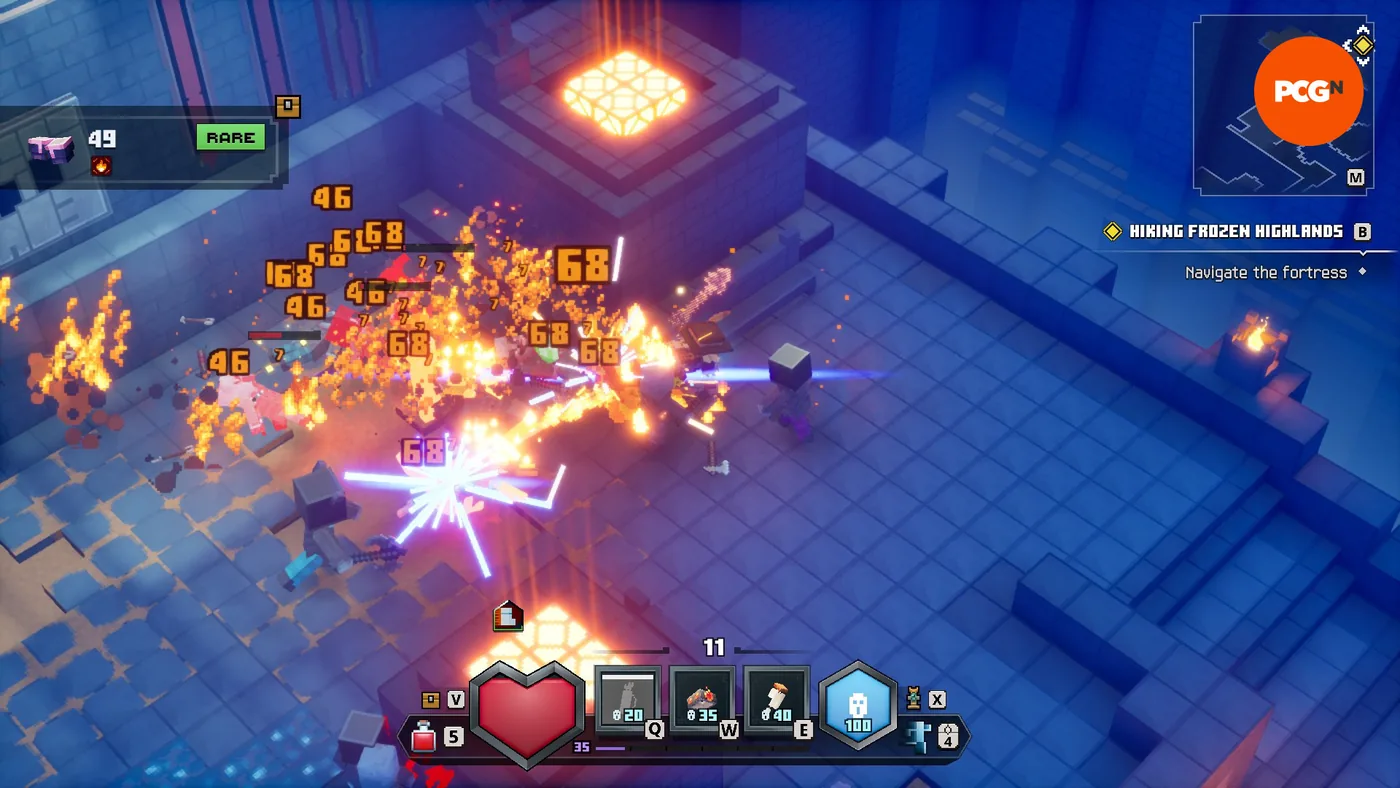
The most impactful mechanical upgrade is the inclusion of a dedicated jump button. In the 2020 original, heroes remained glued to the floor, limiting encounters to flat positioning and basic rolling. In Minecraft Dungeons 2, jumping introduces verticality to both platforming traversal and mob engagements. Characters can leap over incoming boss projectiles or drop from ledges to initiate sudden skirmishes. A midair melee slam delivers devastating area-of-effect damage, giving fighters an immediate tool to disrupt tightly packed swarms of zombies and skeletons [5].
Gear customization received an equally substantial overhaul. Where the original restricted defense to a single armor slot, the sequel divides protection across four distinct pieces for the head, chest, legs, and feet. Three talisman slots complement this gear, providing overarching perks such as increased experience gains, expanded health pools, or a loyal wolf companion. Players also equip three active artifacts to unleash poison clouds, explosive fireworks, or summoned swarms of helpful bees. Buildcrafting hinges entirely on equipment, as the game eschews traditional character classes and branching talent trees [3].
Upgrading equipment is streamlined through camp specialists. The blacksmith upgrades favored weapons and armor to the player’s current power level, funded by dismantling surplus dungeon drops. In contrast, village merchants sell stock that quickly becomes obsolete compared to common enemy loot. Players can also socket permanent enchantment books into weapons, though each item now accepts only a single enchantment to prevent game-breaking combinations. Disenchanting items is non-destructive, encouraging continuous tactical experimentation without punishing resource loss [4].

Exploring the Sift Realm in Minecraft Dungeons II
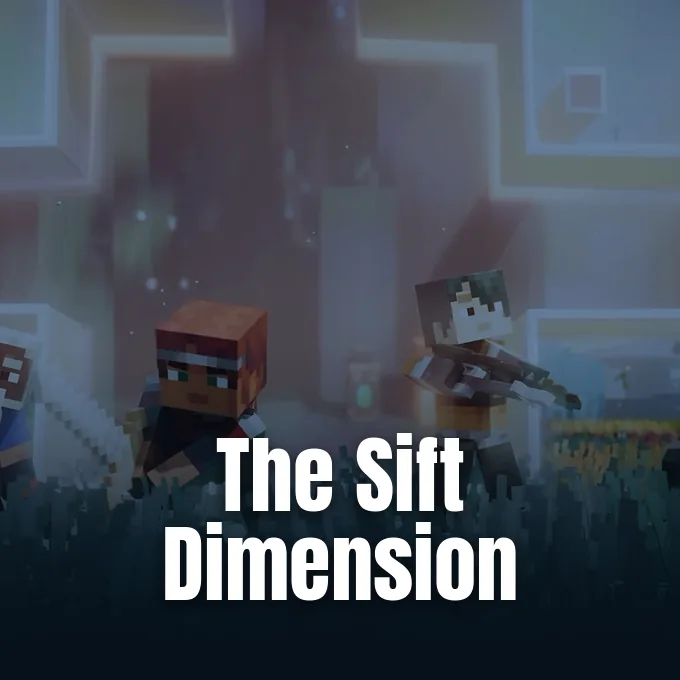
The central narrative introduces the Sift, the first brand-new dimension added to the franchise in nearly fifteen years. Three rogue Illagers breach an interdimensional rift to harness ancient energies, threatening the harmony established after the original game’s events. This psychedelic realm stands in sharp contrast to the Nether and the End, showcasing glowing teal landscapes, floating souls, dancing automatons, and hazardous pools of poisonous water. Mojang plans to bring the Sift dimension to the base versions of Minecraft Bedrock and Java in 2027, making this spin-off an early playable showcase [1].
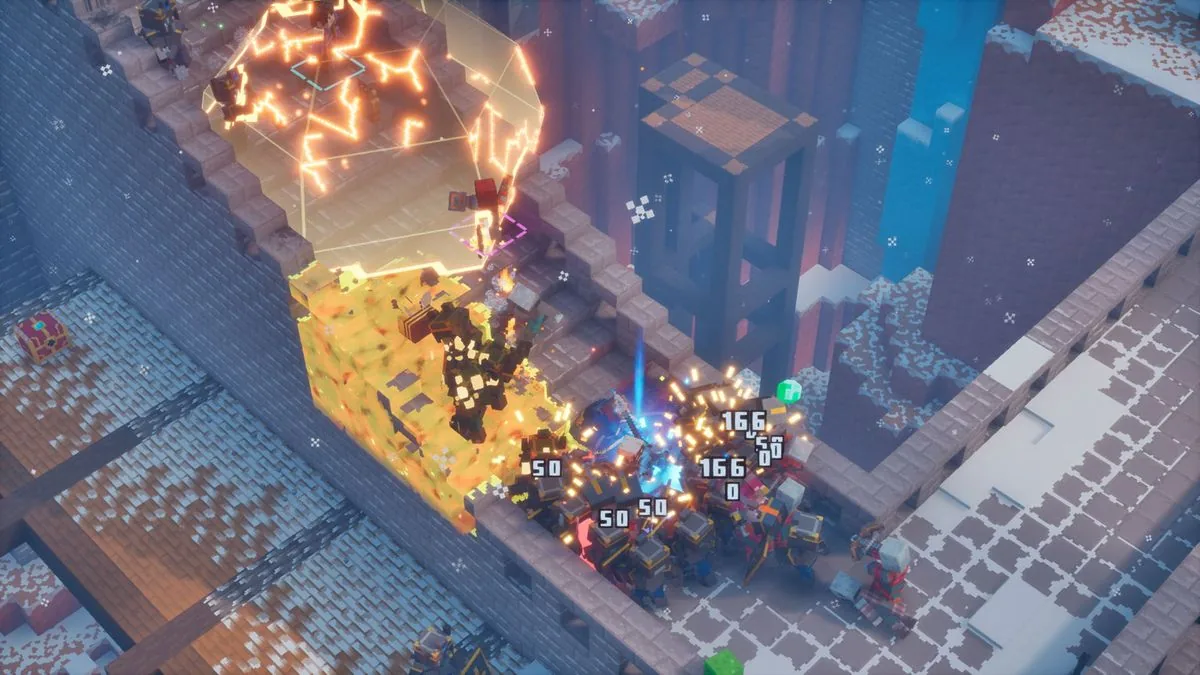
Traveling through the Sift is shaped by global environmental conditions known as Sift Tides, which alter gameplay variables across entire mission zones. In PCGamesN, Ken Allsop explained that the dimension cycles dynamically between the benevolent Thrive state and the oppressive Endure phase, throwing aggressive mobs and amplified hazards at adventurers during hostile shifts. Justin Towell observed that these tides manipulate cooldown timers and suppress passive soul generation, forcing players to rely on weapon strikes rather than automated magic bursts. Scott Duwe of Destructoid praised the Unreal Engine 5 overhaul for rendering these fluid shifts with striking visual clarity, even as swarms of Skulk Monstrosity bosses and illuminated rift creatures crowd the display during high-tier encounters [1].
These dimensional rifts expand the broader lore in parallel with developments like the upcoming Minecraft Game Drop that introduces frozen zombies to subterranean biomes. Yet Travis Northup argued that the Sift’s vibrant art design occasionally masks straightforward hack-and-slash objectives, noting that players primarily execute repetitive clear-out tasks rather than solving complex environmental puzzles [2].

Is Minecraft Dungeons 2 Worth It for Endgame Fans?
Reaching the final story credits unlocks Soul Storms, the primary endgame activity designed to test optimized character builds. Resembling the Helltide events seen in Diablo 4, these time-limited occurrences overrun designated sectors of the map with elite mobs, previous story bosses, and elevated drop rates. Players must locate and destroy three Soul Generators or Storm Towers before an extraction timer expires. Justin Towell noted that these towers act as formidable damage sponges on higher difficulty settings, demanding focused cooperative coordination [4].
In Minecraft Dungeons 2, the difficulty curve sharpens dramatically when tackling these endgame storms. Unlike forgiving introductory stages, advanced encounters feature punishing mob modifiers capable of eliminating solitary adventurers in single strikes. Solo players carry one health potion. The unforgiving potion recharge timer makes evasive rolling and jump repositioning essential during crowded skirmishes. Joe Cumbo found that this elevated difficulty prevented brute-force tactics, compelling him to fine-tune weapon synergies and passive talisman bonuses [5].
Despite the thrill of surviving high-tier encounters, critics disagree on whether the current reward loop sustains long-term engagement. Travis Northup emphasized that after collecting elite equipment from Soul Storms, the game currently offers few dedicated endgame dungeons requiring such immense power. Mojang has already promised post-launch content updates and DLC campaigns to address this deficit. Ken Allsop proved more optimistic, spending over five hours in the post-game loop hunting unique enchantment books and optimizing elemental daggers [3].
The base game retails for $30 across PC, PlayStation 5, Xbox Series X, Nintendo Switch 2, and Nintendo Switch, supported by two planned expansions [1].

Co-Op Dynamics and Launch Performance
In Minecraft Dungeons 2, multiplayer cooperation remains the definitive way to experience the campaign, though specific networking rules govern how groups assemble. The game separates characters into distinct online and offline profiles right from creation. Offline characters cannot venture online [4]. Online avatars cannot convert into local-only saves. Couch co-op allows family members or visiting friends to jump in as guests without creating separate platform accounts, automatically cloning the host’s character level and build for seamless drop-in play [5].
Loot distribution is handled through individualized drops that prevent party disputes. When chests open or bosses crumble, gold divides evenly between players on a fifty-fifty split, while gear drops are instanced directly for specific participants. A novice adventurer cannot hoard a Level 100 pickaxe meant for an experienced ally, ensuring balanced progression across mixed-skill households. To keep co-op sessions moving, a new mini-inventory window allows players to adjust artifacts or equip fresh drops without obscuring the entire screen [3].
Launch stability exhibits minor blemishes across platforms. Justin Towell noted rare frame rate drops on Xbox Series X during intense Storm Tower skirmishes, as well as occasional collision glitches where jumping led to characters getting stuck in geometry [4]. Joe Cumbo documented eleventh-hour matchmaking interruptions during multiplayer sessions, along with latency spikes that impacted solo players when connected through online profiles [5]. Nevertheless, Ken Allsop affirmed that mouse and keyboard controls felt responsive ninety-eight percent of the time, concluding that Minecraft Dungeons 2 succeeds as an accessible, polished ARPG [3].
- ONLINE NEWS Duwe, S. (2026, September 28). Minecraft Dungeons 2 review – A diamond in the rift, and even more in the Sift. Destructoid. [Article Link]
- ONLINE NEWS Northup, T. (2026, September 28). Minecraft Dungeons 2 is a shallow sequel that provides some peaceful button mashing with friends, but does little to stand out. IGN. [Article Link]
- ONLINE NEWS Allsop, K. (2026, September 28). Minecraft Dungeons 2 review – block-blasting bliss. PCGamesN. [Article Link]
- ONLINE NEWS Towell, J. (2026, September 28). Minecraft Dungeons 2 review: “I love that this family friendly take on Diablo embraces old school vibes.” GamesRadar+. [Article Link]
- ONLINE NEWS Cumbo, J. (2026, September 28). Minecraft Dungeons II | Review. PlayDayOne. [Article Link]


