




Can embedded hardware finally untether intelligent robots from centralized cloud computing? Silicon Valley startup SiMa.ai Technologies Inc. took a major step toward answering that challenge on Monday by securing $150 million in new Series C funding at a $1.45 billion valuation [1]. The investment accelerates development of custom physical AI chips designed to power autonomous machines, drones, and industrial robotics directly at the operational edge [3]. By computing sensory data locally, these processors eliminate round-trip latency to remote data centers [2].
Series C Funding for Physical AI Chips
The Series C funding round was co-led by Fidelity Management & Research Company and Amplify, drawing a broad syndicate of prominent venture firms and institutional asset managers. Key participating investors included Alter Venture Partners, Dell Technologies Capital, Maverick Capital, +ND Capital, Point72, and StepStone Group. New institutional backers also entered the cap table, including AllianceBernstein, Baron Capital, J.P. Morgan, and the State of Michigan [1]. This latest financing propels total capital raised by the San Jose enterprise past $500 million [2].
PitchBook tracked the previous valuation [2]. SiMa.ai had achieved a $960 million post-money valuation in July 2025 after securing an $85 million Series B round, marking rapid financial expansion as enterprise interest in physical artificial intelligence surged across automotive, robotics, and industrial automation sectors [1]. The valuation increase to $1.45 billion underscores rising private market confidence in physical AI chips and purpose-built silicon alternatives to traditional graphics hardware [3].
Rangasayee founded SiMa.ai in 2018 [1]. He previously served as chief operating officer at Groq [2].
Reflecting on the milestone, founder and Chief Executive Krishna Rangasayee emphasized that general-purpose processors struggle with real-time physical environments [3]. “While others are still figuring out the pieces or repurposing their cloud offerings, we’ve built the entire puzzle,” Rangasayee said [1]. The chief executive explained that the fresh capital will catapult SiMa.ai into a dominant market position by scaling its specialized physical AI compute platform against entrenched cloud hardware competitors [3].

Replacing Cloud Dependency in Autonomous Machines
Physical AI systems differ fundamentally from purely digital algorithms because they must perceive, reason about, and physically manipulate real-world environments through continuous sensor-actuator feedback loops [3]. Modern implementations span autonomous vehicles, delivery drones, industrial inspection cameras, and bipedal humanoid platforms that process high-bandwidth sensory streams in real time [2]. The iconic example involves a self-driving car navigating dense metropolitan streets: the vehicle must continuously process multi-camera optical feeds and laser imaging simultaneously, detect pedestrians, stop at stoplights, and react to surrounding vehicle traffic within split milliseconds [3]. Transmitting raw sensor streams across cellular wireless networks to remote cloud servers introduces severe transmission delays, connectivity dropouts, and massive power consumption that rapidly exhausts vehicle battery reserves [2].
To eliminate these operational bottlenecks, physical AI chips execute complex neural network models directly on the physical machine [1]. Localized execution guarantees predictable, low-latency performance while completely removing continuous data transmission expenses [2]. Furthermore, physical devices gain crucial operational independence because onboard inference operates reliably inside remote manufacturing plants, agricultural fields, or signal blackout areas where external communication networks fail [3].
Rangasayee highlighted the immense scale of this industrial shift during the funding announcement. “Physical AI in humanoids, automotive, and drones is the gateway to a $50 trillion market that has remained largely untouched by modern innovation,” Rangasayee said. As heavy industries transform mechanical tools into intelligent, automated interfaces, custom edge silicon serves as the essential computing foundation [3].


Challenging Nvidia with Purpose-Built Physical AI Chip Architectures
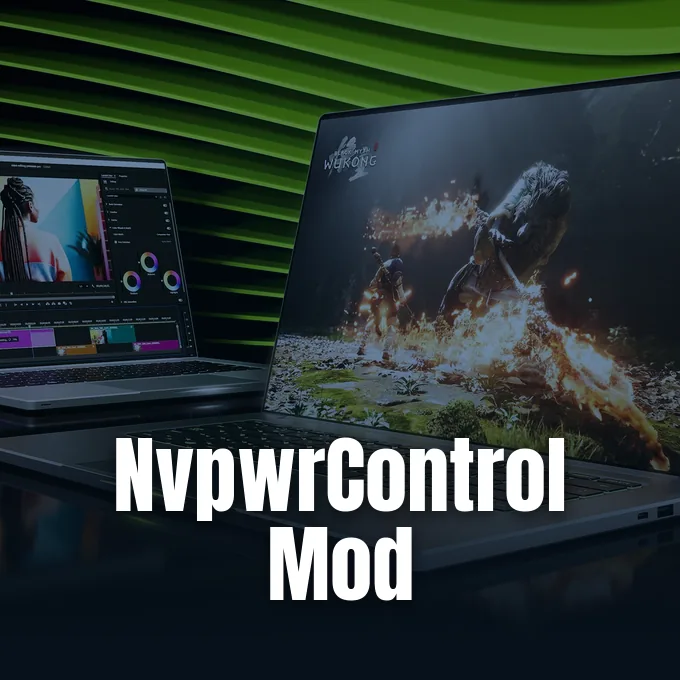
Nvidia Corp. remains the dominant market force across artificial intelligence hardware, but its flagship architectures were originally conceived for hyperscale cloud data centers rather than power-constrained physical machinery that requires dedicated physical AI chips. While enterprise infrastructure continues evaluating how an Apple AI server reportedly pairs M8 Ultra with Nvidia tech for centralized data processing, autonomous robotic systems demand radically different thermal and energetic efficiency. Compact delivery drones cannot accommodate heavy cooling fans or dissipate hundreds of thermal watts without sacrificing battery endurance [3].
Nvidia addresses physical robotics through specialized tiers of its Jetson compute platform. The high-end Jetson AGX Thor series delivers 2,000 FP4 TOPS (trillions of operations per second) to handle complex humanoid robots and compute-intensive machinery. Meanwhile, mainstream robotic arms and heavy drones rely on modules such as the Jetson T2000 and T3000, which cover around 400 and 865 TOPS to conserve onboard power [3].
However, Nvidia’s dominant software stack presents notable integration barriers. The company’s CUDA-based architecture ranks among the most power-hungry and computationally complex frameworks in the semiconductor industry [3]. SiMa.ai pitches its specialized physical AI chip portfolio as a significantly cheaper, lower-power alternative engineered specifically for device-level autonomy. The startup asserts that its purpose-built silicon and software cut customer deployment timelines from several months to mere days or hours [1].
Modalix Silicon and the 2028 Performance Roadmap
SiMa.ai plans to direct its Series C proceeds toward dual engineering tracks: software tooling and next-generation silicon [3]. On the developer side, capital will scale Palette Neat, the company’s agentic development environment built expressly for physical AI workloads [1]. The software abstracts complex hardware layers, allowing robotics engineers to optimize neural network pipelines and deploy edge vision models without manual low-level register configuration [3].
Hardware development focuses on an upcoming system-on-chip named Modalix, targeted specifically at embedded robotics [3]. Due for commercial release in the first half of 2028, the next-generation architecture will deliver 1,000 dense TOPS (tera operations per second) of machine learning compute [1]. SiliconANGLE reported that this 1,000 TOPS performance envelope will establish a powerful middle ground, providing more compute than mainstream modules like the Jetson T3000 while drawing substantially less electrical power than full-scale data center accelerators [3].

Modalix targets embedded robotics workloads [3]. SiMa.ai plans to release the architecture across several modular configurations, including standalone machine learning intellectual property (IP), multi-die chiplets, and integrated systems-on-chip. Through these adaptable silicon formats, the startup intends to capture diverse commercial platforms ranging from autonomous drones and industrial robotic arms to automotive advanced driver assistance systems and intelligent cockpit systems [1].
Commercial Deployments Across Global Industrial Sectors
Commercial adoption has driven rapid top-line growth for the San Jose startup. The company announced that its revenue growth quadrupled year on year between 2024 and 2025, although it did not publicly disclose specific revenue figures [1]. Growing demand for physical AI chips reflects broadening industry appetite for localized machine intelligence across factory floors and transportation networks [3].
SiMa.ai has established customer relationships with major global industrial and technology conglomerates. Its commercial partners and clients include German automotive technology supplier Robert Bosch GmbH, machine tool specialist TRUMPF, and industrial automation provider Emerson Electric Co. [1]. Semiconductor leaders Micron Technology Co. and Synopsys Inc. provide memory solutions and electronic design automation tools, while hardware manufacturers ARK Electronics LLC and AverMedia Technologies Inc. collaborate on system board integration [3].
Analog Devices paid $1.35 billion. The high-profile acquisition of rival edge chipmaker Alif confirmed surging capital consolidation across physical computing developers. Meanwhile, European automation specialists NEURA Robotics and SECO announced plans to build standardized robot compute modules across Europe [1]. SiMa.ai enters this expanding ecosystem with $500 million in total funding, positioning its 1,000 TOPS Modalix hardware to capture industrial autonomy as intelligent machines scale from experimental pilots into everyday operational reality [3].
- ONLINE NEWS Dina, C. (2026, September 28). SiMa.ai raises $150m at $1.45bn valuation to rival Nvidia at the edge. The Next Web. [Article Link]
- ONLINE NEWS Temkin, M. (2026, September 28). Physical AI chip developer SiMa AI hits $1.45B valuation. TechCrunch. [Article Link]
- ONLINE NEWS Dotson, K. (2026, September 28). Physical AI custom chip startup SiMa.ai raises $150M at $1.45B valuation. SiliconANGLE. [Article Link]


1 comment