





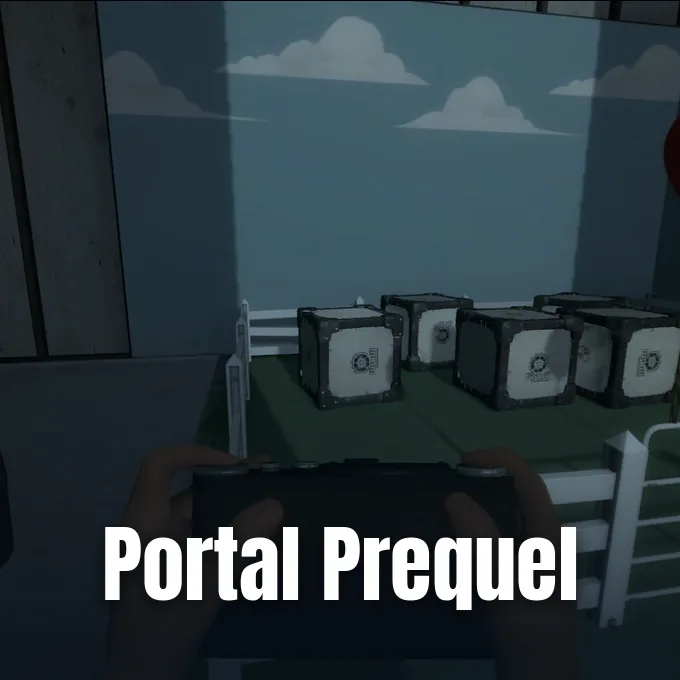
Valve’s cancelled 2007 Portal prequel, known internally as F-Stop, has become fully playable after community modders assembled leaked source code, map files, and asset archives [1, 3]. The Valve Cut Content team verified the files. Users now have direct community access to camera-based Aperture Science test chambers that Valve shelved almost two decades ago [2, 3].
How Portal Prequel F-Stop Leaked Online
The arrival of the playable build stems from several separate community data leaks [1, 3]. During late August, an anonymous dump labeled Steam2 surfaced on the internet with roughly 13 terabytes of Valve depot files that spanned company software releases from 2003 through 2013 [3]. Oisin Kuhnke reported for Rock Paper Shotgun that the Steam2 dump included raw assets for F-Stop. Yet that initial archive lacked executable source code and level geometry, leaving F-Stop unplayable until modders obtained the missing map directories this week [1, 3]. The early rip was nonfunctional [3].
Source code and map archives surfaced in the Valve Cut Content Discord server over the past 48 hours, providing the underlying scripts that Valve originally compiled in 2007. Discord moderators said the person who leaked the mapsrc folder asked for $1,000 before handing over the data for free [1, 3]. Lewis Parker reported for Kotaku that the mapsrc archive contained Valve’s authentic level source code [3].
Valve Cut Content contributors verified the map data before recompiling the levels. Players who tested the restored build on modern PCs reported that while some voice lines and sound effects remain absent, the playable campaign is essentially 99 percent complete from start to finish. It requires no unofficial emulator. Lewis Parker wrote for Kotaku that having a 99 percent complete build represents a massive leap forward from the 0 percent playable state on Steam [3].
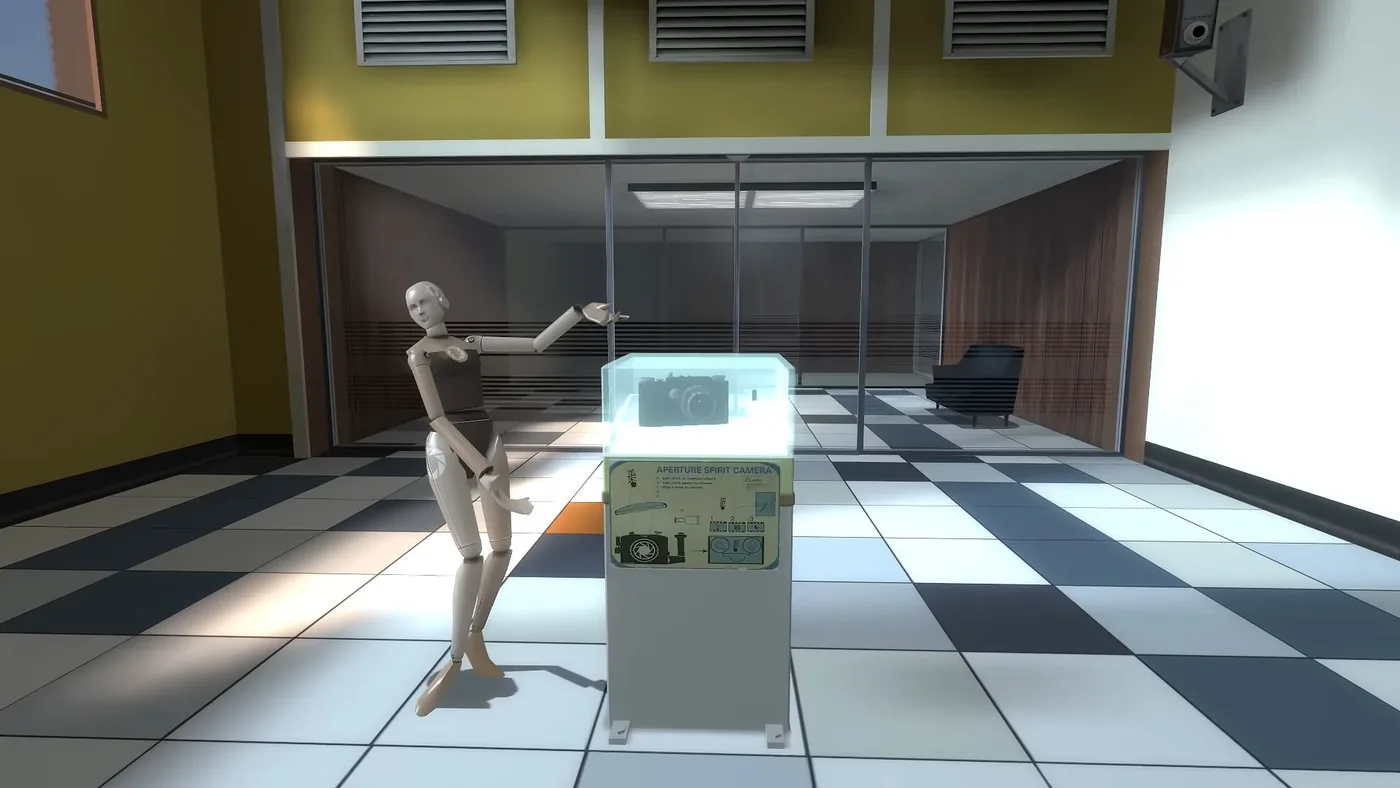
Camera Mechanics of the Unreleased Build
The mechanics of F-Stop differ fundamentally from the portal loops that defined Portal and Portal 2 [2, 3]. Instead of firing blue and orange wormholes with an Aperture Science portal gun, players wield an experimental camera that photographs physical objects and alters how they sit in 3D space [1, 3]. Snapping a photo of an item makes it vanish from the test chamber, turning it into a Polaroid-like photograph in hand [1, 2]. Terrence O’Brien said in The Verge that this mechanic turns ordinary room objects into portable tools [2]. The handheld camera replaces teleportation with optical manipulation, creating an Aperture Science puzzle experience where camera perspective dictates the physical dimensions of every room element [1, 3].
Placing a captured photograph back into the test chamber rematerialises the object, allowing players to look upward or downward to alter physical scale and bridge massive gaps [1, 3]. Oisin Kuhnke said in Rock Paper Shotgun that this perspective trick resembles the spatial illusions used throughout Superliminal [1]. Terrence O’Brien said in The Verge that the mechanic also shares obvious parallels with Viewfinder [2].
The entire campaign runs under an hour. Video footage published by community archivist ToothpasteVixen on YouTube reveals that the full sequence of restored F-Stop puzzles takes approximately forty-five minutes to complete at normal speed [2, 3]. Chambers move quickly, challenging players to resize weighted storage cubes, reposition elevated platforms, and align optical perspective lines correctly [1, 2].


Valve Experiments Behind Portal Prequel F-Stop
Valve began developing F-Stop in 2007 under an internal initiative that Gabe Newell called the Directed Design Experiments. During this three-month incubation window, Valve split its staff into five separate teams, charging each group with inventing an original gameplay prototype to spark new ideas [2, 3]. Team five developed F-Stop. Conceived as an official prequel to Portal, the prototype explored Aperture Science before the mainline narrative, testing whether an inventive puzzle title could stand on its own without portal mechanics [2, 3]. Gabe Newell praised the early camera prototype, but internal Valve playtesters reacted to the experimental chambers with far less enthusiasm. Test audiences found the perspective shifts confusing, which ultimately led Valve management to shelve the project [1, 3].
F-Stop stayed hidden away for thirteen years. A deeper look at the prototype surfaced in a semi-official capacity during 2020, revealing how Valve engineers originally built the camera mechanics using Source engine tools. Yet the playable code and map files remained inaccessible until the Valve Cut Content community pieced the leak together [1, 3].
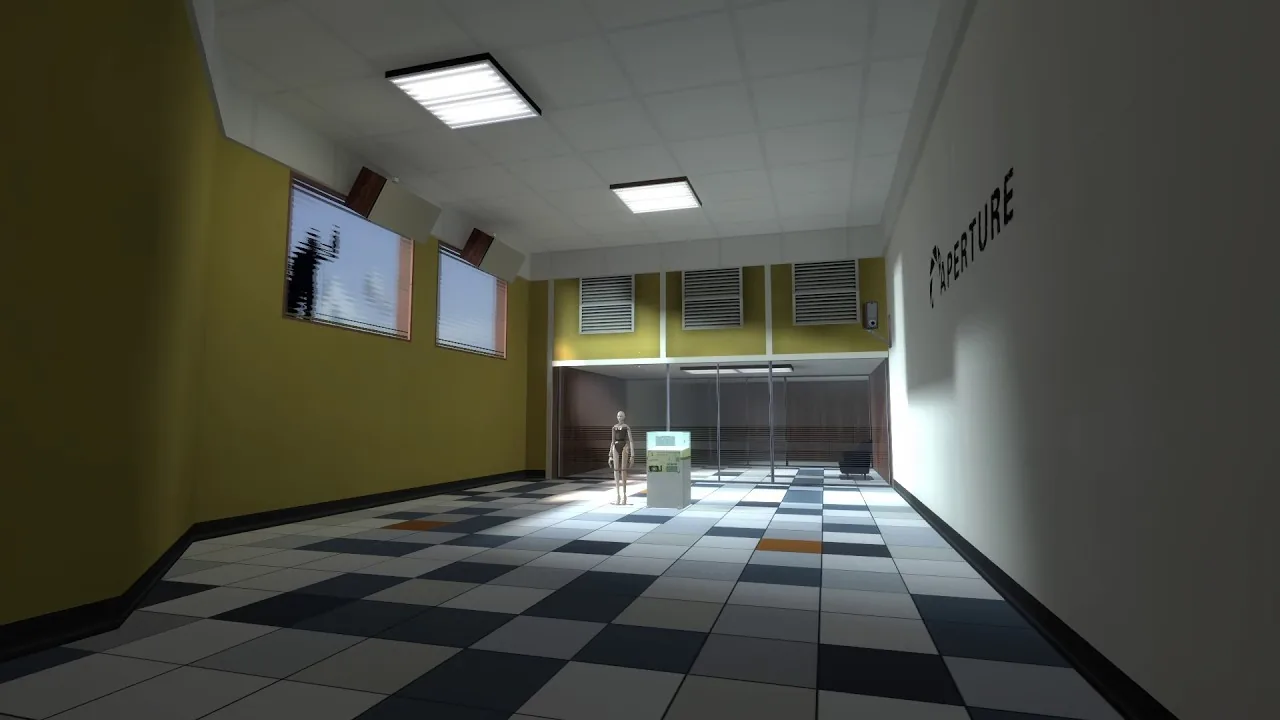
For dedicated fans of Portal and Half-Life, recovering lost Valve prototypes remains an enduring passion [1, 3]. Archivists monitor legacy depot repositories closely, even as Valve moves the Steam Linux client to 64-bit in ongoing software updates to its modern desktop client. Preservation groups document every discarded asset. The Valve Cut Content group continues examining early Steam repositories to catalog how abandoned prototypes influenced later commercial releases from Valve [1, 3].
Puzzles Restored by Valve Cut Content
Assembling the playable version of F-Stop required stitching together three separate community leaks. The August Steam2 archive provided the vast majority of 3D models, textures, and audio cues, but it lacked the crucial mapsrc directories that instruct the game engine where objects belong [1, 3]. Modders could not compile active chambers. The Valve Cut Content archivist teams had to wait until map geometry leaked before building playable Source engine BSP map files [1, 3].
Discord leaks solved the missing puzzle [2, 3]. Map data and source code finally appeared on the Valve Cut Content Discord server, ending a search that had puzzled Half-Life and Portal historians for years. Discord moderators said the leaker originally wanted $1,000 for the files before handing over the mapsrc repository to the public [1, 3]. The Valve Cut Content team verified the authenticity of the maps against historical Valve depot structures [3].

Community members compiled the restored map files immediately. Players testing the release reported that the build functions at roughly 99 percent completion, giving modern audiences their first opportunity to experience the camera mechanics Valve conceived in 2007 [2, 3]. While a few Aperture Science sound files remain missing, the core puzzle sequence runs smoothly across modern Source engine setups without fatal errors [3].
Ideas Carried Over Into Portal 2
Although Valve cancelled F-Stop as a standalone prequel, the company preserved its best creative discoveries. Valve writers and puzzle designers reworked several key concepts from F-Stop directly into Portal 2 during development on the official sequel [1, 3]. Dialogue lines found a permanent new home. Lewis Parker reported for Kotaku that early Aperture Science character concepts and test chamber dialogues originated in the cancelled F-Stop project [3].
Writers and level designers Frankensteined bits of F-Stop into Portal 2 to expand Aperture Science lore. While Valve replaced the camera mechanic with portal guns and mobility gels, the quirky mid-century personality of the Aperture Science facility remained fundamentally unchanged [1, 2]. Oisin Kuhnke wrote for Rock Paper Shotgun that test audience resistance frequently causes game studios to scrap bold ideas, but recycling parts into Portal 2 saved Valve’s three-month investment [1].
The restored build gives Portal fans a direct look at the alternate path Valve explored in 2007 [2, 3]. The lost Aperture Science project has become an interactive experience [2]. Thanks to the Valve Cut Content team and persistent Discord leakers, F-Stop now stands as a playable testament to the Directed Design Experiments that reshaped Valve history [1, 3].
- ONLINE NEWS Kuhnke, O. (2026, November 1). What remains of canned Portal prequel white whale F-Stop is now fully playable thanks to modders and some big leaks. Rock Paper Shotgun. [Article Link]
- ONLINE NEWS O’Brien, T. (2026, November 1). A fully playable version of Portal prequel F-Stop leaked. The Verge. [Article Link]
- ONLINE NEWS Parker, L. (2026, November 1). Valve’s Cancelled Portal Prequel F-Stop Has Leaked. Kotaku. [Article Link]


