



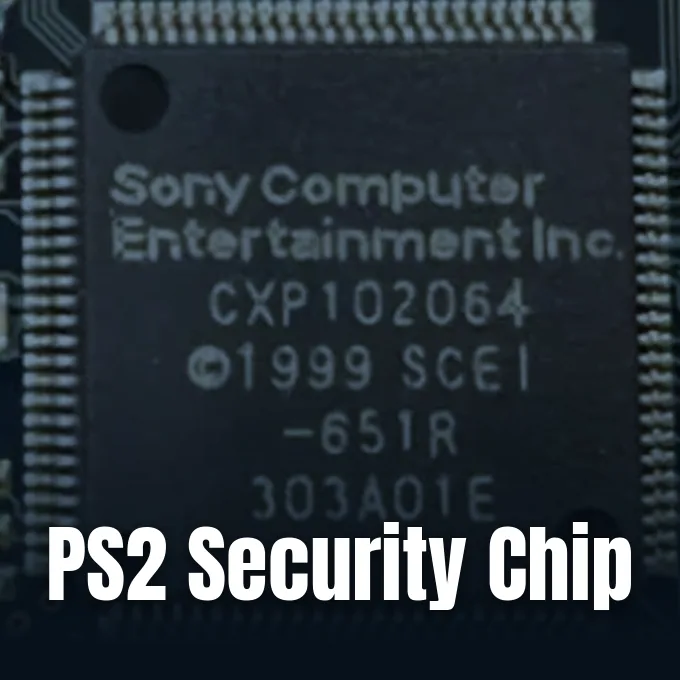
Sony built an intricate silicon fortress inside its flagship gaming hardware, yet the PlayStation 2 security chip has finally yielded to community reverse engineering after 26 years of unbroken defense. Canadian Retro enthusiast DiscoStarslayer announced that the proprietary Security Chip has been dumped following a rigorous four-year effort in Reverse Engineering [1]. While enthusiasts routinely ask when was the original sony playstation released, early console revisions presented hidden cryptographic barriers that stymied Hardware Modders for decades [2]. Complete Firmware Hashes are now public, confirming the extraction of Sony internal silicon code [1].
The MechaCon Architecture and Its 26-Year Defense
The Security Chip inside the original PS2 Fat chassis arrived in Japanese hardware during 1999 under the internal designation CXP102064 (the MechaCon chip arrived inside the PS2 Fat) [2]. Operating silently beneath the motherboard, MechaCon handled the mechanical operation of the Optical Drive tray and flash memory while enforcing Broken DRMs protection across the platform. It served as Sony primary digital gatekeeper, authenticating media before passing control to the main computational processors [1]. The silicon resisted extraction. The mystery deepened [2].
Sony engineers designed the MechaCon architecture to authenticate original game software by verifying encrypted disc sectors, communicating with Sony MagicGate memory cards, and managing security handshakes across connected accessories [1]. Because the microchip internal read-only memory remained permanently shielded against standard extraction tools, security researchers could not inspect the raw machine code directly [2]. Decades of software homebrew projects bypassed disc checks through memory cards, internal hard drives, and DVD player exploits without ever dumping the physical chip onboard firmware ROMs. The chip held out [1].
DiscoStarslayer dubbed the daunting task his personal Moby Dick project after pursuing the processor across four painstaking years of independent laboratory work [1].
Reverse Engineering vintage semiconductor packages requires exceptional patience, specialized equipment, and methodical verification to prevent permanent damage to irreplaceable Original Hardware samples. Early production consoles presented subtle manufacturing variances that complicated circuit tracing across the delicate internal silicon pathways [2]. That persistent hardware mystery kept Hardware Modders searching for an opening in the Silicon Architecture. Every byte matters [1].
Chemical Decapping and Libby’s Exploitation Breakthrough
Accessing the CXP102064 silicon required direct physical intrusion into the microchip packaging. DiscoStarslayer stripped away the protective packaging using Chemical Decapping to expose the die, preparing the raw silicon die for microscopic inspection. High-powered optical equipment allowed the researcher to inspect the silicon chip circuitry using microscopes and optical dumping skills [2]. Hardware Preservation analysis laid the necessary groundwork, but extracting the hidden bits demanded an executable vulnerability. The breakthrough arrived [1].
Software Exploit author Libby partnered with DiscoStarslayer to discover a software exploit that compelled the MechaCon processor to surrender its internal firmware payload. Combining microscopic Optical Dumping with Libby software exploit transformed an arduous hardware problem into a repeatable extraction method, allowing the team to harvest verified firmware data directly from the running chip. Official Firmware Hashes and metadata are now public, giving preservationists concrete cryptographic proof that the chip has surrendered its secrets. Decades of secrecy ended [1].
Can custom code run on later revisions of Sony console hardware? DiscoStarslayer and Libby are currently refining their exploit to support newer production runs of the MechaCon chip, ensuring that subsequent motherboard revisions surrender identical architectural insights. The team promised a detailed write-up documenting every stage of the decapping and software exploitation process in an upcoming technical release [1].
Documenting proprietary Disc Security hardware at the register level allows developers to comprehend historical engineering decisions that shaped sixth-generation console security [2]. The collaborative dynamic between Hardware Modders and software exploit authors proved decisive in breaking through Sony longest-standing hardware barrier. Technical Documentation confirmed the victory [1].


What the PlayStation 2 Security Chip Actually Controls
The PlayStation 2 security chip carried responsibilities extending far beyond simple Drive Mechanics control. Technical Documentation compiled on the PSDev Wiki indicates that MechaCon decrypted Sony proprietary KELF files and validated MagicGate memory cards during boot routines (supporting Magic Gate memory cards and KELF decryption). Without MechaCon explicit cryptographic sign-off, the console motherboard refused to load system executables or initialize peripheral memory modules [2].
Contrary to common assumptions within retro gaming circles, standard game discs did not store their interactive game data behind full-disc encryption layers. As developer uyjulian clarified in technical discussions following the announcement, standard PlayStation 2 discs store unencrypted game assets, with Sony reserving cryptographic authentication for system executables and online DNAS network verification protocols. The MechaCon processor governed that authentication gateway by verifying disc wobble grooves and decrypting specialized binaries rather than scrambling every raw texture file on discs. Understanding these exact boundaries explains why software exploits previously ran backups without accessing MechaCon, while low-level system preservation still required full firmware extraction [2].
Dumping the chip required unconventional hardware interaction, as extracting the firmware from SPC970 units involved extensive writing directly to console NVRAM (repeated NVRAM write operations). The MechaCon dumps also clarify how the 50k series and later Dragon MechaCon revisions allowed a force unlock patch without patching copied disc media [2]. Hardware Modders welcomed the breakthrough [1].
Analyzing internal routines confirms how Sony partitioned access permissions between consumer software and privileged internal diagnostics [2]. By separating drive control from cryptographic verification within a dedicated package, Sony maintained MagicGate and KELF security even when external communication lines were tapped. Silicon boundaries held fast [1].

Emulation Milestones and Original Hardware Preservation
Software Emulation on personal computers has already achieved remarkable maturity through the long-running PCSX2 open-source project. According to official compatibility statistics published by the emulation team, more than 98% of the console vast software catalog is currently playable on modern PC systems. Because PCSX2 already simulates hardware behavior through high-level emulation, the newly extracted firmware will have minimal immediate impact on day-to-day PC gaming performance [1].
Where the dump creates immediate excitement is in the realm of physical Hardware Preservation and repair. Aging optical drive lasers across millions of original consoles are failing, and replacement components are becoming increasingly scarce as manufacturing lines remain long shuttered. Preservationists facing hardware decay encounter component hurdles similar to modern portable designs, as highlighted when component shortages shaped the Valve RAM crisis and Steam Deck 2 hardware planning [2].
Will the newly dumped code immediately yield a plug-and-play Optical Drive Emulator (an optical drive emulator hardware replacement)? Developer uyjulian noted that the standalone MechaCon dumps alone do not contain sufficient architectural data to construct a fully independent hardware drive replacement. The dump does, however, create viable blueprints for custom modchips that can replace defective MechaCon silicon while relying on the DSP to process media reads [2]. The work continues [1].
Low-level emulation projects will eventually incorporate these dumps to replicate exact cycle timings and cryptographic handshakes with absolute fidelity [2]. Archival projects benefit when proprietary silicon no longer conceals undocumented behavior from researchers attempting to simulate fragile legacy hardware. Future emulators gain precision [1].
Arcade System Preservation and Future Modding Horizons
Beyond home television cabinets, the MechaCon processor extended its operational footprint into commercial Arcade Machines centers across the globe. Manufacturers built coin-operated Arcade Systems around modified console motherboards, including the Namco System 246, the Namco System 256, and the Konami Python 1. In those arcade platforms, the MechaCon firmware authenticated hardware security dongles and authorized the execution of proprietary encrypted arcade software [2]. Decades of arcade secrecy ended there [1].
Security developers can now analyze the dumped firmware to discover potential vulnerabilities within MechaPwn and TonyHax implementations. MechaPwn enables custom code execution directly on the MechaCon to disable region locks and security checks, while TonyHax leverages exploits to unlock original PlayStation mode on SPC970 and original PlayStation chips [2]. Access to raw machine code gives community developers unhindered visibility into the processor innermost state machine [1].
Retro gaming collectors evaluating the value of an original sony playstation console or repairing Original Hardware now possess an open window into one of Sony most secretive silicon designs [2]. As Canadian Retro enthusiast DiscoStarslayer and Software Exploit author Libby prepare their comprehensive technical release, the community gains permanent archival protection for a landmark era of Video Game history [1].
- ONLINE NEWS Maruccia, A. (2026, September 17). *Someone finally cracked the PlayStation 2’s security chip, 26 years later*. TechSpot. https://www.techspot.com/news/113876-someone-finally-cracked-playstation-2-security-chip-26.html [Article Link]
- ONLINE NEWS Tyson, M. (2026, September 16). *Original Sony PlayStation 2 security chip ‘broken wide open’ after 26 years — chemical decapping and four years of reverse engineering unlocks MechaCon secrets*. Tom’s Hardware. https://www.tomshardware.com/video-games/playstation/26-year-old-sony-ps2-security-chip-broken-wide-open-after-four-years-of-effort-reverse-engineering-enthusiast-successfully-unlocks-cxp102064-mechacon-chip [Article Link]


