



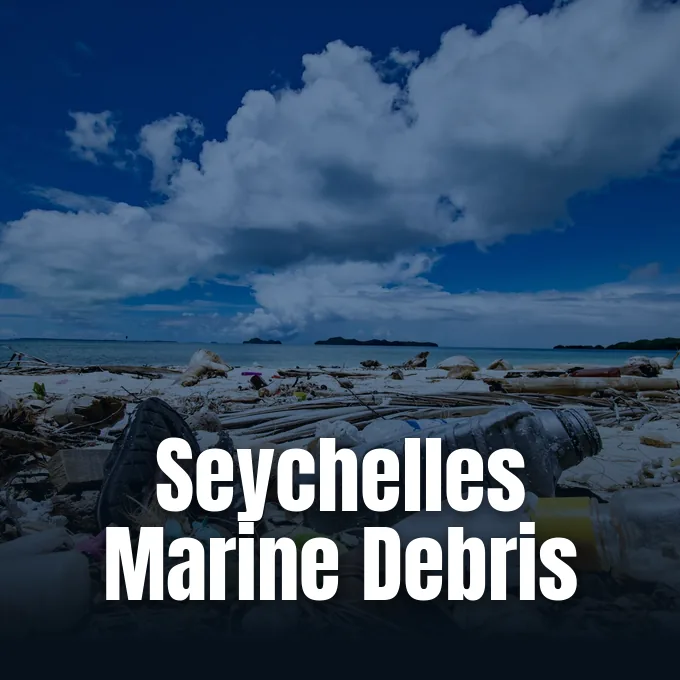
How do vast mounds of maritime refuse wash ashore on remote coral islands? Across the western Indian Ocean, tons of fishing gear and discarded plastic litter continue to choke coastal habitats, threatening endemic wildlife and imposing heavy cleanup costs on coastal settlements [4]. Aldabra Atoll alone bears an immense accumulation of synthetic waste across its beaches. While conventional scientific assumptions held that island debris drifted primarily across open oceans from distant continents, recent satellite tracking reveals that most shoreline pollution originates from industrial vessels operating directly within Seychelles waters [3].
The Accumulation Crisis on Aldabra Atoll
Aldabra Atoll is an isolated UNESCO World Heritage Site located within the 115-island Seychelles archipelago. Despite its protected international status, researchers calculate that more than 500 tons of plastic debris have piled up along its remote beaches [3]. Tangled commercial nets and synthetic containers wash ashore on daily tides. Coastal wildlife faces severe hazards. Nesting seabirds, giant tortoises, and marine turtles regularly encounter discarded refuse, and marine organisms frequently perish after ingesting plastic particles or becoming entangled in nylon cords [1].
Clearing these shoreline deposits requires prohibitive municipal expenditures. Removing plastic litter from Aldabra Atoll alone would cost roughly US$4.68 million (£3.46 million) and demand 18,000 hours of labor [3].
Small island developing states face severe economic consequences from marine pollution despite generating negligible global plastic output. The environmental toll directly threatens coastal fisheries and beach tourism, which provide essential employment and foreign revenue across the western Indian Ocean [4]. When tons of fishing gear choke nearshore waters, local communities bear heavy cleanup costs that rapidly outstrip public budgets. In addition to physical obstruction, plastic waste degrades into hazardous chemical contaminants; foundational toxicological studies have documented the unanticipated toxicity levels found in conventional plastic items as consumer polymers fragment under intense tropical sunlight and release harmful additives into coastal ecosystems [5]. Without identifying the exact maritime sources responsible for this debris, vulnerable island governments cannot establish effective containment policies or assign financial liability to offshore operators [3].
Simulating Billions of Virtual Drift Fragments
To uncover the origin of this debris, researchers Alex Albinski, H. L. Johnson, J. Savage, A. J. Burt, and Noam Vogt-Vincent evaluated regional shipping and fishing operations [1]. Rather than depending on generalized ocean models, the research team analyzed satellite tracking data recorded between 2018 and 2022. This extensive five-year dataset captured the daily movements of commercial vessels operating across the western Indian Ocean [3]. By tracking vessel density and operational routes, the scientists mapped where marine traffic concentrated around the 115 islands [4].
Using this empirical vessel distribution, the team simulated the transport of billions of virtual pollution fragments through computational ocean currents [3]. Hydrodynamic models tracked how virtual particles drifted across the western Indian Ocean, tracing whether items escaped toward the open sea or washed ashore on specific atolls [4]. The simulations incorporated regional ocean circulation and seasonal wind patterns to project landfall probabilities for different vessels. From these computational runs, the scientists constructed dedicated risk maps for both commercial fisheries and merchant shipping corridors, pinpointing how tons of fishing gear drift toward protected reefs [1].
The simulation results overturned earlier scientific assumptions. Previous studies frequently posited that plastic waste on remote archipelagos drifted from distant continents along large-scale ocean currents [3]. Instead, the computational analysis showed that most debris washing up on Seychelles beaches originates from vessels operating in or directly adjacent to domestic waters [4]. Local industrial maritime activity, rather than distant continental runoff, drives the shoreline waste crisis [3].
How Tons of Fishing Gear Enter Local Waters
Where does the largest volume of shoreline gear originate? The research demonstrates that most fishing waste recovered on Seychelles beaches comes from commercial operations conducted inside the nation’s own exclusive economic zone. Under maritime law, a coastal state maintains sovereign rights over marine resources across an exclusive economic zone (waters extending 200 nautical miles, or 370 kilometers and 230 miles, offshore) [3]. These expansive waters support massive tuna stocks. Because tuna fishing provides substantial employment and foreign currency, the national economy depends heavily on offshore harvesting [4].
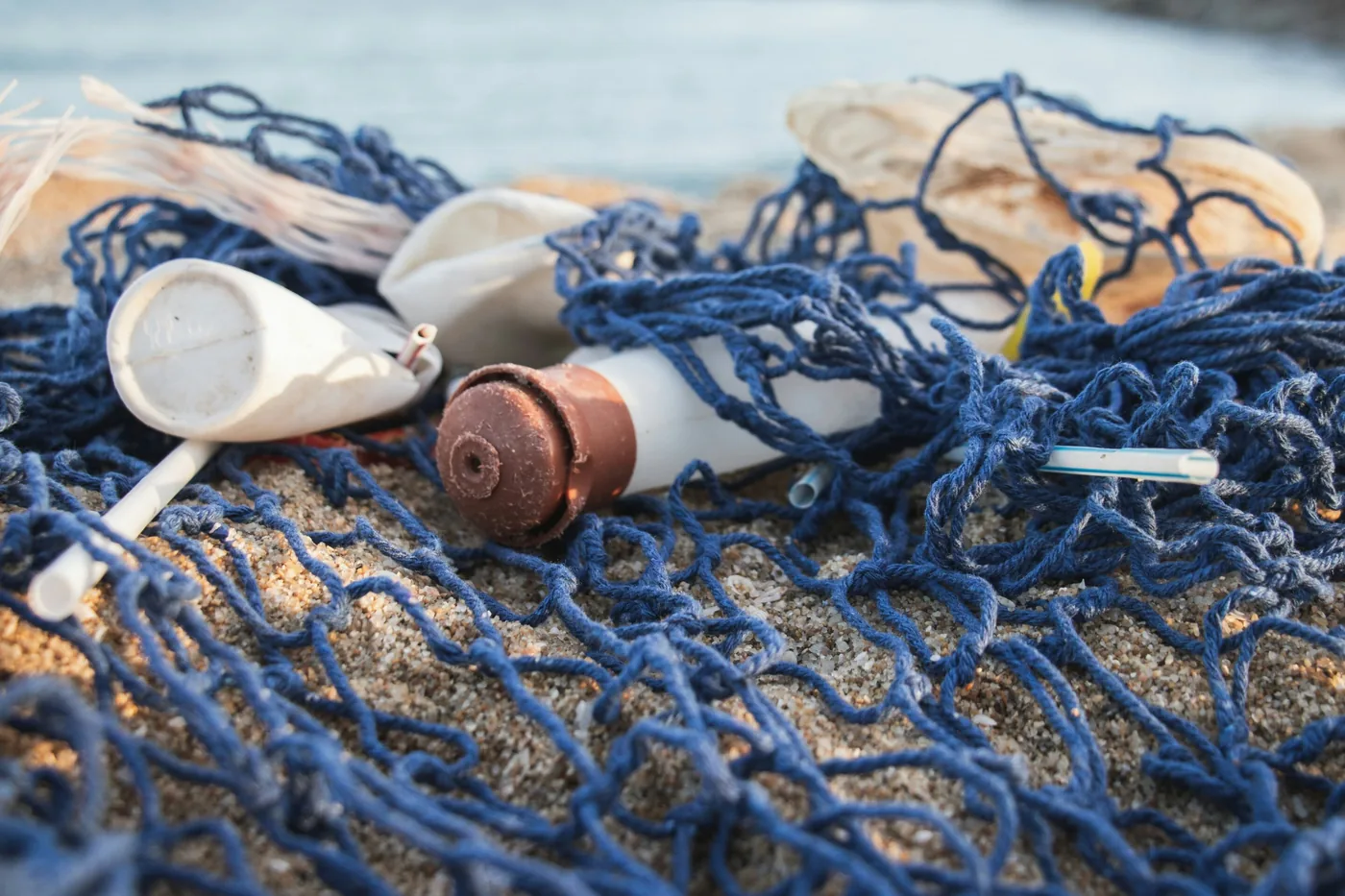
During commercial tuna operations, fishing vessels frequently lose or discard massive synthetic nets, ropes, and buoys. Over successive fishing seasons, tons of fishing gear become abandoned at sea, floating with prevailing surface currents until they ensnare vulnerable coral reefs and wash onto sandy beaches [1]. This abandoned gear persists in saltwater without decomposing. Marine animals suffer severe injuries when they become entangled in ghost gear, while underwater coral colonies break under the weight of grounded ropes [4]. Industrial efficiency at sea inadvertently creates persistent ecological damage along the coast [3].
Emerging environmental engineering concepts offer innovative ideas for aquatic remediation. For instance, bioengineers are exploring how tiny robots made of living cells cleaning up plastic pollution might one day assist in clearing microscopic particles from freshwater environments [3]. However, microscopic robotic systems cannot retrieve heavy industrial ropes submerged beneath pounding island surf. Remotely situated island nations cannot rely on hypothetical future technologies to recover heavy maritime waste [4]. Halting the inflow of lost equipment requires interventions implemented directly aboard commercial vessels before nets are abandoned in open waters [3].


European Fleets and Drifting Aggregating Devices
A substantial share of industrial fishing in Seychelles waters is conducted by European Union vessels operating under a longstanding bilateral partnership. The fleet relies primarily on two vessel types: purse seiners (ships that encircle schools of tuna with large surrounding nets) and longliners (boats that deploy lines of baited hooks extending across many kilometers) [3]. Both methods involve significant risks of gear loss during stormy sea conditions or mechanical snags. When gear becomes entangled on submerged topography, crews often cut lines away to safeguard ship engines [4].
Fish-aggregating devices present another severe source of shoreline pollution. Tuna fleets deploy these floating rafts, often equipped with satellite transmitters and submerged netting, to attract fish schools in open seas. A report submitted to the Indian Ocean Tuna Commission revealed that 76% of 214 drifting fish-aggregating devices examined in Seychelles waters belonged to Spanish-owned vessels [3]. When these structures drift outside commercial fishing sectors, currents carry them directly onto shallow coral reefs. As a result, tons of fishing gear linked to abandoned aggregating rafts end up stranded across protected nature reserves [1].
The financial returns generated by these fishing access agreements contrast sharply with cleanup expenses. The Seychelles–EU fishing agreement was recently renewed for the 2026–2030 term at €5,750,000 per year (£4.89 million), authorizing 38 EU fishing vessels to operate in national waters. Reports suggest the Seychelles government pushed for a 30% increase in compensation but ultimately settled for a 7% adjustment [3]. Considering that cleaning a single atoll requires millions of dollars, the bilateral payment remains modest compared to the indirect environmental damage inflicted on island shores [4].
International Shipping Lanes and Bottle Debris
Commercial merchant traffic creates a distinct category of marine refuse across the western Indian Ocean. Cargo carriers, bulk freighters, and container vessels pass near the archipelago along established trade routes [1]. Albinski and Vogt-Vincent determined that more than 90% of plastic debris washing ashore from shipping vessels originates from just five transit lanes [3]. These busy maritime passages connect major commercial ports across the Indian Ocean basin [1].
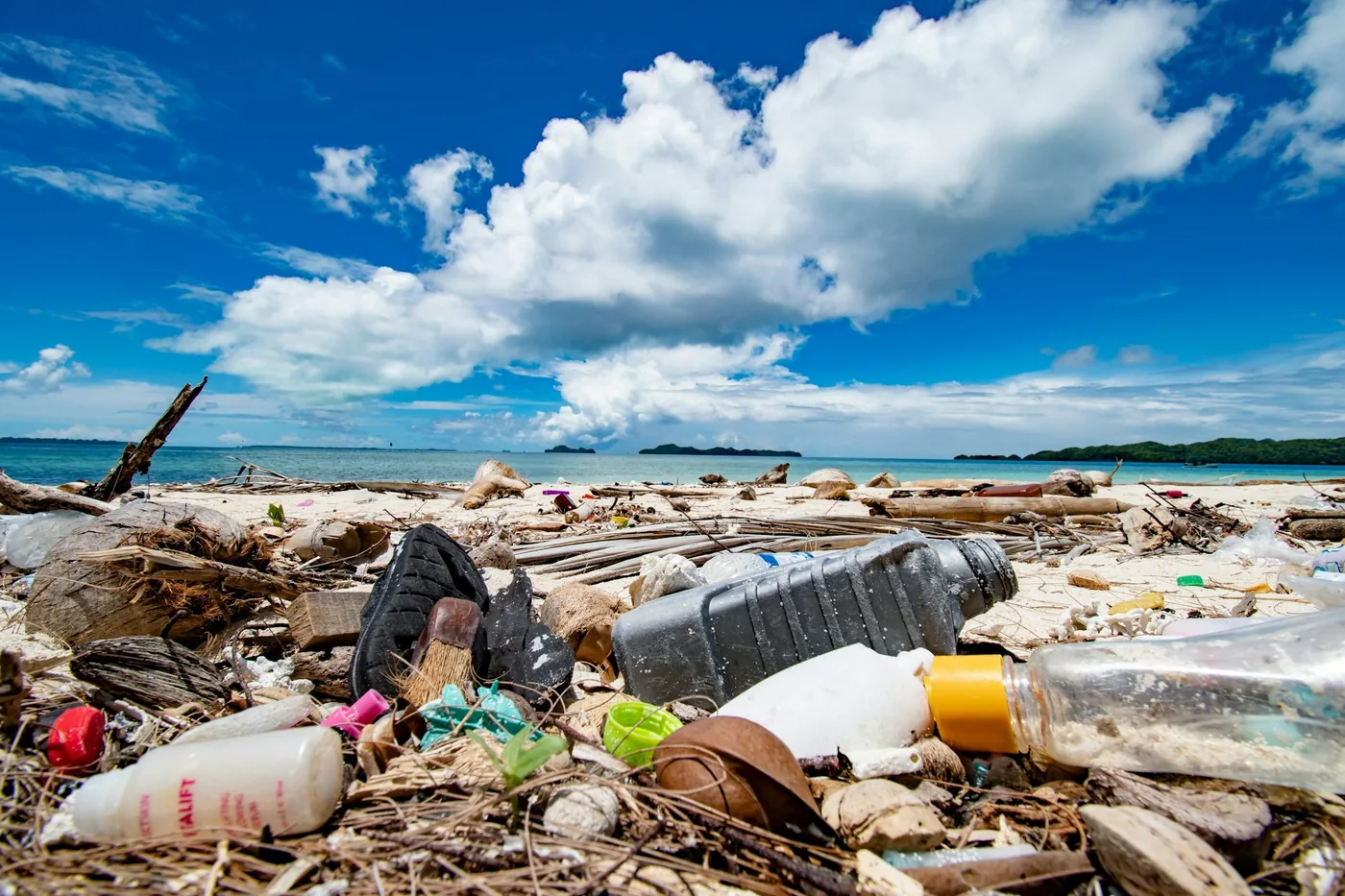
Field observations on Aldabra confirm this shipping connection. Origin ports and destination terminals of the five modeled lanes match the country labels printed on plastic bottles collected along the atoll’s coastline [3]. Vessel crews frequently discard domestic packaging and plastic bottles directly into open waters, violating international agreements prohibiting garbage disposal at sea [4]. Prevailing surface currents transport these buoyant containers straight toward low-lying atolls [1].
Addressing transit traffic requires different policy tools than managing licensed fishing fleets. While tuna boats operate under specific bilateral treaties, merchant vessels merely transit international corridors near Seychelles waters [3]. When merchant vessels transit near tons of fishing gear lost across fishing grounds, identifying specific polluters proves difficult without satellite surveillance [1]. Coastal states must establish regional cooperation to enforce maritime anti-dumping standards across the western Indian Ocean [4].
Enforcing Maritime Rules and Future Negotiations
Can targeted policy interventions curb this inflow of ocean refuse? The study authors suggest that practical measures could substantially reduce maritime litter without imposing excessive operational burdens [3]. For international shipping, maritime authorities must strictly enforce international regulations against dumping solid waste at sea [4]. Onboard logistics could also change: ensuring merchant vessels carry adequate safe drinking water systems would dramatically decrease the consumption and disposal of single-use plastic bottles [3]. Port authorities could verify shipboard water supplies and waste manifests during scheduled harbor inspections [1].
For industrial fisheries, accounting for environmental costs must inform future negotiations. When tons of fishing gear wash ashore, the heavy financial burden of shoreline cleanup falls on local authorities rather than vessel operators [4]. The authors emphasize that the Seychelles government needs to calculate the precise economic damage inflicted by abandoned gear [3]. Equipped with rigorous estimates of ecosystem disruption and removal expenses, Seychellois leaders can negotiate more equitable terms in future treaty discussions with the European Union [4].
Transparent reporting of scientific literature remains critical for ocean policy. Researchers Alex Albinski and Noam Vogt-Vincent initially published their tracking findings as a 2026 preprint, which has not undergone formal peer review [2]. Their peer-reviewed analysis subsequently appeared in Marine Pollution Bulletin, expanding upon foundational plastic pollution literature published by Thompson and colleagues in Philosophical Transactions of the Royal Society B [1, 5]. By connecting satellite vessel monitoring with beach debris surveys, scientists provide island governments with empirical tools to trace tons of fishing gear and protect vulnerable marine habitats [1].
- ACADEMIC JOURNAL Albinski, A. L., Johnson, H. L., Savage, J., Burt, A. J., & Vogt-Vincent, N. S. (2026). Shipping and fishing vessels as sources of marine plastic debris for the Seychelles. Marine Pollution Bulletin, 233, 120064. [Article Link]
- PREPRINT Albinski, A., & Vogt-Vincent, N. (2026). Tonnes of fishing gear and plastic are washing up on Seychelles beaches. We tracked where it was coming from [Preprint – not peer reviewed]. [Article Link]
- ONLINE NEWS Albinski, A., & Vogt-Vincent, N. (2026, September 17). Tons of fishing gear and plastic are washing up on Seychelles beaches. We tracked where it was coming from. Phys.org. [Article Link]
- ONLINE NEWS Albinski, A., & Vogt-Vincent, N. (2026, September 17). Tonnes of fishing gear and plastic are washing up on Seychelles beaches. We tracked where it was coming from. The Conversation. [Article Link]
- ACADEMIC JOURNAL Thompson, R. C., Moore, C. J., vom Saal, F. S., & Swan, S. H. (2009). Plastics, the environment and human health: current consensus and future trends. Philosophical Transactions of the Royal Society B: Biological Sciences, 364(1526), 2153-2166. [Article Link]
APA 7: TWs Editor. (2026, September 18). Where tons of fishing gear and plastic in Seychelles originate. PerEXP Teamworks. https://perexpteamworks.com/en/tons-of-fishing-gear-seychelles/


