






APA 7: TWs Editor & ChatGPT. (2023, October 22). Study Suggests Link Between Reduced Serotonin Levels and Long Covid Symptoms. PerEXP Teamworks. [News Link]
Despite various hypotheses, the medical community has yet to provide a definitive explanation for how contracting SARS-CoV-2 results in persistent issues like impaired concentration, attention, memory, and the myriad debilitating symptoms linked to Long Covid.
Recent investigations into individuals who have experienced lasting symptoms following SARS-CoV-2 infection present a novel theory: Inflammation triggered by the virus might lead to a reduction in serotonin levels. Serotonin is a neurotransmitter that plays a role in mood regulation, digestion, and various other bodily functions, and this drop in serotonin could be contributing to cognitive issues. [2]
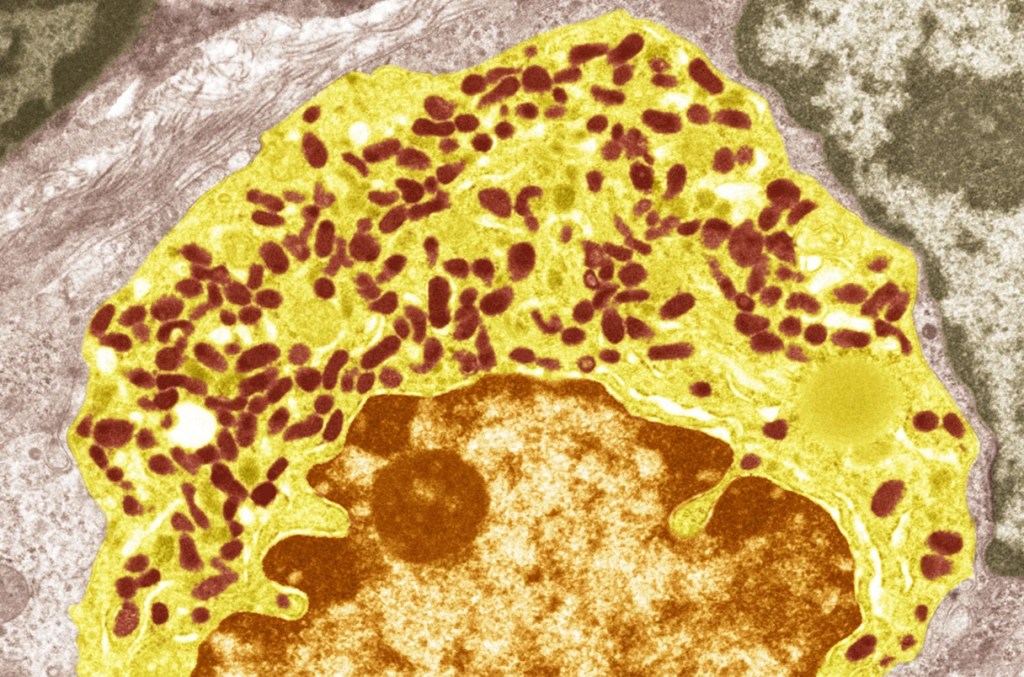
Roberto Malinow, a neuroscientist at the University of California (UC), San Diego, who was not part of the study, finds the proposal “intriguing and surprising,” emphasizing that the findings are reinforced by multiple supportive pieces of data.
Still, some researchers point out that the study relies heavily on experiments conducted in mice, raising some unresolved questions. For instance, while serotonin reduction was observed in the mice’s blood, it wasn’t confirmed in their brains, creating complexities regarding how serotonin affects cognitive functions. Additionally, there’s uncertainty about how closely the team’s animal experiments mimic the Long Covid symptoms that humans experience.
The latest research, published on October 16, 2023, in the journal Cell, originated from an initial observation by scientists at Penn Medicine. Their findings indicated that individuals attending a post-COVID-19 clinic at the facility exhibited lower levels of serotonin in their blood in comparison to those who had completely recuperated from the infection. Moreover, patients in the acute phase of COVID-19 also displayed decreased blood serotonin levels.
Intrigued by the possibility of viral infection contributing to decreased serotonin levels, the researchers sought to investigate this hypothesis. (While some earlier studies had suggested a potential connection between serotonin levels and post-COVID-19 symptoms, conflicting research findings had also emerged, failing to establish a clear association. [3]) To do so, they conducted experiments with mice, infecting them with SARS-CoV-2 or administering a drug that induced a comparable inflammatory response. Remarkably, both treatments resulted in a reduction in blood serotonin levels, as explained by one of the study’s co-authors, Maayan Levy, a microbiologist at the University of Pennsylvania Perelman School of Medicine.
Together with her colleagues, Levy uncovered several mechanisms contributing to this serotonin reduction. Firstly, viral infection or drug treatment impeded the absorption of dietary tryptophan, a key precursor of serotonin present in various foods like fish and dairy products, in the mouse gut. Secondly, it disrupted the molecule’s transportation via platelet cells in the bloodstream. Lastly, it increased the activity of an enzyme responsible for serotonin breakdown.
These modifications were associated with the mice’s performance in memory tests. Objects like a glue stick and binder clips were placed in the animals’ cages, with a new object introduced later. Typically, mice with better memory lose interest in familiar items faster as they prefer novelty. The team observed that the mice treated with the virus or inflammation-inducing drugs exhibited poorer recall based on this measure. Furthermore, examinations of their brain tissue unveiled reduced activity in the hippocampus, a brain region connected to memory.
To counter this impairment, the researchers were able to reverse the effects by adding tryptophan to the animals’ diet or administering the antidepressant fluoxetine, a selective serotonin reuptake inhibitor (SSRI) known to primarily increase serotonin levels in the brain.
Nonetheless, the researchers did not observe differences in brain serotonin levels between the treated and untreated mice. The study’s co-author, Christoph Thaiss from the Perelman School of Medicine, suggests that the findings indicate that reductions in “peripheral” serotonin, which circulates outside the brain and spinal cord, impact the hippocampus by decreasing the activity of the vagus nerve. This nerve is a collection of sensory fibers responsible for transmitting information about the body to the brain.
Several discoveries within the study indicate that the results in mice might have relevance for comprehending Long Covid, according to the authors. They noticed diminished tryptophan levels in the blood of Long Covid patients at Penn Medicine and other medical centers. Additionally, an examination of stool samples from a few Penn Medicine patients revealed the presence of SARS-CoV-2 RNA. The scientists suggest that this could indicate the virus lingering in the digestive tract, possibly impeding tryptophan absorption.
However, some other researchers raise concerns about gaps in this theory. Jeffrey Meyer, a neuroscientist at the University of Toronto’s Centre for Addiction and Mental Health, points out that peripheral serotonin is distinct from brain serotonin. He remains skeptical that reduced peripheral serotonin can fully account for patients’ symptoms. Nevertheless, he finds the discovery of reduced tryptophan intriguing and suggests it could have relevance to Long Covid, as brain serotonin levels are indeed influenced by the concentrations of tryptophan in the blood.
Joanna Hellmuth, a cognitive neurologist and clinical researcher at UC San Francisco, who has collaborated with some of the authors but was not part of the current study, raises concerns about the paper’s emphasis on the hippocampus. She points out that there is currently limited evidence connecting the typical cognitive symptoms of Long Covid to memory encoding in this brain region. While she finds the results intriguing, she believes that the model being tested may not fully reflect the clinical condition.
Benjamin Abramoff, a physician at Penn Medicine and a co-author of the study, expresses the team’s aspiration to conduct clinical research to assess whether diets supplemented with tryptophan or SSRIs can ameliorate Long Covid-related impairments. He highlights that the individuals in the current study exhibited a variety of Long Covid symptoms, extending beyond neurocognitive issues. Consequently, it remains uncertain which groups of patients might experience the most significant benefits from such treatments.
Akiko Iwasaki, an immunobiologist at the Yale School of Medicine, underscores the complexity of Long Covid, likely characterized by various types driven by diverse underlying causes. She suggests that low serotonin might be associated with one specific type of Long Covid, but further research is essential to understand how this reduction in serotonin could lead to cognitive symptoms. She also recommends that a clinical trial involving SSRIs in individuals with below-average serotonin levels could provide valuable insights into this matter.
Resources
- DATASET Offord, C. (2023). Low serotonin levels might explain some Long Covid symptoms, study proposes [Dataset]. In AAAS Articles DO Group. [Science]
- JOURNAL Wong, A. C., Devason, A. S., Umana, I. C., Cox, T. O., Dohnalová, L., Litichevskiy, L., Perla, J., Lundgren, P., Etwebi, Z., Izzo, L., Kim, J., Tetlak, M., Descamps, H. C., Park, S. L., Wisser, S., McKnight, A. D., Pardy, R. D., Kim, J. W., Blank, N., . . . Levy, M. (2023). Serotonin reduction in post-acute sequelae of viral infection. Cell. [Cell]
- JOURNAL Sadlier, C., Albrich, W. C., Neogi, U., Lunjani, N., Horgan, M., O’Toole, P. W., & O’Mahony, L. (2022). Metabolic rewiring and serotonin depletion in patients with postacute sequelae of COVID‐19. Allergy, 77(5), 1623–1625. [Allergy]


