




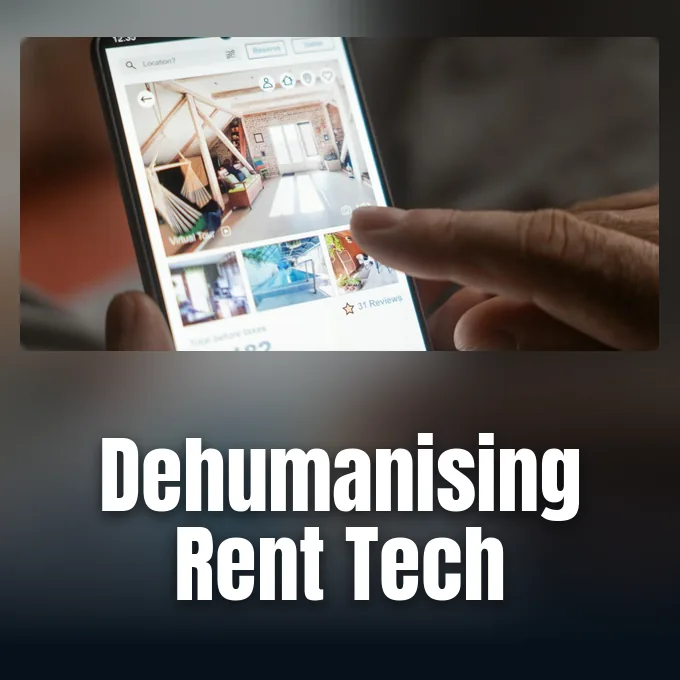
Can automated software systems strip away basic dignity from prospective tenants during an ordinary housing search? The expansion of rent tech platforms (online software systems used for submitting rental applications, processing payments, and managing property communications) increasingly subjects Australian applicants to intrusive surveillance and opaque automated screening [1]. Conducted as part of doctoral research by Samantha Floreani and directly informing a public report from the non-profit Consumer Policy Research Centre, the statewide investigation reveals digital exploitation across residential leasing [2]. Crucially, because this empirical research by Samantha Floreani is currently issued as an academic preprint, the paper has not yet undergone formal peer review [1]. Real estate agencies across Australia have steadily replaced direct human interactions with algorithmic portals that demand sensitive personal documentation [2].
How Rent Tech Platforms Reshape Tenant Screening
The nationwide shift toward automated property management has transformed standard leasing procedures into lucrative data extraction pipelines across Australia [1]. Prospective tenants encountering commercial rent tech platforms navigate digital portals that systematically harvest intimate financial, residential, and employment records before any tenancy agreement is considered [2]. Many applicants report finding these algorithmic interactions fundamentally dehumanising [1]. The power imbalance is stark [2]. Commercial real estate workflows rely on artificial intelligence bots to filter applicant pools, calculate risk scores, optimise property manager schedules, and automate routine tenant correspondence without exercising any meaningful human empathy [1].
Tenants cannot simply walk away when shelter is at stake [1]. The severe shortage leaves applicants powerless against coercive digital intake demands enforced by real estate agencies [2].
When individuals seek rental accommodation during an acute housing shortage across Australia, digital intake forms demand sensitive financial histories and identity verification files that reach far beyond traditional paper applications [2]. Automated intake mechanisms dominate property management operations, mirroring broader technological developments where commercial sectors integrate generative AI tools to eliminate administrative friction and replace human oversight [1]. Proprietary algorithms parse submitted materials to generate automated applicant rankings for Australian real estate agents [2]. In 2023, the consumer advocacy organisation CHOICE found that 41% of Australian renters were pressured to use a rent tech platform [1]. Applicants surrender confidential identity credentials without receiving transparent disclosures [2].
Dark Patterns and Dubious Personality Testing
The collaborative investigation by Samantha Floreani and the Consumer Policy Research Centre documents systemic reliance on manipulative user interface techniques commonly categorized as dark patterns [1]. Rental software interfaces employ deceptive visual nudges and misleading default configurations that trick vulnerable renters into handing over excessive personal information [2]. Even when specific disclosures remain optional under local regulations, rent tech platforms routinely shame applicants who refuse or flag completed profiles as incomplete [1]. Digital nudges distort choice [2]. This deceptive interface architecture directly reflects a landmark regulatory ruling issued in April by the Australian Privacy Commissioner against commercial rental application platform 2Apply [1].
In that pivotal April ruling, the Australian Privacy Commissioner determined that 2Apply collected excessive personal information from Australian applicants through unfair online choice architecture (the manipulative design, structural arrangement, and coercive presentation of digital user interfaces) [1]. The regulatory finding was explicit. Although the Australian Privacy Commissioner called upon competing rent tech platforms to overhaul intrusive data gathering, subsequent field research confirms that commercial providers failed to implement meaningful operational reforms [2].
Dubious psychological profiling has also emerged within automated residential screening systems across Australia [1]. The Consumer Policy Research Centre report documented at least one platform deploying a questionnaire that purported to evaluate prospective tenants based on the psychological trait of agreeableness [2]. Why should an unverified personality questionnaire determine an individual’s fundamental access to residential housing? Such algorithmic metrics reduce complex human lives to arbitrary behavioral scores while creating dangerous mechanisms for covert discrimination [1]. Furthermore, rent tech platforms coerce applicants into purchasing dubious reward programs and paid data storage subscriptions [2].
Vague Privacy Policies and Commercial Data Sharing
Behind these invasive screening mechanisms sits a web of convoluted legal agreements that conceal commercial data sharing practices across Australia [1]. A forensic review of platform terms and conditions conducted for the Consumer Policy Research Centre report revealed that formal privacy policies remain vague, highly technical, and frequently contradictory [2]. Rent tech platforms deploy dense legal jargon that prevents prospective tenants from discerning how third parties access, store, or monetize their sensitive personal records [1]. Obscure terms conceal commercial data flows [2]. Tenants remain completely uninformed [1]. Applicants cannot reasonably comprehend the corporate tracking permitted under these ambiguous agreements [2].
Most concerning are contractual provisions explicitly authorizing the dissemination of private tenant data to unrelated commercial entities across Australia [1]. Multiple platform privacy statements disclose that companies routinely share renter information with third-party debt collectors and commercial financial product providers [2]. Vulnerable individuals applying for an essential apartment do not anticipate that personal contact records will be transferred to predatory financial brokers [1]. Algorithmic systems channel user attention across digital environments, just as social media discussions on climate solutions reflect shifting public narratives and automated information flows [2]. Within the private rental market, desperate applicants lack any collective leverage to refuse these intrusive data disclosures [1].



Victoria Limits Application Data Collection
Targeted legislative action provides compelling empirical proof that statutory safeguards can effectively curb technological abuses in residential leasing [1]. In March, Victoria enacted landmark rental reforms designed to limit the intrusive questions property managers and commercial platforms can ask prospective tenants on application forms [2]. The statutory changes enacted in Victoria prohibited real estate operators from demanding unnecessary personal histories while banning predatory third-party transaction fees (charges imposed by external payment vendors) for rent payments and mandatory identity checks [1]. Meaningful legal boundaries protect basic tenant privacy [2]. Regulatory intervention reshapes commercial incentives across Victoria [1].
Researchers examined major rent tech platforms before and after the Victorian legal changes took effect, identifying immediate operational improvements across Victoria [1]. Commercial operators swiftly eliminated paid identity verification schemes, streamlined questionnaires, and curtailed requests for sensitive personal documentation across Victorian listings [2]. These verified improvements demonstrate that software architectures readily adapt when statutory mandates enforce clear boundaries [1]. When Victoria established penalties, platforms modified user interfaces to comply with statutory baselines [2].
Nevertheless, these tenant protections disappear immediately upon crossing state borders into other Australian jurisdictions [1]. When Samantha Floreani and the Consumer Policy Research Centre audited the exact same rent tech platforms operating outside Victoria, abusive data collection practices persisted without restraint [2]. Outside Victoria, platforms continue demanding excessive personal disclosures and enforcing coercive fee structures [1]. Moreover, research revealed that commercial operators in Victoria attempt to circumvent statutory restrictions by requesting personal documents outside formal application forms [2]. National standards remain absent [1].
Structural Imbalance and Vulnerable Renters
The pervasive spread of automated rent tech platforms is sustained by an intense power imbalance entrenched across the Australian housing market [1]. Australia faces an acute rental crisis marked by skyrocketing rents, historic vacancy lows, and intense competition for modest properties [2]. Under such desperate market conditions, individual applicants possess zero bargaining power to negotiate privacy terms or reject exploitative digital platforms [1]. Real estate agencies dictate the software pipeline, leaving prospective tenants with no practical choice but to comply or face homelessness [2]. Housing is a fundamental necessity [1].
The coercive reality of digital leasing systems falls with disproportionate severity upon economically vulnerable households across Australia [1]. Low-income earners and marginalized families (groups frequently navigating precarious employment) face heightened risks when opaque algorithmic filters penalize non-traditional records [2]. As reported by The Conversation, automated screening tools systematically reinforce socioeconomic inequalities under a veneer of computational objectivity [1]. Few genuine protections safeguard desperate applicants from digital exclusion [2]. When real estate agencies outsource tenant selection to unaccountable algorithms, housing discrimination becomes mechanized and invisible [1].
Enforcing Comprehensive Privacy Protections
Reversing the rapid digital erosion of tenant dignity requires decisive, synchronized action from industry leadership and government regulators across Australia [1]. The peak professional body representing Australian real estate agents must establish binding best-practice guidelines governing software selection and digital application protocols [2]. Real estate professionals cannot continue delegating fiduciary responsibilities to unregulated software developers [1]. Industry guidance is urgent [2]. Voluntary industry codes alone cannot dismantle the commercial profits generated by tenant data extraction [1].
Substantive reform requires comprehensive legislative updates to Australian privacy law combined with rigorous judicial enforcement across every Australian state [1]. Industry experts interviewed by Samantha Floreani and the Consumer Policy Research Centre unanimously agreed that real estate agencies—including small real estate businesses that handle extensive tenant files—must be legally mandated to comply with the federal Privacy Act [2]. Currently, small business real estate operators remain completely exempt from standard obligations under the Privacy Act [1].
While new anti-money-laundering regulations introduced specific statutory obligations for select real estate operations starting in July, those compliance rules explicitly exclude everyday residential rental property management [1]. Consequently, privacy protections for millions of Australian tenants remain dangerously fragmented and legally deficient [2]. The Australian federal government is currently drafting significant reforms to update the national Privacy Act [1]. Enforcement cannot remain voluntary [2]. Federal lawmakers must explicitly include tenant privacy protections within upcoming statutory reforms, ensuring that automated rent tech platforms cannot strip basic dignity from Australian citizens seeking a home [1].
- PREPRINT Floreani, S. (2026). Personality tests, dodgy reward programs, AI bots: how rent tech platforms make renting a ‘dehumanising’ experience. [Article Link]
- ONLINE NEWS Floreani, S. (2026, September 20). Personality tests, dodgy reward programs, AI bots: how rent tech platforms make renting a ‘dehumanising’ experience. The Conversation. [Article Link]
APA 7: PerEXP Teamworks. (2026). How Rent Tech Platforms Dehumanise the Rental Experience. PerEXP Teamworks.


1 comment