






Jokes started disappearing from the edit after test audiences told Resident Evil director Zach Cregger that his horror film made them laugh too much. Speaking to The Hollywood Reporter, in remarks reported by GamesRadar+ and Kotaku, Cregger said he cut humor across successive screenings and came to prefer the leaner version himself. The filmmaker behind Weapons says he misses none of the jokes he removed. [1, 2]
Resident Evil Director Cuts the Laughs
Cregger described an awkward response for a filmmaker trying to frighten a room: audiences liked the movie, yet thought its comedy went too far. They wanted fewer laughs. According to the account GamesRadar+ published on September 11, the Resident Evil director responded during testing by removing as many jokes as he could, then watching how audiences reacted to the revised film. He said their enjoyment increased. His own assessment moved in the same direction. [1]
“A little bit of humor goes a long way in a horror movie,” Cregger told The Hollywood Reporter. He agreed with the audience feedback. Kotaku also reported that he preferred the film after the changes, making his explanation an account of a creative decision he supported. Neither report identifies a particular joke that disappeared, describes a deleted comedy scene or gives a running-time comparison between the earlier and later edits. [1, 2]
Cregger gave no number for the cuts. He also did not say he removed every joke from the finished film. [1, 2]
Comedy Came Before the Horror
Cregger has a comedy background. GamesRadar+ traces his rise to Whitest Kids U’Know, the sketch-comedy collective whose television series aired on Fuse and IFC, and describes the group’s humor as frequently dark. For a director with that background, finding jokes inside a horror story hardly represents a sudden departure. The new interview concerns how much of that material he wanted to keep once people sat down to watch the movie. [1]
GamesRadar+ also points to Weapons, which included a reference to a Whitest Kids U’Know sketch featuring the late Trevor Moore. Austin Abrams, who appears in that film, leads Cregger’s new adaptation. Those connections put a familiar performer and an established comic sensibility around the production, although the reports provide no evidence that any removed joke referred to Cregger’s earlier work. The director discusses the effect of humor on the movie as a whole. [1]
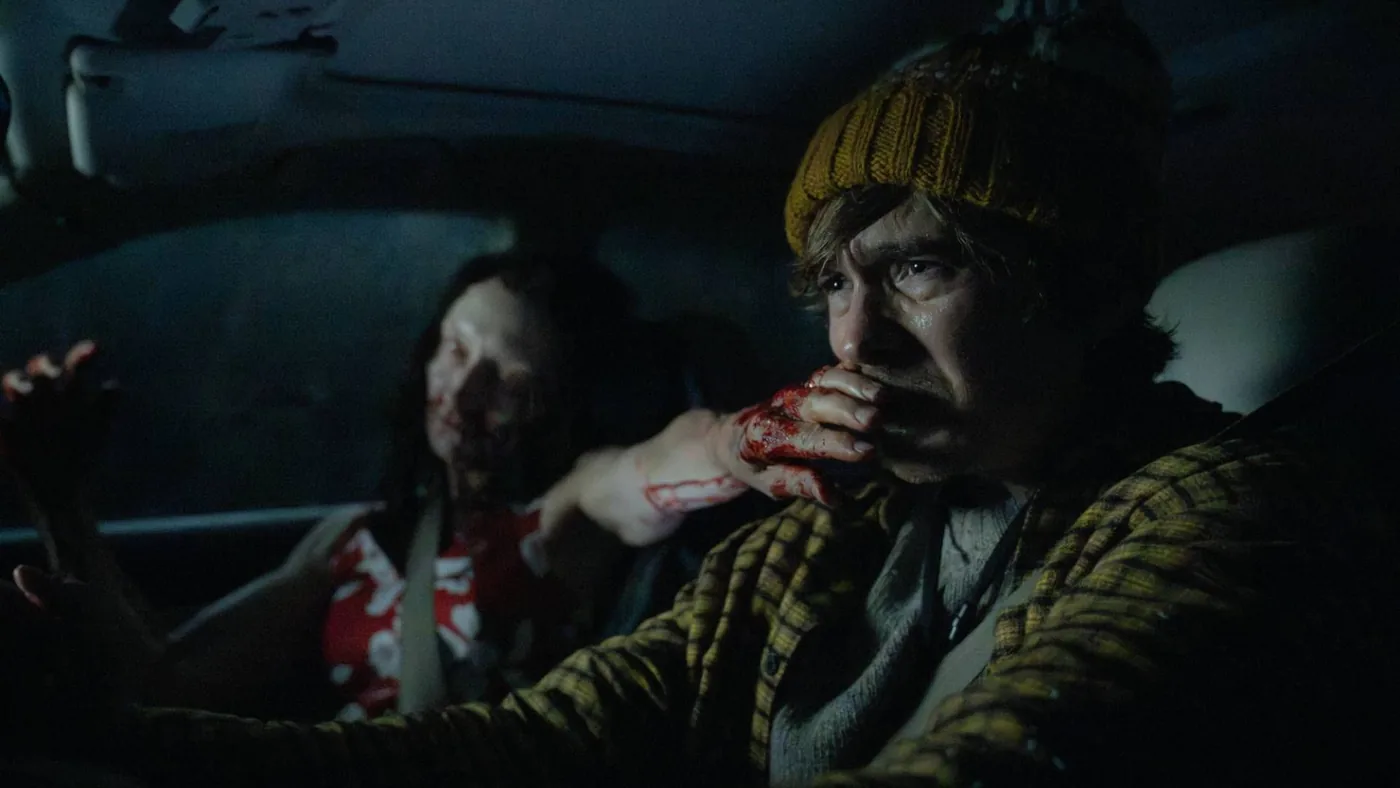
Kotaku’s Lewis Parker approaches the decision from the games. He cites Leon Kennedy’s quips as an example of the series’ goofy streak and argues that Cregger’s mix of comedy and horror makes him a plausible fit. Parker offers a critical opinion; he does not report a test-audience verdict on fidelity to the games. The objection Cregger recounts concerns the amount of humor in his film. [2]

A Delivery Into Raccoon City
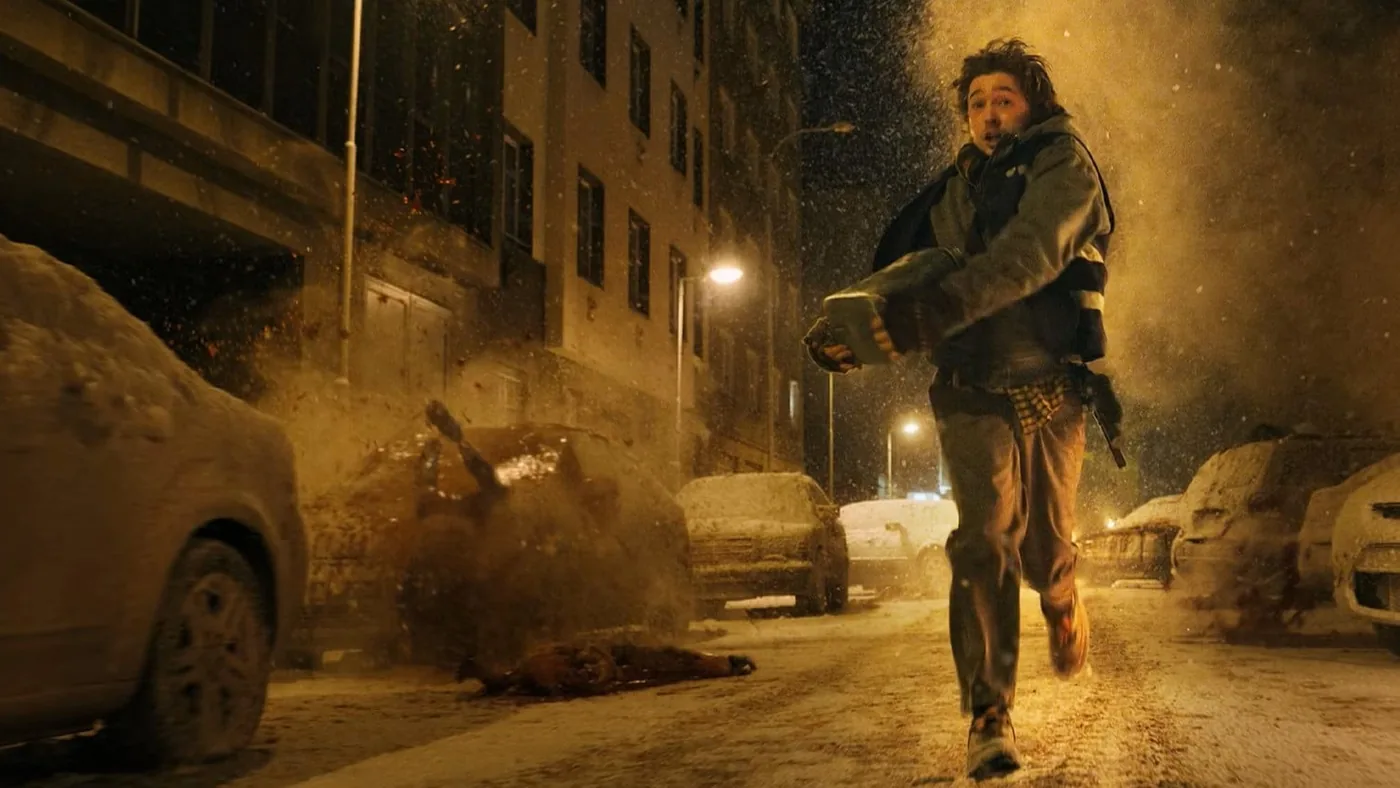
Abrams plays a medical courier making a delivery to Raccoon City General Hospital when an outbreak forces him to fight for his life, according to GamesRadar+’s synopsis. A work assignment becomes a survival story. The report identifies Abrams through Euphoria and Weapons, while naming Zach Cherry, Kali Reis and Paul Walter Hauser among the cast. It does not identify their characters or explain how they intersect with the courier’s route. [1]
Shay Hatten co-wrote the screenplay with Cregger. GamesRadar+ describes Hatten as a frequent Zack Snyder collaborator, but does not attribute individual scenes or jokes to either writer. The screenplay credit does not identify who wrote the deleted material. Cregger speaks about taking jokes out during testing; neither account says that Hatten rewrote the film in response or that the production returned to shoot replacement scenes. [1, 2]
Cregger’s courier supplies a concrete starting point for the adaptation: someone arrives to do a job and encounters an outbreak. How much comic relief survives around that premise? GamesRadar+ describes the trailers as leaning toward scares, though a trailer cannot establish which jokes remained in the theatrical edit or show exactly how the earlier screenings played. [1]
What the Screenings Actually Establish
GamesRadar+ and Kotaku both carry Cregger’s account of his interview with The Hollywood Reporter. Kotaku notes that it encountered the remarks through PC Gamer. Both reports trace the audience response to Cregger himself. Neither publishes audience questionnaires, a breakdown of responses or an independent comparison of the cuts. The Resident Evil director says viewers enjoyed the changed version more, and the supplied reporting supports attributing that assessment to him; it cannot establish how every viewer reacted, which change made the largest difference or how the broader release audience will respond. A screening response and a published review also answer different questions. [1, 2]
Kotaku’s Parker ultimately backs Cregger’s judgment. GamesRadar+’s Lauren Milici connects the humor to his earlier career. Neither article presents a scored review of the completed film, so their coverage cannot support a verdict that the adaptation succeeds or fails. For a separate example of coverage built around critics’ judgments, PerEXP Teamworks examines the divided reviews of Marvel’s Wolverine. Here, Cregger is explaining a decision made before the wider audience weighs in. [1, 2]
The Missing Jokes Remain Unnamed
Parker raises one possible avenue for comparison: a purported Resident Evil script that he says leaked in March. He wants to see which jokes survived into the finished movie. The supplied reports do not authenticate that script or compare its contents with the theatrical cut, so it cannot establish a list of deleted scenes. A difference between a circulating screenplay and a released movie would still need evidence connecting it to the testing Cregger describes. [2]
Cregger names no discarded punchline. He gives no example of a moment where a joke interrupted a scare, and the reports do not say whether any removed material will appear in a later release. His remarks leave a narrower, practical question open: where did he decide the film needed to keep its tension? Answering that would require the actual scenes or a more detailed explanation from the filmmaker. [1, 2]
The Resident Evil director has described his choice and his satisfaction with it. Audiences will judge the surviving mix when they see the film, while anyone trying to reconstruct the earlier comedy-heavy version still lacks the crucial material: the jokes Cregger actually cut. [1, 2]
- ONLINE NEWS Milici, L. (2026, September 11). Resident Evil director says test audiences thought the movie was “too funny,” so he toned down the humor: “There’s not a single joke I took out of this movie that I miss.” GamesRadar+. [Article Link]
- ONLINE NEWS Parker, L. (2026, September 11). Resident Evil director ‘stripped out’ jokes because it was ‘too funny.’ Kotaku. [Article Link]


1 comment