





Federal immigration authorities detained Princeton University researcher Eva Yi Xie while she was traveling back to New Jersey from an academic conference in Washington, D.C. [1]. Xie, a third-year doctoral student in neuroscience, was taken into custody on Thursday by Immigration and Customs Enforcement after presenting her research at the annual gathering of the Society for Neuroscience. The detention news spread rapidly through academic circles on Friday morning, raising immediate distress among foreign scholars and graduate researchers who rely on domestic travel to share experimental findings. Her arrest brought renewed attention to the legal vulnerabilities facing non-citizen academics at American universities during a period of heightened immigration enforcement.
Detention of Eva Yi Xie
Xie traveled to Washington earlier in the week to present her experimental findings at the annual convention. Federal agents detained her on Thursday during her journey home [1]. She was returning to New Jersey. The situation became public when her mentor posted about the detention on social media on Friday morning, prompting immediate disbelief among researchers who had spoken with her only days earlier in Washington.
Princeton University administrators reacted swiftly to the development by securing legal counsel to assist with her case. Rodney D. Priestley, the dean of Princeton University’s graduate school, addressed the campus community in an official message expressing deep concern over the event. “News of Eva’s detention is distressing for me and many members of the Princeton University community,” Priestley wrote in his statement [1]. He stated that Princeton had secured legal counsel for her defense, adding: “We hope Eva will soon be able to resume her studies at Princeton.” Immigration authorities gave no reason for the stop. Officials at ICE did not respond to requests for comment regarding the specific grounds for taking the graduate student into custody.

Legal Status and Asylum Claim
Xie moved from China to the United States in 2016 to complete her undergraduate studies before entering graduate school. Although she has resided in the country for a decade, her student visa had expired prior to her travel, according to reporting by The New York Times [1]. However, her legal representatives stated that she was authorized to remain in the country because she has an active asylum application pending with federal authorities. Her petition remains unresolved. Under United States immigration law, an individual with a pending asylum claim is permitted to stay in the country lawfully while the case proceeds through review.
Holding a pending asylum petition with an expired visa creates a complex legal standing during domestic travel checks. While asylum applicants hold lawful permission to remain inside the United States, enforcement agents at transit hubs often question travelers who lack active student visas [1]. Foreign scholars often assume that travel between American cities carries little danger compared to crossing international borders. The detention proved otherwise. Princeton attorneys are working to secure Xie’s release by presenting documentation of her lawful pending status to immigration officials.
Laboratory Work at Princeton
In the laboratory, Eva Yi Xie investigates how mammalian brains make decisions. She combines animal surgery with machine learning algorithms to build computational models of neural circuits [1]. Her experimental work involves recording neural firing patterns from mice as they carry out structured behavioral tasks. By collecting and analyzing massive datasets of neural recordings, she maps how different areas of the brain exchange information to evaluate choices. The work is demanding. Colleagues regard her as a rising talent because she masters both wet-lab surgical techniques and complex computational code. Her adviser, computer scientist Benjamin Eysenbach, pointed out that very few researchers bridge those two disciplines successfully.
Eysenbach explained that Xie’s interdisciplinary skill set sets her apart from most graduate researchers in the department. “I think it speaks to how exceptional of a researcher Eva is that she can work on projects that really span multiple disciplines, that require that she go and learn the foundations, not just of AI and machine learning, and not just computational models of the brain, but also understanding how do you run the experiment on the mice,” Eysenbach said [1]. “She’s in the lab actually doing the surgery on the mice, gathering the data from the mice, analyzing those data, and running the AI experiments.” Performing cranial surgery on mice and writing machine learning pipelines are rarely mastered by the same person. Her work unites both skill sets into one coherent program.
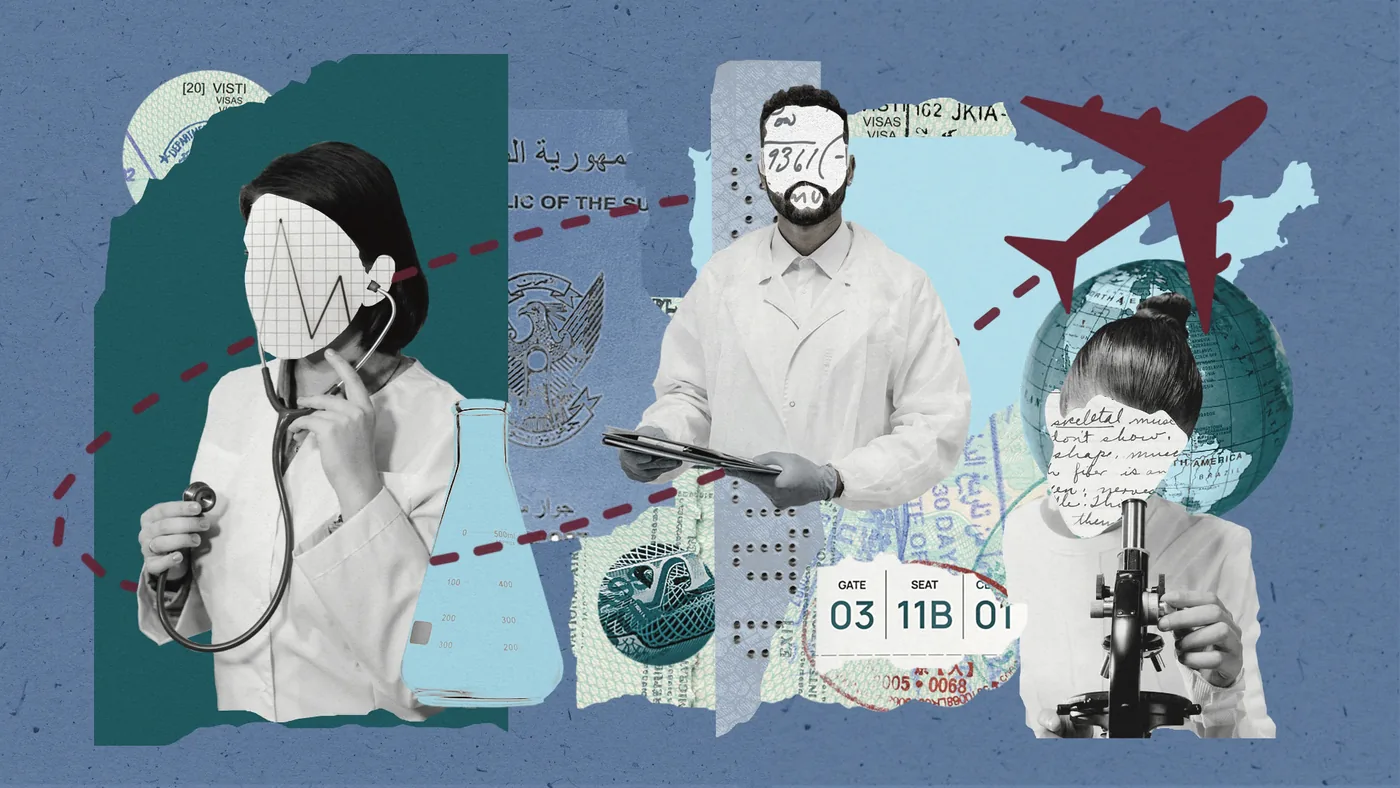


Mentorship and Research of Eva Yi Xie
Beyond her primary research projects, Eva Yi Xie organized scientific events that brought separate research communities into dialogue. At last year’s NeurIPS meeting, one of the premier conferences in machine learning, she convened a workshop connecting computational scientists with neurobiologists [1]. Xie gave presentations on her own research while moderating discussions between scholars from both fields. The goal was to explore how modern artificial intelligence methods could help neuroscientists interpret complex neural measurements. Eysenbach noted that the event allowed researchers to “introduce these important questions about the brain to folks in AI that might be equipped with new methods, and to help folks working on neuroscience questions define what are the right AI tools.”
Her influence also reached younger scientists through direct mentorship and academic guidance. Krithik Ramesh, a fellow researcher, first met Xie at high school science fairs before seeking her advice when deciding whether to transfer to the Massachusetts Institute of Technology (MIT), where she had earned her undergraduate degree. Ramesh learned about her detention from social media. He felt disbelief [1]. “We academics exist for the benefit of the public,” Ramesh said. “We are very privileged as a country to have people like Eva continue to pursue academia at the highest level, and to share that with other people.” “That’s literally the nature and reason why we go to conferences to present stuff.” “It is appalling to me that she cannot do that with reasonable certainty that she can’t be detained.”
Federal Scrutiny of Foreign Scholars
The arrest took place amid a broader federal effort to reduce the number of foreign-born graduate students studying in the United States. Under the second Trump administration, federal officials have placed stricter controls on student visas and immigration enforcement [1]. In an official science blueprint released earlier this year, the White House framed the presence of international scholars as a strategic concern. The administration document asserted: “America’s over-reliance on foreign students also creates a security challenge.” That explicit policy stance signaled a shift in how federal agencies view foreign researchers working in domestic laboratories.
Xie is not the only graduate student detained by immigration officers during this enforcement wave. Last year, Tufts University researcher Rumeysa Ozturk was detained by ICE in Cambridge, Massachusetts, and subsequently chose to leave the United States [1]. The experience altered her career. A report released earlier this week found that international graduate student enrollment at academic medical centers has fallen by a third, showing how quickly policy shifts alter institutional demographics across the country.
Travel Risks for International Students
The enforcement measures have created deep hesitation among international scholars who need to travel for their scientific work. Academic progress relies on attending conferences where researchers present fresh data, debate interpretations, and build professional connections with other institutions. Caitlin Rivers, an academic at Johns Hopkins, warned that travel detentions jeopardize that core academic function [1]. Rivers noted that one of her own staff members was detained by ICE earlier this year. “There’s, I think, an open question about whether or not it’s safe for people who are international students on visas to travel, because there have been these detentions, and that’s a very scary prospect,” Rivers said.
The growing fear of detention has started to affect attendance at major scientific meetings held within the United States. Over the past two years, several domestic conferences have recorded lower attendance numbers, while some organizers have weighed whether to relocate future events to other countries [1]. The detention of Eva Yi Xie brought those quiet discussions into sharp relief across university campuses. For graduate programs that depend on global talent, the prospect that researchers could be stopped on their way home from a routine conference poses an urgent challenge to open scientific collaboration.
- ONLINE NEWS Oza, A. (2026, November 20). ICE detention of Princeton scientist rattles academia. STAT. [Article Link]
APA 7: PerEXP Teamworks. (2026, November 22). Princeton Neuroscientist Eva Yi Xie Detained by ICE. PerEXP Teamworks. https://perexpteamworks.com/en/eva-yi-xie-detained-ice/


