



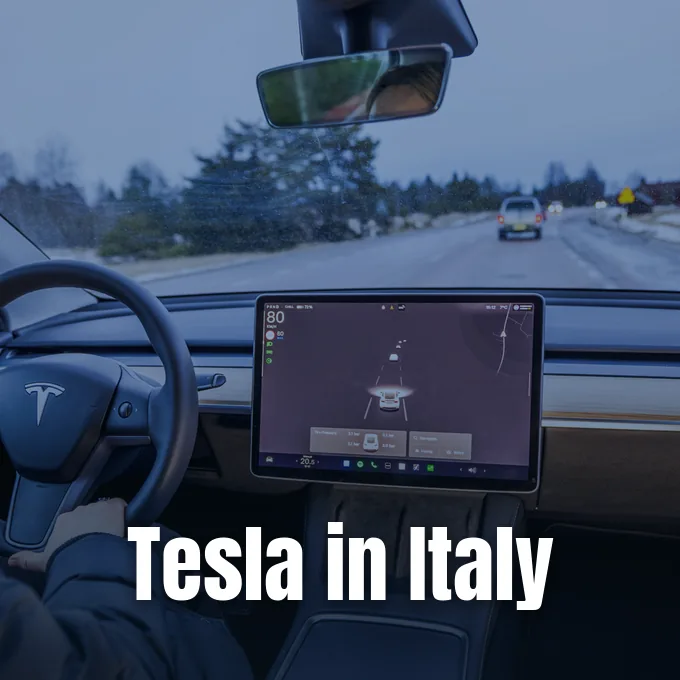
Italy gave provisional approval to Tesla Assisted Driving on Friday, making the country the first large European Union economy to clear the system for public travel [2]. Transport Minister Matteo Salvini announced the clearance on social media platform X after a technical feasibility review [1]. The decision allows Tesla to deploy its supervised platform across Italian highways before an upcoming European Union vote, with drivers paying 99 euros ($109) per month on a subscription plan to use the Level 2 system [2].
Tesla Assisted Driving in Italy
Tesla Europe shared the news online by posting video footage of a vehicle navigating through Rome near the Coliseum [1]. Rollout begins soon. Drivers in Italy who purchased HW4 computers can now prepare to activate features they bought years ago [3].
Matteo Salvini, who serves as deputy prime minister and leads the Ministry of Infrastructure and Transport (MIT), said on X that the green light arrived after a timely review of technical feasibility [1]. Political support formed in April when Senator Carlo Calenda urged MIT to prioritize testing. On October 29, Salvini held a constructive telephone discussion with Elon Musk regarding automotive technology. Three weeks later, Salvini granted national clearance [3]. The move bypassed pending deliberations in Brussels, establishing an active user footprint in southern Europe ahead of collective European Union ballots [1]. Italian transport leaders opted to test the system directly on regional motorways rather than wait for continental consensus [3].
Italy now ranks as the 12th European nation to authorize the driver-assist package on its territory, marking Rome as the first heavy automotive market in the European Union to grant clearance. Matteo Salvini wanted to move early. Matteo Salvini pointed out that his ministry acted because bloc-level recognition rules remain unfinished, giving Tesla a Mediterranean testing base where road conditions test automated steering on coastal motorways [3].
The Dutch Regulatory Precedent
Tesla opened its European pathway in the Netherlands when the RDW vehicle authority granted provisional clearance on April 10. Dutch regulators acted under Article 39 of the European Union type-approval regulation. That rule allows an individual member state to authorize innovative vehicle systems locally, letting other governments review technical findings and adopt identical standards for domestic travel without waiting for Brussels. RDW inspectors spent months reviewing vehicle logs before concluding that the driver monitoring architecture satisfied European safety parameters. Once Amsterdam signed the clearance certificate, regulatory doors unlocked in neighboring European markets interested in automated travel [3].
Ten European governments recognized the Dutch approval before Italy acted. Belgium, Croatia, Czechia, Denmark, Estonia, Finland, Latvia, Lithuania, Slovakia, and Slovenia adopted the Dutch findings in rapid sequence. Together with the Netherlands, those eleven nations represent roughly 70 million people, or about 15% of the European Union population [3].
Italian adoption adds roughly 59 million people to the territory where the system can operate legally. Population share jumped immediately. That single decision nearly doubles the share of European Union residents living in approving member states, pushing coverage close to 30% of the bloc. While earlier clearances proved that Tesla met technical standards in northern and eastern Europe, Rome provides a denser testing ground with heavy traffic flow and complex highway interchanges [3].
Speed Limit Caps and Driver Monitoring
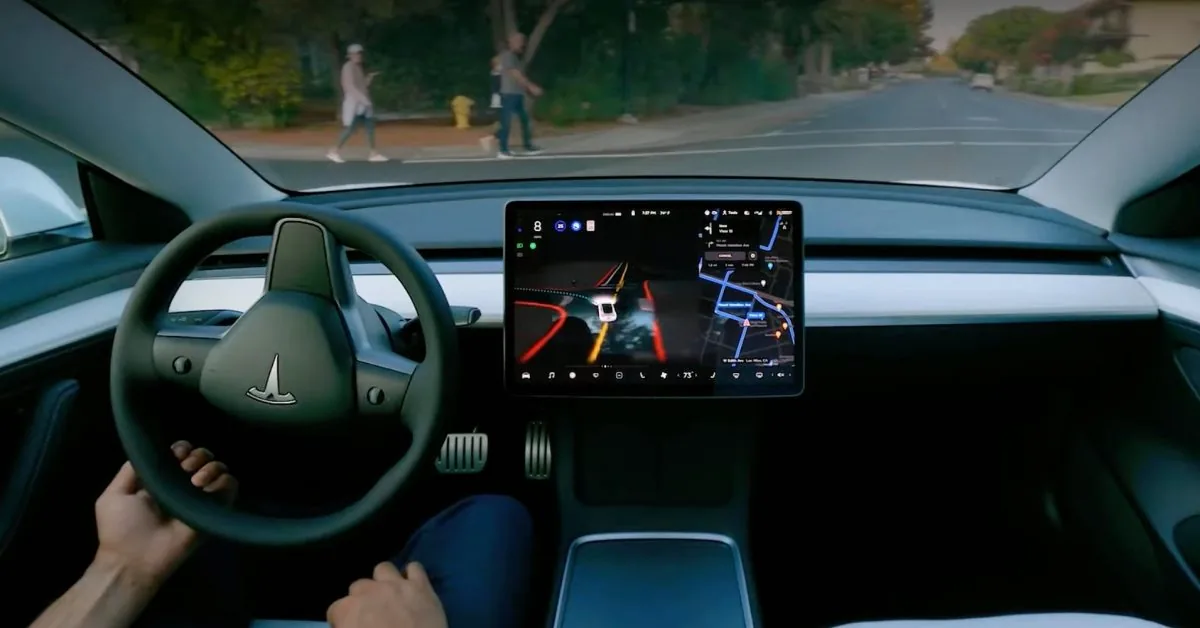
European regulators required Tesla to modify its technology before national transport ministries would approve local permits. The company previously marketed the package in the United States as Full Self-Driving Supervised, but dropped that title in Europe after Germany’s Transport Ministry called it misleading [3]. Tesla rebranded the software as Tesla Assisted Driving to clarify that human drivers must supervise every movement [1].
European road standards forbid automated systems from exceeding official speed limits under any circumstances [2]. France warned in September that earlier code builds let vehicles drift above legal limits, prompting Tesla to cut its maximum speed margin from 50% over posted signs down to 10%. Tighter rules followed. On November 16, the Dutch RDW approved driver monitoring updates that demand hands on the wheel above 130 km/h, disengaging automatically if drivers ignore visual prompts. These technical adjustments proved essential for overcoming regulatory resistance in Berlin and Rome, demonstrating that automated systems must respect firm local highway codes to earn approval [3].
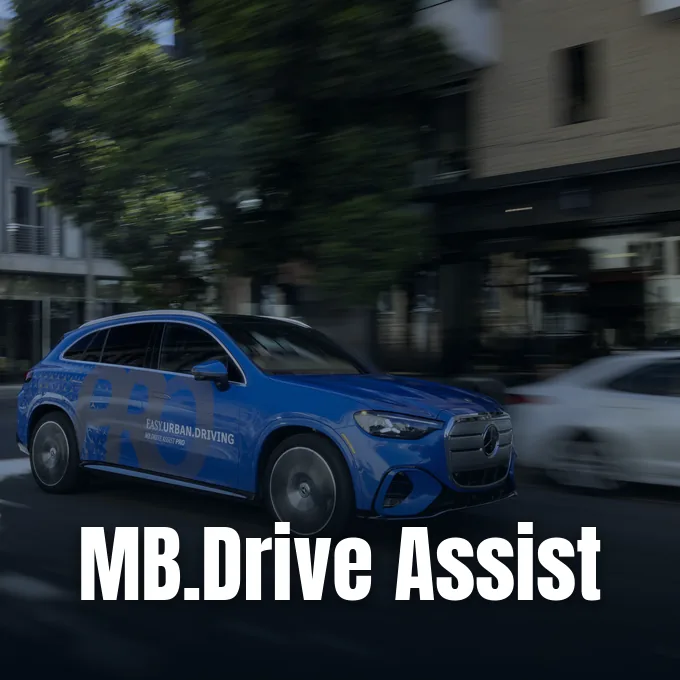
The version approved in Italy incorporates those lower speed thresholds and driver monitoring controls [3]. French regulators continue testing on local roads, though Paris has withheld national clearance [1]. German competitors like Mercedes-Benz have pushed their own automated driving software, according to Tech Xplore [2].
The Qualified Majority Threshold in Brussels
The green light from Rome arrives before a major vote in Brussels, where the European Union Technical Committee on Motor Vehicles (TCMV) evaluates automated driving rules. The committee held preliminary discussions in October but pushed its vote to December. A favorable decision would clear the system across all 27 European Union member states without requiring separate bilateral negotiations with individual transport ministries [3].
Winning bloc-wide clearance requires securing a qualified majority under European Union governance rules. Approval demands support from at least 15 of the 27 member states representing at least 65% of the total EU population. Twelve member states have approved the software nationally, yet their combined populations fall well short of that 65% threshold [3].
Germany announced in October that it would support European Union approval after Tesla agreed to rename the software and cap speed margins. German support helps. If German delegates vote alongside the twelve approving nations, the coalition covers roughly 47% of the EU population. That total leaves the proposal several percentage points short of the required threshold. Because France refused national authorization in July and Spain has not recognized the Dutch RDW decision, Tesla must win support from either Paris or Madrid to hit the 65% benchmark in December. Convincing either French or Spanish regulators represents the final hurdle for continental deployment [3].
Tesla Assisted Driving Rules and Costs
Tesla Assisted Driving operates as a Level 2 automated driving system under global vehicle standards [2]. The system steers, accelerates, brakes, and negotiates intersections, but the driver remains legally responsible for the car at all times [3]. In the United States, Elon Musk has faced regulatory scrutiny and repeated lawsuits over claims regarding vehicle autonomy [2].
Level 2 automation differs fundamentally from Level 3 technology, where human drivers can legally cede control and take their hands off the wheel under approved highway conditions. Level 3 systems shift legal liability to the car manufacturer during automated operation, whereas Level 2 leaves all legal fault with the person behind the wheel. BMW and Mercedes dropped Level 3 options early this year to prioritize hands-off driving with active supervision [2]. Tesla relies on optical cameras and neural network processing rather than lidar sensors to detect lane lines, road signs, and other vehicles [1]. Millions of vehicles in North America, Australia, New Zealand, and South Korea already use the software [2].
Italian owners who want the system will pay 99 euros ($109) each month for an in-car subscription [4]. Only vehicles equipped with Tesla HW4 computing hardware can activate the update [3]. Can the system handle chaotic traffic around Rome as easily as open motorways? Ministry inspectors plan to evaluate incident data as cars begin receiving updates in Italy [1].
- ONLINE NEWS Chen, J. (2026, November 21). Tesla’s assisted driving system gets the green light for rollout in Italy. Engadget. [Article Link]
- ONLINE NEWS Zinin, A. (2026, November 20). Italy gives green light to Tesla’s assisted driving system. Tech Xplore. [Article Link]
- ONLINE NEWS Lambert, F. (2026, November 20). Tesla FSD approved in Italy, the first big EU market to say yes. Electrek. [Article Link]
- ONLINE NEWS Agence France-Presse. (2026, November 21). Italy gives green light to Tesla’s assisted driving system. The Local Italy. [Article Link]


