





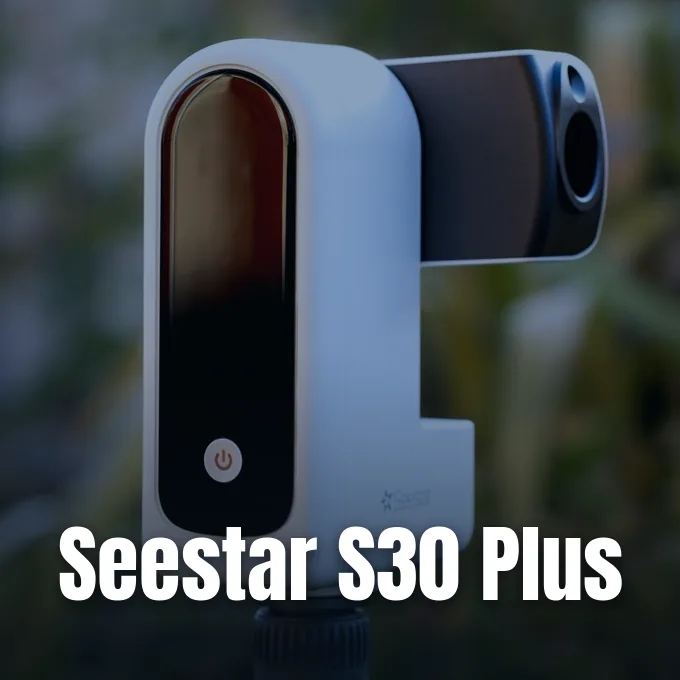
ZWO introduced the Seestar S30 Plus smart telescope on November 10, setting its base retail price at $499 with an introductory launch discount of $474 on Amazon and the official ZWO store. Company founder Sam Wen designed the compact unit to replace the discontinued original Seestar S30 and lower cost barriers for newcomers exploring astrophotography. By pairing automated plate solving and motorized tracking with dual sensors inside a portable chassis, the unit lets observers image deep-sky objects from city backyards without assembling separate telescope mounts [1].
Seestar S30 Plus Pricing and Hardware
The new telescope enters the market at $499, undercutting the higher-tier Seestar S30 Pro by $200. That price cut makes the Seestar S30 Plus the cheapest smart telescope in the current ZWO catalog, arriving after the 4K Seestar S30 Pro and Seestar S50 Pro releases. In an official announcement, founder Sam Wen said the release aims to help hesitant beginners enter the hobby. “With S30 Plus, we wanted to give beginners more room to explore and create without taking away the simplicity that makes Seestar easy to start with,” Wen said [1].
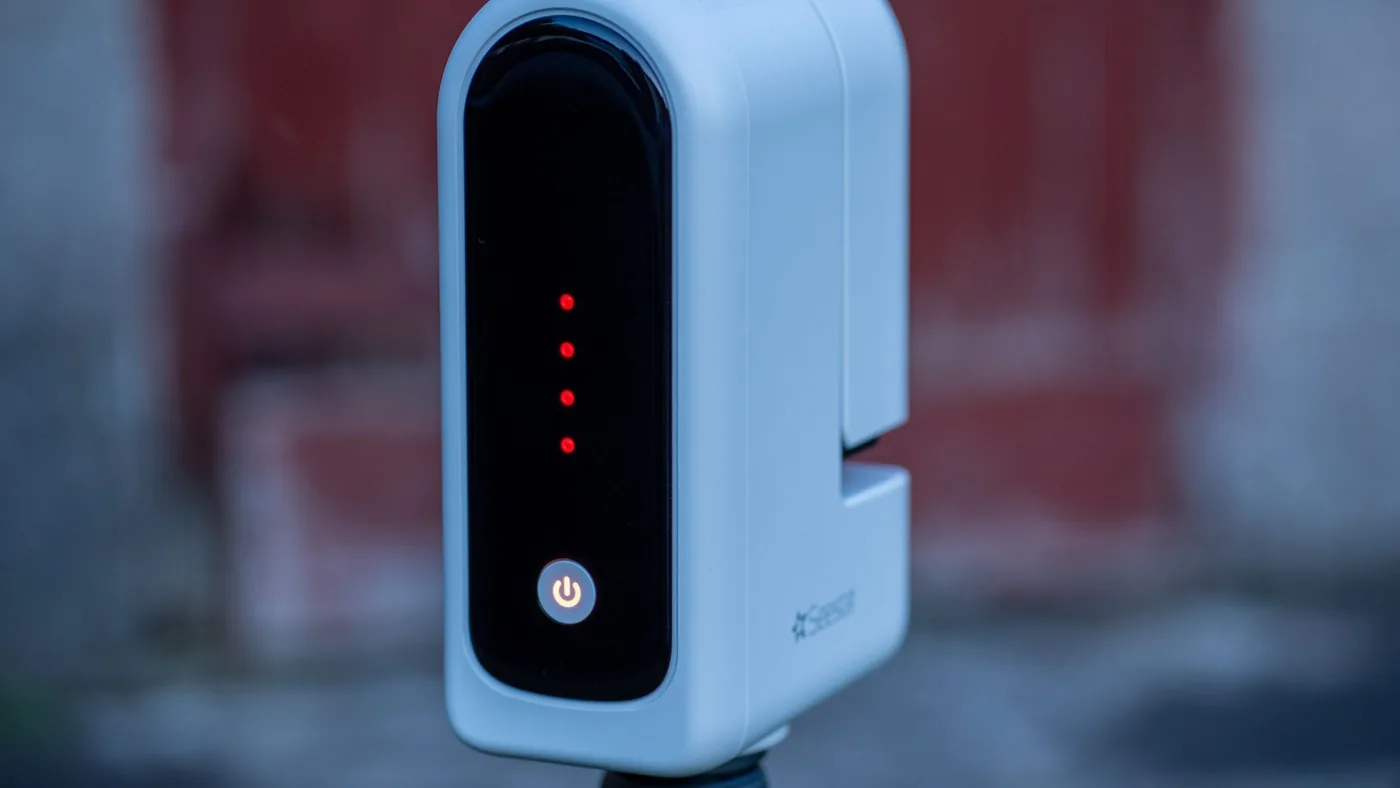
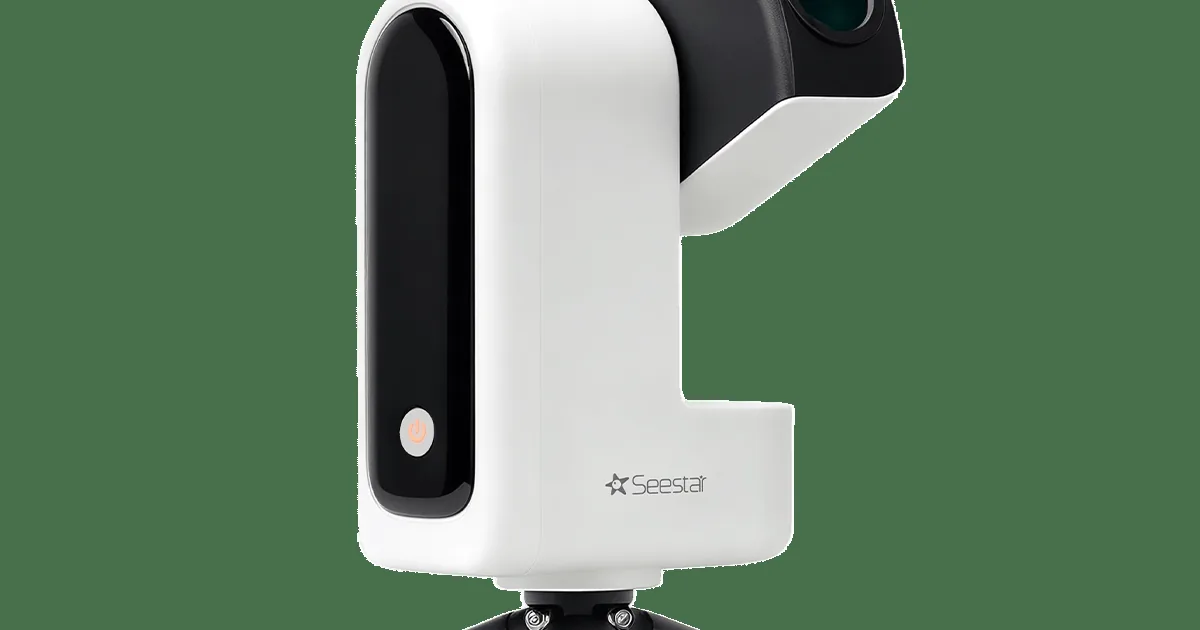
The optical tube assembly weighs 3.64 pounds (1.65 kg) and measures 8.25 by 5.5 by 3.15 inches (210 by 140 by 80 mm) when powered down for transport [2]. Reviewer Kimberley Lane at Live Science tested the complete retail package, reporting that the telescope body, padded carrying case, tabletop tripod, and bundled accessories together weigh 4.89 pounds (2.22 kg) on her scale. The matte white body retains a single physical power button with an uncovered side USB-C port, which Lane said remains vulnerable to outdoor dust and moisture. An integrated anti-dew heater stops optics from fogging up during humid sessions, which Lane monitored using the Clear Outside weather app [4].
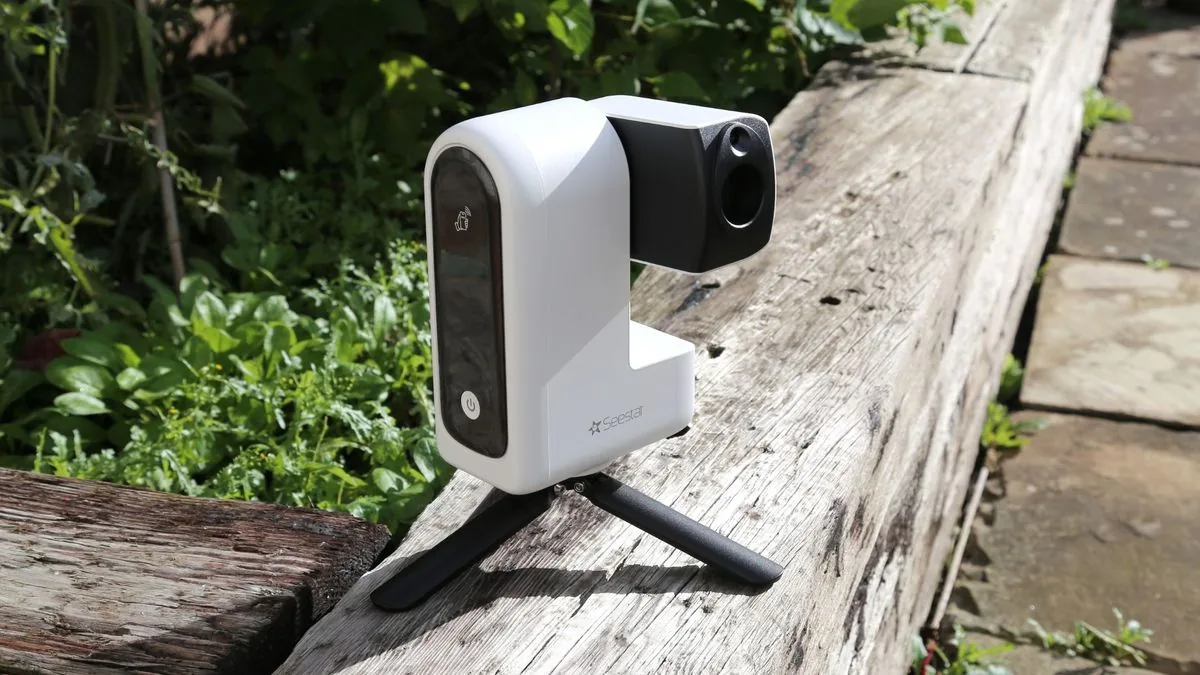
Power comes from an internal 6,000mAh lithium battery that runs for about six hours during night observation sessions [2]. Turning the power switch on produces a double beep. Four red LED indicator dots on the front panel display charge status, with four illuminated dots confirming a full battery. The retail box contains a compact tabletop tripod, a padded carrying case with a handle, a magnetic solar filter, and a 40-inch USB-A to USB-C charging cable [4].
Dual Camera Optical Specs
The primary optical tube uses a 30 mm (1.2-inch) aperture with a 160 mm focal length behind a four-element apochromatic objective lens containing extra-low dispersion (ED) glass. This multi-element glass assembly curbs color fringing, focusing starlight directly onto a 1/1.8-inch SmartSens SC485SL sensor on the telephoto side. Both onboard cameras capture frames at 1440 by 2560 pixels, delivering 3.7 megapixels per shot. That resolution surpasses the 2.1 megapixels of the retired Seestar S30, but stays below the 8.3-megapixel 4K output on the Seestar S30 Pro [1].
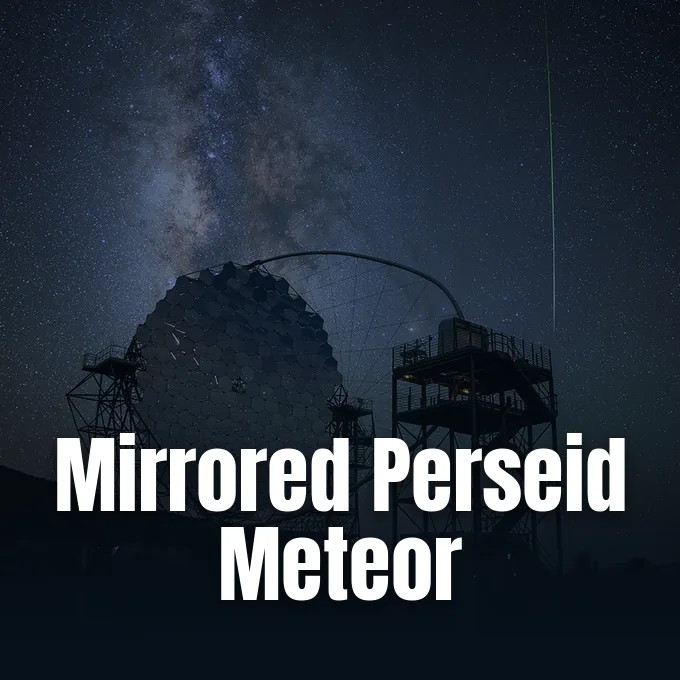
Sensor dimensions govern field coverage across the night sky. Because the telephoto sensor retains 2.9-micrometer pixels, fine image detail matches the Seestar S30 Pro despite the smaller total chip area. The telephoto system delivers a 3-degree field of view, leaving generous room to frame deep-sky targets like the Pleiades (M45), the Orion Nebula, the Rosette Nebula, and the full Moon. The secondary wide-angle camera employs a 1/2-inch Sony IMX586 sensor behind a 6 mm, f/1.75 lens, cropped to 2K resolution to cover 43.5 degrees of sky. That wide window lets observers capture constellations, Perseid meteor streaks, and broad Milky Way star fields [1].
Lower production cost introduces specific hardware limits compared to higher-end models. Onboard storage drops to 64 GB, which holds thousands of raw exposures but fills up on extended camping trips. Hardware limits also prevent the system from exposing both cameras simultaneously, meaning stargazers cannot stack deep-sky data on the telephoto chip while recording wide nightscapes on the secondary sensor. The wide lens also omits automatic Milky Way panorama stitching, though telephoto mosaic stitching remains fully functional [1].
How the Automated Imaging System Operates
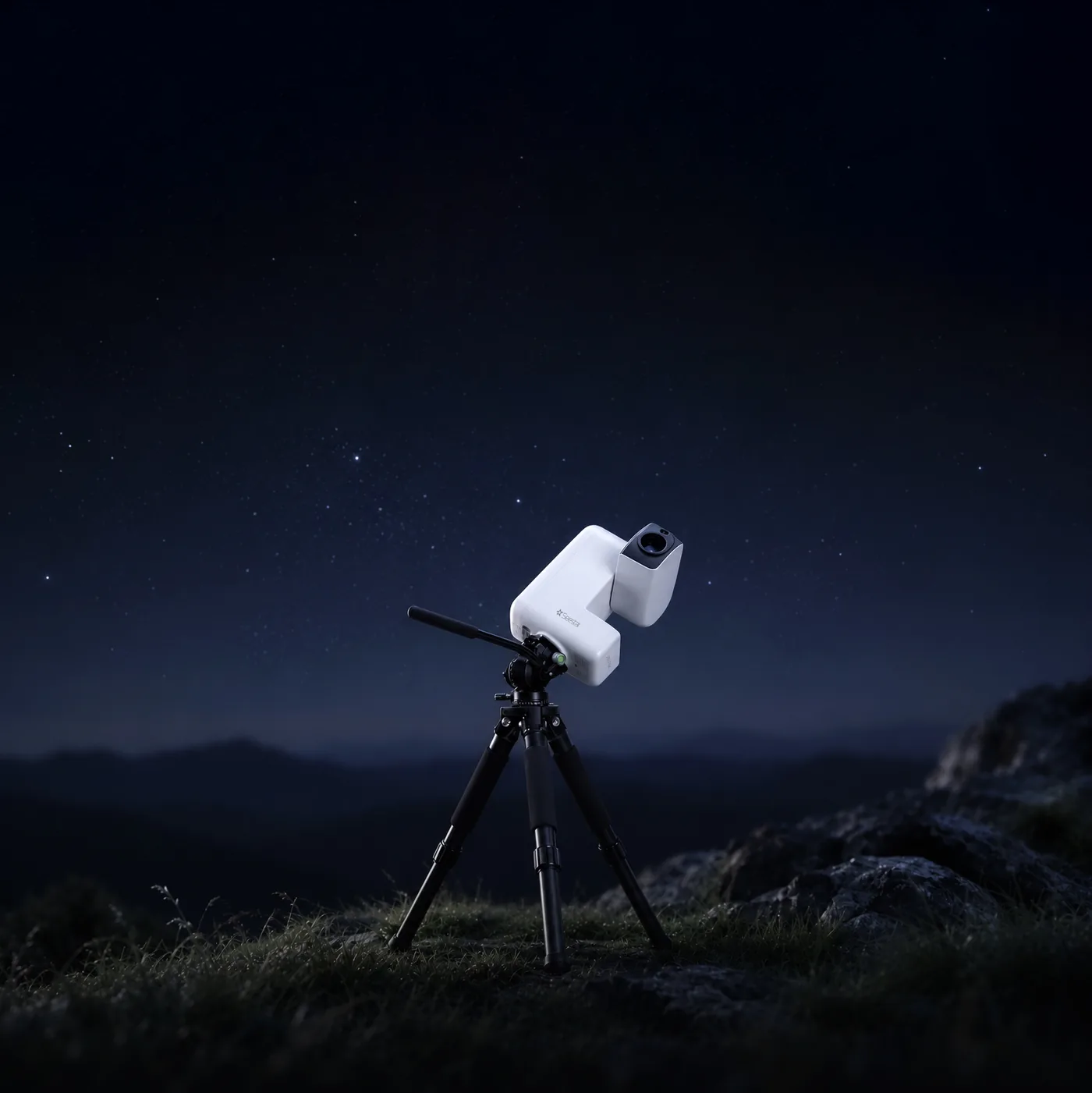
The telescope operates wirelessly through the Seestar mobile app on iOS and Android devices, eliminating cables, counterweights, and manual polar alignment scopes. Once powered on and connected via Wi-Fi, internal motors align the optical axis against visible stars through automated plate solving [1]. Stargazers can select targets from an interactive sky atlas or browse suggested objects in the Tonight’s Best menu, prompting the motorized mount to slew toward celestial coordinates and center the object in minutes [4].
Gears guide the altitude-azimuth mount to track targets across the sky and counteract Earth’s axial rotation. The capture software starts live stacking, combining short exposures to cut image noise as faint nebular gas appears on the phone screen [2]. Integrated optical filters assist suburban stargazers by blocking unwanted city lighting without requiring physical filter wheels [1]. A dual-band filter isolates hydrogen and oxygen emission lines, and a UV/IR-cut filter blocks infrared light to keep star shapes tight and clean [2].

Post-processing controls inside the Seestar app let users edit photos directly on their mobile screens. The AI Enhance panel lets users adjust color saturation, tweak RGB contrast curves, reduce star sizes, and eliminate artificial satellite streaks across completed stacks [4]. For advanced hobbyists who prefer desktop workflows, the telescope exports raw, lossless FITS files with JPEG stills and MP4 or AVI video clips [1]. Jamie Carter at Space.com showed that mounting the telescope on a Seestar TH10 Fluid Tripod Head and TC20 tripod enables equatorial tracking. Carter tested the equatorial setup at 51 degrees north. That alignment prevents field rotation during extended runs, keeping star edges sharp across long integration sessions [2].
Field Testing the Seestar S30 Plus on Deep-Sky Targets
Field tests show how automated exposure stacking pulls faint celestial details out of suburban skies. Testing under Bortle 4 conditions before moonrise, Kimberley Lane aimed at the Pleiades open cluster (M45) and recorded blue reflection dust around the stars after 15 minutes of integration. Extending the run to 60 minutes yielded an image with clear dust trails surrounding the cluster stars [4].
Observations of the Andromeda Galaxy (M31) demonstrated how passing clouds impact live image stacking. Lane tracked Andromeda for 57 minutes before dense cloud cover interfered with individual frames, prompting the software to reject obscured sub-exposures. Lane stopped tracking at 57 minutes. Even with that weather interruption, the final image showed dark dust lanes running through Andromeda’s outer spiral arms [4]. Astronomy Magazine published an extended 140-minute photograph of M31 taken with the Seestar S30 Plus, which framed the central galaxy with its dwarf elliptical companions M32 and M110 [1].
Extended emission nebulas take full advantage of the 160 mm focal length. Lane imaged the Eastern Veil Nebula in 15 minutes of live stacking, picking up ionized red hydrogen and turquoise oxygen emissions with clean automated tracking [4]. Jamie Carter tested the telescope on the Dumbbell Nebula (M27) and the North America Nebula (NGC 7000), capturing rich colors from city skies. Carter also targeted the Double Cluster in Perseus (NGC 869 and NGC 884) and the Great Globular Cluster in Hercules (M13), recording pinpoint stars across both clusters. These trials confirm that testing how the Seestar S30 Plus handles cosmic dust produces steady results under transparent night skies [2].
Planetary Observation Limits
Basic optical physics limits what the telescope can show on planets, even though deep-sky targets look sharp. The modest 30 mm aperture and short 160 mm focal length cannot generate the high magnification needed to split Saturn’s rings or resolve distinct cloud belts on Jupiter. Planetary discs appear small on screen. Both Carter and Lane said stargazers focused primarily on solar system targets should pick traditional telescopes with longer focal lengths [2, 4]. Lane tested the Helix Nebula after previously testing the Cocoon Nebula and Dumbbell Nebula on the Seestar S30 Pro, finding that the Helix appeared as a tiny disc after 27 minutes of stacking [4].
Solar imaging offers an easy daytime application thanks to the included magnetic white-light solar filter [1]. Snapping the filter over the front objective lens allows safe observation of sunspots and active magnetic regions across the solar photosphere. Carter also tested the telescope during daytime hours by pointing at a near-full Moon against a bright blue sky, reporting that manual app slewing helped find the lunar disc when plate solving lacked guide stars. Once centered, the motor kept the Moon steady in the frame [2].
Outdoor environmental factors still shape image quality despite digital assistance. The chassis lacks an active cooling fan on the image sensor, so thermal noise can increase on warm summer evenings, though short individual sub-exposures keep background noise manageable [2]. High humidity also demands caution in the field. The internal anti-dew heater kept optical glass clear during Lane’s testing, but heavy coastal dew can still coat the exterior casing [4]. Carrying a portable USB power bank keeps the heating elements operating without draining the internal battery cell [2].
Comparing the Model to Rival Smart Telescopes
The telescope occupies a distinct position in a rapidly expanding consumer market. In ZWO’s catalog, the Seestar S30 Plus costs $200 less than the Seestar S30 Pro and less than half the price of the flagship $999 Seestar S50 Pro [1, 2]. The Seestar S50 Pro pulls in three times more light with its 50 mm aperture and 8.3-megapixel sensor, but it weighs 6.17 pounds (2.8 kg) and takes up far more room in luggage. External rivals feature different compromises. DwarfLab sells the smaller DwarfLab Dwarf Mini at an entry price, while the larger DwarfLab Draco smart telescope retails for $1,299 with a 3.5-inch (90 mm) aperture for advanced stargazers. High-end instruments like the Vaonis Atlas cost $4,990 with an 80 mm aperture and will not ship until 2027, but the Unistellar Odyssey carries an electronic eyepiece at a premium price [2, 3].
Planet observers will still want larger traditional optical tubes, but this compact unit offers an accessible path into deep-sky imaging from city backyards. By combining a $499 price with dual cameras and automated exposure stacking, the Seestar S30 Plus lowers technical barriers for amateur astronomers seeking an affordable holiday gift in 2026 [1, 3]. Stargazers avoid the difficult process of balancing heavy counterweights, calculating polar alignment, and managing unstable laptop drivers in the dark. Reviewers Jamie Carter at Space.com and Kimberley Lane at Live Science concluded that ZWO created an effective entry-level tool for beginners exploring the night sky [2, 4].
- ONLINE NEWS Astronomy Staff. (2026, November 11). ZWO introduces the Seestar S30 Plus. Astronomy Magazine. [Article Link]
- ONLINE NEWS Carter, J. (2026, November 11). Why I recommend the Seestar S30 Plus smart telescope for beginners. Space.com. [Article Link]
- ONLINE NEWS Carter, J. (2026, November 10). Great astrophotography on a budget, meet the ZWO Seestar S30 Plus. Space.com. [Article Link]
- ONLINE NEWS Lane, K. (2026, November 10). ZWO Seestar S30 Plus review. Live Science. [Article Link]
APA 7: PerEXP Teamworks. (2026, November 12). ZWO Introduces Seestar S30 Plus Smart Telescope for $499. PerEXP Teamworks. https://perexpteamworks.com/en/seestar-s30-plus-smart-telescope/


