





On November 5, 2026, TikTok released a standalone shopping platform called the TikTok Shop app in Singapore, Malaysia, Thailand, and the Philippines. Social media consultant Matt Navarra first spotted listings for the software on X. The software separates retail checkout from the main social video feed, letting shoppers browse product catalogs, watch merchant livestreams, and buy items without opening the primary social network. By giving commerce its own space on the mobile home screen, ByteDance wants to capture routine purchasing habits but not rely solely on casual viewing [1].
Features in the TikTok Shop App
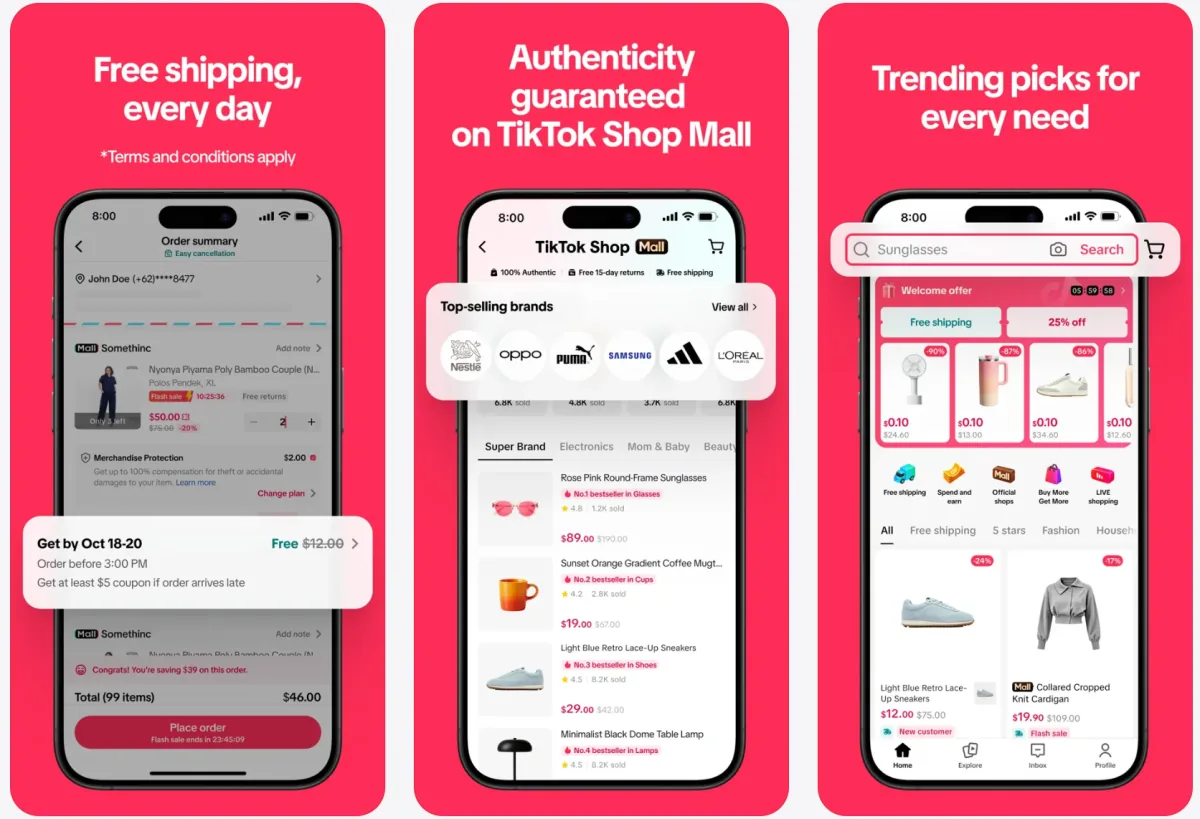
The mobile store presents personalized product recommendations based on individual user interests, while merchant demonstration clips show goods in use. Its Apple App Store listing explains that shoppers can inspect items through video feeds, track parcels from purchase to delivery, and reach 24/7 customer support [2].
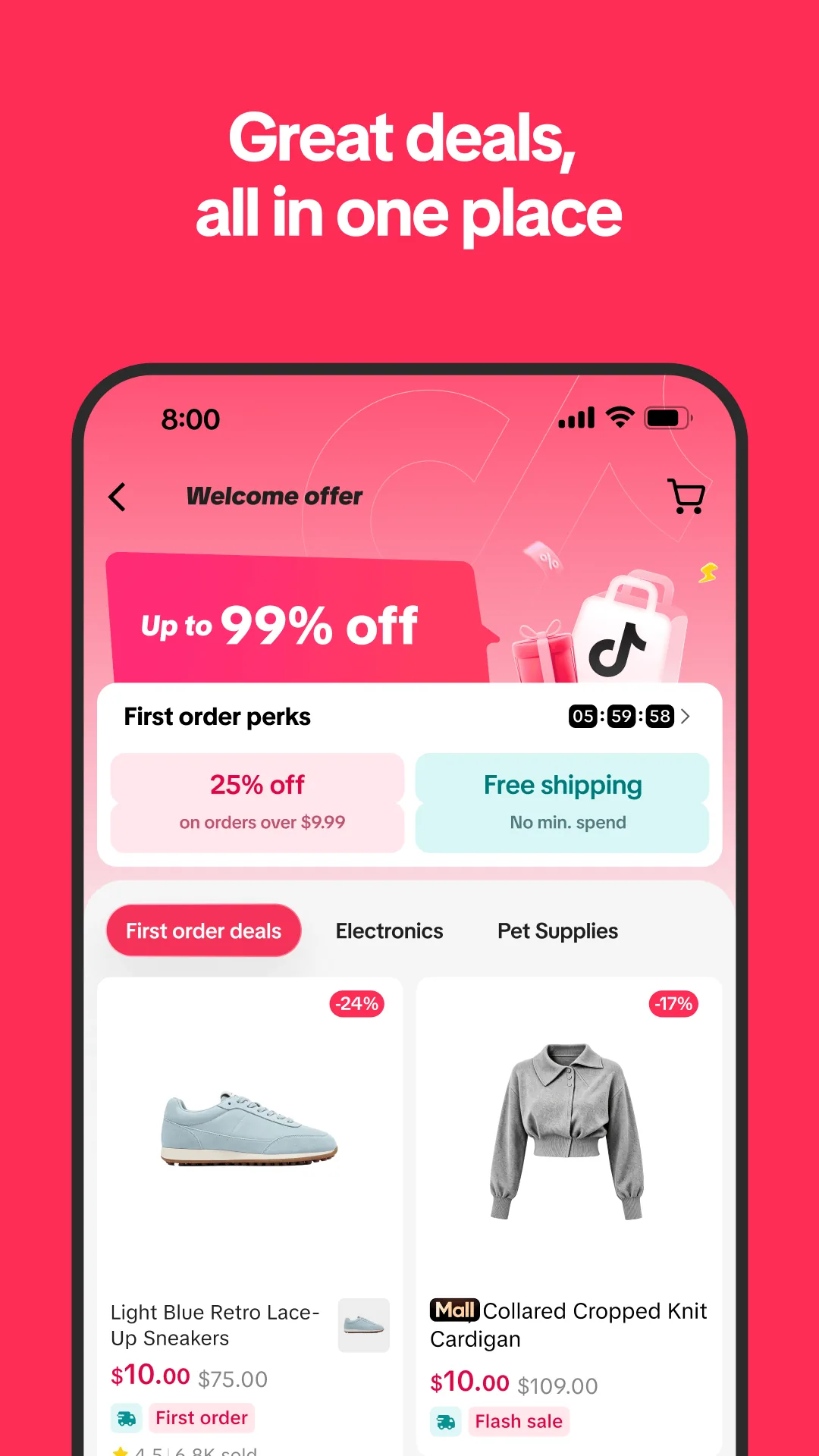
To attract early shoppers, the company offers commercial incentives that don’t appear in the main entertainment feed. New accounts receive free shipping promotions, first-order price reductions, and exclusive app vouchers that make early purchases feel economical. The software also promises “secure payments for safe checkout” to protect consumer credit cards during digital transactions. Shoppers don’t have to wait for an algorithm to surface a creator’s clip; they can simply search for household goods, apparel, or kitchen items directly through the catalog [3]. By providing dedicated transaction tools, the software encourages users to complete orders quickly instead of abandoning products during casual browsing sessions.
Impulse purchases during video scrolling can stall when users get distracted by incoming comments or fresh entertainment clips. That distinction shapes how consumers spend money. The separate setup keeps the mobile screen focused purely on commercial browsing, order management, and seller inquiries without feed interruptions [7].
Four Southeast Asian Launch Markets
The rollout focuses on four countries in Southeast Asia: Singapore, Malaysia, Thailand, and the Philippines. These four nations represent an established base where live shopping already drives routine merchant sales. Ground News reported that the shopping business generated $45.6 billion in sales before launching this software [4]. Starting in countries with proven customer demand lets ByteDance see whether buyers prefer a separate mobile portal or want to keep buying through an entertainment feed. Strong smartphone adoption and widespread digital payment usage through local banks make these Southeast Asian markets practical testing grounds for new mobile experiments before any wider international distribution. Local merchants have spent years selling beauty supplies, snacks, and clothing through live streams, giving the new storefront ready inventory to show shoppers.
Early store metrics show steady interest among mobile phone users. On Google Play, the listing passed 50,000 downloads, while the Singapore Apple App Store ranked the app at No. 71 in its shopping category [5]. The software received an update (version 45.5.5) on November 5, arriving just 13 hours after publication.
Behind the storefront is a specific corporate setup. The Singapore App Store listing names TikTok Pte. Ltd. as the provider managing international commerce. For investors watching the retail sector, Whalesbook noted that TikTok belongs to ByteDance, a privately held Chinese technology company [6]. Because ByteDance is private, its shares do not trade on public bourses like the National Stock Exchange (NSE) or the Bombay Stock Exchange (BSE). The expansion still matters to market observers because it creates new retail pressure on listed e-commerce rivals that rely heavily on consumer attention and online ad spending.

Competition with Amazon and Temu
Launching a separate store pits ByteDance into direct rivalry with retail powerhouses like Amazon and Temu. In earlier years, TikTok worked primarily as a discovery engine where users encountered products while watching casual lifestyle videos. The new storefront seeks to capture shoppers at the moment they open their phone with the intent to purchase. If the platform arrives in the United States, it will also contest big-box retailers like Walmart and Target, whose shoppers routinely order household goods through phone apps [3]. Those major American retail chains have spent years convincing customers to shop through mobile software, meaning any new competitor must deliver smooth digital checkout and reliable package fulfillment to win market share.
The move creates an interesting reversal in online retail strategies. Amazon previously rolled out a short-video feed called Inspire to draw user attention away from social networks and spark purchases on its marketplace. Now, the TikTok Shop app makes the reverse play by stripping away social feeds to build a focused storefront [7].
Competing with entrenched retail marketplaces brings practical challenges. Temu has set low price expectations that force online merchants to cut costs and speed up package deliveries. Running an independent marketplace also means managing warehouse coordination, return requests, and seller verification. Whalesbook reported that maintaining verified seller standards and everyday customer trust will require steady spending on delivery partnerships, return processing centers, and customer service teams [6]. Operating an independent shopping portal raises overhead costs compared to running a digital content feed. Low prices help, but shoppers expect reliable delivery.

Availability of the TikTok Shop App
Despite the successful launch in Southeast Asia, the standalone software does not appear in app stores in either the United States or the United Kingdom. Reporter Jay Peters of The Verge noted that searches on his American phone (iOS and Android) showed no sign of the download [2]. Representatives from TikTok declined to comment.
The gap between American and overseas releases connects to the platform’s split structure. In the United States, operations run through TikTok USDS Joint Venture, an American-led partnership tasked with overseeing local data safety, algorithms, and content moderation. Olivia Tauber of Mashable SEA reported that international commercial projects remain under TikTok Pte. Ltd. instead [5]. That organizational split means launching the TikTok Shop app in the United States requires close coordination between the American joint venture and the international business. Regulators in Washington continue to examine Chinese ownership ties, making any new consumer software launch subject to scrutiny regarding how customer records and transaction details are stored.
While American shoppers wait for news of a separate store, the primary social app has introduced other tools to test user habits. Lawrence Bonk of Engadget reported that the platform added voice comments on posts and began embedding travel reservation links directly into clips [1]. Those tools keep commercial activity inside the regular video stream for now.

Expansion Beyond the Video Feed
Building an independent shopping app fits into an ongoing effort by ByteDance to turn casual video discovery into standalone digital businesses that generate steady transaction revenue. In May 2026, the company launched TikTok GO in the United States, allowing adults to book hotels, tours, and travel activities directly through video recommendations. The tool works with booking partners like Booking.com, Expedia, and Viator, letting creators earn commissions when viewers reserve a trip. At the time of that rollout, Adam Presser, CEO of TikTok USDS Joint Venture, said the service is “good for creators, good for local businesses, and good for communities.” [5] That travel product illustrates how ByteDance aims to bridge the gap between watching a creator’s recommendation and completing a direct commercial booking.
The firm applied a similar model to dining through its Must Eat restaurant guide. Built from more than 40 million posts, reviews, and video comments, the tool organizes food recommendations into searchable lists covering New York City, Los Angeles, and the San Francisco Bay Area [5]. Diners can inspect menus and book tables through OpenTable without searching other websites. Earlier this year, the company also launched PineDrama, a standalone app built for serialized short dramas with episode recommendation tools.
These separate releases reveal how ByteDance aims to monetize habits that begin inside its short-video feed. TechCrunch reported that the company has steadily added mini-games, sports hubs, and payment experiments to expand beyond advertising revenue [3]. Giving retail its own software tests whether shoppers will open a TikTok-branded service when buying is their only goal. If consumers embrace the format, ByteDance will have turned casual browsing into an independent contender in global online retail.
- ONLINE NEWS Bonk, L. (2026, November 5). TikTok just released a standalone Shop app, but it’s not in America just yet. Engadget. [Article Link]
- ONLINE NEWS Peters, J. (2026, November 5). TikTok launched a dedicated TikTok Shop app. The Verge. [Article Link]
- ONLINE NEWS Malik, A. (2026, November 5). TikTok quietly launches a stand-alone TikTok Shop app. TechCrunch. [Article Link]
- WEBSITE Ground News. (2026, November 5). TikTok Quietly Launches a Stand-Alone TikTok Shop App. Ground News. [Article Link]
- ONLINE NEWS Tauber, O. (2026, November 5). TikTok launches standalone TikTok Shop app (in four markets). Mashable SEA. [Article Link]
- ONLINE NEWS Shah, A. (2026, November 5). TikTok Launches Standalone Shopping App in Southeast Asia. Whalesbook. [Article Link]
- WEBSITE BigGo Finance. (2026, November 5). TikTok Quietly Rolls Out Standalone Shop App in Four Southeast Asian Markets. BigGo Finance. [Article Link]


