





Holiday retail discounts have reduced the price of the Dwarflab Dwarf Mini to $339, providing an $80 price cut in time for Black Friday. The 19% markdown at major storefronts including Amazon, Best Buy, and Walmart establishes the lowest recorded price for the device since Dwarflab released it in January 2026. The instrument weighs 1.8 lbs (840 g) and pairs motorized celestial tracking with an optical assembly designed to photograph deep-sky objects and solar events. Half of the promotional stock allocated on Amazon was claimed early as holiday shoppers focused on portable skywatching gear [1].
Black Friday Discount and Availability
The seasonal promotion lowers the telescope to $339 at major online storefronts, matching prices at Amazon, Best Buy, and Walmart. Amazon shoppers claimed 50% of the retailer’s promotional allocation during the opening hours of the holiday campaign. In addition to standard sales, Space.com writers Harry Bennett and Jamie Carter reported that Space+ members could enter a prize draw to win one of two free Dwarf Mini smart telescopes on Space.com without a purchase. The contest runs parallel to seasonal technology markdowns across consumer electronics. Both Best Buy and Walmart maintain identical $339 promotional pricing for holiday shoppers [1].
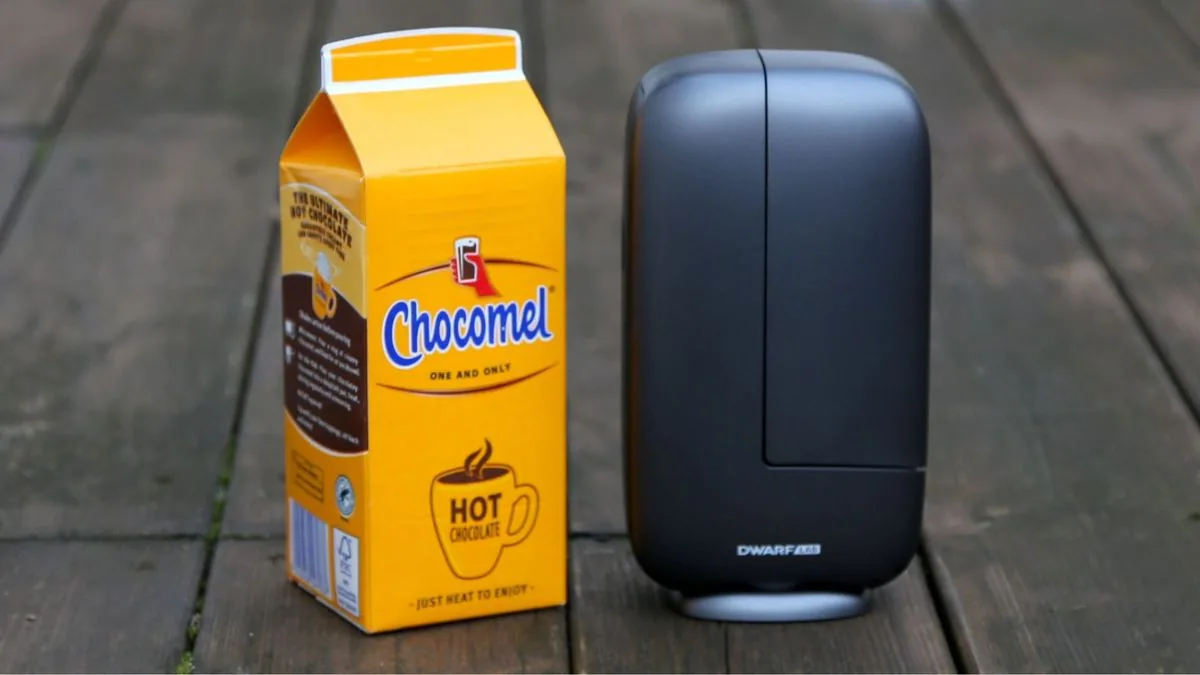
Heavy gear often discourages casual skywatching. Traditional telescope assemblies demand heavy counterweights, manual polar alignment, and separate optical tubes that complicate observation trips in suburban yards or remote travel destinations. The compact unit serves beginners seeking simple views without manual coordinate math, while also operating as a grab-and-go option for experienced stargazers traveling to dark sky parks or chasing solar eclipses. Observers replace noisy phone sensors with an optical tube sized like a Chocomel beverage carton. Evaluating the telescope for Space.com, reviewer Jamie Carter awarded it four stars, writing that it “makes capturing the deep sky and the solar system almost effortless” during field sessions [1].
Dwarflab Dwarf Mini Hardware Specifications
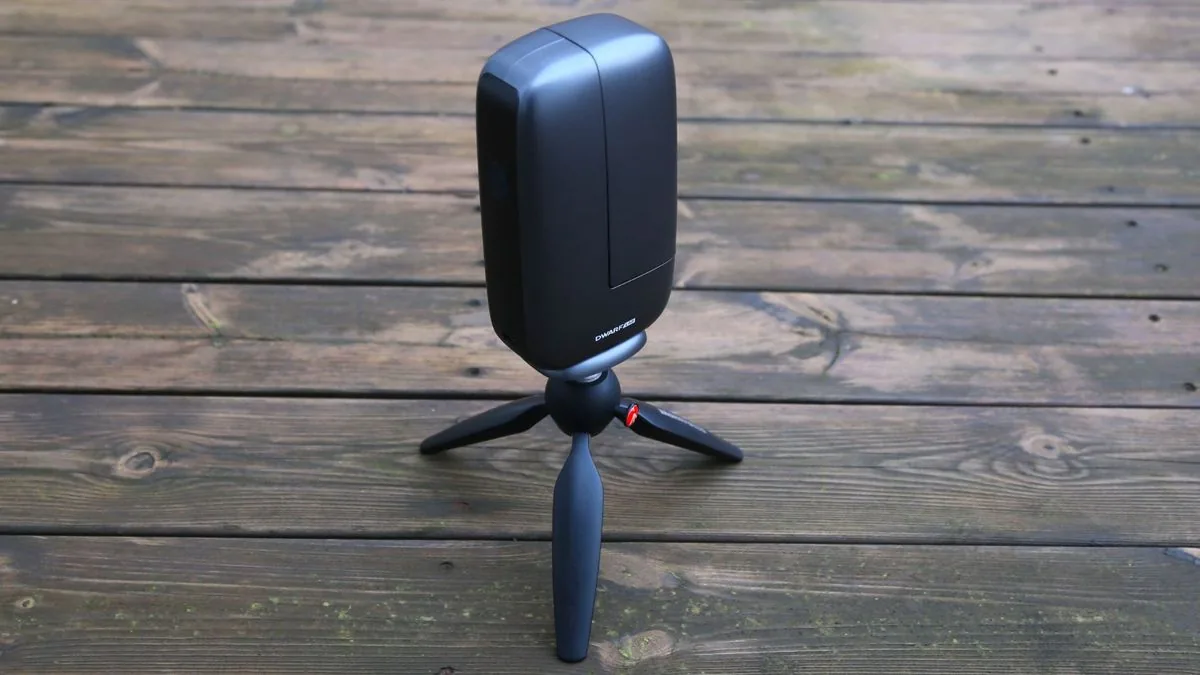
Portability defines the physical design of the Dwarflab Dwarf Mini, which measures 7.24 inches by 3.94 inches by 2.4 inches. DwarfLab engineered the unit to weigh 840 grams. That compact footprint allows stargazers to stow the optical tube into ordinary backpacks with personal travel gear. The aperture measures 30 mm. This 1.180-inch front optical glass combines with a 150 mm focal length to collect incoming photons from celestial targets across the night sky [1].
Dual viewing configurations let internal optics switch between a wide 50.59 by 45.06 degree field and a telephoto 2.5 by 2.14 degree frame. An integrated 7,000 mAh rechargeable battery delivers up to four hours of runtime under field conditions. The chassis contains 64GB of onboard memory for multi-target imaging sessions. Storage eliminates the need for separate memory cards during long observing runs. An integrated motorized mount operates in altitude-azimuth and equatorial orientations to follow celestial objects as Earth rotates. Stargazers manage tracking, exposure controls, and target lists wirelessly through a companion mobile application running on a smartphone or tablet [1].
Automated Celestial Tracking Features
Internal software handles navigation by identifying star patterns against an onboard database. Setup takes minutes. Once linked to a tablet, the telescope finds celestial objects and drives internal motors automatically. Wireless pairing coordinates tracking routines without requiring physical controller cables on cold nights. It tracks targets across the night sky, stacking sequential digital exposures to reveal faint details in nebulas, star clusters, and distant galaxies that remain invisible to the naked human eye [1].
Light pollution washes out contrast in city skies. Digital processing algorithms help isolate emission wavelengths so urban stargazers can photograph deep-sky objects directly from balconies or backyards. An integrated solar filter enables safe daytime viewing of sunspots without requiring third-party glass attachments. In addition to single-frame captures, an automated mosaic mode tiles adjacent portions of the sky, letting users record expansive star groupings and nebular boundaries without manually stitching separate image panels on a computer [1]. Similar app controls appear on the Seestar S30 Plus smart telescope, reflecting a wider industry shift toward automated backyard observing.


How Does the Dwarf Mini Sensor Perform?
A compact 2-megapixel sensor handles imaging tasks, engineered for fast frame transfers and mobile viewing. High-end astrophotography systems rely on large full-frame sensors with tens of millions of pixels, but this setup keeps file sizes small. The camera produces colorful nebular shots. However, fine structural details soften when images are enlarged on large computer monitors [1].
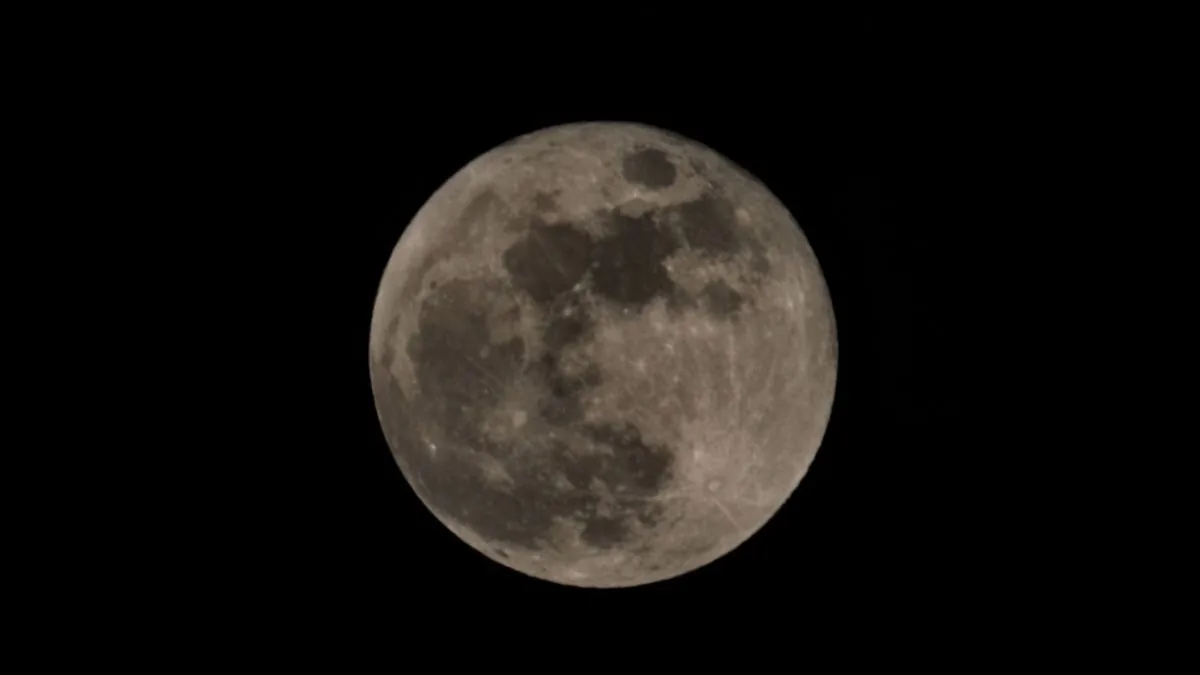
Reviewer Jamie Carter said that the 2MP sensor fits mobile displays and social sharing rather than giant art prints. Carter gave it four stars. Reviews across Space.com, T3, and LiveScience agreed on four-star scores for beginner functionality. Observers seeking higher resolutions for large screens often choose alternatives like the ZWO Seestar S50 Pro. Even so, the telescope reliably photographs lunar craters, solar disk events, and bright star groupings such as the Beehive Cluster without requiring manual calibration steps [1].
Retail Origins of the Holiday Discount
Holiday discounts on consumer optics connect to a retail tradition rooted in American market history. The term Black Friday originally designated financial crises rather than shopping discounts, most notably the gold market collapse of September 1869 in the United States. That financial episode became known as the Panic of 1869 [2].
Financiers Jay Gould and James Fisk attempted to corner national gold supplies through political ties in the administration of President Ulysses Grant. When President Grant released federal gold reserves from the United States Treasury, market prices plunged by 18% in a single day, ruining investors such as Abel Corbin. Labor usage arose later when Factory Management and Maintenance reported in November 1951 and 1952 that workers called in sick after Thanksgiving to secure four-day weekends [2].
Police departments in Philadelphia and Rochester used the monikers Black Friday and Black Saturday during the 1950s to describe massive traffic congestion as shoppers flooded downtown streets for the Christmas shopping season. Philadelphia merchants attempted to rebrand the event as “Big Friday” and “Big Saturday” in 1961, but the promotional substitutes failed quickly. The phrase spread slowly across American retail markets, with The New York Times citing the shopping day on November 29, 1975, while The Philadelphia Inquirer reported in 1985 that stores in Cincinnati and Los Angeles still did not recognize it. By the 1980s, retailers described the term through accounting ink, claiming holiday sales moved yearly business ledgers from red ink losses into black ink profits [2].
Amateur Skywatching and Market Access
Automated optics show a clear shift in how amateur stargazers explore astronomical phenomena from home. Older astrophotography rigs required guide cameras, balancing weights, and separate power banks that made travel difficult [1]. While formal astrophysics depends on giant facilities and orbital platforms like the Hubble and James Webb space observatories, compact consumer gear brings automated observing into everyday backyards.
A discounted $339 price point lowers financial barriers for beginners who want to explore digital astrophotography without investing thousands of dollars in optical accessories. The Dwarflab Dwarf Mini houses automated plate solving, dual camera angles, and motorized tracking inside an 840-gram chassis, making personal sky exploration accessible to a broad audience. Observers trade ultra-high sensor resolutions for swift setup speeds, low travel weights, and simple smartphone control. As holiday promotions like Cyber Monday and Cyber Week extend across retail sites, compact smart telescopes continue to broaden how amateur astronomers view the night sky [1].
- ONLINE NEWS Bennett, H., & Carter, J. (2026, November 26). Be ready for astrophotography anywhere with the Dwarf Mini — now $80 off!. Space.com. [Article Link]
- WEBSITE Wikipedia contributors. (n.d.). Black Friday (shopping). Wikipedia, The Free Encyclopedia. [Article Link]
APA 7: PerEXP Teamworks. (2026, November 27). Dwarflab Dwarf Mini Sells for $339 for Black Friday. PerEXP Teamworks. https://perexpteamworks.com/en/dwarflab-dwarf-mini-black-friday/


