





Can local communities hold multinational energy producers liable for global warming in state court? The justices of the Supreme Court open their new term on October 5 by hearing arguments in a high-stakes Supreme Court climate case that pits Colorado local governments against corporate energy giants. The dispute in Suncor Energy (U.S.A.) Inc. v. Commissioners of Boulder County tests whether federal statutes prevent municipal leaders from seeking compensation under state common law for local environmental harms. At least 60 state and local governments nationwide have brought similar lawsuits seeking billions of dollars in damages [1].
- Can Local Governments Win a Supreme Court Climate Case?
- Why Supreme Court Is Called Federal Court?
- Inside the Boulder Climate Lawsuit Against Suncor and Exxon
- Clean Air Act Debates in High Court Climate Case
- Constitutional Limits on Interstate Emissions Claims
- Why Supreme Court Is the Highest Court in Interstate Disputes?
Can Local Governments Win a Supreme Court Climate Case?
Local governments can only win a Supreme Court climate case if the justices conclude that federal environmental statutes leave room for state common law tort remedies. In the appeal before the high court, the City of Boulder and Boulder County argue that their claims do not attempt to solve global warming [2].
Instead, local leaders ask energy companies to pay a fair share of the costs incurred from wildfires, flood damage, and rising municipal expenses caused in part by fossil fuel sales [1]. “Local communities are living with the mounting costs of climate change,” Boulder Mayor Aaron Brockett said in a statement [3]. Energy producers counter that state courts have no power to manage global atmospheric conditions. Suncor Energy and Exxon Mobil Corporation contend that greenhouse gas emissions from every nation disperse around the globe and cannot be separated into individual local shares. In Supreme Court filings, attorneys for the companies warned that allowing local lawsuits to move forward could bankrupt the energy industry by imposing what amounts to an informal carbon tax [2].
Curtis Smith, a spokesman for Exxon Mobil, said that “climate policy shouldn’t be set through fragmented state‑court actions” [3]. State common law provides traditional remedies for localized harm, and Boulder officials argue that federal statutes never eliminated the basic power of states to protect their residents from outside hazards [1].
Why Supreme Court Is Called Federal Court?
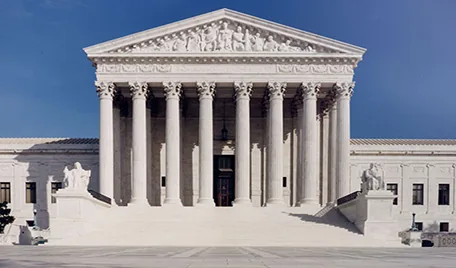
The Supreme Court is called a federal court because it was created under Article III of the United States Constitution as the highest judicial body of the national government. Federal courts possess distinct constitutional authority to hear disputes that involve federal statutes, foreign nations, and legal controversies between different states. When municipalities sue companies over greenhouse gases, energy firms argue that federal courts must control the outcome. Suncor Energy pointed to the Supremacy Clause in Article VI, Clause 2, which establishes that federal statutes and the Constitution remain the supreme law of the land. Under this constitutional structure, federal courts ensure that individual states do not impose conflicting legal standards on national and international commerce [1].
The high court must also decide whether it has legal authority to review the case at this stage. Boulder County argues that the Supreme Court lacks statutory jurisdiction because the Colorado Supreme Court only resolved early preemption issues without issuing a final judgment on liability. In its brief, Suncor countered that the justices have the power to intervene under the 1975 precedent Cox Broadcasting v. Cohn. Suncor argued that waiting for a trial would threaten energy companies with enormous financial judgments before federal rights could be protected [1].
Inside the Boulder Climate Lawsuit Against Suncor and Exxon
The Boulder climate lawsuit began in 2018 when the City of Boulder and Boulder County filed claims in Colorado state court [1]. Local officials claimed that Suncor and Exxon Mobil knew about fossil fuel risks for decades while promoting products that contributed to global warming and damaged municipal property [3].
In their complaint, the local governments brought claims for public nuisance, private nuisance, trespass, unjust enrichment, and civil conspiracy [1]. They modeled their legal claims after earlier government challenges against tobacco and opioid manufacturers, seeking money to fix drainage, roads, and bridges damaged by floods [3]. The lawsuit traveled through federal and state courts for seven years before returning to the high court. In 2021, the Supreme Court remanded the dispute to resolve procedural questions, and in 2023 the justices declined to hear the case over the dissent of Justice Brett Kavanaugh. On May 12, 2025, the Colorado Supreme Court issued a divided 5-2 ruling allowing Boulder to pursue its claims in state district court [1].
Writing for the majority, Judge Richard L. Gabriel said that Boulder’s claims were not preempted by federal common law or the Clean Air Act. Judge Carlos Samour dissented from the decision. That ruling opened the door for local governments seeking compensation for local climate costs before the high court [1].


Clean Air Act Debates in High Court Climate Case
The central argument in the high court climate case examines whether the federal Clean Air Act eliminates state common law claims for environmental damages. Judge Richard L. Gabriel concluded that while the Clean Air Act regulates emissions from stationary sources, it does not wipe out state damages lawsuits for deceptive marketing and local harm. Dissenting Judge Carlos Samour, joined by Judge Brian Boatright, strongly disagreed with that interpretation. “Unlike the Blue Fairy that brought Pinocchio to life, the CAA did not magically breathe life into state-law tort claims that had been as lifeless as a wooden puppet,” Judge Carlos Samour said, warning that the ruling would cause regulatory chaos for energy companies operating across state lines [1].
Boulder attorneys countered that Congress passed the Clean Air Act to control industrial emissions without eliminating state court remedies for property injuries. Connecting local infrastructure damage to research on understanding the causes and effects of climate change explains why local governments seek financial recovery for growing municipal expenses [1]. Boulder officials argue that local taxpayers should not bear the entire financial burden of rebuilding public bridges and roads damaged by storms [3]. The justices must now determine whether federal pollution statutes shield energy firms from state tort damages [1].
Constitutional Limits on Interstate Emissions Claims
The constitutional clash over interstate emissions centers on whether single states can penalize out-of-state energy production. Energy companies argue that state-level damage awards violate constitutional principles that give the federal government exclusive authority over interstate commerce and international affairs [1]. Both energy companies denied wrongdoing during lower court proceedings [3].
Deputy Solicitor General Sarah M. Harris filed a brief supporting Suncor and will take part in oral argument on behalf of the federal government. Harris argued that “state-law claims contravene the Constitution’s territorial limits on state authority and the federal government’s exclusive role over foreign affairs” [1]. State officials around the nation have also divided over the Boulder lawsuit. West Virginia Solicitor General Michael Williams joined a coalition of Republican attorneys general who opposed Boulder’s legal claims. “We don’t think that there’s a role for one state to regulate the activities that are happening in another state,” Michael Williams said [4]. Energy companies warned that upholding the Colorado ruling would give every municipality license to set national environmental policies [2].

Federal positions on climate litigation have changed between presidential administrations. The Justice Department under President Donald Trump urged the Supreme Court to block Boulder’s lawsuit, calling the Colorado ruling “manifestly wrong on a question of vast nationwide significance”. Under the Biden administration in 2024, the Justice Department told the justices to let state litigation proceed [3].
Why Supreme Court Is the Highest Court in Interstate Disputes?
The Supreme Court is the highest court in interstate disputes because the Constitution vests final judicial authority over conflicting state and federal laws in one national high court. Legal scholars emphasize that the outcome of this dispute could set a lasting standard for municipal regulation far beyond fossil fuels. Bridget Fahey, an expert at the University of Chicago Law School who studies interactions between federal and state governments, said the lawsuit functions as a proxy for other major regulatory questions, including state-level efforts to regulate artificial intelligence [4].
The justices will hear the case with one notable absence on the bench. Court records show that on Sept. 28, 2026, Supreme Court Clerk Scott S. Harris said Justice Samuel Alito would not participate in the case [1]. In his financial disclosure for 2025, Justice Samuel Alito reported owning stocks in energy companies ConocoPhillips and Phillips 66, although he did not list shares in Suncor or Exxon Mobil. Justice Samuel Alito did not give an official reason for his recusal [2]. With oral arguments scheduled for October 5, 2026, the remaining eight justices will decide whether state courts can hold energy producers liable. As local governments confront projected increases in extreme weather events, communities in the United States are waiting to see whether local courts can provide financial remedies [1].
- ONLINE NEWS Bomboy, S. (2026, September 29). Supreme Court to start new term with major environmental case. National Constitution Center. [Article Link]
- ONLINE NEWS Quinn, M. (2026, October 4). Supreme Court gears up for new term with major cases on climate change, immigration and guns. CBS News. [Article Link]
- ONLINE NEWS Groppe, M. (2026, February 23). Supreme Court to take Exxon case on cities suing over climate change. USA TODAY. [Article Link]
- ONLINE NEWS Groppe, M. (2026, October 4). Trump. Climate. AR-15s. The Supreme Court is about to go back to work. USA TODAY. [Article Link]
- ONLINE NEWS The New York Times. (2026, October 4). A Supreme Court Battle Over Climate Change Begins. The New York Times. [Article Link]
APA 7: PerEXP Teamworks. (2026, October 5). Can the Supreme Court Climate Case Reshape City Lawsuits? PerEXP Teamworks.


