






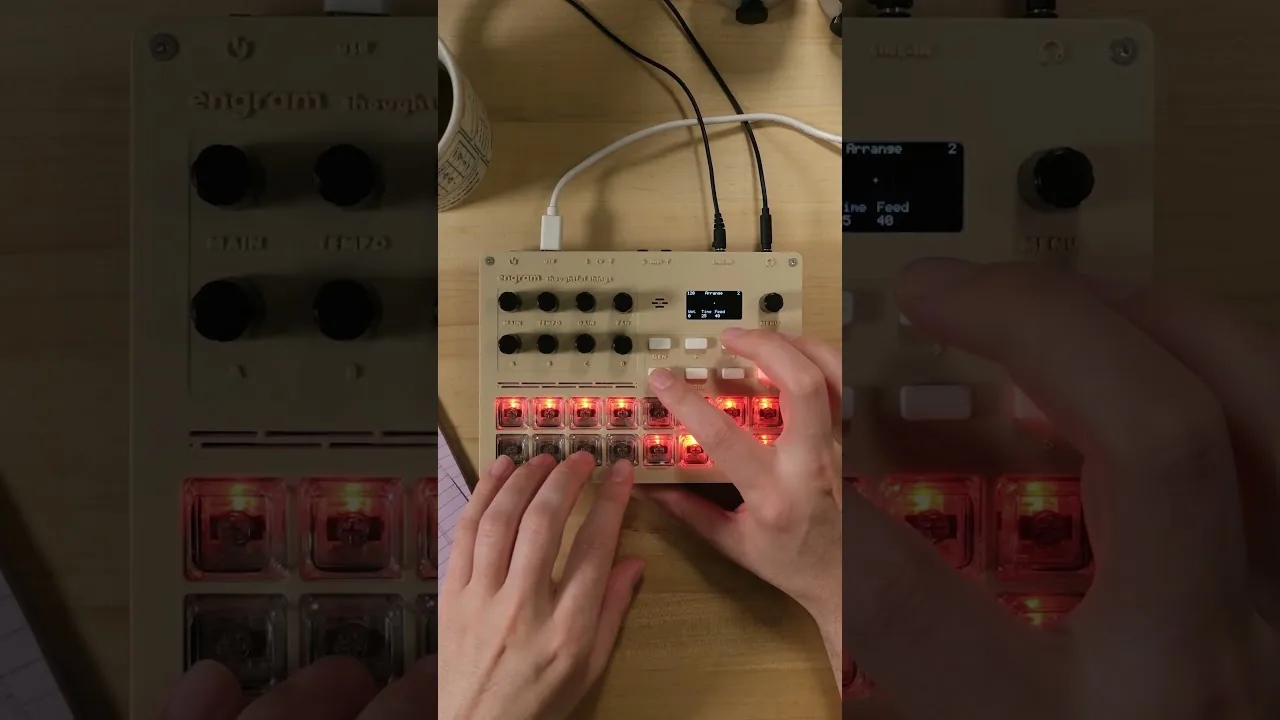
Music technology startup Thoughtful Things has officially introduced the Engram sampler, an offline hardware groovebox meticulously engineered to transform neural network hallucinations, algorithmic glitches, and unexpected decoder errors into expressive, tactile acoustic material. The standalone device operates custom generative audio models directly on local silicon without requiring cloud connections, subscription services, or remote processing servers. Rather than delivering polished commercial tracks from simple text prompts, the standalone instrument functions as an experimental field recorder for latent space that invites independent artists to bend synthetic sound waves in real time [1].
Engram Sampler Reinvents Hardware Sound Design
Evan King founded Thoughtful Things. The researcher and musician developed the machine after spending several years exploring how algorithmic processes intersect with acoustic composition. King previously trained neural networks to synthesize uncanny botanical imagery, mangled audio inputs to coax haunting timbres, and built songwriting tools powered by speech recognition models. He argues that automated systems generating finished tracks from single text prompts render synthetic art definitionally boring by stripping away human agency, technical limitations, and historical context [5].
The Engram sampler deliberately avoids the commercial goals of cloud platforms (such as Suno) that attempt to generate radio-ready songs with a single button press. King framed the instrument around the philosophy of jazz icon Thelonious Monk, who famously insisted that the piano contains no wrong notes. During early demonstrations, King prompted the internal voice engine for a piano tone, which caused the neural decoder to spit out a distorted, fragmented acoustic burst filled with digital artifacts [1].
Monk rejected wrong notes [5]. King explained that traditional guitar amplifiers never protect players from distortion, just as blank canvases do not demand uniform brushstrokes. The Engram sampler treats mathematical breakdown as expressive acoustic texture rather than a technical failure. By confining custom machine learning models to dedicated physical hardware, the device operates as an expressive digital synthesizer rather than an opaque commercial generator [2].

Model Bending Warps Embedded Neural Audio
The core operational mechanism driving the instrument is an experimental technique dubbed model bending, which adapts the physical philosophy of circuit bending to neural network architectures. King hand-rolled custom embedded inference code for MusicGen models to execute sample generation directly on constrained hardware without relying on cloud processing or experiencing remote transmission latency. Musicians interact with the system through an offline voice interface powered by Moonshine, creating three distinct operational pathways across the physical channels. In blank-slate mode, users speak an audio prompt into an empty track to receive an immediate burst of synthetic sound, while guided generation builds completely new timbres directly upon existing acoustic recordings to match tone and genre [5].
How does a musician transform a broken neural network into an expressive acoustic instrument? Thoughtful Things installed dedicated physical knobs mapped to the internal audio decoder, allowing performers to deliberately destabilize mathematical tensors during sound playback. The resulting acoustic outputs recall traditional musique concrète tape manipulation techniques while producing unpredictable digital textures that cannot emerge from standard subtractive synthesis [6].
These sounds do not exist [6]. Technical analysts at Let’s Data Science noted that the underlying model architectures, memory footprints, and latency benchmarks remain unpublished during this prototype phase. Those undisclosed engineering specifications will determine how practical custom model training proves for independent developers seeking to create reproducible neural sound libraries [3].


Engram Audio Sampler Prioritizes Ethical Datasets
Ethical concerns regarding proprietary training data have prompted widespread pushback across music and entertainment communities. Intellectual property disputes around training data continue to challenge entertainment studios, as seen when Insomniac rejected claims regarding unauthorized AI assets during commercial game development. Thoughtful Things countered these recurring industry tensions by training its models exclusively on open datasets licensed for commercial use (CC-BY or similar commercial terms), ensuring no pirated, scraped, or unauthorized audio entered the pipeline [1].
In-house training utilized gaming PCs. The startup completed model development on desktop hardware without relying on industrial server centers [6].
Operating embedded models locally also minimizes the environmental footprint commonly associated with massive cloud compute clusters. Thoughtful Things cited peer-reviewed academic research published in Communications of the ACM showing that tiny machine learning architectures produce minimal carbon emissions compared to centralized infrastructure. The company emphasized that its audio models will never ingest non-commercial or stolen audio libraries [1].
Future software updates will introduce open-source firmware, empowering sound designers to modify internal algorithms or load custom neural sound models. This open hardware architecture prevents the instrument from becoming obsolete when commercial software standards shift. Community members will retain complete sovereignty over their physical audio gear, transforming the machine into an evolving collaborative platform [2].

Tactile Controls Combine Codecs with Vintage Workflow
Despite its neural processing engine, the Engram sampler retains the familiar tactile ergonomics of classic hardware grooveboxes and vintage studio ROMplers. The physical enclosure integrates MIDI input and output with control voltage (CV) sync and gate ports for modular synthesizer integration. Audio engineers can capture external acoustic sources through a stereo line-level input or utilize the integrated lo-fi microphone for quick acoustic recording, immediate sample warping, pattern slicing, and voice prompting [3].
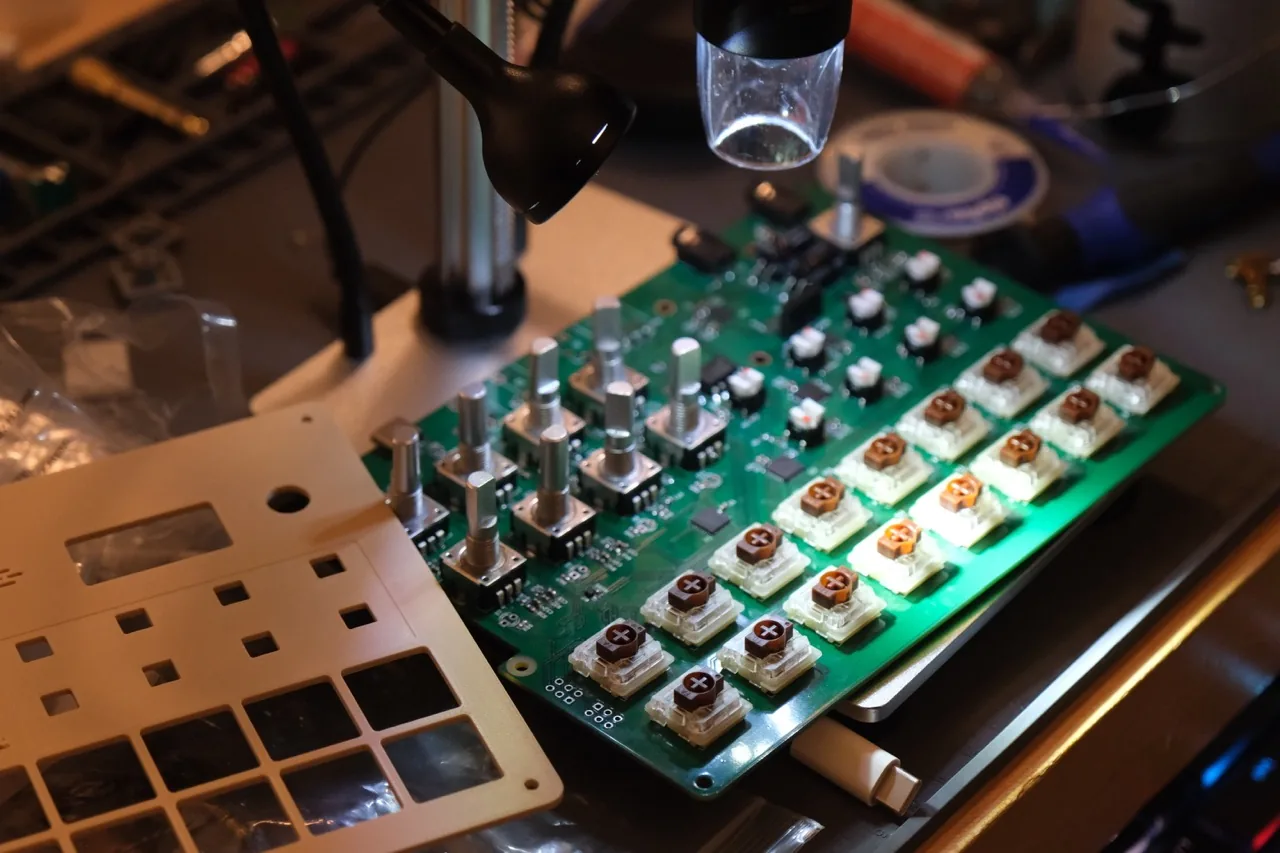
The call for testers closed. King developed the current unit as a second hardware revision, housing the internal electronics inside a 3D-printed enclosure prototype. The device combines a traditional step sequencer with multi-channel sample slicing, pattern storage, and dynamic audio effects. King designed the tactile interface so electronic musicians can manipulate synthetic waveforms without touching a computer monitor or managing software licenses [5].
While wider computing sectors explore how AI hardware processing moves from 2D to 3D silicon, Thoughtful Things chose constrained local chips. By running user audio through an embedded neural codec, the machine warps incoming recordings without relying on external computer connections. Musicians can slice glitchy waveforms, sequence complex polyrhythms, and modulate parameters in live performance environments. Thoughtful Things designed the instrument to outlast passing tech trends and live comfortably with timeless studio gear [6].
Kickstarter Campaign Funds the Engram Groovebox
Thoughtful Things launched the crowdfunding effort on September 27, 2026. The initial campaign listed a $10,600 funding goal, securing $6,300 across nine backers during its opening hours. Thirty days remained for funding. The early backing demonstrated demand from independent producers seeking experimental grooveboxes rather than standard commercial workstations [3].
Pledges start at $675 [1]. Early backers can secure production units through the crowdfunding platform at this introductory tier, which represents a 30 percent discount against projected retail pricing anticipated between $850 and $900 once commercial fulfillment begins. Reporting from splashthenews.com noted that initial shipments will cater to electronic artists who value offline predictability over cloud subscriptions [4].
The developer classifies the current machine as a research prototype whose physical enclosure and internal hardware specifications may evolve before mass assembly begins. Thoughtful Things intends to establish industrial manufacturing partnerships to scale batch production for professional recording studios and touring performers. By prioritizing tactile experimentation over algorithmic automation, the Engram sampler provides a compelling template for how neural networks can serve musicians as collaborative instruments [1].
- ONLINE NEWS O’Brien, T. (2026, September 27). Engram is a sampler that turns broken AI hallucinations into music. The Verge. [Article Link]
- ONLINE NEWS Printing Press AI. (2026, September 27). Engram is a sampler that turns broken AI hallucinations into music. [Article Link]
- ONLINE NEWS Let’s Data Science. (2026, September 27). Engram launches embedded AI audio sampler. [Article Link]
- ONLINE NEWS splashthenews.com. (2026, September 28). Engram turns AI hallucinations into experimental hardware. [Article Link]
- WEBSITE King, E. (2026, February 10). Engram: Generative audio sampler. [Article Link]
- WEBSITE Thoughtful Things. (2026, January 1). Engram generative audio sampler. [Article Link]


