





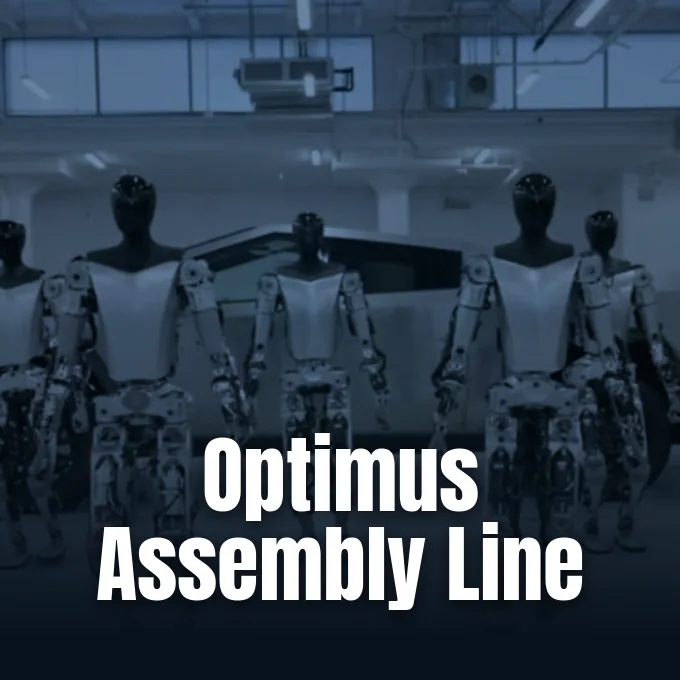
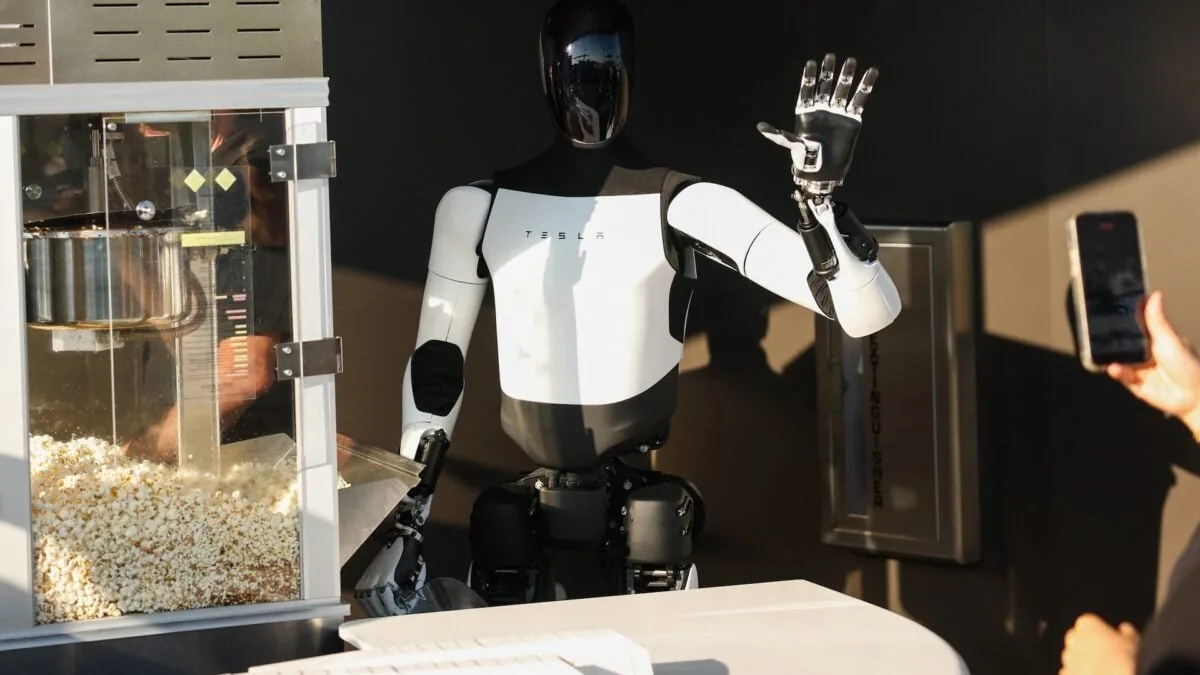
Tesla has accelerated assembly of its bipedal machines at the Fremont facility in California, yet serious hardware and software limitations continue to surface. A report from The Information revealed on Friday that weekly factory output jumped to several hundred units last month, representing a sharp increase from only a few dozen weekly machines produced during the second quarter. However, the Tesla Optimus robot still struggles with fragile mechanical extremities and basic workplace tasks. Internal engineering teams now confront stubborn manufacturing bottlenecks as ambitious production targets clash with physical reality [2].
Tesla Optimus Robot Production Accelerates at Fremont
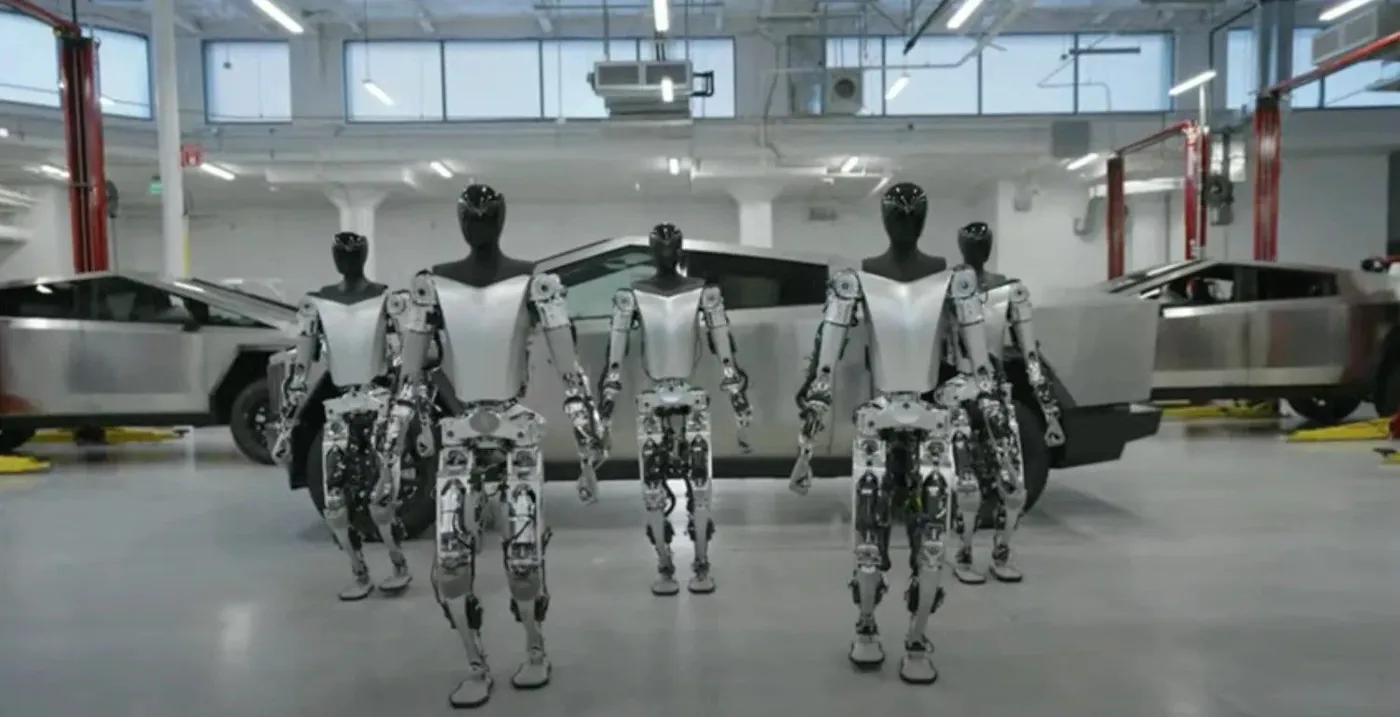
Manufacturing adjustments at the company’s historic Fremont plant sparked the sudden surge in output. Tesla ended production of its flagship Model S and Model X electric passenger vehicles in early May, terminating the legacy vehicle lines to clear physical space for humanoid automation. Manufacturing executives subsequently reassigned automotive assembly staff and specialized engineers from the retired passenger vehicle programs directly to the robotics initiative. Dozens of additional technicians joined the effort from the Model Y manufacturing lines to support the ramp [2].
Factory managers now operate under intense executive pressure to scale the newly converted line into a continuous automated system capable of delivering more than 1,000 units weekly before the close of 2026 [3]. Musk targets 20,000 units weekly [1]. Reaching several hundred units weekly in August marked a tenfold increase compared to second-quarter volumes, yet finished hardware remains confined to factory walls. Most units entering service stay inside tightly controlled testing zones for operational data collection rather than carrying out independent factory duties [2].
Optimus V3 units currently rolling off the Fremont line incorporate a lighter structural frame and an expanded suite of external optical cameras. While Tesla CEO Elon Musk first announced the concept in 2021 under the original Tesla Bot codename before displaying an early mechanical prototype in 2022, the modern V3 hardware remains an intermediate engineering build [1]. It has not yet passed the rigorous durability thresholds established for commercial release [2].
Manual Dexterity Hurdles in Articulated Hands
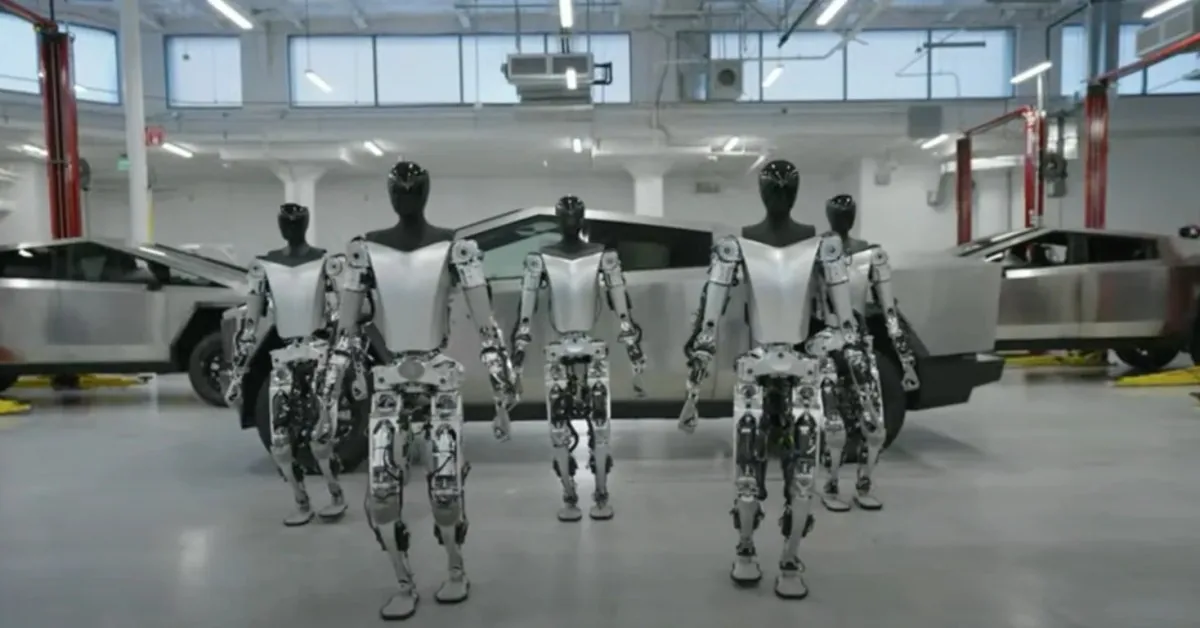
Assembling humanoid extremities with human-grade dexterity has emerged as the most punishing industrial bottleneck inside the plant. Unlike automotive chassis assembly where automated heavy robotic arms weld stamped steel panels with repeatable precision, the intricate structure of the robot forearm and articulated hand demands meticulous manual intervention (including tiny threaded fasteners and articulated tendon pins) [2]. Each forearm contains over 100 screws [1].
Workers fasten these delicate mechanical linkages manually because automated factory tooling cannot manipulate the miniature fasteners within tight mechanical tolerances [2].
Workstation fixtures tasked with hand mating, joint alignment, and electronics verification frequently fail to seat components with sufficient geometric accuracy. Because the moving joints require tolerances far tighter than standard passenger car assemblies, minor mechanical misalignments force finished units into secondary rework bays [2]. Specialized tactile sensors embedded in the fingers have also suffered repeated reliability failures under continuous factory stress. To prevent technicians from discarding entire mechanical hands during sensor breakdowns, Tesla engineered a modular sensing glove (a replaceable tactile sheath housing integrated sensor arrays) that will debut on next year’s revision [1]. China supplies motors and precision gears. While these overseas suppliers produced high-grade components for early engineering prototypes, maintaining dimensional consistency across thousands of mass-manufactured shipments has proven difficult [2].

Optimus Humanoid Robot Struggles With Task Generalization
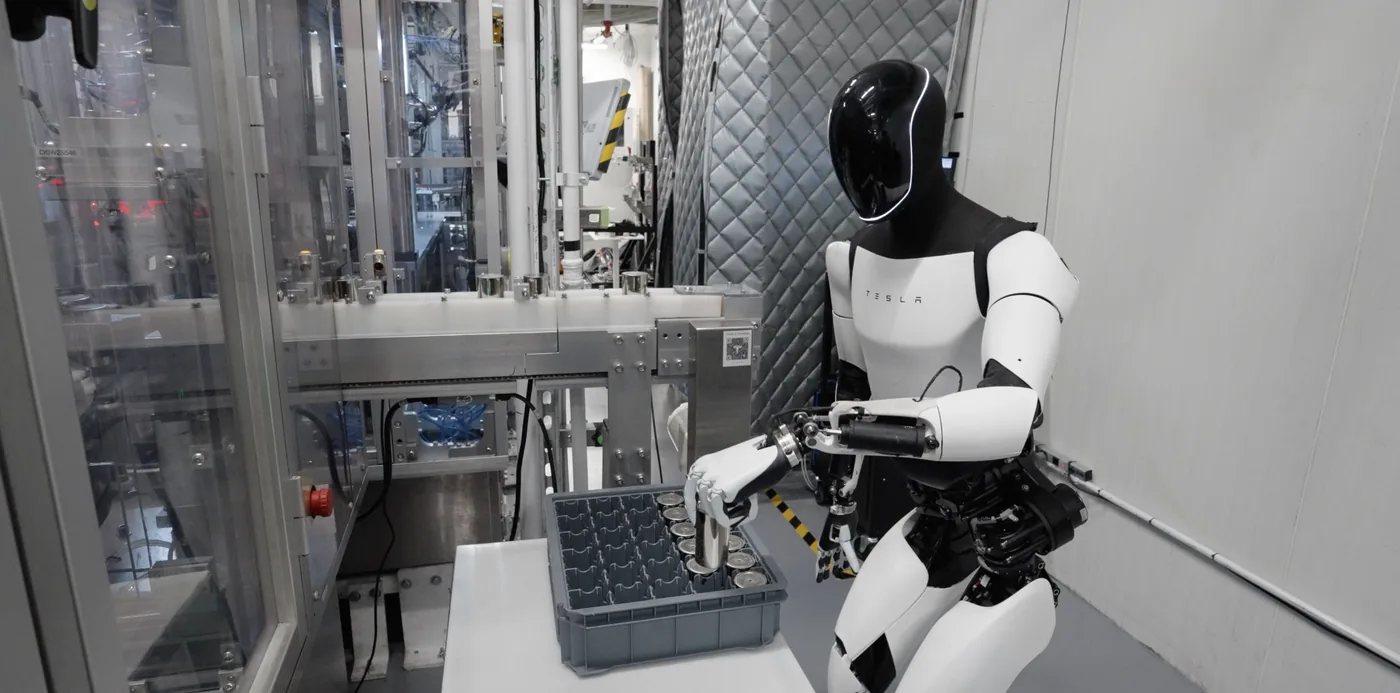
Physical durability represents only half the challenge; cognitive flexibility poses an even steeper barrier to workplace viability. Three people familiar with internal evaluations revealed to The Information that the Optimus humanoid robot still cannot reliably perform general-purpose industrial tasks without narrow, labor-intensive customization. When placed in novel or unmapped factory environments, the machine often displays unpredictable kinematic behavior [2]. Even straightforward pick-and-place duties require several days of continuous site-specific training before the robot operates reliably [1].
Software engineers at Tesla are attempting to construct an extensive library of foundational physical primitives that the neural network can recombine on the fly. Tesla has amassed more than 500,000 hours of physical demonstration data and aims to double that total before the end of the year. The company transferred much of its automotive Full Self-Driving data annotation team directly to the humanoid robotics division. Tesla deployed operators across three states. These dedicated field data collectors wear camera helmets and motion-capture suits to record physical workflows across facilities in Colorado, Arizona, and Florida [2].
The aggressive push into physical AI data collection comes amid broader industry debate, following reports where Jacob Coxon left Anthropic after warning of risks in the frontier AI race. Inside Tesla’s training facilities, engineers must prove whether massive motion libraries will unlock genuine generalization or merely yield brittle, memorized behaviors across factory tasks [2].
Commercial Leasing Strategy for Controlled Facilities
Commercial deployment plans rely on structured environments because autonomous generalization remains unsolved, prompting Tesla to bypass direct consumer sales in favor of a commercial leasing arrangement (such as automotive sub-assembly plants) [1]. Under this deployment model, the automaker plans to place small fleets of bipedal units exclusively with commercial partners whose factory and logistics warehouse layouts closely mirror Tesla’s own manufacturing facilities. Operating within structured, predictable surroundings allows the machines to operate with fewer environmental edge cases [2]. Deploying hardware into client facilities also enables Tesla to harvest real-world telemetry across diverse industrial workflows to train future algorithmic models [1].
Tesla structured this strategy to mirror the commercial playbook previously established for Full Self-Driving: ship preliminary physical hardware to customers, gather telemetric fleet feedback, and rely on subsequent over-the-air software updates to deliver promised capability [2]. Elon Musk has promoted the robotic program with sweeping rhetoric. During an investor earnings call in July, Musk declared that the Tesla Optimus robot could eventually prove to be “the biggest product ever” while claiming it could handle factory labor, domestic chores, and even babysitting. Commercial sales remain targeted for 2027 [1].
Historical performance milestones reveal a widening gap between executive projections and industrial execution. In January 2025, Musk publicly asserted that Tesla would construct approximately 10,000 units during 2025 and that several thousand would be performing productive work by year-end. One year later, Musk admitted that zero Optimus robots were performing useful work across company operations. A promised public demonstration of the refined V3 architecture scheduled for mid-2026 similarly failed to materialize [2].
Rival Manufacturers Pressure the Tesla Bot Timeline
International competitors are moving rapidly into production while Tesla wrestles with manual forearm assembly and algorithmic generalization hurdles at Fremont. Chinese electric vehicle manufacturer XPeng initiated operations on an automated assembly line in Guangzhou this month for its own IRON humanoid robot. XPeng has targeted commercial customer deliveries by 2027, establishing direct competitive pressure on Western robotics programs. Guangzhou houses the competing line [2].
Industrial automation traditionally favored specialized machinery over anthropomorphic form factors, creating an unresolved economic debate regarding humanoid utility versus purpose-built equipment. Factories rely on articulated robotic arms along automotive welding lines or wheeled automated carts traversing warehouse concrete because custom tools deliver superior speed and mechanical endurance. A humanoid form factor provides distinct value only if the underlying artificial intelligence achieves broad task generalization across spaces constructed for humans. Without that cognitive breakthrough, a bipedal robot requiring days of manual instruction remains a fragile, expensive alternative to fixed machinery [2].
Executive conviction that embodied artificial intelligence will define the automaker’s future valuation drove the decision to sacrifice vehicle assembly lines at Fremont to churn out hundreds of pre-commercial robots. Achieving that future requires solving two distinct, unforgiving disciplines: high-volume precision manufacturing for sub-millimeter mechanical joints, and generalized neural reasoning capable of adapting to unfamiliar tasks without human intervention [2]. For now, the Tesla Optimus robot remains an unfinished prototype scaled to factory volume, leaving assembly teams to assemble delicate fingers manually while software models slowly learn the basics of manual labor [1].
- ONLINE NEWS Gil, B. (2026, September 26). Tesla Wants to Build 20,000 Optimus Robots a Week. First It Has to Figure Out Hands. Gizmodo. [Article Link]
- ONLINE NEWS Lambert, F. (2026, September 25). Tesla ramps Optimus to hundreds a week, but the robots can’t generalize. Electrek. [Article Link]
- ONLINE NEWS Ars Technica. (2026, September). Tesla workers balk at training Optimus humanoid robots as replacements. [Article Link]


