




Digital Foundry benchmark tests show that Switch 2 input lag in Call of Duty: Modern Warfare 4 reaches up to 100ms in portable play, roughly double the response time measured on PlayStation 5. The latency gap puts Nintendo players at a measurable disadvantage during fast online matches, even though the hybrid hardware generally maintains its 60 frames per second target during competitive multiplayer [1]. Docked performance proves somewhat snappier at 81ms, but handheld responsiveness drops significantly behind Sony and PC hardware [2].
Measuring Switch 2 Input Lag in Multiplayer
The Digital Foundry testing team evaluated button response times on Nintendo Switch 2 and PlayStation 5 using wireless gamepads, pairing the official Switch 2 Pro Controller against Sony’s DualSense pad [1]. DualSense latency measured 49.1ms [2]. In contrast, Nintendo Switch 2 registered an average latency of 81ms when connected to a television dock, meaning button presses take almost two additional frames of animation to register on screen during online matches [1].
Handheld performance exhibited even wider delays during testing, ranging from a best-case measurement of 83ms to a sluggish peak of 125ms. Digital Foundry said that “responsiveness here simply isn’t as good as on other consoles,” warning that portable input delay becomes “actually deleterious to performance” when players compete in high-stakes online lobbies [1]. In competitive first-person shooters where milliseconds dictate who survives an encounter, taking twice as long to register a shot after pulling the trigger creates an unavoidable handicap against rivals on PlayStation 5 or PC. Delay disrupts snap aiming [2].
Input timing shapes every gunfight. That disparity matters because Call of Duty multiplayer relies on twitch reflexes and reliable weapon handling where players obsess over their kill-to-death ratios. Digital Foundry said that even with a fast trigger finger, the console processes controller signals slower than rival PlayStation 5 hardware. Nintendo players joining crossplay lobbies will feel that delay in every shootout against PC and Sony squads [2].

Docked and Handheld Resolution Targets
To keep Modern Warfare 4 running on Nintendo Switch 2 hardware, port specialist Digital Legends adjusted internal rendering targets [4]. When resting in its dock with Nvidia DLSS enabled, the game aims for a dynamic 900p resolution, though pixel counts dip down to 450p in chaotic sequences like the Paris vehicle chase [1]. Players who prefer a sharper still image can switch to an SMAA anti-aliasing profile that resolves to a 1080p presentation, but that setting struggles to clean up noisy visual artifacts during fast movement [4]. Handheld mode targets 720p by default, yet heavy combat drops the presentation down to 360p [1].
Nvidia DLSS reconstruction stabilizes edges during character movement, but it introduces a softer overall picture on the portable display [4]. The visual cuts stand out when compared to Call of Duty: Modern Warfare 4 PC tech, which features unlocked frame rates and sharper textures.
Visual assets remain identical whether Nintendo Switch 2 is docked or portable. Digital Foundry confirmed that Modern Warfare 4 relies on an in-house anti-aliasing solution by default, giving Nintendo players room to pick between temporal reconstruction softness through Nvidia DLSS and raw pixel clarity via SMAA. Both choices keep action legible, but neither eliminates the heavy scaling needed to hit portable targets [4].


Why Switch 2 Input Lag Changes Online Matches
Competitive multiplayer targets 60fps. Digital Foundry confirmed that Modern Warfare 4 hits this target throughout most standard matches on Nintendo Switch 2 [2]. However, specific gameplay situations cause noticeable drops into the 50s and high 40s [4]. In one example reported by Wesley Yin-Poole at IGN, simply looking through the transparent visor of a riot shield causes the frame rate to drop right away [2].
These sporadic frame drops compound the existing Switch 2 input lag, making tracking moving targets feel erratic right when stability matters most. Fortunately, players using television screens that support Variable Refresh Rate can smooth out sudden dips below the 60fps ceiling during heavy firefights. Handheld mode offers no VRR buffer. Portable users remain fully exposed to the combined weight of visual hitches and delayed controller response times, which Simon Cardy of IGN noted will frustrate online purists competing against PlayStation 5 or PC rivals [2].
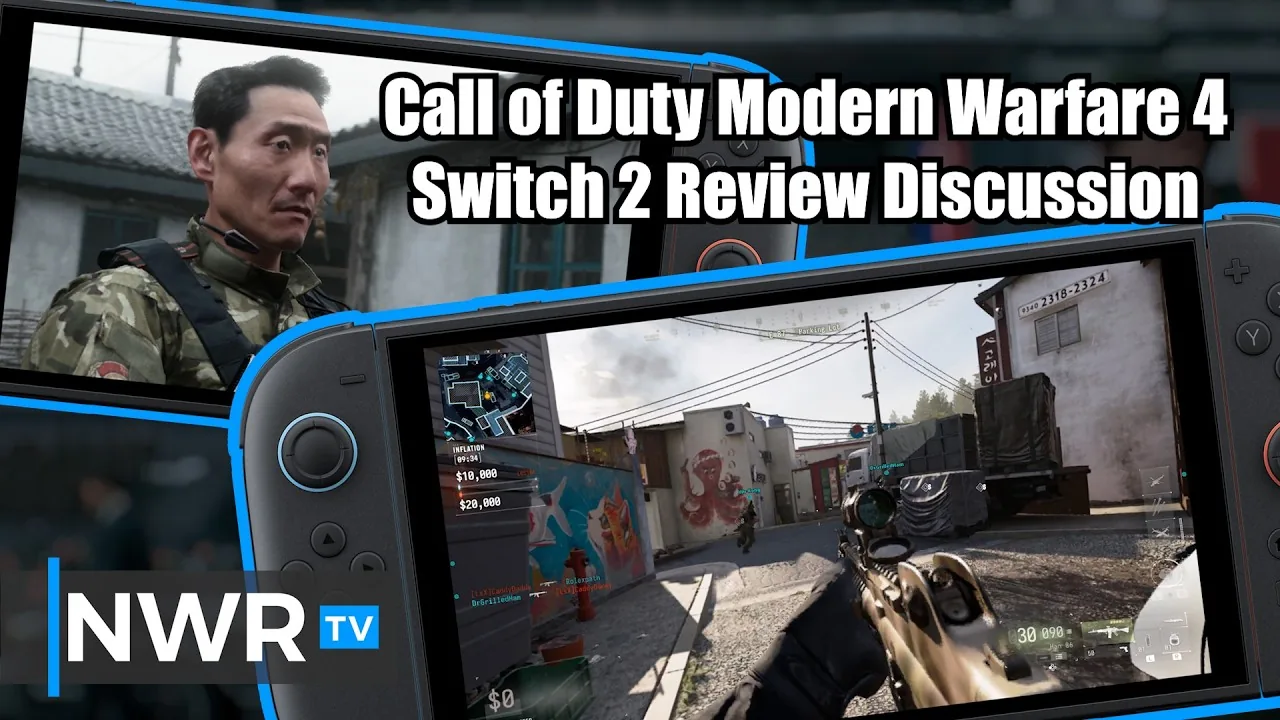
In a Nintendo World Report video discussion, reviewers John Rairdin and Jordan Rudek concluded that Modern Warfare 4 runs well on Nintendo Switch 2, but controller responsiveness leaves room for improvement. Digital Legends delivered working matchmaking and full game modes, but controller tuning still needs refinement to satisfy seasoned Call of Duty competitors [3].
Campaign Frame Rates and Visual Downgrades
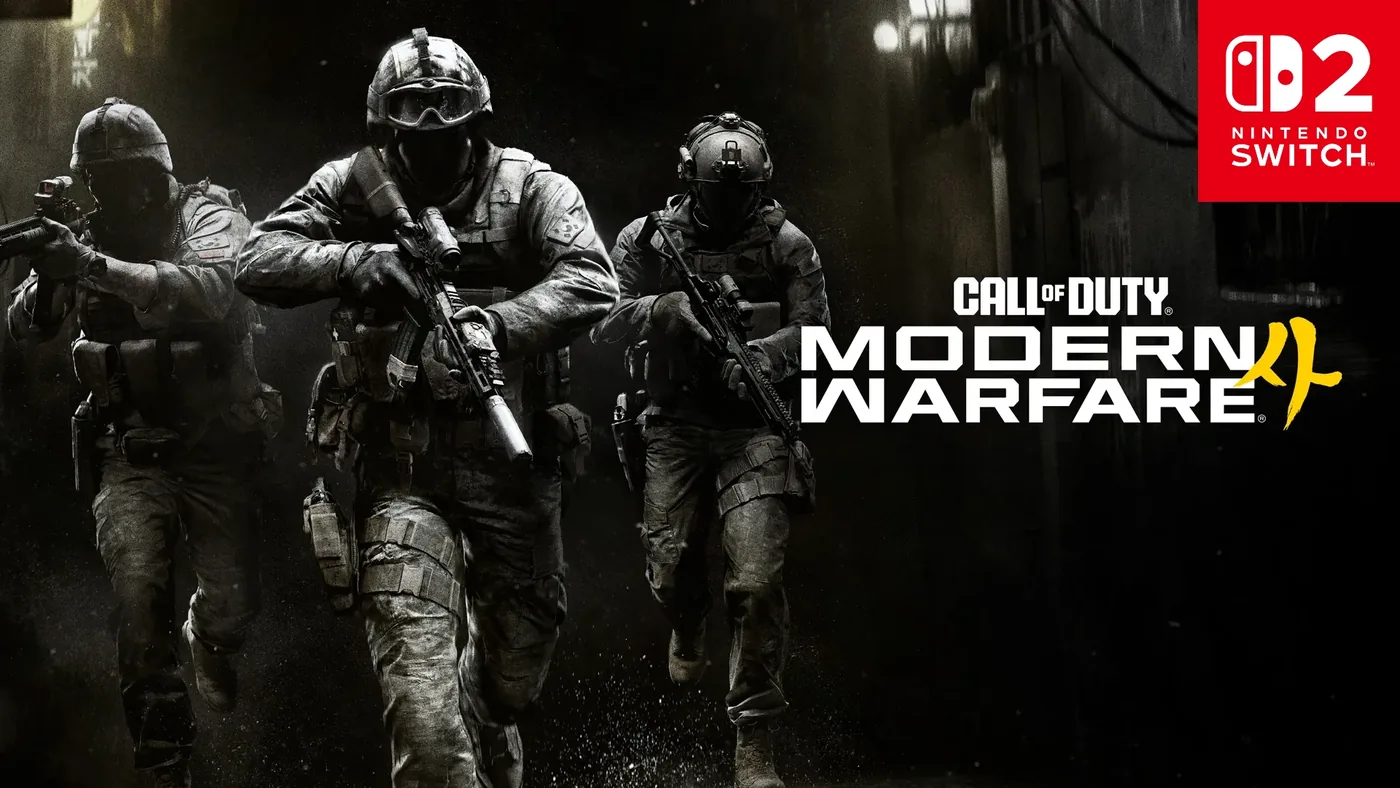
The single-player campaign runs at a locked 30 frames per second. Vikki Blake of Eurogamer and Simon Cardy of IGN tested the campaign mode docked at 4K output, reporting that gameplay felt smooth despite the reduced frame budget [1, 2]. Simon Cardy said: “Granted, the textures are nowhere near as detailed, with flat surfaces and faces smoothed over to give the impression of plasticine versions of the campaign’s characters”. He added that the presentation is noticeably downgraded compared to PC and PlayStation 5 releases, but the campaign remains engaging on Nintendo Switch 2 [2].
To squeeze the campaign into Nintendo Switch 2 hardware limits, Infinity Ward and Digital Legends stripped out bump mapping and screen-space reflections, cut back grass density, and introduced noticeable level-of-detail pop-in at fixed distances. Single-player missions also remove character self-shadows, but those shadows return in multiplayer under lower resolution settings [4].
Extraction fans jumping into the DMZ mode get an alternative balance, targeting a steady 40 FPS if they connect Nintendo Switch 2 to a 120Hz television display [4]. Digital Foundry and Nintendo Life reported that DMZ holds this 40fps refresh rate reliably during matches [5]. The opening cinematic stutters on boot, but testers saw that this minor hitching occurs on PlayStation 5 and Xbox Series X consoles as well [4].
Nintendo Return Under the Ten-Year Microsoft Deal
Modern Warfare 4 is the first mainline Call of Duty entry on Nintendo hardware in 13 years, following 2013’s Call of Duty: Ghosts on Wii U. The release stems from a binding 10-year agreement Microsoft offered Nintendo during regulatory review for its $69 billion purchase of Activision Blizzard [1]. In December 2022, former Xbox leader Phil Spencer declared: “Microsoft is committed to helping bring more games to more people — however they choose to play”. Four years later, Call of Duty arrived on Nintendo Switch 2 [2].
Port specialist Digital Legends handled development of the Nintendo Switch 2 conversion with support from Infinity Ward [2]. Engineering teams compressed the full game into an 88GB storage footprint, saving 32GB of space compared to the massive 120GB installation required on PlayStation 5. Activision executives stated that Nintendo is “all in” on supporting Call of Duty on its new console [4].
Ahead of launch, Activision addressed community concerns surrounding campaign content. Activision apologized to bereaved families of Itaewon crowd crush victims and confirmed that it removed real tragedy footage from the story mode. Narrative adjustments resolved concerns before release, but players now wait to see if future updates from Infinity Ward and Digital Legends can reduce controller latency during competitive matches [1].
- ONLINE NEWS Blake, V. (2026, November 1). Modern Warfare 4’s Switch 2 input lag is roughly double PS5’s in portable mode, which is bad news for multiplayer. Eurogamer. [Article Link]
- ONLINE NEWS Yin-Poole, W. (2026, October 31). Call of Duty: Modern Warfare 4 players on Nintendo Switch 2 face a ‘competitive disadvantage,’ tech experts say. IGN. [Article Link]
- ONLINE NEWS Rairdin, J., & Rudek, J. (2026, October 29). Call of Duty Modern Warfare 4 (Switch 2) review discussion. Nintendo World Report. [Article Link]
- ONLINE NEWS Brian. (2026, October 30). Call of Duty: Modern Warfare 4 Nintendo Switch 2 tech analysis, including frame rate and resolution. Nintendo Everything. [Article Link]
- ONLINE NEWS Digital Foundry delivers its tech verdict on Call of Duty: Modern Warfare 4 on Switch 2. (2026, October). Nintendo Life. [Article Link]


