



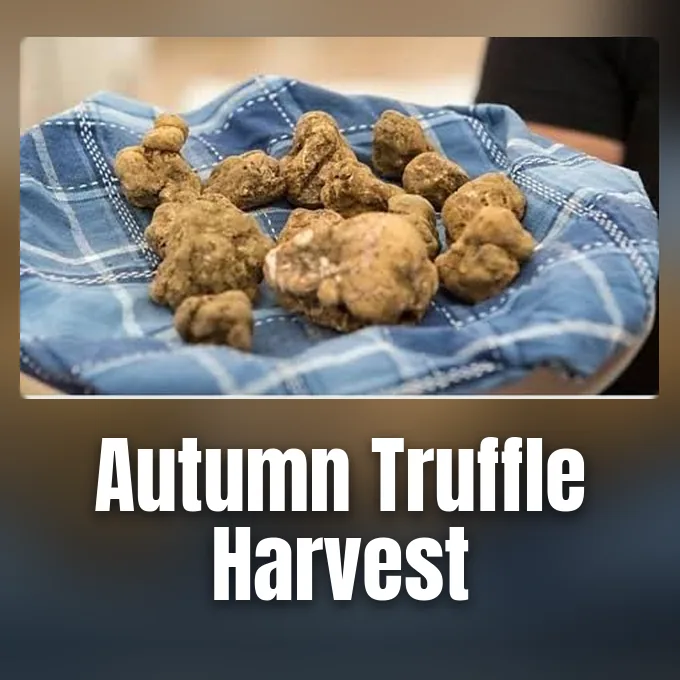
In the wooded hills of Piedmont in northern Italy and the oak forests outside Zagreb in Croatia, gatherers are pulling far fewer fungi from the ground this autumn. Months of summer heat and scarce rain have cut into the seasonal white truffle harvest, leaving soils dry, shrinking specimen sizes, and pushing market prices higher. Hunters who head into the trees each October report that finding good specimens now takes longer, while laboratory researchers warn that changing weather patterns are shifting the moist forest conditions these wild fungi need to grow [1].
Dry Autumn Weeks in Piedmont
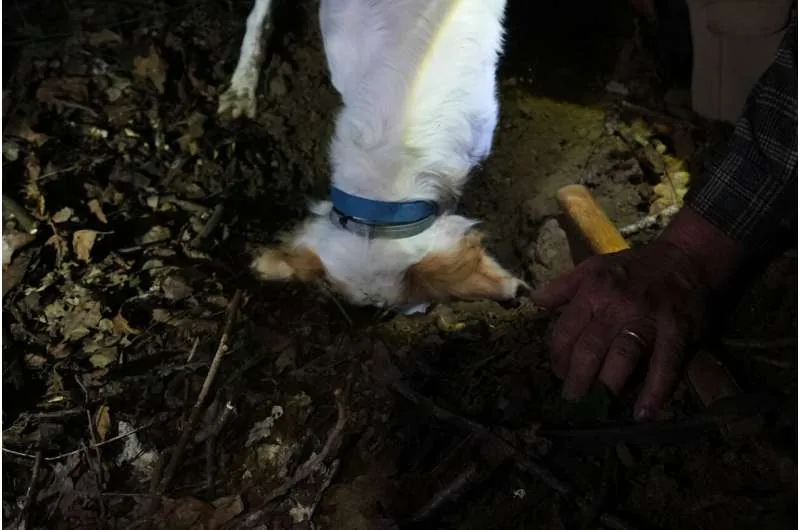
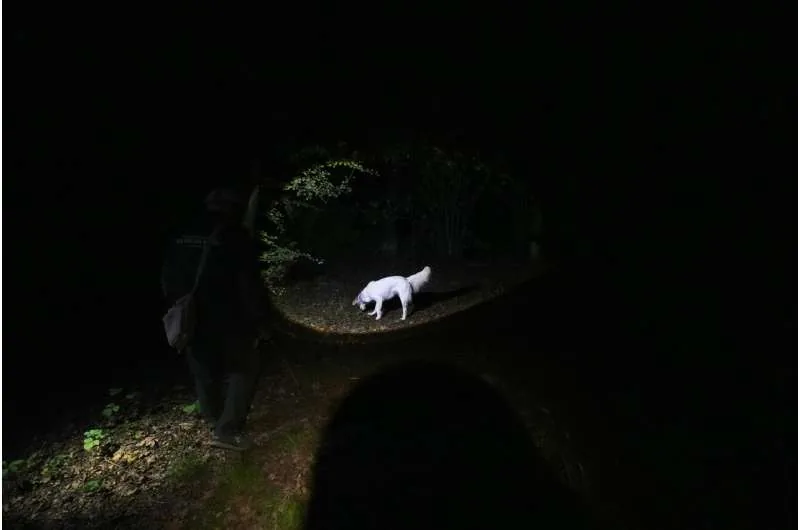
In the Piedmont region of northern Italy, truffle hunters known as trifolau traditionally begin searching the woods on October 1. Tino Marolo walks through the dark trees of Vezza d’Alba with a flashlight, watching his dog Stella sniff the soil. Marolo explained that returning empty-handed has always been part of the craft, but prolonged autumn dryness has tested even the most experienced hunters in Alba. “You certainly come home empty-handed more often than you do with a truffle,” Marolo said about his nocturnal outings. “It’s really the thrill of saying: I don’t know what I’m going to find.” For Marolo and other hunters around Alba, the current season has brought unusual frustration, as dry ground yields fewer mature fungi after months without steady precipitation [1].
The trouble stems from weather earlier in the year. Dry summer conditions in July and August left forest soils hardened before the season opened. Antonio Degiacomi, president of Italy’s National Centre for Truffle Studies, said October production suffered from those summer temperatures [1].
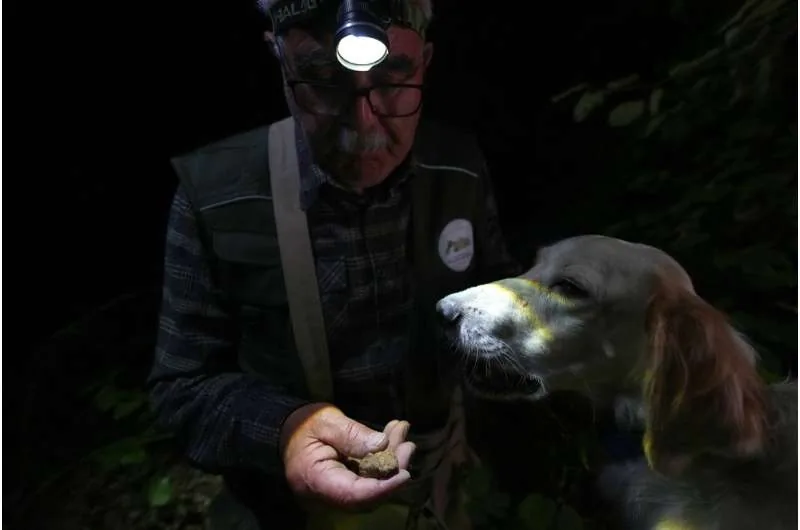
The fungi that did form underground ended up smaller than usual, showing fragile outer walls and shorter shelf lives once hunters brought them to market. Degiacomi pointed out that this season fits into a clear pattern of hotter summers and erratic rainfall that has persisted in northern Italy for five or six years. Compacted earth makes it harder for the organism to expand underground. When topsoil dries out under heat, mycelium networks struggle to nourish maturing specimens, leaving gatherers with fewer finds in places that once yielded steady baskets [1].
Oak Habitats Outside Zagreb
Similar troubles are unfolding on the other side of the Adriatic Sea. In Croatia, gatherers who work the oak woods outside Zagreb have faced shrinking harvests for nearly a decade. Petar Alebic, a local truffle hunter in Croatia, has watched yields decline each autumn as droughts become longer and ground moisture evaporates earlier in the summer. Alebic estimated that his autumn harvest is down by about 30% compared to typical baseline years. The scarcity has cut into regular income, prompting Alebic to guide visiting tourists on foraging walks to offset his losses. “Each year for the past seven or eight years has been worse than the last,” Alebic said about the steady decline in local forests [1].
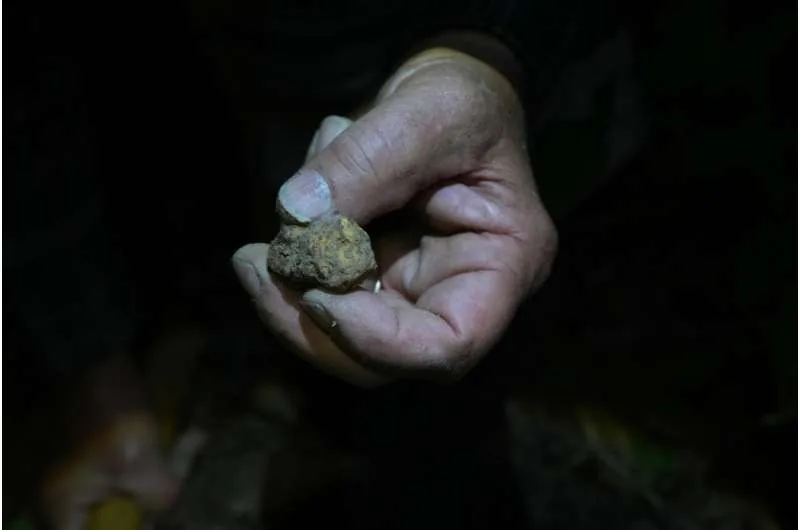
“Due to the drought, unfortunately, truffles are becoming smaller and scarcer,” Alebic said. Armin Mesic, a mycologist at the Rudjer Boskovic Institute, studies fungal ecology across Croatian woodlands. Drought and high heat harm both the volume and physical quality of the harvest. Mesic confirmed that Croatia hosts about a dozen separate truffle species, with the delicate white truffle standing out as the most valuable variety in European commercial trade [1].
Market Values and Supply Pressures
The scarcity of fresh specimens has sent tremors through wholesale markets. In Alba, the annual International White Truffle Fair opened on October 10 and runs until December 6, drawing culinary buyers and international visitors to the Langhe territory. Axel Iberti, president of the fair, reported that trading began slowly because smaller truffles emerged following the hot summer. Even though supply tightened, consumer interest remained high. Prices at Alba’s truffle market climbed between 20% and 30% higher than last year, while local hotels sold out most rooms for the festival weeks. For visiting chefs, smaller sizes meant adapting kitchen preparations to make smaller shavings go further [1].
Similar price pressures appeared across Croatian markets, where top-grade white truffles can fetch as much as 4,000 euros ($4,500) per kilogram during peak auction weeks. Top specimens command thousands of euros when supplies drop. A reporting dispatch from WTOP News filed from Rome reported that higher market rates rarely make up for lost foraging volume [2].
Media tracking services documented growing public attention to the autumn shortfall. An analysis by MediaBias News examined reporting from 22 news outlets, finding that while many digests focused on environmental shifts, several summaries omitted specific economic figures like the 30% harvest drop in Croatia or the 20% to 30% price rise in Alba. Meanwhile, Ground News tracked 31 media reports covering harvest challenges in southern Europe [4]. Such disparities show how general news digests often simplify the economic reality facing rural foraging communities [5].


Why White Truffle Harvest Yields Dropped
Understanding why the seasonal white truffle harvest declined involves looking closely at how fungal biology interacts with woodland soil. Unlike common mushrooms that sprout quickly above ground after a brief rain, wild truffles develop hidden beneath the soil surface over several challenging months. The mycelium forms a symbiotic network with host tree roots, exchanging minerals and water for carbohydrates produced by photosynthesis. When hot summer weather bakes the soil and eliminates moisture reserves, this root partnership weakens and stops nourishing embryonic truffles. Early subterranean specimens wither before reaching maturity, leaving the surrounding soil barren when hunters begin their seasonal search in traditional foraging grounds [1].
Soil compaction worsens the problem when dry spells linger through late summer. Hardened ground restricts the diffusion of oxygen into deeper soil layers and prevents light autumn showers from soaking down to root depth. Warmer soil temperatures disrupt the fruiting signals that mycorrhizal fungi rely on to produce truffles. In both Piedmont and Croatian oak woods, researchers observe that these combined environmental stresses reduce the total area capable of supporting wild fungi, compressing productive harvesting zones into smaller, shaded valleys [3].
Managing White Truffle Harvest Soils
Faced with recurring droughts, Italian researchers and conservation groups are testing practical interventions to safeguard wild habitats. Degiacomi dismissed suggestions that the white truffle is sliding toward total loss, arguing that adaptation strategies can preserve productive woodlands. “I don’t think we’re facing extinction; we’re facing a challenge,” Degiacomi said. Scientists in Piedmont are exploring experimental drip irrigation in selected forest plots to maintain baseline soil moisture during prolonged summer heat, while local municipalities work with landowners to establish public truffle reserves. These managed plots allow researchers to test whether controlled watering can replicate the natural moisture levels fungi require to produce mature fruiting bodies [1].
Community initiatives around Alba are linking economic tourism to forest preservation. Reforestation projects help lower soil temperatures and retain underground moisture. “The forest is an act of love and faith for the next two or three generations,” Iberti said, noting that planting suitable host trees creates future habitats even if seedlings take more than a decade to bear truffles [1].
Long-term stewardship also depends on protecting natural forest canopy from suburban development and soil degradation. By planting native oaks, poplars, and willows that naturally host fungal mycelium, rural communities hope to build ecological buffers against heat waves. Degiacomi explained the philosophy guiding these trials: “We’re trying to do what nature does, and do it artificially.” Sustaining a white truffle harvest in the decades ahead will depend on balancing human demand with the fragile ecological limits of European woodlands [1].
Can Underground Cultivation Succeed?
Why has commercial white truffle cultivation proved so difficult when black truffles grow reliably in commercial groves? While agricultural producers have successfully cultivated black truffles in managed orchards, the prized white truffle has resisted commercial farming. Black truffles colonize hazel and oak roots when seedlings are inoculated in nurseries, yielding steady harvests in managed groves. White truffles, by contrast, depend on specific soil chemistry, complex microbial communities, and subtle moisture cues that scientists cannot yet reproduce in commercial orchards. In reports compiled by Phys.org, agronomists have attempted controlled inoculation trials in European test plots, but reliable yields are still elusive. Because commercial cultivation has not succeeded, the culinary trade continues to depend on wild foraging where weather dictates the harvest. When dry summer weather reduces underground fruiting, supply drops without an agricultural buffer [1].
Researchers are now turning their attention beneath the soil surface to investigate microflora and tree genetics. Microbiologists are examining bacterial strains on white truffle peridium tissue, searching for helper microorganisms that might encourage fungal survival through extended dry periods. Other teams evaluate tree varieties that tolerate drought, aiming to plant woodlands capable of thriving under hotter summers. Understanding soil microorganisms could provide new tools to protect vulnerable woodland ecosystems. Yet scientists acknowledge that breeding resilient host trees takes years of observation before benefits emerge in the forest [1].
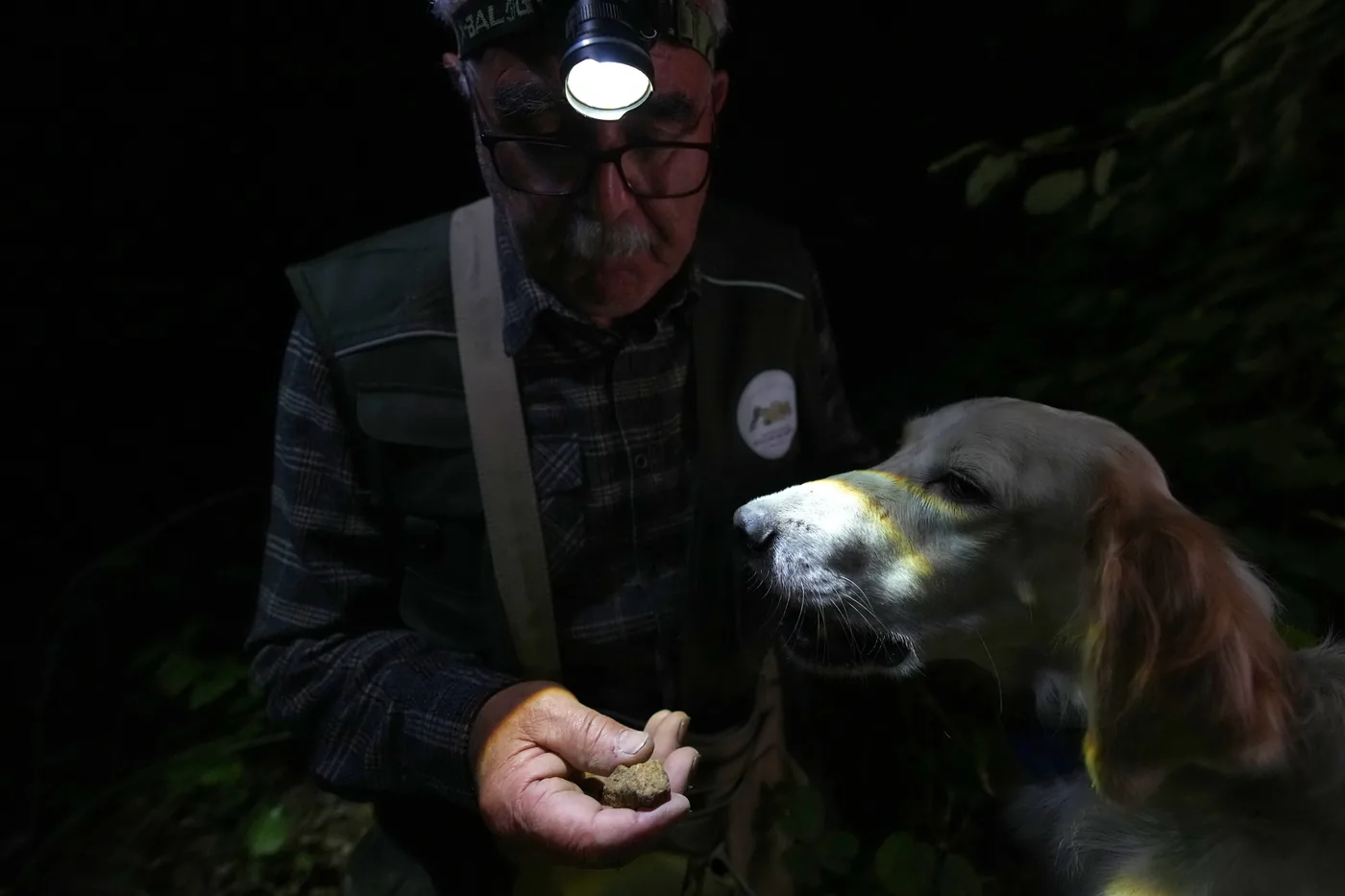
For now, the tradition rests on the bond between foragers, their dogs, and the forests they explore. In Piedmont, Tino Marolo walks through the night woods of Monteu Roero, waiting for Stella to catch a scent. The dog stops, paws at the leaf litter, and uncovers a fragrant white truffle beneath the roots. Whether future generations will witness that quiet partnership depends on how effectively forest managers, rural landowners, and climate scientists work to protect these vulnerable habitats [1].
- ONLINE NEWS Lupone, N., & Zampano, G. (2026, November 1). From Italy to Croatia, a warming climate threatens prized white truffles. Phys.org. [Article Link]
- ONLINE NEWS WTOP Staff. (2026, November 1). From Italy to Croatia, a warming climate threatens prized white truffles. WTOP News. [Article Link]
- ONLINE NEWS Post News Network. (2026, November 1). From Italy to Croatia: Warming climate threatens white truffles. OrissaPOST. [Article Link]
- WEBSITE Ground News. (2026, November 2). Climate Change Shrinks White Truffle Harvests in Italy and Croatia. Ground News. [Article Link]
- WEBSITE MediaBias Comparison Desk. (2026, November 1). Climate change impacts white truffle harvest in Italy and Croatia. MediaBias News. [Article Link]
APA 7: PerEXP Teamworks. (2026, November 2). Italian and Croatian Woods Yield Lower White Truffle Harvest. PerEXP Teamworks. https://perexpteamworks.com/en/white-truffle-harvest-climate-impacts/


