





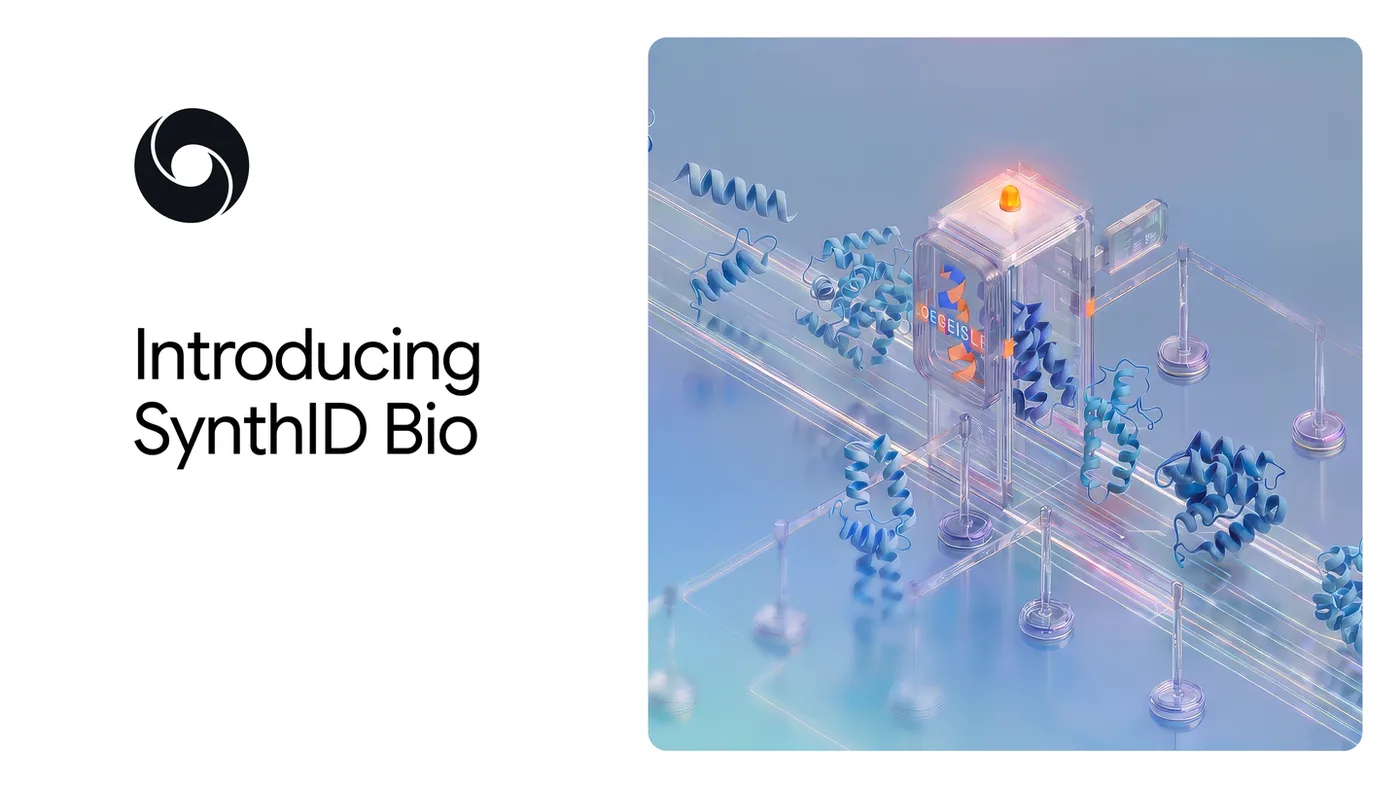
Can synthetic biology verify the origin of artificial proteins without destroying the delicate chemical machinery that gives them life? Google DeepMind researchers have introduced SynthID Bio, a watermarking framework that embeds verifiable digital signatures directly into AI-designed protein sequences and predicted three-dimensional molecular structures. As generative tools accelerate synthetic biology, distinguishing machine-generated designs from natural molecules has become a critical safeguard for global biosecurity. In laboratory tests published in Nature, watermarked protein binders retained their binding potency against viral and human targets while detectors identified every sequence candidate [1].
How Does SynthID Bio Mark Proteins?
SynthID Bio marks proteins by subtly steering amino acid selection during sequence generation and modifying atomic coordinates within predicted 3D structures. Technical development led by Alexander I. Cowen-Rivers and David Stutz, under the advisory direction of Pushmeet Kohli at Google DeepMind, established two distinct mechanisms tailored to biological data formats [3]. When generative models output a linear chain of amino acids, the system employs tournament sampling during the ProteinMPNN generation phase to bias residue selection according to a pseudorandom key. This mathematical signature remains embedded in the primary sequence without altering the broader chemical stability or folding trajectory of the resulting molecule [6]. Detectors equipped with the corresponding secret key evaluate the sequence against a statistical threshold to verify whether an artificial intelligence model produced the candidate.
Predicting biomolecular geometry requires an entirely different technical intervention. For structural predictions, the DeepMind team fine-tunes components within the diffusion network of AlphaFold 3, embedding watermarking parameters directly into the model weights [3]. When the updated network executes inference, it introduces minute, deterministic spatial variations into the predicted atomic coordinates. These imperceptible coordinate adjustments act as a permanent watermark across the simulated atomic lattice [2]. The resulting structural files convey high-resolution spatial predictions while secretly proving their computational origin.
The code is on GitHub [2].
Laboratory Validation Across Three Disease Targets
Moving computational predictions into physical reality required rigorous laboratory validation. Collaborating with Adaptyv Bio for in vitro experiments, the research group synthesized watermarked protein binders designed to selectively attach to three high-profile medical targets [3]. These biomolecules included the vascular endothelial growth factor A (VEGF-A), which governs blood vessel development in cancer pathways, the receptor-binding domain of the SARS-CoV-2 spike protein (SC2RBD), and programmed death-ligand 1 (PD-L1), an immune checkpoint regulator. The experimental team tested fifteen backbones [6]. They paired the AlphaProteo design framework with the watermarked ProteinMPNN tool to produce physical molecules.
Using surface plasmon resonance (SPR) spectroscopy, the scientists measured the binding kinetics of each physical binder to verify whether watermarking impaired molecular activity. Across all three therapeutic targets, the binding-affinity distributions of watermarked binders exhibited no statistically significant population-level difference compared to unwatermarked control groups [6]. The watermarked molecules grabbed their intended target proteins with comparable grip strength [5]. At an affinity threshold of KD ≤ 10⁻⁷, the proportion of successful binding candidates showed no significant deviation between groups, though at KD ≤ 10⁻⁶ the unwatermarked binders yielded a slightly higher hit rate than the non-distortionary cohort generated under a 0.5 sampling temperature [6]. Similar rigorous physical testing underpins broader biotechnology initiatives, such as creating tiny biological robots engineered from human cells to repair injured physiological tissue.
Detection accuracy matched the high functional performance observed in the wet lab. For filtered in vitro protein sequence designs, the detection algorithm achieved a 100% true-positive rate while maintaining a false-positive rate of just 0.1% [6]. Statistical detection remained dependable across diverse amino-acid compositions without flagging natural protein sequences [1].
Fine-Tuning AlphaFold 3 Diffusion Weights
Embedding invisible watermarks into three-dimensional macromolecular predictions presented unique computational hurdles. Generative systems predicting protein shapes rely on complex spatial representations, where arbitrary numerical noise can distort hydrogen bonds, electrostatic interactions, and hydrophobic packing cores [1]. DeepMind resolved this tension by retraining a fraction of the diffusion network within AlphaFold 3, adjusting the network weights so that every coordinate generation deterministically embeds a subtle geometric pattern [3]. Because the watermarking capability is baked into the neural parameters, the model inherently signs every predicted structure without requiring post-processing scripts or user intervention [5].
Evaluation benchmarks confirmed that AlphaFold 3 retained its industry-standard geometric accuracy while producing traceable structures. Across an extensive evaluation dataset, the three structure-watermark models surpassed a 99.8% true-positive detection rate at a calibrated 0.1% false-positive threshold [6]. Key structural metric distributions, including backbone dihedral angles and root-mean-square coordinate deviations, matched the fidelity of unmodified model outputs [3]. The invisible spatial tag proved resilient against standard digital noise and mild coordinate perturbations [5]. Computational biologists can manipulate the predicted coordinates within visualization software without erasing the embedded institutional signature.

The preservation of natural structural properties is critical because public repositories depend on high-fidelity data to advance molecular medicine and biochemical modeling. Mislabeled or corrupted structural entries can misdirect downstream drug discovery campaigns, wasting millions of dollars and years of laboratory effort on distorted binding pockets [3]. By integrating watermarking directly into the diffusion weights of AlphaFold 3, researchers can safely deposit computed biomolecular models into community archives while providing curators with a reliable, mathematical tool to verify design provenance [5]. This architectural approach demonstrates that safety mechanisms can operate natively within frontier generative systems without compromising their analytical resolution or scientific utility [1].


Why Biosecurity Defenses Require Design Verification
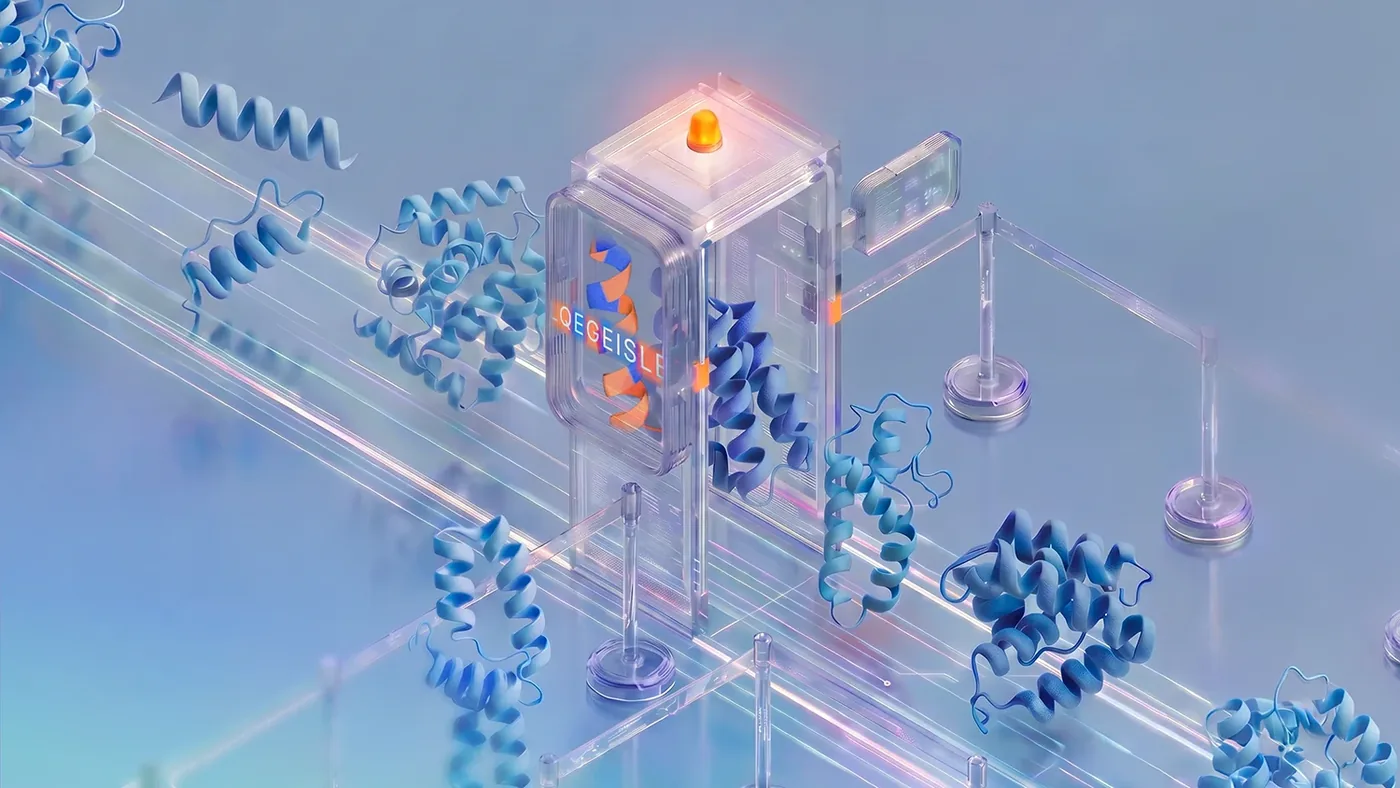
The rise of generative molecular design has exposed critical vulnerabilities in global biosecurity screening protocols. When researchers convert digital protein blueprints into physical samples, they place commercial manufacturing orders with DNA synthesis providers [5]. These firms screen incoming genetic orders against reference databases of known biological hazards, infectious pathogens, and regulated toxins [3]. Historically, an unfamiliar sequence was assumed to belong to an undiscovered natural organism [5]. Generative artificial intelligence has shattered that assumption by fabricating entirely novel sequences with negligible resemblance to known natural hazards [3].
Without automated provenance indicators, screening providers face an overwhelming volume of manual compliance reviews that threaten to paralyze academic research. Sarah Carter, a biosecurity policy expert and Principal at Science Policy Consulting, emphasized the governance implications of the breakthrough: “SynthID Bio is an important piece of the puzzle for tracking the provenance of biological designs. By linking designs to the model developer, these watermarks empower developers to lead on safety and allow synthesis providers to streamline screening for customers who have used those models.” James Diggans, Vice President of Policy and Biosecurity at Twist Bioscience, similarly praised the mechanism: “For Twist, watermarking offers a promising new addition to the biosecurity toolbox that could strengthen screening, focus resources on sequences that warrant closer review and make biosecurity more efficient as AI-designed biology continues to advance [3].”
Beyond commercial gene synthesis counters, verifiable watermarks provide vital defenses for open scientific repositories such as the Protein Data Bank, UniProt, and GenBank [3]. Because these databases accept public community submissions, unauthenticated AI-generated entries risk polluting foundational scientific resources with unverified structures [5]. As shown by parallel advances in CRISPR and RNA-editing therapies, synthetic biology demands robust authentication standards to ensure technological progress does not outpace bio-risk governance.
Relaxation Limits in Protein Watermarking
Despite the remarkable detection rates demonstrated in initial benchmarks, the watermarking architecture exhibits notable vulnerabilities under specific computational transformations. In controlled red-teaming experiments conducted by the DeepMind team, sequence watermarks were effectively erased when candidates underwent iterative resequencing through an independent ProteinMPNN pipeline. By running an existing design back through an unwatermarked sampling process, an adversary could strip the hidden amino-acid signature while retaining the underlying structural fold [6]. This sequence vulnerability demonstrates that statistical watermarking cannot serve as an impenetrable barrier against dedicated computational tampering.
The 3D structure watermark faced an even more direct physical vulnerability during standard energetic refinement. When predicted molecular coordinates underwent constrained relaxation using OpenMM and the Amber99sb force field, the structural watermark was completely destroyed [6]. Molecular relaxation is a standard computational technique employed by structural biologists to relieve steric clashes and minimize potential energy in predicted coordinates. Recognizing this deficiency, the authors noted in their Nature publication: “However, robustness to relaxation is lacking, but we expect that this could be addressed by explicitly considering relaxation while training SynthIDBio-structure [2].”

OpenMM relaxation destroyed the spatial signal [6]. Future iterations will need to incorporate relaxation dynamics directly into training loss formulations to safeguard spatial watermarks against post-prediction energy minimization.
Extending SynthID Bio to Phage Genomes
Recognizing that biological watermarking must evolve alongside frontier capabilities, Google DeepMind has already begun expanding the framework toward complex living systems. In an ongoing collaboration with the laboratory of Brian Hie at Stanford University and the Arc Institute, researchers integrated SynthID Bio into Evo 2, an advanced foundation model trained on genomic architectures [3]. Rather than marking isolated individual proteins, the joint research team applied watermarking algorithms across the entire genomic sequence of an artificial bacteriophage—a virus engineered to infect bacterial cells [5].
Early wet-lab testing within live bacterial cultures confirmed that these watermarked bacteriophages remained fully functional and biologically viable [3]. The experimental results demonstrate that computational watermarks can persist within replicating genetic material without disrupting viral replication cycles or host infectivity [5]. The research consortium plans to publish full technical details in an upcoming manuscript, establishing preliminary foundations for watermarking synthetic organisms. Demis Hassabis supported the research effort [3].
Global biosecurity frameworks rely on layered defenses rather than single interventions, operating much like a Swiss cheese defense model where overlapping mechanisms cover individual blind spots [3]. Verifiable watermarks supply a tangible provenance layer that complements model-level safeguards and synthesis customer screening [5]. Nature published the paper on September 30 [7]. Transparent verification mechanisms will help ensure that biological innovation advances safely across the global scientific ecosystem [1].
- ACADEMIC JOURNAL Stutz, D., Cowen-Rivers, A. I., Ortiz-Jimenez, G., Ratcliff, J., Zambaldi, V., Willmore, L., Abramson, J., Patani, H., Kouridi, C., Stimberg, F., Vecerik, M., Chu, A., Singh, S., Dathathri, S., Papa, E., De Bortoli, V., Doucet, A., Hassabis, D., Wang, J., & Kohli, P. (2026). Function-preserving watermarking of AI-generated proteins. Nature. [Article Link]
- ONLINE NEWS Arnold, P. (2026, October 1). Google DeepMind develops invisible watermarks for AI-designed proteins. Phys.org. [Article Link]
- PRESS RELEASE Kohli, P., Stutz, D., Cowen-Rivers, A., & Ratcliff, J. (2026, September 30). SynthID Bio: Watermarking methods for synthetic biology. Google DeepMind. [Article Link]
- PRESS RELEASE Chang, M. (2026, September 30). We’re introducing SynthID Bio, bringing our watermarking technology to synthetic biology. Google. [Article Link]
- ONLINE NEWS Pogorelec, A. (2026, October 1). Google’s SynthID Bio can watermark AI-designed protein binders without breaking them. Help Net Security. [Article Link]
- ONLINE NEWS NeoTeo. (2026, September 30). SynthID Bio protein watermark: how it works in AI. NeoTeo. [Article Link]
- ONLINE NEWS NewsMarkets. (2026, September 30). Google DeepMind unveils SynthID Bio to watermark AI-designed proteins. NewsMarkets. [Article Link]
APA 7: TWs Editor. (2026, October 2). Google DeepMind Watermarks AI Proteins With SynthID Bio. PerEXP Teamworks.


