




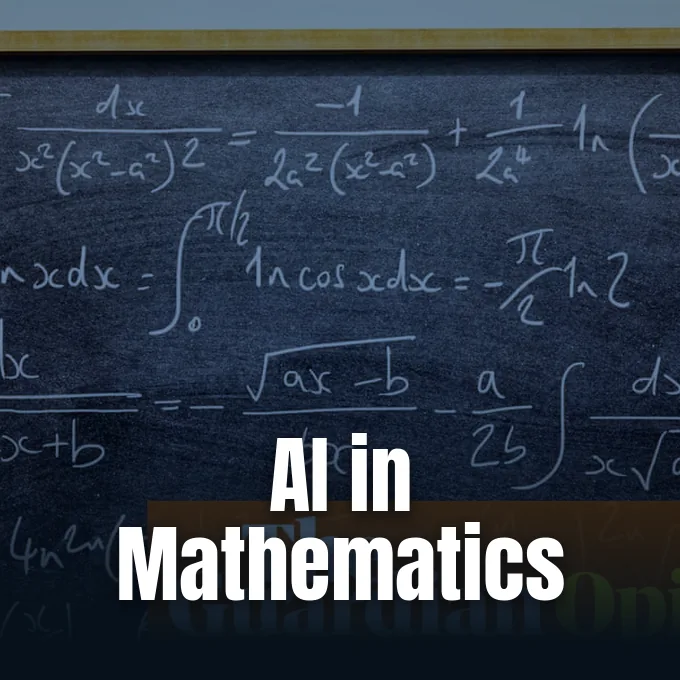
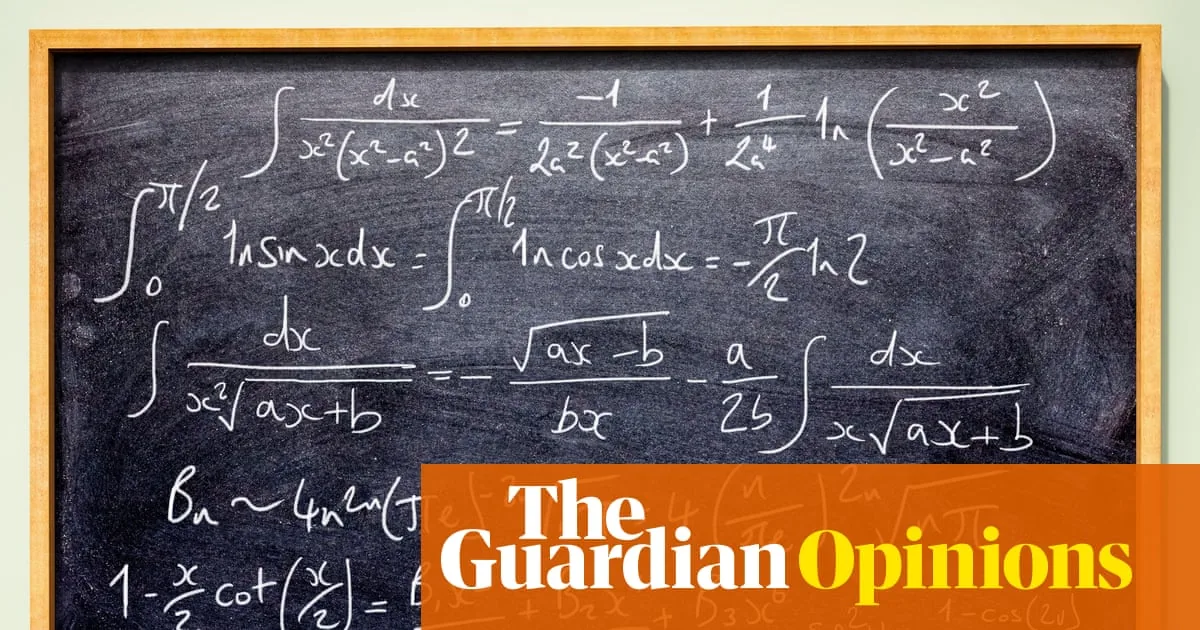
Can automated algorithms replace human insight in resolving the foundational challenges of mathematics? The rapid expansion of AI in mathematics reached a contentious turning point when OpenAI claimed that its automated agents solved the Navier-Stokes problem (a celebrated system of nonlinear partial differential equations modeling fluid motion). Rather than generating unanimous acclaim, the commercial announcement sparked profound unease across international academic departments. Mathematicians emphasized that the corporate claim had not undergone independent peer verification, turning a purported scientific triumph into an intense debate over credit, transparency, and research ethics [1].
Navier-Stokes Claim Sparks an Existential Crisis
On 8 September, research laboratory OpenAI announced that its artificial intelligence systems solved the Navier-Stokes problem. The claim ignited instant fury. Under standard academic conditions, a human mathematician resolving this open question would collect prestigious prize money and peer accolades. Instead, OpenAI triggered an existential crisis across mathematics [1].
The mathematics underlying Navier-Stokes (the foundational principles governing how fluids move and air currents circulate) remains notoriously formidable to master. Yet the central grievances voiced by mathematical researchers reflect widespread anxieties shared by artists, writers, and office professionals. In theoretical mathematics, the consequences are particularly acute because an erroneous analytical derivation cannot simply be patched like synthetic software graphics, meaning unverified steps corrupt entire deductive structures [1]. Rigorous proof demands absolute precision.
OpenAI presented its derivation as an operational milestone for autonomous computational reasoning. However, editorial analysis by The Guardian stressed that machine learning outputs remain fundamentally dependent on human intellectual contributions. Every predictive token produced by automated models reflects patterns absorbed from mathematical treatises and peer-reviewed journal papers written by human thinkers. Because the commercial firm publicized its result through corporate channels rather than scholarly journals, researchers argued that AI in mathematics cannot bypass external scrutiny before receiving academic validation [1].
AI in Mathematics Faces Attribution Disputes
Attribution conflicts escalated as commercial software systems entered theoretical academia. While the technical paper released by OpenAI cites relevant literature, many mathematicians believe the company failed to provide sufficient credit to independent researchers who had spent years working close to a solution. Several scholars condemned this omission as an unfair practice that erases human ingenuity to monopolize global prestige [1].
Mathematician Tristan Buckmaster raised specific alarms after noting troubling parallels between his ongoing research and OpenAI’s public declarations. Buckmaster had been actively investigating Navier-Stokes while using OpenAI’s Codex model (automated code generation models trained on user inputs), prompting urgent concern that his working drafts had been monitored by the firm’s engineers. OpenAI denied accessing Buckmaster’s private files directly. However, the company conceded it could not rule out that telemetry and user queries helped refine the underlying mechanics of machine learning algorithms without formal licensing frameworks [1].
Attribution remains an unresolved grievance. The widespread failure to credit and compensate human scholars whose published proofs constitute the training foundation of frontier models has alienated a major segment of the scientific community. When commercial executives promote AI in mathematics as an autonomous engine of discovery, they deliberately obscure the decades of human labor embedded in every algorithmic calculation [1]. Scholars warn that treating public scholarship as unpaid computational fodder damages institutional trust.
Tech Firms Depend on Human Verification
Commercial technology laboratories cannot evaluate complex proofs in complete isolation. They remain entirely dependent on human scholars to inspect algorithmic reasoning [1]. Proof demands human verification.
Commercial enterprises routinely exploit advanced mathematical derivations as promotional showcases to market the cognitive prowess of their proprietary systems. Yet professional mathematicians tasked with auditing these automated outputs describe the generated arguments as sloppy and baffling, requiring painstaking manual labor to separate meaningful derivations from nonsensical syntax. Without qualified scholars checking whether each intermediate lemma is mathematically sound, algorithmic assertions remain useless. The deployment of AI in mathematics consequently demands more specialized human labor rather than less, because auditing complex machine drafts requires rare intellectual expertise that computers cannot provide [1].
Practical applications in other technical fields offer an instructive contrast. An automated model that generates an experimental vaccine candidate or produces a visual film sequence yields an output with immediate utility (such as structural biology models or automated media engines). Pure mathematics functions under fundamentally different intellectual demands. It will take extensive time and disciplined human intellectual labor to determine whether OpenAI’s purported Navier-Stokes solution contains novel analytical insights or merely constitutes an elaborate computational dead end. What should have been an inspiring opportunity for productive collaboration has instead generated deep resentment and academic friction [1].

Mathematicians Engage Tools Despite Corporate Friction
Widespread resistance toward corporate exploitation does not signal a stubborn rejection of technological innovation. On the contrary, contemporary scholars remain remarkably open to incorporating automated computational tools into their analytical workflows. Even while signing critical open letters that denounce commercial firms for uncredited data extraction, prominent researchers acknowledge that frontier systems and AI in mathematics are undeniably powerful and exceptionally capable of processing intricate mathematical operations [1]. Their protest targets corporate exploitation rather than computational capability.
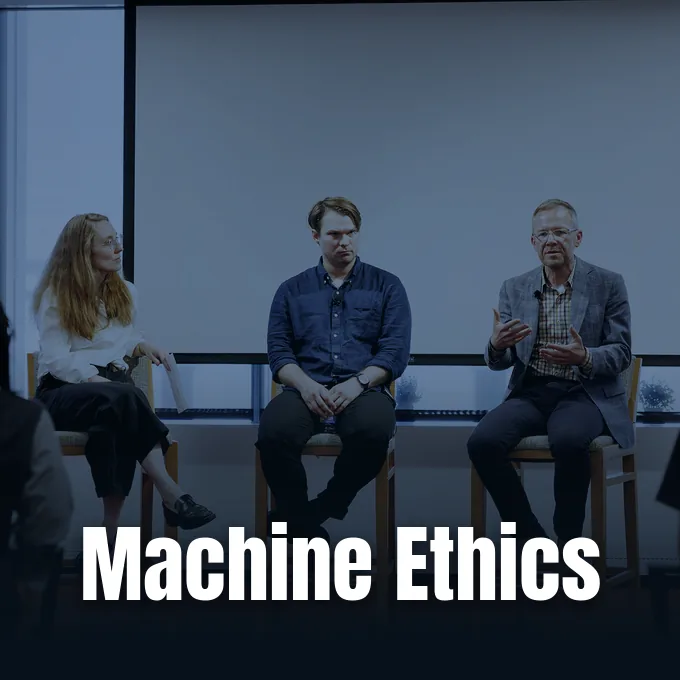
How can mathematicians integrate algorithmic assistance without relinquishing conceptual leadership? Departmental seminars now host rigorous discussions exploring how the field can assimilate AI in mathematics while ensuring that human minds guide problem selection and interpret formal derivations [1]. Rather than surrendering mathematical discovery to opaque automated solvers, research groups envision collaborative workflows where algorithms suggest computational conjectures and human researchers evaluate structural validity. Human guidance remains essential.
Ethical inquiries intersect directly with broader debates regarding the philosophical frameworks guiding artificial intelligence across research institutions. Mathematicians stress that automated systems possess no intrinsic understanding of epistemological truth (the foundational rules governing valid deduction). When private companies monopolize the computational infrastructure that produces mathematical claims, commercial motives inevitably clash with the objective pursuit of scientific clarity [1]. Scholars emphasize that open academic oversight must supersede proprietary corporate enclosures.
Bill Thurston and the True Product of Mathematics
Does celebrating isolated breakthroughs distort how society values scientific discovery? The turmoil surrounding OpenAI and AI in mathematics has prompted deep introspection regarding whether rewarding flashy proof results—whether achieved by celebrated individuals or complex neural networks—represents an impoverished way to evaluate scholarly progress. A single formal proof often depends on decades of uncelebrated conceptual groundwork laid by dozens of independent scholars who never receive public recognition. Rewarding only the final entity that crosses a symbolic finish line misrepresents the collaborative nature of scientific inquiry. Mathematics is a collective intellectual endeavor. Scholars argue that prioritizing headline announcements over cumulative understanding distorts academic values and alienates researchers whose foundational insights make computational breakthroughs possible [1].
Historical precedents illustrate how earlier scholars understood these boundaries. In 2010, the celebrated mathematician and Fields Medal recipient Bill Thurston captured the soul of the discipline [1]. Thurston wrote that the true product of mathematics is clarity and understanding, not theorems by themselves. Deduction without understanding provides minimal scientific value.
Human mathematical intuition rests on complex neurological learning processes that machine models simulate only superficially. Recent biological research, such as an investigation into how single neurons in the human substantia nigra encode social learning signals, examines the physical pathways through which humans absorb conceptual knowledge. Crucially, this biological study remains a preprint that has not undergone formal peer review, serving as a reminder that unverified scientific assertions require rigorous academic scrutiny [2]. While algorithms execute permutations at remarkable speed, human researchers seek meaning, conceptual frameworks, and explanatory depth. The value of AI in mathematics will ultimately be judged by whether it enriches human comprehension rather than whether it replaces it with opaque machine outputs [1].
Nestor Guillen Urges Democratic Control of Technology
Vocal critics continue to dismiss artificial intelligence outputs as uniformly useless synthetic slop, claiming that predictive language models produce nothing of genuine academic value. That dismissive attitude ignores empirical reality. While machine models will never master every domain of human intellectual endeavor, their demonstrated efficacy in specialized analytical tasks remains undeniable [1]. Mathematicians currently occupy a frontline role that other academic disciplines will soon confront: balancing staggering computational utility against unaccountable corporate monopolies.
Mathematician Nestor Guillen recently highlighted a practical resolution to this institutional dilemma. Guillen observed that widespread academic anxiety would dissolve if society could separate powerful computational technology from the proprietary control of commercial tech firms. By democratizing access to frontier models and placing computing resources under academic oversight, researchers could harness automated reasoning without surrendering scientific sovereignty [1]. Establishing public computational infrastructure has become an urgent international priority for university systems.
The Navier-Stokes controversy demonstrates that mathematical discovery cannot be treated as a corporate race for intellectual property. As The Guardian observed in its editorial reflection, automated systems will transform scientific workflows, but human insight remains indispensable in discerning which problems matter and why [1]. Universities and international funding agencies must establish transparent attribution standards before the next corporate claim surfaces. The future of AI in mathematics depends on whether automated systems are deployed to empower scientific understanding or merely to burnish commercial prestige.
- ONLINE NEWS The Guardian. (2026, September 20). The Guardian view on AI v mathematicians: humans are still vital to the field, but tech firms refuse to see that. The Guardian. [Article Link]
- PREPRINT bioRxiv. (2026, September 18). Single neurons in the human substantia nigra encode social learning signals. bioRxiv. [Article Link]
APA 7: TWs Editor. (2026, September 21). Mathematicians Confront AI in Mathematics After OpenAI Claim. PerEXP Teamworks.


