





Taiwan Semiconductor Manufacturing Company cleared a $1 billion plan on Tuesday to buy direct equity stakes in artificial intelligence developers Anthropic and OpenAI as both firms expand compute clusters across global data centers [5]. Directors in Taipei set aside up to $500 million for Anthropic common stock and an equal $500 million for OpenAI preferred shares [3]. The move establishes a direct TSMC AI investment in software customers that consume large volumes of advanced silicon before Anthropic lists shares in New York on November 19, 2026. Claude and ChatGPT drive this silicon demand [5].
Structure of the TSMC AI Investment
The funding plan splits cash between the two American labs under distinct terms. TSMC plans to acquire non-voting Class N common shares directly from Anthropic during the debut, matching the price set for public buyers [3]. Local reports from CNA and Taiwan News in Taipei revealed that the full package totals NT$32.85 billion, with NT$16.43 billion earmarked for Anthropic and NT$16.43 billion set for OpenAI [6]. TSMC manages this deal through TSMC Partners, an investment unit led from Hsinchu to participate alongside Alphabet and Nvidia [3].
Anthropic set an indicative price range of $70 to $78 per share in a filing with the US Securities and Exchange Commission, matching NT$2,308 to NT$2,572 in local currency. At the $74 midpoint, TSMC’s $500 million check buys roughly 6.8 million shares. That purchase secures about 0.05% of Anthropic common stock. The agreement closes immediately after the public launch on Wall Street, but only if the offering proceeds [3].
OpenAI agreed to sell preferred stock reserved for large institutions. While TSMC didn’t disclose the exact share price for its purchase, OpenAI raised $11 billion on November 6 at a $1.25 trillion valuation to kick off a broader funding round that could top $20 billion [3]. The new TSMC AI investment departs from the foundry’s usual practice as a neutral chip fabricator that avoids owning client equity [5].
Anthropic Offering and Investor Group
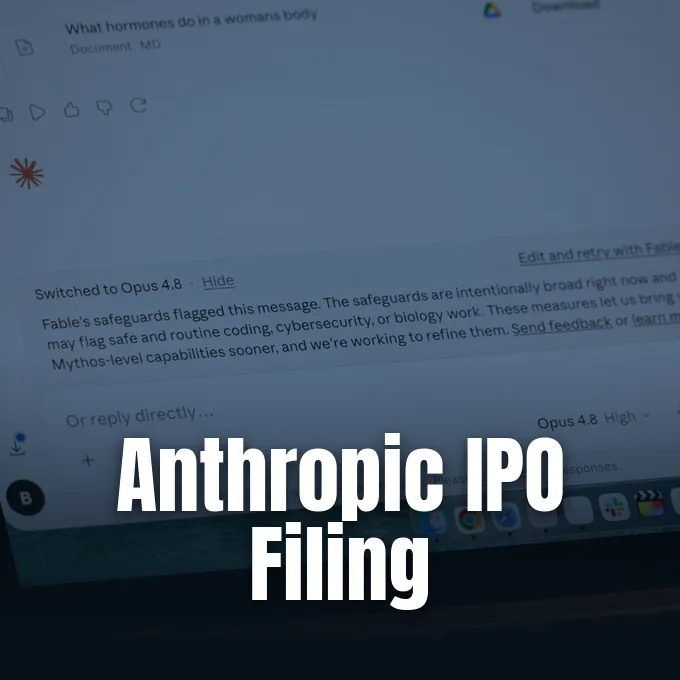
Anthropic aims to raise up to $64.4 billion during its Wall Street debut by selling 825 million common shares [5]. At the top of the price band, the 13.1 billion shares left after the debut and private sale would value Anthropic at roughly $1.02 trillion, or NT$46.16 trillion. Adding employee stock options and restricted stock units lifts that figure to $1.4 trillion, according to financial reporting by Reuters [3].
The public listing coincides with a $26 billion private share sale to strategic tech partners, raising NT$857.2 billion [5]. Alphabet and Nvidia lead the buyer group. Each committed $10 billion each to buy non-voting Class N shares at the debut price [3]. The remaining shares go to Advanced Micro Devices, Broadcom, Micron Technology, Microsoft, and TSMC Partners, assembling a powerful coalition of processor designers, memory suppliers, and cloud giants. These buyers can’t vote on corporate governance, but the arrangement ties their balance sheets directly to Anthropic’s Claude AI models as enterprise demand grows across North America and Asia [5]. The private placement closes right after the public offering, and only if the debut proceeds [3].
Heavy computing costs drive these massive funding rounds as model builders spend heavily on hardware. Recent disclosures in Anthropic IPO filings showed rapid revenue gains paired with steep losses from cloud server contracts. Claude requires vast clusters of graphics processors to train next-generation models. Software labs need cash upfront [5].


Capital Budget for Advanced Fabs
The equity deals arrived during a busy board meeting in Hsinchu. TSMC directors approved roughly $40.93 billion in capital spending for 2027 to expand cleanrooms, build new plants, and fund research projects. The allocation targets next-generation silicon, specialty chips, and advanced packaging methods such as Chip-on-Wafer-on-Substrate technology [5].
Directors also set aside NT$16.49 billion, or about $500 million, to launch an independent corporate entity for semiconductor supply chains, though TSMC hasn’t said whether the Anthropic and OpenAI stakes will sit inside that unit or stay with TSMC Partners. Direct equity stakes in clients remain rare for the Taiwanese foundry. Nikkei Asia noted that TSMC historically focused on contract fabrication rather than holding shares in software partners [6].
In 2023, TSMC bought NT$3.3 billion of shares in British designer Arm during its public debut, but the company sold its entire Arm position in April 2026 as core manufacturing operations continued to generate record cash flow [6]. TSMC posted six straight quarters of record net income [5]. Net profit topped $23 billion for the third quarter from July through September 2026, while October sales jumped 60% from a year earlier. That cash flow funds global fab growth, including $265 billion committed to Phoenix, Arizona, as well as facilities in Kumamoto, Japan, Dresden, Germany, and cleanroom plants across Tainan. TSMC is also evaluating potential projects in Texas [8].

Supply Chains and Customer Concentration
TSMC sits at the heart of the world’s AI hardware supply chain. It makes nearly all top-tier accelerator chips used to train frontier models. The foundry also produces custom processors for Apple hardware, supplying chips for iPhones, Mac laptops, and cloud server racks [5].
Nvidia relies on TSMC foundries to produce the specialized graphics processing units that power large computing clusters at both Anthropic and OpenAI, with Anthropic’s prospectus noting that most cutting-edge chipmaking capacity sits in Taiwan [5]. TSMC has at times failed to match surging demand, leaving Anthropic short of processors for model training. Cleanrooms can’t run above capacity [3].
Heavy reliance on Nvidia poses a strategic challenge because the chip designer accounts for a huge slice of TSMC’s revenue. Taiwanese reports in China Times and United Daily News noted that both Anthropic and OpenAI are designing custom chips for AI inference to lower their reliance on Nvidia. A direct TSMC AI investment helps the foundry build direct client relationships, giving it more room to plan factory capacity and set prices for future 2-nanometer lines [7].

Market Concerns Around TSMC AI Investment
Financial markets cheered the TSMC AI investment announcement. In New York trading, TSMC stock added 2.0% on Tuesday, while the Philadelphia Semiconductor index slipped 0.4%. In Taipei, TSMC shares rallied 4.8% on Wednesday, beating the Taiwan Weighted Index which gained 3.6% [3].
Yet the deal sparked fresh debate over circular financing across the AI sector. Industry analysts warned that circular funding deals between hardware makers, suppliers, and model developers make it tricky to gauge real market demand for AI tools [2]. Nvidia has committed $30 billion to OpenAI and $10 billion to Anthropic, creating loops where chip revenue flows back into client equity [5].
The move may offer markets “a shot of confidence as the artificial-intelligence trade shows signs of strain,” The Wall Street Journal reported [2]. Analysts at Emergent estimate that both AI labs will combine to pour more than $15 billion into data center computing next year, with TSMC foundries producing most of those processors. Direct equity stakes tie TSMC to the boom while locking in steady demand for its 2-nanometer lines [4].
- ONLINE NEWS Zafar, R. (2026, November 12). Taiwan Chip Giant TSMC Acknowledges Hack Of Reportedly 49,000 Employee Files Occurred But Says Leaked Data Matches That Stored With External Cloud Provider. Wccftech. [Article Link]
- ONLINE NEWS Ars Technica. (2026, November 11). Taiwan’s chipmaking giant TSMC to invest $1B in Anthropic, OpenAI. Ars Technica. [Article Link]
- ONLINE NEWS Gunnars, K. (2026, November 11). TSMC to invest up to $1B in Anthropic and OpenAI, $500M in each. StockAnalysis.com. [Article Link]
- ONLINE NEWS Anand, S. (2026, November 11). TSMC Invests $1B in Anthropic and OpenAI AI Labs. Emergent. [Article Link]
- ONLINE NEWS Primary News Team. (2026, November 12). TSMC approves $1 billion investment in OpenAI and Anthropic. Primary. [Article Link]
- ONLINE NEWS Taiwan News. (2026, November 11). Taiwan’s TSMC plans up to NT$32.85 billion investment in Anthropic and OpenAI. Taiwan News. [Article Link]
- ONLINE NEWS Seo, J. (2026, November 11). TSMC approves $1b investment in OpenAI, Anthropic to deepen AI ties. The Herald Business. [Article Link]
- ONLINE NEWS Navi. (2026, November 10). TSMC Invests $1B in OpenAI and Anthropic Amid AI Boom. TheOutpost.ai. [Article Link]


