





In the third quarter of 2026, AI lobbying spending reached a high point as top tech labs built up their staff in Washington. Federal filings submitted this week show that Nvidia, Anthropic, and OpenAI spent nearly $6 million between July and September to shape federal policy on national security, copyright, and safety rules [1]. The figures set a quarterly high for each of the three firms [2].
Record Numbers in Third Quarter
Nvidia led the three firms by paying $2.2 million between July and September, registering its biggest lobbying quarter to date [1]. It was the first quarter that the chip maker spent more than $2 million in Washington, as lawmakers spent the summer studying semiconductor export limits, power needs for data hubs, and hardware supply chains. Techmeme noted that all three firms hit peak advocacy spending at the same time during the summer [2]. Software labs now share the lobby floor with chip giants.
Anthropic followed with $2.1 million in lobbying outlays during the same three-month window [1]. The total marked a steep climb from last year, when its highest quarterly budget sat just over $1 million.
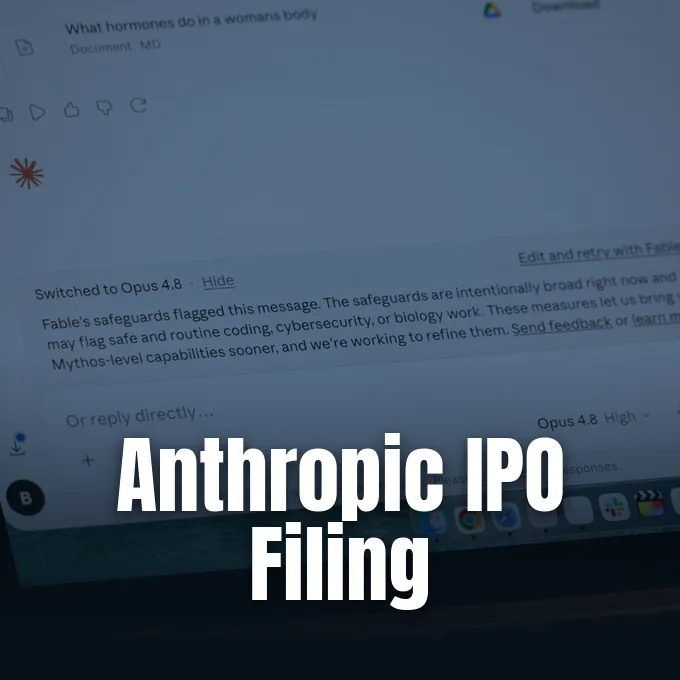
Anthropic grew its political budget even as an Anthropic IPO filing revealed an $8B loss and rapid growth during its commercial push. Funding remains strong across the AI field. Former OpenAI executive Kevin Weil led his firm Warp Sciences out of stealth with $215M at an $865M valuation to speed up drug discovery using AI models, as tracked by Techmeme. In enterprise tools, 1Password passed $500M in ARR, up from $400M in November 2025, driven by software agents [2].
Surge in AI Lobbying Spending
The jump in AI lobbying spending shows how fast young AI firms have built policy teams to match older technology giants [1]. For years, firms like Microsoft and Google set the baseline for tech advocacy in Washington. Microsoft has spent at least $2 million each quarter going back to 2021, and Google regularly spends over $3 million every quarter, including during the July-to-September period. The new labs want that same influence as Congress drafts new tech laws.
Apple set a company record.
The iPhone maker spent $3.1 million on federal lobbying during the third quarter. It was the first quarter that Apple spent over $3 million in Washington. Filings show that Apple worked on tariffs, chip manufacturing, IP rights, and child safety rules, including bills that ask app store owners to verify user age. Tech startups that once stayed out of politics now find that new federal rules leave little room to wait [1]. Two years ago, neither OpenAI nor Anthropic had a big presence in Washington, but today their combined budgets rival those of older tech giants.

Key Bills and Federal Oversight
Anthropic submitted a detailed list of bills, executive orders, and policy topics that its team discussed with Congress and the White House during the third quarter [1]. Among the legislative proposals was the Kids Online Safety Act, where lawmakers want to add guardrails for teenage users on digital platforms. Anthropic also addressed export control provisions in the AI Overwatch Act, tracked an executive order from President Donald Trump that renamed artificial intelligence as “Super Intelligence,” and engaged on the Ratepayer Protection Act, a measure that aims to place energy costs for data centers directly onto developers instead of utility customers.
Energy is the bottleneck.
The debate over the Ratepayer Protection Act touches on public worry about power grids. Building large data centers needs new power hubs, heavy transmission lines, and huge power capacity, and local towns have raised concerns about rising utility bills. Lawmakers want developers to pay for grid upgrades themselves so that families do not face higher monthly power bills. Nvidia focused on hardware rules, telecom systems, and trade policy, lobbying Congress, federal agencies, and White House offices on 6G networks, quantum computing, competition policy, and export control rules [1]. Hardware rules also carry global weight, as Chinese AI firm DeepSeek raised about 100 billion yuan, or $15 billion, in its latest funding round [2].
Focus of AI Lobbying Spending
OpenAI directed its lobbying toward federal oversight frameworks, model safety, and copyright disputes [1]. Filings show that the firm lobbied Congress, the White House, the Small Business Administration, the Commerce Department, and the State Department. Its staff discussed cybersecurity tests for frontier models, safety oversight frameworks, and antitrust shields that would let tech firms share threat data safely.
OpenAI’s filings addressed fallout from a security incident at Hugging Face, though public forms list only high-level topics [1]. The firm argues that frontier models need clear safety evaluations rather than rigid development bans. Meanwhile, rivalry between top labs has grown, especially after Replit chose OpenAI over Anthropic to power Replit Agent in a major deal. Security outlets including AI Policy Daily and Recorded Future documented how fast automated exploits spread, giving urgency to talks with the Commerce Department [2].
Federal bodies want to know if labs can test their own tools before release [1]. Startups want voluntary guidelines and joint threat sharing, but some lawmakers want mandatory checks and strict liability rules for model failures. That gap explains why AI labs have hired seasoned policy staff in Washington to explain how they build models.
Political Shifts Ahead of Midterms
The jump in lobbying filings came with top-level meetings at the White House [1]. In late September, tech chief executives met with President Donald Trump for a lunch that led to an agreed “morally binding” AI safety accord. Filings show that deep policy talks were happening often behind the scenes before Trump named his federal AI czar and task force.
Elections add new pressure.
Congressional midterm elections could return key committee gavels to Democrats, a shift that may push tech labs to build ties with officials who favor tough limits on AI. Both parties have shown readiness to question big tech power, making early friendships on Capitol committees valuable. Worries about data centers, power grids, and AI safety will keep tech lobbyists busy well into next year. Whether the vote splits power in Congress or leaves one party in charge, federal scrutiny of AI will keep growing. The third-quarter filings show that Nvidia, Anthropic, and OpenAI are set to keep a seat at the table as those rules get written [1].
- ONLINE NEWS Feiner, L. (2026, October 22). OpenAI, Anthropic, and Nvidia had record lobbying quarters. The Verge. [Article Link]
- WEBSITE Techmeme. (2026, October 22). Filings: Nvidia, Anthropic, and OpenAI had their highest-spending lobbying quarter between July and September. Techmeme. [Article Link]


1 comment