



For decades, paleontologists debated whether predatory dinosaurs were cold-blooded creatures or active warm-blooded hunters. How warm was the blood of ancient carnivores? Geobiologists from the University of California, Los Angeles have resolved this mystery by determining tyrannosaurus rex body temperature from tooth enamel. Analyzing microscopic mineral samples from Thomas the T. rex, the team discovered the predator maintained an internal temperature of 36 Celsius (97 Fahrenheit), matching modern humans [1].
Measuring Tyrannosaurus Rex Body Temperature
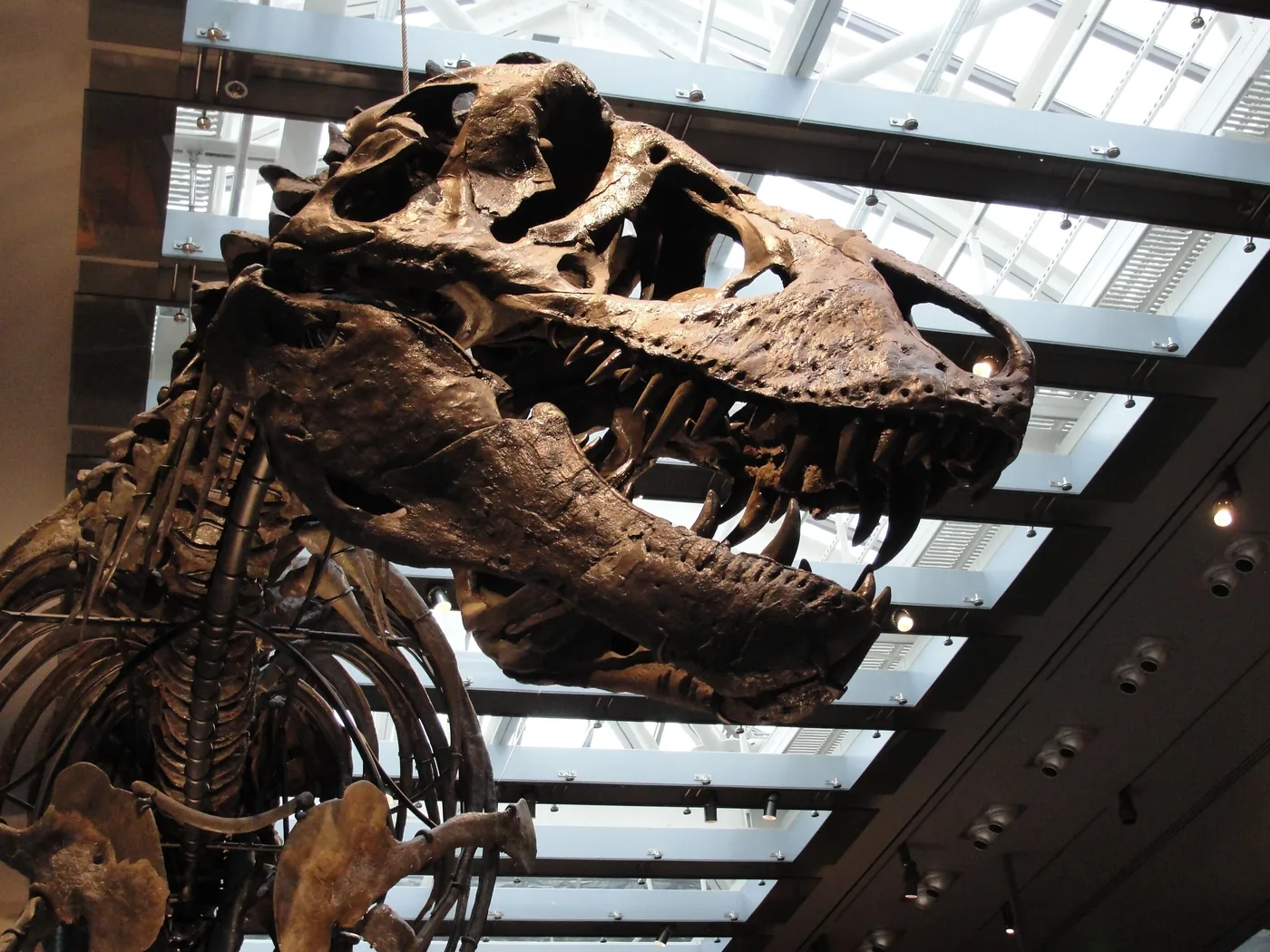
Extracting biological data from fossilized dinosaur teeth presents enormous technical hurdles because museum specimens are exceptionally rare and historically irreplaceable. The teeth proved decisive. Curators at the Natural History Museum of Los Angeles County granted permission to study Thomas the T. Rex, an iconic specimen housed in the Dinosaur Institute. Rather than damaging large sections of rare fossil material, the research group implemented an advanced micro-sampling method that used 90 percent less sample material than previous testing protocols. The team carefully drilled minuscule bits of enamel and dentin from the tooth without compromising the physical integrity of the specimen. Similar preservation challenges surround rare skeletal discoveries, such as fossilized prey found in a tyrannosaur belly. By preserving 90 percent of the precious fossil tooth during extraction, the team established a safe standard for measuring Tyrannosaurus Rex body temperature across historic museum collections [1].
Chemical analysis required measuring minute crystal structures formed during the life of the dinosaur. The researchers sent the isolated tooth powder for mass spectrometry to inspect the mineral lattice of the tooth crown. In a comprehensive study published in Science Advances, co-author Robert Eagle of UCLA explained that previous investigative tools lacked the sensitivity needed to capture paleotemperature readings from such tiny mineral volumes. “No one’s been able to make a temperature measurement like this before,” Robert Eagle noted after reviewing the final mass spectrometry readouts. Robert Eagle confirmed that the measured reading of 36 Celsius matched initial geobiological hypotheses. The findings were definitive [1].
Isotopic Bonds Inside Fossil Enamel
Determining internal warmth relies on the physical behavior of stable isotopes within tooth bioapatite. The researchers focused specifically on clumped isotopic thermometry (a geochemical technique tracking molecular bonds) to reconstruct body conditions. Carbon and oxygen atoms form rare chemical bonds whose frequency depends strictly on the ambient temperature at the exact time the mineral crystallizes. In warm-blooded organisms with elevated body temperatures, these heavy isotopic bonds form far less frequently. Conversely, cold-blooded animals generate a noticeably higher number of bonds between carbon and oxygen isotopes within their skeletal tissues. Geobiologist Flores and colleagues from the University of California, Los Angeles measured these precise bond ratios to isolate the thermal history of Tyrannosaurus rex [1].
Enamel preserves chemical clues. This durable outer tooth layer shields pristine isotopic ratios from ground contamination over geologic time [1].
Mass spectrometry confirmed that the tooth mineral recorded an internal operating temperature of 36 Celsius (97 Fahrenheit). Because tooth enamel forms incrementally during tooth replacement, the mineral captures a continuous biological record rather than a momentary environmental fluctuation. Robert Eagle observed that the resulting reading reflects the true physiological temperature of the living animal. The isotopic ratio remained uniform throughout the sampled enamel layers, proving that the chemical signature had not degraded since the Cretaceous. Thomas the T. Rex had maintained a constant thermal operating state across his mature lifespan [1].
Comparing Dinosaur Warmth to Modern Animals
Placing 36 Celsius into a modern biological framework demonstrates where predatory dinosaurs sit on the metabolic spectrum. Modern cold-blooded reptiles regulate their thermal conditions behaviorally (a physiological habit of absorbing environmental warmth) by basking in direct sunshine. Writing in Nautilus, science journalist Jake Currie explained that modern lizards and alligators typically run between 82 and 86 degrees Fahrenheit. When ambient temperatures drop, these cold-blooded species immediately grow sluggish and inactive. Modern birds run hotter. Avian dinosaurs maintain body temperatures running between 104 and 109 degrees Fahrenheit. Robert Eagle pointed out that the measured Tyrannosaurus Rex body temperature placed the carnivore directly between slow mammals and modern flighted birds [2].
How did that internal warmth influence the daily behavior of a multi-ton carnivore? Robert Eagle emphasized that 36 Celsius (97 Fahrenheit) matched human body temperatures almost exactly. That level is noticeably higher than a reptile or a slow mammal like a sloth, yet comfortably lower than an avian. Cold blood slows movement. An operating temperature of 97 Fahrenheit allowed Tyrannosaurus Rex to sustain sustained physical movement without relying on external solar warmth. Thomas the T. Rex operated with the physiological readiness of an active endotherm [2].


Metabolic Demands of a Giant Predator
Maintaining an internal body heat of 36 Celsius demanded substantial energetic intake. A high body temperature requires an elevated metabolic rate to generate internal heat constantly. Paleontologists long wondered whether Tyrannosaurus Rex was a swift, aggressive predator or a lumbering scavenger limited by physical inertia. A body temperature matching modern mammals strongly supports the model of an active hunter equipped for sustained locomotion. These thermal requirements align with recent anatomical studies, including evaluations of T. rex brainpower that assess neurological processing and predatory behavior. High sensory coordination and active pursuit require steady metabolic fuel. Metabolism demands fuel. Robert Eagle highlighted that this elevated temperature confirms Tyrannosaurus Rex possessed the high-octane physiology typical of an energetic carnivore [2].
Cellular energy production sustained this elevated thermal state through mitochondria (structures supplying metabolic energy inside living cells) working continuously across dense muscle groups. Thermal stability required energy. In contemporary scientific reporting, Interesting Engineering highlighted how exceptional preservation methods uncover ancient metabolic clues, noting that 66-million-year-old dung preserves rare fossilized dinosaur feathers from the Cretaceous era. Preserved organic structures from 66 million years ago demonstrate how specialized integument and plumage helped theropods regulate heat. Thermal insulation prevented massive carnivores from bleeding vital calories into the surrounding atmosphere [3].

Surviving Frigid Seasons in Ancient Alaska
Geographic distribution provides the most compelling ecological confirmation of Tyrannosaurus Rex body temperature. Fossil hunters have documented Tyrannosaurus Rex remains across vast latitudes, stretching from southern latitudes all the way north into Alaska. Alaska was cold. While the Cretaceous greenhouse climate maintained warmer polar conditions than modern ice sheets, northern latitudes experienced dark, freezing winters. Paleontologists agree that Cretaceous Alaska was simply too nippy for ectothermic reptiles to survive during winter months [2].
Cold-blooded reptiles could not endure high-latitude winter darkness because ambient temperatures failed to provide sufficient thermal energy. Consequently, fossilized turtles, snakes, and lizards are entirely absent from northern Cretaceous sediments. Tyrannosaurus Rex, however, thrived across these subpolar habitats. The dinosaur’s stable internal warmth of 36 Celsius shielded vital organs from seasonal freezing. Predators need high agility. Internal thermoregulation enabled massive theropods to hunt continuously throughout prolonged seasonal cold spells [2].
Warmth enabled expansion. The discovery of northern tyrannosaur fossils proves that internal heat regulation unlocked an extensive geographic range across high-latitude landscapes (the anatomical boundary of high-latitude prehistoric ecosystems) where cold-blooded competitors could never establish permanent populations. By decoupling physical stamina from direct sunlight, Thomas the T. Rex and his northern relatives dominated regional food webs across disparate Cretaceous environments [2].
Rewriting Dinosaur Physiology and Evolutionary History
Resolving Tyrannosaurus Rex body temperature fundamentally alters how evolutionary biologists reconstruct Mesozoic life. The findings from Flores and colleagues at the University of California, Los Angeles overturn outdated visions of predatory dinosaurs as lethargic reptiles sunning themselves on riverbanks. Instead, isotopic geochemistry confirms that giant theropods were dynamic endotherms operating at thermal baselines identical to modern placental mammals. This discovery connects directly with macroevolutionary models like the longevity bottleneck hypothesis linking dinosaurs to mammalian lifespan, which explores how dinosaur dominance shaped early mammalian evolution. The fossil record expanded [1].
Precision mass spectrometry has replaced speculation with concrete geobiological measurements. Thomas the T. Rex from the Natural History Museum of Los Angeles County provided the physical key that unlocked Cretaceous physiology. By demonstrating that clumped isotope thermometry requires 90 percent less tooth enamel than traditional methods, the research team paved the way for non-destructive analyses of other rare dinosaur specimens. Isotopes reveal ancient life. Future isotopic studies across global museum archives will clarify whether smaller theropods and herbivorous dinosaurs shared this exact 36 Celsius thermal equilibrium [1].
Thomas the T. Rex has helped answer a question that puzzled paleontologists for over a century. Measuring 36 Celsius in fossil enamel anchors the study of dinosaur metabolism in empirical chemistry rather than indirect skeletal inferences. As analytical technologies continue to advance, paleontologists will refine how theropod dinosaurs balanced high energy expenditure with ecological dominance. Cretaceous ecosystems supported active, warm-blooded predators whose internal biology closely mirrored the thermal efficiency seen in living fauna today [1].
- ACADEMIC JOURNAL Flores, R. J., Eagle, R. A., Trayler, R. B., Larocca Conte, G., Kim, S. L., Chiarenza, A. A., Farnsworth, A., Valdes, P. J., Chiappe, L., & Tripati, A. (2026). The body temperature of Tyrannosaurus rex. Science Advances, 12(38). [Article Link]
- ONLINE NEWS Currie, J. (2026, September 16). We finally know Tyrannosaurus rex’s body temperature. Nautilus. [Article Link]
- ONLINE NEWS Interesting Engineering. (2026, September 16). Science archives. Interesting Engineering. [Article Link]
APA 7: TWs Editor. (2026, September 17). How Scientists Measured Tyrannosaurus Rex Body Temperature. PerEXP Teamworks. https://perexpteamworks.com/en/tyrannosaurus-rex-body-temperature/


